
Second Charge Mortgages
A second charge mortgage lets you borrow against the equity in your home without replacing your current mortgage. It can be useful if you need extra funds but do not want to remortgage. This may apply if you have a low fixed rate, high early repayment charges, or a current lender that cannot offer further borrowing. A second charge mortgage is secured against your property. Your existing mortgage stays in place as the first charge. The new loan sits behind it as the second charge. This means you will have two separate monthly payments. You must be confident both are affordable before you apply.

Second Charge Mortgages
A second charge mortgage may help homeowners raise funds without changing their main mortgage.
It may be considered when:
- You want to keep your current mortgage deal.
- You face early repayment charges if you remortgage.
- Your current lender will not offer further borrowing.
- You need funds for home improvements, debt consolidation, or another legal purpose.
- Your income or credit profile needs a specialist lender review.
It may not be suitable if:
- The extra monthly payment would stretch your budget.
- A remortgage or further advance would cost less overall.
- You only need a small amount of borrowing.
- You are using it to consolidate debt without changing spending habits.
- You are unsure about long-term affordability.
Your home may be repossessed if you do not keep up repayments on your mortgage or any loan secured on it.
What is a Second Charge Mortgage?
A second charge mortgage is an additional loan secured against your home.
It does not replace your existing mortgage. Instead, it runs alongside it.
Your first mortgage lender keeps the first legal charge on your property. The second charge lender registers another legal charge behind it. If the property is sold because payments are missed, the first mortgage lender is usually repaid first.
This extra risk means second charge mortgage rates are often higher than first mortgage rates. However, they may still be useful when remortgaging would create bigger costs.
A second charge mortgage is also known as:
- A second mortgage.
- A secured loan.
- A homeowner loan.
- A secured homeowner loan.
The right term can depend on the lender, broker, or search phrase used by the client. The key point is the same: the borrowing is secured against your property.
Considering a Second Charge Mortgage?
If you’re a homeowner seeking extra funds but want to avoid remortgaging, a second charge mortgage could be a smart way to unlock equity in your property. This type of secured loan allows you to borrow additional capital while keeping your existing mortgage in place. Provided you’re confident in managing repayments on both loans, it may offer a flexible solution for home improvements, debt consolidation, or large personal expenses.
Explore how remortgaging compares, or use our mortgage calculators to assess affordability.
Why Homeowners Consider Second Charge Mortgages
Many homeowners consider second charge mortgages to raise money without changing their main mortgage.
This can happen when the first mortgage still works well. For example, you may have a competitive fixed rate that you do not want to lose. You may also face early repayment charges if you leave your current deal early.
A second charge mortgage may give you another route to funds while your existing mortgage remains untouched.
Common reasons include:
- Home improvements or an extension.
- Debt consolidation.
- Business investment.
- School fees or family support.
- Tax bills.
- Large one-off expenses.
- Raising a deposit for another property.
- Repair work or essential property costs.
Debt consolidation needs careful advice. You may reduce monthly payments, but you could pay more interest over a longer term. You are also securing unsecured debts against your home.
When a Second Charge Mortgage May Make Sense
A second charge mortgage may be worth reviewing if your current mortgage still suits you.
It may help when:
- Your fixed rate is much lower than current market rates.
- Your early repayment charge is high.
- Your current lender has declined further borrowing.
- You are self-employed and need specialist underwriting.
- Your income includes bonuses, commission, or multiple sources.
- You have had credit issues since taking your first mortgage.
- You need to borrow more than a personal loan can offer.
- You want the extra borrowing kept separate from your main mortgage.
If credit history is a concern, our adverse credit mortgage advice page explains how lenders may review past credit issues.
Second Charge Mortgage or Remortgage?
A second charge mortgage and a remortgage can both help you raise funds. However, they work in different ways. A remortgage replaces your current mortgage with a new one. A second charge mortgage leaves your current mortgage in place and adds a separate secured loan.
| Question | Second Charge Mortgage | Remortgage |
|---|---|---|
| Does it replace your current mortgage? | No | Yes |
| Can it help avoid early repayment charges? | Often, yes | Not usually |
| Do you keep your current rate? | Yes | No, unless you stay with the same lender |
| Will you have two monthly payments? | Yes | No, usually one mortgage payment |
| Can it help if your credit has changed? | Sometimes | It may be harder |
| Can it be used to raise extra funds? | Yes | Yes |
| Is advice important? | Yes | Yes |
A remortgage may be better if your current deal is ending soon or a new rate gives better overall value. A second charge mortgage may be better if your current mortgage is worth keeping and remortgaging would create unnecessary costs. Use the mortgage calculators to get a basic view of affordability. Then speak to an adviser before making a decision.
When It May Not Be the Right Option
A second charge mortgage is not suitable for every homeowner.
It may not be right if:
- You cannot afford another monthly payment.
- A further advance from your current lender is cheaper.
- A remortgage gives better long-term value.
- You only need a small amount.
- You are already struggling with household bills.
- You want to consolidate debt without reviewing your wider budget.
- You may move home soon and need flexibility.
If you are planning to move, read our guide to moving home mortgages before taking extra secured borrowing.
💡 Preparing for Approval: Expert Tips
Boost your chances by:
- Checking and improving your credit score
- Reducing existing debts
- Gathering key documents (proof of income, mortgage statements, ID)
- Working with a specialist mortgage broker, like Connect Mortgages, who can fast-track lender approval and find the best match for your financial profile
Looking to explore your options further? Use our mortgage calculators or speak with a UK adviser today for tailored advice on second charge loans.
How Much Can You Borrow?
The amount you can borrow depends on your property, mortgage balance and affordability.
Lenders usually review:
- Your property value.
- Your current mortgage balance.
- Your available equity.
- Your income and employment type.
- Your regular commitments.
- Your credit history.
- Your loan purpose.
- Your first mortgage lender’s consent.
- The total loan-to-value across both loans.
For example, if your home is worth £350,000 and your mortgage balance is £220,000, there may be equity available. However, that does not mean you can borrow the full difference. The lender must still check affordability, risk and suitability.
Choose an Adviser
Mortgage Advice..
Thinking of getting a mortgage? Our experienced team of skilled mortgage advisers are here to offer the essential guidance you require. Relying on our comprehensive understanding of the mortgage market, we’ll ensure you secure the perfect mortgage to suit your specific situation.
What Costs Should You Consider?
Second charge mortgage costs vary by lender, loan size and case type.
You may need to consider:
- Interest rate.
- Arrangement fee.
- Broker fee.
- Valuation fee.
- Legal or administration costs.
- Early repayment charges.
- Exit fees.
- Total interest over the full term.
A lower monthly payment does not always mean a lower total cost. This is especially important if the loan is spread over many years. Always compare the monthly payment, fees and total repayment amount.
Using a Second Charge Mortgage for Debt Consolidation
Some homeowners use second charge mortgages to consolidate debts.
This may bring several payments into one place. It may also reduce monthly outgoings. However, it can increase the total amount repaid if the term is longer.
It can also turn unsecured debt into debt secured against your home.
Before using a second charge mortgage for debt consolidation, consider:
- Why the debt built up.
- Whether your spending has changed.
- The total interest over the new term.
- Any fees added to the loan.
- Whether you can repay early without penalties.
- The risk to your home if payments are missed.
Debt consolidation should be reviewed carefully with a qualified adviser.
Can You Get a Second Charge Mortgage With Bad Credit?
It may be possible to get a second charge mortgage with poor or limited credit history.
Some specialist lenders may consider cases involving:
- Missed payments.
- Defaults.
- County Court Judgments.
- Debt management plans.
- Self-employed income.
- Recent income changes.
- Complex household finances.
However, rates and fees may be higher. Lenders may also ask for stronger evidence that the new payment is affordable.
Read more about adverse credit mortgage advice if your credit file may affect your options.
What Happens If You Move Home?
If you move home while you have a second charge mortgage, the loan usually needs to be repaid from the sale proceeds.
Some lenders may consider transferring the borrowing to a new property. However, this depends on the lender, your circumstances and the new property.
Before moving, check:
- Whether the loan has early repayment charges.
- Whether your first mortgage is portable.
- Whether your second charge lender allows transfer.
- Whether the sale leaves enough equity.
- Whether your next mortgage remains affordable.
Taking advice early can help you avoid delays during the sale or purchase.
Second Charge Mortgage Advice From Connect Mortgages
Connect Mortgages can help you compare your options before you apply.
We can review whether a second charge mortgage, remortgage, further advance, personal loan, or another route may be suitable.
Our advisers can look at:
- Your current mortgage deal.
- Early repayment charges.
- Your property equity.
- Your income and outgoings.
- Your credit profile.
- The reason for borrowing.
- Your repayment plans.
- Alternative mortgage options.
- Protection needs linked to the new borrowing.
If your borrowing increases, you may also want to review mortgage protection and life insurance. Protection can help you consider how payments may be maintained if your circumstances change.
Find a Second Charge Mortgage Adviser
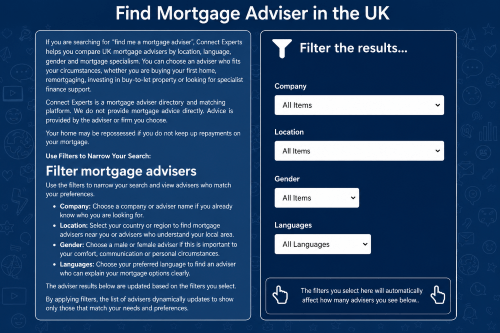
Some clients prefer to choose an adviser by location, language, or specialist experience.
Connect Experts can help you find second-charge brokers across the UK. You can also use the Second Charge Mortgage Adviser Search if you want to compare adviser profiles before making contact.
Connect Experts is a directory and matching platform. Mortgage advice is provided by the adviser or firm selected by the customer.
FAQs: Second Charge Mortgage
Most frequent questions and answers about second charge mortgages
They differ from first-charge mortgages as they don’t secure against the full value of your property; rather they only secure a portion of it and come after primary mortgage holders in terms of priority. They typically have higher interest rates and fees than first-charge mortgages and are only available to those who own their property.
To put a second charge on your property, you need to take out a second charge mortgage. This is a loan secured against the value of your property, but with a higher interest rate than primary mortgages and it typically comes after primary mortgage holders in terms of priority.
Second charge mortgages work in the same way as other types of loans but are secured against the value of your property. They may be used for a variety of purposes such as home improvements, consolidating debts, or taking that much-needed holiday. The limit of what you can borrow may vary depending on your circumstances and requirements, so it’s important to shop around for the right deal that meets your needs and budget.
Yes, a mortgage company can refuse to offer a second charge. This could be for a variety of reasons, such as if you don’t meet the required criteria or have sufficient income to cover repayments. It is important to shop around and compare different lenders to find one that meets your requirements and budget. Alternatively, getting independent financial advice can help you find the most suitable lender. It may also be helpful to investigate what other options are available as well.
Yes, you can get a second charge mortgage if you own your property and have the necessary income to cover monthly repayments. It is important to understand all the risks associated with taking out this type of loan, such as higher interest rates and fees than primary mortgages, to make an informed decision about whether it is the right approach for you.
Yes, second charge mortgages are regulated by the Financial Conduct Authority (FCA). This means that lenders must adhere to certain regulations and ensure that borrowers have adequate protection when taking out a loan. It is important to take the time to understand the risks associated and make sure that they have a realistic repayment plan in place. They are no different from a first-charge mortgage except they rank second on the title deed of the property.
The downside to a second mortgage is that it typically comes with higher interest rates and fees than primary mortgages and may also be more difficult to obtain. Additionally, if you fail to make regular repayments, your property could be at risk of being repossessed.
No, a solicitor is not always necessary for a second charge mortgage. However, it is recommended that you seek independent legal advice before taking out a loan of this kind. This will ensure that your interests are protected and ensure that the terms of the agreement are clear.
What next?
We will come back to you quickly to let you know how we can help. If you would like to speak to us immediately, call us on 01708 676 111.
Looking for our intermediaries site?

Liz Syms is the CEO and Founder of Connect Mortgages and Connect for Intermediaries, a leading firm specialising in property investment finance. With more than 25 years of experience in the mortgage and financial services industry, Liz has helped thousands of clients secure both residential homes and investment properties.
Renowned for her expertise and commitment to excellence, Liz is passionate about delivering tailored, high-quality advice on mortgages and protection. Her leadership has positioned her as a trusted figure in the sector, and under her guidance, Connect Mortgages has expanded to a national team of over 300 advisers.
Driven by a vision to make Connect Mortgages one of the UK’s most successful mortgage networks, Liz continues to champion professional standards and client-focused solutions across the industry.
About the Author
Liz Syms is the CEO and Founder of Connect Mortgages, a specialist in finance for property investment. With over 25 years of experience in mortgages and financial services, Liz has helped countless people get their dream homes and investment properties. She is passionate about giving her clients the best advice possible when it comes to financial decisions relating to mortgages and protection and is dedicated to providing the highest quality of service. With her wealth of knowledge in the industry, Liz is a respected leader in mortgages and financial services and has grown her team to over 300 advisers nationally. She strives to make Connect Mortgages one of the most successful companies in its field.
Lorem ipsum dolor sit amet, consectetur adipiscing elit. Ut elit tellus, luctus nec ullamcorper mattis, pulvinar dapibus leo.