

Mortgage for Bad Credit First-Time Buyers: Buying your first home is not just a financial decision. It is a test of timing, preparation and honesty.
A poor credit history can make that test harder. However, it does not always close the door. Some lenders may consider first-time buyers with missed payments, defaults, CCJs, debt management plans or other credit issues. The outcome depends on the details.
A bad credit mortgage for first-time buyers is not a separate legal mortgage type. It usually means a residential mortgage assessed by lenders who can consider credit problems alongside income, deposit, affordability and recent financial conduct.
Your home may be repossessed if you do not keep up repayments on your mortgage.
Quick Answer: Can First-Time Buyers Get a Mortgage with Bad Credit?
Yes, some first-time buyers may be able to get a mortgage with bad credit.
Lenders will usually look at:
- The type of credit issue
- How recent it was
- Whether it has been settled
- The size of your deposit
- Your income and outgoings
- Your bank statements
- The property being bought
- Whether the mortgage looks affordable
A missed payment from several years ago may be viewed differently from a recent CCJ. A settled default may be viewed differently from ongoing unpaid debt. This is why the detail matters.
If you are at an early stage, read our First-Time Buyer Mortgage guide first. It explains the wider buying process, including deposits, affordability and first-time buyer checks.
Bad Credit Mortgage for First-Time Buyers
A first-time buyer with bad credit may still have mortgage options. However, the lender will need to understand the full picture.
The strongest applications usually show stable income, controlled spending, a clear deposit source and an honest explanation of past credit issues.
You may need a higher deposit than a buyer with a clean credit file. You may also have fewer lender options or pay a higher rate. Over time, a better credit profile may improve future remortgage options.
The key is not to guess. The key is to check your credit file, prepare your documents and speak to an adviser before submitting applications.
What Counts as Bad Credit for a First-Time Buyer Mortgage?
Bad credit can mean different things to different lenders.
Some lenders may focus on your credit score. Others may look beyond the score and assess the events behind it.
Common credit issues include:
- Missed or late payments
- Defaults
- County Court Judgments
- Debt Management Plans
- Individual Voluntary Arrangements
- Bankruptcy
- Payday loan history
- High credit card balances
- Frequent credit applications
- Very limited credit history
A thin credit file can also create problems. This can happen when you have never used credit before. In that case, the issue may be limited credit history rather than bad credit.
If your credit issue is more serious, our Adverse Credit Mortgage page may help you understand the wider mortgage options.
Mortgage Options for Bad Credit First-timeBuyers
Mortgage options for bad-credit first-time buyers vary by lender and mortgage type. Having bad credit can make it harder to secure a mortgage compared to someone with a strong credit history. This is because lenders may view you as a higher risk. Poor credit can also limit access to lower interest rates. Improving your credit profile may help increase the range of mortgage products available to you.
Some high-street banks may decline applications from buyers with poor credit. However, specialist lending options may still be available. A mortgage broker experienced in bad-credit mortgage cases can assess your situation and identify lenders willing to consider your application.
How Lenders Assess Bad Credit, First-Time Buyers
A lender does not usually make a decision based on one factor alone.
Instead, the lender will assess the risk of the whole application. This includes your credit history, income, deposit, spending habits and the property itself.
1. The Type of Credit Issue
Not all credit problems carry the same weight.
A late mobile phone payment may be treated differently from a recent CCJ. A small settled default may be treated differently from an unpaid default.
Lenders may ask:
- What happened?
- When did it happen?
- How much was involved?
- Has it been settled?
- Has your recent conduct improved?
This matters because a mortgage is a long-term commitment. Lenders want to see whether the problem was temporary or ongoing.
2. How Recent the Credit Problem Was
Time can make a difference.
A credit issue from last month may reduce your options more than one from several years ago. Some lenders have strict rules on recent defaults, CCJs or missed payments.
Older issues may still matter, but recent financial conduct often carries more weight.
This is why first-time buyers should avoid new missed payments before applying. Even a small missed payment can cause problems if it appears close to the mortgage application.
3. Whether the Debt Was Settled
Some lenders may prefer credit issues to be satisfied before application.
A settled default or CCJ can show that the debt has been dealt with. However, settlement does not remove the event from your credit file straight away.
You should keep evidence of settlement. This may include confirmation letters, payment receipts or updated credit reports.
4. Deposit Size and Loan-to-Value
Deposit size is important for first-time buyers with bad credit.
A larger deposit can reduce the lender’s risk because the mortgage is a smaller percentage of the property value. This is called loan-to-value, often shortened to LTV.
For example:
- A £200,000 property with a £20,000 deposit means a 90% LTV mortgage.
- A £200,000 property with a £40,000 deposit means an 80% LTV mortgage.
Lower LTV can sometimes improve lender choice. However, each lender has its own rules.
If you want an early estimate of borrowing, use the Residential Affordability Calculator before speaking with an adviser.
5. Affordability and Monthly Commitments
Affordability is central to the mortgage decision.
The lender will assess your income and regular outgoings. This includes loans, credit cards, car finance, childcare, dependants and other financial commitments.
Bad credit does not remove the need for affordability. In fact, affordability may become even more important because the lender is already assessing extra risk.
Before applying, check whether your spending supports the mortgage amount you want.
6. Bank Statements and Account Conduct
Bank statements can tell a lender a lot.
They may show your income, bills, overdraft use, gambling, returned payments and general money management.
For first-time buyers with credit issues, bank statements can either support or weaken the case.
Good recent conduct may help. Regular unauthorised overdraft use or unpaid items may raise concerns.
Find an Affordable Mortgage Rate
Finding an affordable mortgage rate is important for first-time buyers with bad credit. It is advisable to compare mortgage products from different lenders. Key factors to consider include interest rates, deposit requirements, mortgage term length, and associated fees.
Mortgage rates can change over time. A mortgage broker can help you review suitable options based on your circumstances and plans.
Credit Issues and What They May Mean
| Credit issue | Why it matters | Practical action before applying |
|---|---|---|
| Missed payments | Shows a payment was not made on time | Check dates, amounts and whether the account is now up to date |
| Defaults | Shows a lender closed or marked an account after missed payments | Confirm whether the default is settled or still outstanding |
| CCJs | Court judgments can affect mortgage applications | Check the date, amount and whether it has been paid |
| Debt Management Plan | Shows debts were managed through an informal repayment plan | Prepare evidence of payments and current balances |
| IVA | A formal insolvency arrangement can restrict lender choice | Check completion date and gather completion documents |
| Bankruptcy | Usually needs careful lender assessment | Confirm discharge date and provide supporting documents |
| Payday loans | Some lenders view recent payday borrowing as a risk sign | Avoid new short-term borrowing before applying |
| High credit use | Large balances can affect affordability | Reduce balances where possible before application |
What Deposit Might You Need?
There is no single deposit rule for every bad credit mortgage.
Some first-time buyers may be considered with a smaller deposit. Others may need a larger deposit because of the type or timing of the credit issue.
Deposit requirements can depend on:
- The lender
- The credit issue
- The date of the issue
- Whether the debt was settled
- The mortgage amount
- Your income
- The property type
- The overall affordability result
A bigger deposit does not guarantee approval. However, it may improve the number of lenders willing to assess your case.
You should also allow for buying costs. These may include valuation fees, legal fees, survey costs, moving costs and Stamp Duty where applicable.
Use the Stamp Duty Calculator to estimate possible property tax costs.
Find a Mortgage Broker who Specialises in Adverse Credit Mortgages

Should You Apply Now or Wait?
This is one of the most important questions.
Sometimes it may be better to apply now. Sometimes it may be better to wait, repair your credit file and strengthen the application.
You may need to wait if:
- A credit issue is very recent
- A default or CCJ remains unpaid
- Your deposit is too small for available lenders
- Your bank statements show unstable conduct
- Your income has recently changed
- You have made several recent credit applications
Waiting is not failure. In mortgage terms, timing can be a strategy.
A stronger application may reduce the risk of rejection. It may also help you access more suitable options.
Practical Steps Before Applying
Before speaking to a lender, prepare your position properly.
- Check your credit reports with the main credit reference agencies.
- Make sure your name and address history are correct.
- Register on the electoral roll where possible.
- Avoid new credit applications before mortgage advice.
- Reduce credit card balances where practical.
- Bring missed payments up to date if possible.
- Gather evidence for settled debts.
- Keep bank statements clean and consistent.
- Save proof of deposit.
- Avoid unexplained large transfers.
- Prepare payslips, accounts or tax documents.
These steps do not guarantee approval. However, they can help an adviser understand your case and avoid unsuitable lenders.
Why a Mortgage Broker Can Help
Bad credit mortgage applications need careful placement.
A mainstream lender may decline a case that a specialist lender could consider. Equally, a specialist lender may not be needed if the credit issue is minor or historic.
A broker can help assess:
- Which lenders may consider your credit profile
- Whether the timing is right
- How much deposit may be needed
- Whether your income fits lender rules
- Which documents are required
- How to explain historic credit issues
- Whether the mortgage is affordable
If your case is complex, you can read more about getting a Mortgage With Bad Credit.
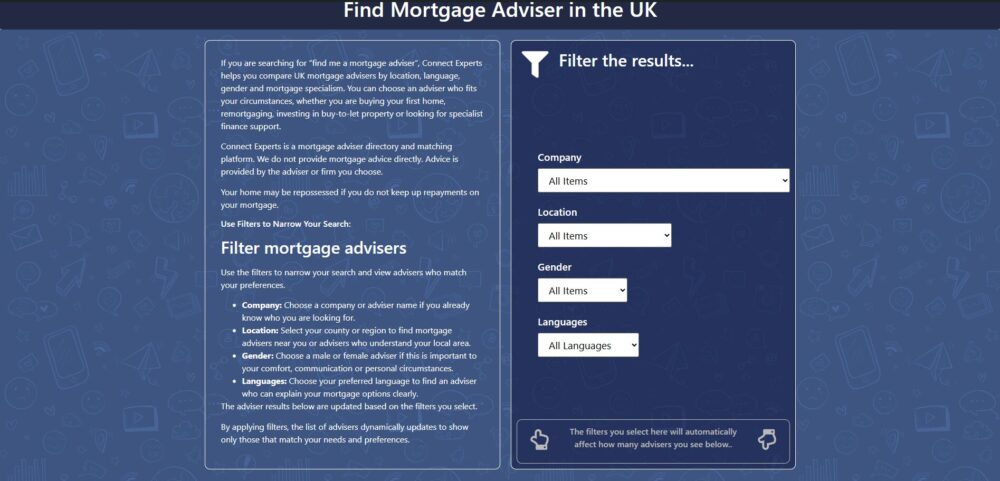
Some buyers also want to compare advisers before making contact. Connect Experts is part of the Connect Group and lets users search by location, language and mortgage need. You can use its Adverse Credit Mortgage Brokers page if you want to search for advisers with relevant experience.
What Documents Might Be Needed?
The exact documents depend on the lender and your circumstances.
However, first-time buyers with bad credit may need:
- Proof of ID
- Proof of address
- Latest payslips
- Latest bank statements
- Proof of deposit
- Credit reports
- Default settlement letters
- CCJ satisfaction evidence
- Debt management plan statements
- Proof of gifted deposit, if relevant
- Self-employed accounts or tax calculations
- Employment contract, if recently started
Good documents do not hide bad credit. They explain the full case clearly.
That matters because lenders do not only assess the past. They also assess whether the mortgage looks sustainable now.
What Rates Should You Expect?
Rates for bad credit mortgages can be higher than standard mortgage rates.
This is because the lender may see the application as higher risk. The exact rate depends on the lender, product, deposit, credit profile and affordability.
Some buyers accept a higher rate at first, then review their options later. If their credit file improves and payments are maintained, remortgaging may become possible in the future.
However, you should not take a mortgage based only on the hope of a better deal later. The mortgage must be affordable from the start.
Use the Quick Mortgage Calculator to estimate repayments at different rates.
Common Mistakes to Avoid
A bad credit mortgage application can fail for practical reasons.
Avoid these common mistakes:
- Applying to several lenders without advice
- Guessing what is on your credit file
- Ignoring old addresses on credit reports
- Hiding debts from the adviser
- Using payday loans before applying
- Taking new credit before completion
- Assuming a decision in principle guarantees approval
- Underestimating legal, survey and moving costs
- Choosing a property before checking affordability
- Applying too soon after a serious credit event
The mortgage process rewards preparation. It rarely rewards rushing.
Bad Credit and First-Time Buyer Schemes
Some first-time buyers ask whether bad credit stops access to first-time buyer support.
The answer depends on the scheme, the lender, and the individual rules. First-time buyer status may help with certain options, but it does not remove credit or affordability checks.
A lender will still assess whether the mortgage is suitable and affordable.
If you are unsure where to start, our Residential Mortgage page explains how lenders assess homebuyer applications.
Can Joint Applicants Apply if One Has Bad Credit?
Yes, joint applicants may be considered if one person has bad credit.
However, the lender will usually assess both applicants. One applicant’s credit history can affect the whole application.
The outcome may depend on:
- Which applicant has the credit issue
- The income split between applicants
- Whether the debt is settled
- The deposit size
- The strength of recent bank conduct
- The property price and mortgage amount
Sometimes applying jointly may help affordability. In other cases, the credit issue may limit lender choice.
The right structure should be reviewed before any application is submitted.
When Bad Credit Does Not Mean Bad Character
Credit files record events. They do not always explain the story.
Illness, redundancy, relationship breakdown, business pressure or a short period of financial difficulty can leave marks that last longer than the event itself.
Lenders still need to manage risk. That is their role.
However, a well-prepared application can show the difference between past difficulty and current stability.
For first-time buyers, this distinction matters. Home ownership is not only about getting accepted. It is about taking on the right mortgage at the right time.
Speak to Connect Mortgages
If you are a first-time buyer with bad credit, Connect Mortgages can help you understand your options before you apply.
We can review your circumstances, discuss lender criteria and help you prepare the right documents.
You do not need to know every lender rule before asking for help. You only need to start with the facts.
Contact Connect Mortgages if you want to discuss a bad credit mortgage for first-time buyers.
FAQs: Bad Credit Mortgage for First-Time Buyers
Can I get a first-time buyer mortgage with bad credit?
Yes, it may be possible. The lender will assess your credit history, income, deposit, outgoings and property details. Recent or serious credit issues may reduce your options.
How far back do mortgage lenders check credit history?
Lenders usually review your credit report and recent financial conduct. Some credit events can remain visible for several years, depending on the type of issue.
Will a CCJ stop me getting a mortgage?
Not always. A CCJ can make a mortgage harder, especially if it is recent or unpaid. Some lenders may consider CCJs, depending on the date, amount, status and wider application.
Do I need a bigger deposit if I have bad credit?
You may need a bigger deposit. The exact amount depends on the lender, credit issue, affordability and property. A larger deposit may improve lender choice.
Can I get a mortgage with defaults?
Some lenders may consider applicants with defaults. The outcome can depend on when the default was registered, whether it has been settled and your recent credit conduct.
Should I pay off debts before applying for a mortgage?
Paying off debts may help, but it depends on your full position. Reducing monthly commitments can improve affordability. However, you should speak to an adviser before using savings needed for your deposit.
Can I apply if I have a Debt Management Plan?
Some lenders may consider applicants with a Debt Management Plan. They will usually assess payment history, remaining balances, affordability and how long the plan has been running.
Will checking my credit file hurt my mortgage chances?
Checking your own credit file does not usually harm your credit score. It can help you spot errors and understand what lenders may see.
Is a decision in principle guaranteed?
No. A decision in principle is not a full mortgage offer. The lender still needs to assess documents, credit information, affordability and the property.
Can I improve my chances before applying?
Yes. Check your credit file, reduce unsecured debt where possible, avoid new credit, keep payments up to date and prepare clear evidence for any historic credit issues.
Can I search for a first-time buyer mortgage adviser myself?
Yes. If you want to compare advisers by location or preference, you can use Connect Experts to search for First-Time Buyer Mortgage Advisers.
Is bad credit mortgage advice regulated?
Residential mortgage advice is regulated by the Financial Conduct Authority. Always check that the adviser or firm you use has the correct permissions.
Important Information
Your home may be repossessed if you do not keep up repayments on your mortgage.
The information in this article is for general guidance only and does not constitute mortgage advice. Mortgage availability depends on lender criteria, affordability, credit status and personal circumstances.