

Can You Remortgage With Bad Credit? Bad credit does not always close the door on remortgaging.
It can, however, change the route.
A remortgage is not just a rate switch. It is a new lending decision. The lender will look at your credit history, income, outgoings, property value, mortgage balance and recent conduct before deciding whether to lend.
That is why two people with similar credit scores may receive different outcomes. One may have an old settled default and strong affordability. Another may have recent missed mortgage payments and high unsecured debt.
The question is not only whether bad credit exists. The question is what happened, when it happened, whether it has been resolved, and whether the new mortgage is affordable.
Your home may be repossessed if you do not keep up repayments on your mortgage.
Remortgaging With Bad Credit
Yes, you may be able to remortgage with bad credit.
However, your options may depend on:
- The type of credit issue
- How recent the issue was
- Whether it has been settled
- Your current mortgage payment history
- Your income and affordability
- The equity in your home
- The loan-to-value required
- Whether you want to borrow more
- Whether you are consolidating debt
Some borrowers may be able to switch lender. Others may be better off reviewing a product transfer with their current lender. In some cases, a second charge mortgage may be considered instead of replacing the main mortgage.
If your current deal is ending, start by reviewing your remortgage options before your lender’s standard variable rate applies.
What Does Remortgaging With Bad Credit Mean?
Remortgaging with bad credit means replacing your current mortgage with a new mortgage when your credit file contains adverse information.
This may include:
- Missed payments
- Late payments
- Defaults
- County Court Judgments, also called CCJs
- Debt Management Plans
- Individual Voluntary Arrangements, also called IVAs
- Bankruptcy history
- Repossession history
- Payday loan use
- High credit card balances
- Recent mortgage arrears
A lender will not usually assess these issues in isolation. They will consider the full picture.
For example, an old settled default may be viewed differently from a recent unpaid CCJ. A missed mobile phone payment may be viewed differently from missed mortgage payments. A borrower with stable income and low borrowing may be assessed differently from someone using credit to cover monthly living costs.
Can You Remortgage With Bad Credit?
Yes, it may be possible to remortgage with bad credit.
However, the number of lenders may be smaller. Rates may be higher. Fees may also differ from mainstream mortgage products.
Some lenders specialise in adverse credit cases. Others may decline applications where the credit issue is too recent, too severe or still unresolved.
A lender may ask:
- What type of credit issue appears on your file?
- When did it happen?
- Has the debt been repaid or settled?
- Was it a one-off issue or repeated pattern?
- Have mortgage payments been maintained?
- Is your income stable?
- Is the new mortgage affordable?
- How much equity is in the property?
- Are you borrowing more money?
- Is any borrowing being used for debt consolidation?
This is where the practical side matters. Bad credit does not automatically define the outcome. The lender wants to understand the risk today.
How Lenders Assess a Bad Credit Remortgage
Lenders usually assess a bad-credit remortgage using underwriting criteria. This means they look beyond a simple credit score.
The main areas are:
1. Type of Credit Issue
Not all credit problems are treated equally.
Missed utility payments, unsecured loan defaults and mortgage arrears can all affect the application differently. Mortgage arrears often carry more weight because they relate directly to secured borrowing.
2. Date of the Issue
Older credit issues may be easier to place than recent issues.
A default from several years ago may be less concerning than one registered last month. Lenders often want to see that your finances have stabilised.
3. Settlement Status
Settled adverse credit can look stronger than unpaid adverse credit.
If a CCJ, default or arrangement remains unpaid, some lenders may decline the case. Others may ask for it to be settled before completion.
A CCJ can stay on the Register of Judgments, Orders and Fines for six years. You can read more on CCJs and your credit rating at GOV.UK.
4. Current Mortgage Conduct
Your current mortgage payment history is important.
If you have paid your mortgage on time, that may support your case. If there are recent mortgage arrears, lender options may become more limited.
5. Loan-to-Value
Loan-to-value, often called LTV, compares your mortgage balance with your property value.
A lower LTV usually means the lender has more security. This may improve your options, especially where credit history is imperfect.
For example, a borrower seeking 60% LTV may have more options than someone seeking 90% LTV, subject to lender criteria.
6. Affordability
Affordability remains central.
Lenders will check income, regular spending, credit commitments, dependants and future mortgage payments. A remortgage must be sustainable, not just possible.
7. Purpose of Borrowing
A straightforward rate switch may be assessed differently from borrowing more money.
If you want to raise funds, the lender will ask what the money is for. Debt consolidation usually receives closer scrutiny because unsecured debt may become secured against your home.
Product Transfer, Remortgage, Further Advance or Second Charge?
A borrower with bad credit may have more than one route.
The right route depends on the current mortgage, lender criteria, equity and reason for changing.
| Option | What it means | When it may be considered |
|---|---|---|
| Product transfer | Switching to a new deal with your existing lender | When staying with the same lender is simpler or more suitable |
| Remortgage | Moving to a new mortgage, often with another lender | When another lender may offer a suitable deal |
| Further advance | Borrowing more from your current lender | When you want extra funds and your lender agrees |
| Second charge mortgage | A separate secured loan behind your main mortgage | When replacing the main mortgage may not be suitable |
A second charge is not the same as a remortgage. It leaves your current mortgage in place and creates a separate secured loan. This may help in some cases, but it also increases secured borrowing.
If replacing your current mortgage is difficult, read more about second-charge mortgages for bad credit before making a decision.
Remortgaging With Defaults
A default means a lender has recorded that an account was not kept in accordance with the agreed terms.
When assessing a remortgage with defaults, lenders may look at:
- The date of the default
- The amount involved
- Whether it has been settled
- The type of account
- Whether there are multiple defaults
- Whether new credit has been managed well since
An old settled default may be more acceptable than a recent unpaid default. However, every lender has its own criteria.
Remortgaging With a CCJ
A CCJ can make remortgaging more complex.
Lenders may consider:
- The CCJ date
- The CCJ amount
- Whether it was paid within one month
- Whether it is now marked as satisfied
- Whether there are multiple CCJs
- Whether there has been clean credit conduct since
A small, older, satisfied CCJ may be treated differently from a recent unpaid CCJ. The context matters.
Remortgaging After an IVA or Debt Management Plan
An IVA or Debt Management Plan can affect your lender options.
A lender may ask whether the arrangement is active, completed or failed. They may also consider the date it started, the date it ended and your conduct since.
Some lenders may want a completed arrangement and a period of clean credit history before considering an application.
Can You Remortgage to Consolidate Debt With Bad Credit?
You may be able to remortgage to consolidate debt, but this needs careful advice.
Debt consolidation can reduce monthly outgoings. However, it can also increase the total amount repaid if the debt is spread over a longer mortgage term.
It may also turn unsecured borrowing into debt secured against your home.
Before using a remortgage for debt consolidation, consider:
- The new interest rate
- The total cost over the full term
- Any early repayment charges
- Mortgage fees
- Legal costs
- The risk of securing previous unsecured debt
- Whether the underlying spending issue has been resolved
A lower monthly payment is not always the same as a lower total cost.
Will Bad Credit Mean a Higher Remortgage Rate?
Bad credit can lead to a higher remortgage rate.
The rate may depend on:
- Credit severity
- Credit recency
- Loan-to-value
- Income type
- Property type
- Mortgage amount
- Whether debts are being consolidated
- Whether the case fits specialist lender criteria
A specialist lender may accept a case that a high-street lender declines. However, this may come with higher rates or fees.
That does not mean the answer is always “do nothing”. It means the full cost should be compared against the cost of staying with your current lender.
Should You Remortgage Now or Wait?
Sometimes it may be better to wait before remortgaging.
Waiting may help if:
- A default is close to becoming older
- A CCJ has recently been satisfied
- Credit card balances can be reduced
- Recent missed payments need more time behind them
- Your income is likely to improve
- Your property value may support a lower LTV later
However, waiting is not always best.
If your current mortgage deal is ending, moving onto a standard variable rate may increase payments. The better decision depends on the numbers, the timing and the lender options available now.
Use a mortgage calculator to estimate payments before comparing options with an adviser.
How to Improve Your Chances Before Applying
Preparation can make a bad credit remortgage stronger.
Before applying, consider these steps:
- Check your credit report with all major credit reference agencies
- Correct any errors on your file
- Make all payments on time
- Reduce unsecured debt where possible
- Avoid new credit applications before applying
- Keep bank statements clean and stable
- Register on the electoral roll if eligible
- Gather payslips, accounts or tax calculations
- Prepare a clear explanation for past credit issues
- Review your current mortgage balance and property value
A clear application can help the adviser and lender understand the case. It may also reduce unnecessary declines.
For a more comprehensive credit preparation guide, read “How to Improve Bad Credit for a Mortgage.”
When Specialist Advice May Help
Specialist advice may help when your credit history is not straightforward.
This is especially true if you have:
- Recent defaults
- Satisfied or unsatisfied CCJs
- Mortgage arrears
- An IVA
- A Debt Management Plan
- Bankruptcy history
- High unsecured debt
- Previous mortgage declines
- Complex income
- A need to consolidate debt
An adviser can help compare your current lender’s options with wider remortgage options. They can also explain whether a product transfer, remortgage or second charge route may be more suitable.
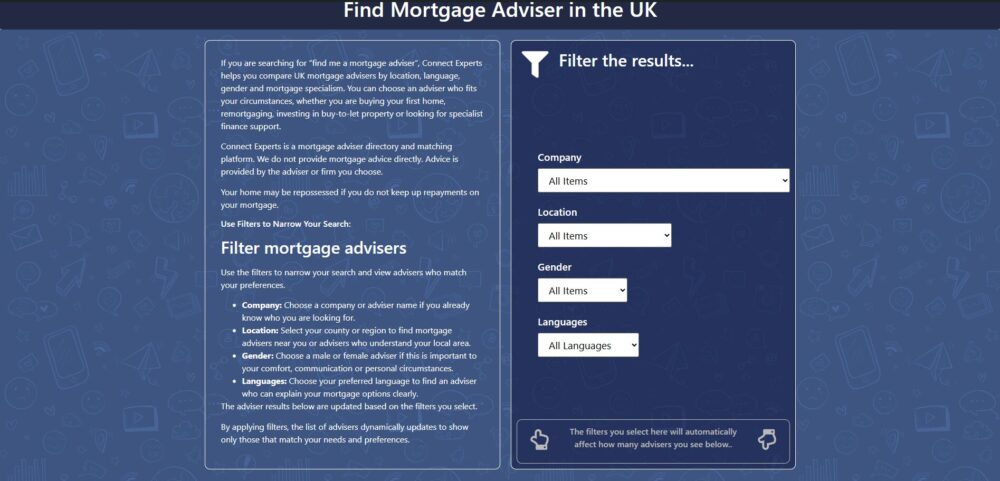
If you want to compare advisers with experience in adverse credit, Connect Experts lets you search for adverse-credit mortgage brokers across the UK.
You can also search for remortgage mortgage brokers if your current deal is ending soon.
Connect Experts is part of the Connect Group. It is a mortgage adviser directory and matching platform. Mortgage advice is provided by the adviser or firm you choose.
Practical Documents You May Need
For a bad credit remortgage, you may need more documents than a standard case.
Common documents include:
- Proof of ID
- Proof of address
- Latest mortgage statement
- Payslips or income evidence
- Bank statements
- Credit report
- Details of defaults, CCJs or arrangements
- Evidence that debts have been settled
- Property value estimate
- Details of current secured and unsecured debts
Self-employed borrowers may also need accounts, tax calculations and business bank statements.
Common Mistakes to Avoid
Avoid applying to multiple lenders without checking criteria first.
Each hard credit search can leave a mark on your credit file. A declined application may also delay the process.
Other mistakes include:
- Ignoring your current lender’s product transfer options
- Borrowing more without checking the full-term cost
- Consolidating debt without advice
- Assuming all lenders treat bad credit the same way
- Waiting too long before your current deal ends
- Failing to explain past credit issues clearly
- Not checking whether your credit file is accurate
The aim is not to make the fastest application. The aim is to make the right application.
Bad Credit Remortgage FAQs
Can I remortgage with bad credit?
Yes, you may be able to remortgage with bad credit. Approval depends on the type of credit issue, when it happened, whether it has been settled, your affordability and the equity in your property.
Can I remortgage if I have a CCJ?
It may be possible to remortgage with a CCJ. Lenders will usually look at the date, amount, settlement status and your wider financial position.
Can I remortgage if I have defaults?
Yes, some lenders may consider applicants with defaults. Older and settled defaults are often easier to place than recent or unpaid defaults.
Will bad credit affect my remortgage rate?
Bad credit can affect the rate offered. The rate may be higher if the lender sees more risk. Loan-to-value, income and credit history all matter.
Can I stay with my current lender instead?
Yes, a product transfer with your current lender may be possible. This may be simpler than moving lender, but it should still be compared against wider options.
Can I borrow more when remortgaging with bad credit?
It may be possible, but it can reduce lender options. Borrowing more for debt consolidation usually requires closer affordability checks.
Is a second charge better than remortgaging?
Not always. A second charge may help if you want to keep your current mortgage, but it creates another secured loan. Advice is important before proceeding.
Should I wait until my credit improves?
Sometimes waiting may improve your options. However, if your current deal is ending, waiting may also increase payments. The right answer depends on timing and cost.