

Secure a Remortgage Before Your Rate Ends: A remortgage is not just about finding a lower rate.
It is a review of time, risk, affordability, lender criteria, property value and future plans. When your current mortgage deal ends, the decision is rarely just about today’s payment. It is also about what happens next.
For many homeowners, the quiet moment before a mortgage rate ends is the most important point. Act too late, and your options may narrow. Act early, and you may have time to compare the cost, structure and purpose of your next deal.
Securing a Remortgage
A remortgage means replacing your current mortgage with a new deal on the same property.
You may do this with a new lender, or you may stay with your current lender through a product transfer.
You may want to secure a remortgage if your current fixed, tracker or discount rate is ending soon.
The main points to check are your current rate, lender Standard Variable Rate, early repayment charge, property value, mortgage balance, loan-to-value, income, credit file, fees and future plans.
A remortgage may help you review your rate, change your mortgage term, raise extra borrowing, release equity or avoid moving onto a higher Standard Variable Rate.
However, it may not always be the right option. Fees, lender checks, legal work and long-term costs matter.
If you want wider support, read our guide to remortgage advice.
Why Securing a Remortgage Early Matters
A mortgage deal gives structure to a large financial commitment.
When that deal ends, the structure may change. Your lender may move you onto its Standard Variable Rate, often called an SVR. This rate can be higher than your current deal, and it may change at the lender’s discretion.
That is why timing matters.
Securing a remortgage early can help you:
- Compare options before your current deal ends
- Avoid a rushed decision
- Understand whether your current lender is still suitable
- Review other lenders across the market
- Check whether your loan-to-value has changed
- Prepare documents before the lender asks for them
- Understand the cost of staying, switching or borrowing more
A mortgage is technical, but the decision is human. It affects monthly cash flow, future flexibility and long-term financial confidence.
What Does It Mean to Secure a Remortgage?
To secure a remortgage, you usually need to agree a new mortgage deal before your current rate ends.
This may involve:
- Choosing a new rate
- Choosing a fixed, tracker or variable product
- Deciding whether to stay with your lender
- Applying to a different lender
- Checking affordability
- Reviewing your credit file
- Confirming the property value
- Comparing fees and total cost
- Completing legal and valuation checks where required
A remortgage normally pays off your existing mortgage and replaces it with a new one.
If you stay with your current lender and move to a new deal, this is usually called a product transfer. It may involve fewer checks, but it may not always offer the most suitable option.
Remortgage or Product Transfer?
A remortgage and a product transfer can both help you move to a new deal. However, they are not the same.
| Option | What it means | When it may help | Key point to check |
|---|---|---|---|
| Remortgage | You move your mortgage to a new lender | You want to compare the wider market or borrow more | Full lender checks may apply |
| Product transfer | You stay with your current lender and switch product | You want a simpler route with fewer changes | It may limit your options |
| Further advance | You borrow more from your current lender | You need extra funds and want to stay put | Rate and affordability still matter |
| Second charge mortgage | You keep your first mortgage and add a second loan secured on the property | Your current deal has high exit charges | You will have two secured loans |
The right option depends on your mortgage balance, rate, income, property value, purpose and lender criteria.
For wider guidance on how lenders assess home finance, visit our residential mortgage advice page.
What Lenders Check When You Remortgage
A remortgage is still a mortgage application.
Even if you already own the property, the lender still needs to assess risk. This is because the mortgage remains secured against your home.
Lenders may check:
- Income
- Outgoings
- Employment status
- Self-employed accounts
- Credit commitments
- Credit history
- Property value
- Mortgage balance
- Loan-to-value
- Mortgage term
- Repayment method
- Age at the end of the term
- Reason for extra borrowing
- Property type and condition
If your income has changed, your credit file has changed, or your property is unusual, the choice of lender may become more important.
Loan-to-Value and Why It Matters
Loan-to-value, often called LTV, compares your mortgage balance with the property value.
For example, if your home is worth £300,000 and your mortgage balance is £210,000, your LTV is 70%.
LTV matters because many lenders price mortgage deals in bands. A lower LTV may give access to different rates. A higher LTV may limit available options.
Your LTV can change when:
- Your property value increases
- Your property value falls
- You repay part of the mortgage
- You borrow more against the property
- You change the mortgage term
- You switch repayment type
Before securing a remortgage, it is useful to know your estimated property value and mortgage balance.
The Practical Costs to Check
The lowest interest rate is not always the lowest total cost.
A remortgage should be reviewed through the full cost, not just the headline rate.
Check:
- Arrangement fee
- Booking fee
- Valuation fee
- Legal fee
- Early repayment charge
- Exit fee
- Broker fee, where applicable
- Cashback
- Free valuation offers
- Free legal offers
- Monthly payment
- Total cost over the deal period
A deal with a higher rate but lower fees may sometimes cost less overall. A lower rate with a high arrangement fee may suit a larger mortgage more than a smaller one.
This is why the calculation must fit the borrower, not just the product.
You can use the quick mortgage calculator to estimate payments before reviewing your options.
When Should You Start Reviewing Your Remortgage?
Many homeowners start reviewing their mortgage several months before their current deal ends.
This gives time to compare options, prepare documents and understand whether early repayment charges apply.
You may want to review your mortgage if:
- Your fixed rate ends within the next few months
- Your lender has written to you about a new rate
- Your monthly payment may rise
- You want more payment certainty
- You want to borrow more
- You want to reduce your mortgage term
- You want to release equity
- You are worried about moving onto SVR
- Your income or credit position has changed
The aim is not to rush. The aim is to give yourself enough time to make a clear decision.
Can You Secure a Rate Before Your Current Deal Ends?
In many cases, a new mortgage deal can be arranged before the current rate ends.
This may help you hold a rate while you wait for the current deal to finish. However, lender rules differ. Some offers are valid for a set period, and some products can change or be withdrawn.
Your adviser can help you check:
- How long the new mortgage offer lasts
- Whether your current deal has an early repayment charge
- When the new deal can complete
- Whether a product transfer may be available
- Whether switching lender is worth the extra checks
- Whether your circumstances still fit lender criteria
This is where timing becomes practical. A mortgage offer is not just about approval. It must also fit the date your existing deal ends.
Reasons Homeowners Secure a Remortgage
Homeowners secure a remortgage for different reasons. The right reason should be clear before applying.
To Review the Rate Before It Ends
This is one of the most common reasons.
When a mortgage deal ends, the lender may move the borrower onto its Standard Variable Rate. Reviewing the mortgage early can reduce the risk of drifting onto a rate that no longer suits the household.
To Change the Mortgage Term
Some borrowers want to shorten the term and repay the mortgage sooner.
Others may extend the term to reduce monthly payments. This can improve short-term affordability, but it may increase the total interest paid over time.
To Borrow More
Some homeowners remortgage to raise funds.
This may be for home improvements, property repairs, family needs or another suitable purpose. The lender will assess affordability, equity and the reason for borrowing.
Borrowing more increases the debt secured against your home. It should be reviewed carefully.
To Review Repayment Type
Some borrowers want to move from interest-only to repayment.
Others may need to review whether their current repayment strategy remains suitable. This is especially important where the mortgage term is approaching its later stages.
To Review Certainty and Flexibility
A fixed rate may give payment certainty for a set period.
A tracker may move in line with a linked rate. An offset mortgage may suit some borrowers with savings. Some products allow overpayments, while others have stricter limits.
The right structure depends on how much certainty, flexibility and risk the borrower can accept.
Technical Checklist Before Applying
Before applying for a remortgage, gather the details that affect lender decisions.
- Current mortgage balance
- Current interest rate
- Current monthly payment
- Date your deal ends
- Early repayment charge details
- Property value estimate
- Income documents
- Bank statements
- Credit commitments
- Credit file information
- Details of bonuses, overtime or commission
- Self-employed accounts, if relevant
- Reason for any extra borrowing
- Preferred mortgage term
- Preferred repayment method
This checklist helps avoid delays. It also helps your adviser compare suitable routes more clearly.
What Could Delay a Remortgage?
A remortgage can be delayed when information is missing or the case needs more checks.
Common delays include:
- Unclear income evidence
- Recent credit issues
- Property valuation concerns
- Complex ownership
- Leasehold queries
- Changes in employment
- High existing commitments
- Debt consolidation requests
- Solicitor or title issues
- Slow document return
The best way to reduce delay is to prepare early and provide clear documents.
Should You Use a Mortgage Adviser?
You can contact lenders directly.
However, a mortgage adviser can help compare different routes. This may include a product transfer, a new lender remortgage, further borrowing or another suitable option.
An adviser may be useful if:
- Your rate ends soon
- You want to compare total cost
- Your income is complex
- You are self-employed
- You want to borrow more
- Your credit file has changed
- Your property type is unusual
- You want someone to manage the process
A good remortgage decision is not only about finding a rate. It is about understanding the whole structure behind that rate.
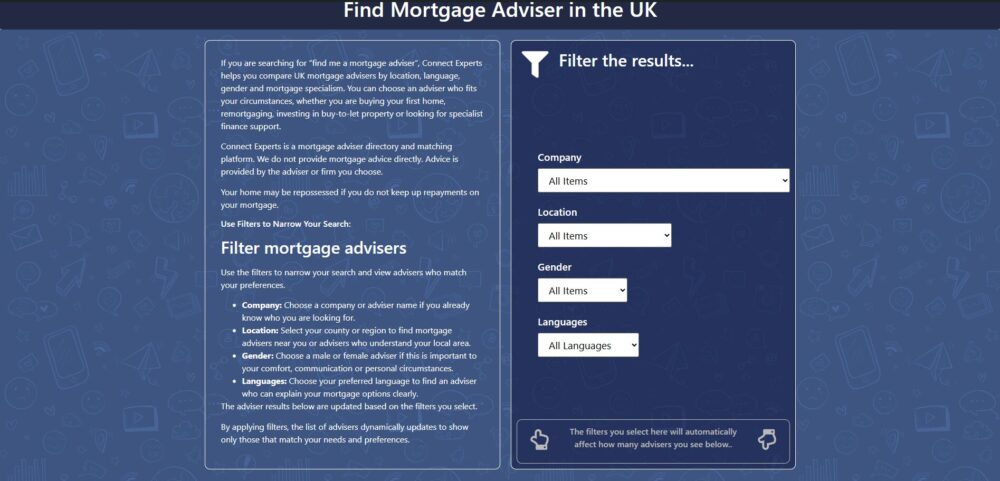
If you want to compare advisers, you can use Connect Experts to find remortgage mortgage brokers by location, language and mortgage type.
Protection Should Also Be Reviewed
A remortgage is a useful time to review protection.
Your mortgage balance, monthly payment, term or household needs may have changed. If the mortgage is larger, longer or structured differently, your cover may need to be reviewed too.
This may include life cover, critical illness cover, income protection, buildings insurance or contents insurance.
You can read more about mortgage protection insurance and why it may matter when reviewing your mortgage.
A Remortgage Is a Decision About Control
A mortgage rate ending is not only a deadline.
It is a decision point.
You can wait for the lender’s next rate. You can accept a product transfer. You can compare the wider market. You can review your term, payment structure, borrowing needs and long-term plans.
The practical task is to secure a suitable mortgage deal.
The deeper task is to regain control before the decision is made for you.
If your current mortgage rate is coming to an end, you can search for mortgage rate ending advisers who can help you review your options before your next payment change.
FAQs: Secure a Remortgage
What does it mean to secure a remortgage?
It means arranging a new mortgage deal on your current property before, or shortly after, your existing deal ends. This may involve moving to a new lender or staying with your current lender through a product transfer.
How early should I look at a remortgage?
Many homeowners review their mortgage several months before their current deal ends. This gives time to compare rates, check fees, prepare documents and avoid a rushed decision.
Is a product transfer the same as a remortgage?
No. A product transfer usually means staying with your current lender and switching to a new product. A remortgage usually means moving your mortgage to a new lender.
Will lenders check my income again?
If you move to a new lender, full affordability checks will usually apply. If you stay with your current lender through a product transfer, the process may be simpler. This depends on lender rules and your circumstances.
Can I borrow more when I remortgage?
You may be able to borrow more if you have enough equity and can meet lender affordability rules. The lender will also consider why you want the extra borrowing.
Can I remortgage if my credit file has changed?
Possibly. Some lenders may still consider your application, depending on the type, date and severity of the credit issue. Advice can be useful before applying.
What costs should I check before remortgaging?
Check arrangement fees, valuation fees, legal fees, early repayment charges, exit fees and any broker fee. You should compare the total cost, not just the interest rate.
What happens if I do nothing when my deal ends?
Your lender may move you onto its Standard Variable Rate. This may increase your monthly payment. Reviewing your options before the deal ends can help you avoid a rushed decision.