

Do I Need House Insurance for a Mortgage?
In a Word
Yes, you usually need house insurance for a mortgage.
More precisely, most mortgage lenders require buildings insurance before the mortgage completes. This protects the property’s structure, including the walls, roof, floors, and permanent fixtures and fittings.
Buildings insurance protects the lender because the property is the security for the loan. It also protects you from large repair or rebuild costs if the home is damaged by fire, flood, storm, escape of water, theft, vandalism, or another insured event.
Contents insurance is different. It protects your belongings inside the home. Lenders do not usually require contents insurance, but many homeowners choose it because replacing furniture, clothing, appliances, and personal items can be expensive.
House insurance is not just paperwork. It is the quiet agreement that a home should be protected before life tests it.
Do You Need House Insurance for a Mortgage?
If you are buying a property with a mortgage, your lender will usually expect buildings insurance to be in place before completion.
The reason is practical. A mortgage is secured against the property. If the property is badly damaged and there is no cover, both you and the lender face risk.
Buildings insurance helps protect the physical structure of the home. It can cover the cost of repair or rebuilding after an insured event, subject to the policy terms.
This does not mean every type of house insurance is compulsory. The lender is usually concerned with buildings insurance, not contents insurance.
You can read more about property cover on our Buildings and Contents Insurance page.
Is House Insurance a Legal Requirement?
House insurance is not usually a legal requirement in the UK.
However, if you are buying with a mortgage, buildings insurance is normally a condition of the mortgage offer. That makes it a contractual requirement between you and the lender.
This is an important distinction.
The law may not force you to insure your home. Yet your mortgage lender may require it before they release funds.
MoneyHelper explains that buildings insurance is not legally required, but mortgage borrowers are usually contractually obliged to have it. This supports the same practical point: the cover protects the property used as mortgage security.
What Type of Insurance Does a Mortgage Lender Require?
A mortgage lender will usually require buildings insurance.
Buildings insurance can protect:
- Walls
- Roof
- Floors
- Windows
- Doors
- Ceilings
- Built-in kitchens
- Built-in bathrooms
- Permanent fixtures
- Pipes, cables, and drains
- Garages, sheds, and outbuildings are included
- Professional fees and debris removal, when included
The exact cover depends on the policy. You should always check the policy wording before relying on it.
A lender may ask to see evidence that the policy is active. They may want confirmation of the property address, start date, insurer, rebuild sum insured, and policy type.
When Should Buildings Insurance Start?
Buildings insurance should usually start from exchange of contracts.
This is because the buyer may become responsible for the property from exchange, even though completion happens later.
In simple terms, exchange is the point where the purchase becomes legally binding. Completion is when the money is transferred and you get the keys.
That gap matters.
If the property is damaged between exchange and completion, you may still be expected to complete the purchase. Buildings insurance can help protect you during that period.
Your solicitor or lender may ask for proof of cover before completion.
If you are buying your first home, our First-Time Buyer Mortgage guide may also help you understand the wider buying process.
What Does Buildings Insurance Usually Cover?
Buildings insurance is designed to cover the property’s structure.
It may include damage caused by:
- Fire
- Flood
- Storm
- Escape of water
- Theft or attempted theft
- Vandalism
- Subsidence, where included
- Falling trees
- Vehicle impact
- Accidental damage, if selected
Some policies may also include alternative accommodation if the property becomes uninhabitable after an insured event.
However, policies vary. Some cover will be standard, while other features may be optional extras.
You should check excesses, exclusions, limits, unoccupied property rules, and maintenance conditions.
The cheapest policy is not always the safest policy. A low premium can sometimes mean lower limits, wider exclusions, or weaker claim support.
Buildings Insurance Is Not the Same as Contents Insurance
Buildings insurance covers the property itself.
Contents insurance covers the belongings inside it.
A simple way to separate them is this: if you could take the item with you when moving home, it is usually contents.
Contents insurance may protect:
- Sofas
- Beds
- Tables
- Clothing
- Televisions
- Laptops
- Mobile phones
- Jewellery
- Watches
- Kitchen appliances that are not built in
- Carpets, curtains, and blinds
- Bicycles and garden furniture, where included
Mortgage lenders do not usually require contents insurance. However, it can still be useful.
A fire, flood, or burglary can damage more than the structure. It can also affect the items that make the property liveable.
How Much Buildings Insurance Do You Need?
Buildings insurance should usually be based on the rebuild cost, not the property’s market value.
This is one of the most important technical points.
The rebuild cost is the estimated cost of rebuilding the property from scratch. It may include labour, materials, demolition, site clearance, professional fees, and other reinstatement costs.
The market value is what someone may pay to buy the property.
These figures are not the same.
A property may be worth £450,000 on the open market, but the rebuild cost may be lower or higher. It depends on the size, construction, location, materials, and property type.
The Association of British Insurers explains that buildings insurance should be based on the home’s rebuild cost, not its market value. You can also use the ABI and BCIS rebuild calculator as a starting point: ABI rebuild cost guidance.
Why Underinsurance Matters
Underinsurance happens when your cover is too low.
For buildings insurance, this can mean the rebuild cost has been underestimated. If a serious claim happens, the insurer may not pay the full amount needed to rebuild or repair the property.
This can leave the homeowner with a shortfall.
Underinsurance can happen when:
- The rebuild cost is estimated
- Renovations are not reflected
- Extensions are not added to the policy
- Outbuildings are missed
- A listed property is treated like a standard home
- Building costs rise after the policy starts
- The policy is renewed without review
A policy should not only exist. It should be accurate.
What If You Own a Leasehold Flat?
Leasehold flats can work differently.
In many cases, the freeholder, landlord, or managing agent arranges buildings insurance for the whole block. The cost may be included within the service charge.
However, you should not assume this without checking.
If you are buying a leasehold flat, ask your solicitor to confirm:
- Who arranges the buildings insurance
- Whether the building is insured correctly
- Whether your lender accepts the arrangement
- What parts of the flat are covered
- Whether communal areas are included
- Whether improvements inside your flat are covered
- Whether you need your own contents insurance
You may not need to arrange the building policy yourself. However, you may still need contents insurance for your own belongings.
What If You Are Remortgaging?
If you are remortgaging, the new lender may ask you to confirm that buildings insurance is in place.
A remortgage is also a useful time to review your cover.
Your property may have changed since the policy was first arranged. You may have added an extension, converted a loft, installed a new kitchen, or changed how the property is used.
The rebuild cost may also have changed.
You can read more about switching or reviewing your mortgage on our Remortgage page.
What If You Are Moving Home?
Moving home creates two insurance questions.
First, you need to check when cover ends on your existing property. Second, you need to arrange buildings insurance for the new property from the right date.
For many buyers, the key date is exchange of contracts.
If there is a gap between exchange and completion, speak to your solicitor, lender, and insurer. Make sure the start date reflects the property’s legal responsibility.
Our Moving Home Mortgages guide explains more about the mortgage side of moving.
Can You Choose Your Own Insurance Provider?
Yes, you can usually choose your own buildings insurance provider.
Your lender may offer insurance, but you are not usually required to use the lender’s own policy.
The important point is that the cover must meet the lender’s requirements.
Before choosing a policy, check:
- The policy start date
- The rebuild sum insured
- The insured property address
- The events covered
- The excess
- Any exclusions
- Unoccupied property rules
- Flood or subsidence terms
- Alternative accommodation cover
- Claims support
- Whether your lender needs to be noted
Your adviser, solicitor, lender, or insurer can explain what evidence may be needed before completion.
What Happens If You Do Not Have Buildings Insurance?
If you do not have buildings insurance when your lender requires it, your mortgage completion could be delayed.
If the mortgage has already completed and the policy lapses, you may breach the mortgage conditions.
If the property is then damaged, you may have to pay repair or rebuild costs yourself.
In serious cases, the property could become uninhabitable. Without suitable cover, that could create financial pressure at the worst possible time.
Some mortgage agreements may allow the lender to arrange cover if you fail to maintain it. However, this may be more expensive and may not offer the cover you would have chosen yourself.
Special Property Types Need Extra Care
Some properties need a more detailed insurance review.
This may include:
- Listed buildings
- Thatched homes
- Non-standard construction
- Older properties
- High-value homes
- Homes in flood-risk areas
- Properties with subsidence history
- Homes with large outbuildings
- Properties used partly for business
- Rental properties
For these homes, a standard online estimate may not be enough.
A professional rebuild valuation may be useful, especially where the property is unusual, extended, listed, or difficult to rebuild.
House Insurance, Mortgage Protection, and Life Cover Are Different
It is easy to group insurance products together. However, each one has a different job.
Buildings insurance protects the property structure.
Contents insurance protects belongings inside the home.
Mortgage protection insurance may help cover mortgage payments if illness, accident, unemployment, or death affects the household, depending on the policy.
Life cover may pay a lump sum if the insured person dies during the policy term.
A lender usually requires buildings insurance. Other protection products depend on personal needs, income, family responsibilities, savings, and risk.
For wider mortgage-related protection, visit our Mortgage Protection Insurance page.
Quick Checklist Before Completion
Before your mortgage completes, check:
- Does your lender require buildings insurance?
- Does the policy start from exchange of contracts?
- Is the property address correct?
- Is the rebuild cost accurate?
- Does the policy meet the lender’s requirements?
- Are flood, storm, fire, theft, and escape of water covered?
- Are exclusions clear?
- Is the excess affordable?
- Does the policy cover alternative accommodation?
- Have you checked leasehold insurance arrangements?
- Do you also need contents insurance?
- Have you saved proof of cover for your solicitor or lender?
This checklist is simple, but it matters.
A mortgage gets you into the home. Insurance helps protect what the mortgage is secured against.
How Connect Mortgages Can Help
House insurance should not be treated as a box-ticking exercise.
The right cover should reflect the property, the mortgage, the lender’s requirements, and the person who will live there.
Connect Mortgages can help you understand how buildings insurance fits into your wider mortgage journey. We can also help you think about related protection needs, where relevant.
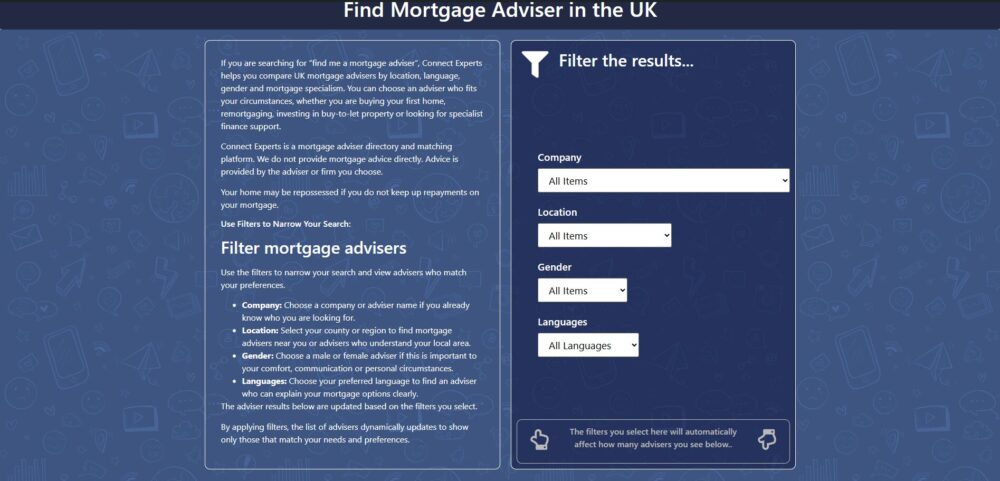
If you want to compare adviser options, you can use Connect Experts to find mortgage advisers who can discuss your mortgage and protection needs.
FAQs
Do I need house insurance for a mortgage?
Yes, most mortgage lenders require buildings insurance before completion. This protects the property used as security for the mortgage.
Is house insurance legally required?
No, buildings insurance is not usually a legal requirement. However, it is normally a mortgage condition if you are borrowing to buy the property.
Do I need buildings insurance or contents insurance?
Your lender will usually require buildings insurance. Contents insurance is usually optional, but it protects your personal belongings.
When should buildings insurance start?
Buildings insurance should usually start from exchange of contracts. This is when the buyer may become responsible for the property.
Can I choose my own buildings insurance provider?
Yes, you can usually choose your own provider. The policy must meet the lender’s requirements.
Is rebuild cost the same as market value?
No. Rebuild cost is the cost of rebuilding the property. Market value is what the property may sell for.
Do I need buildings insurance for a leasehold flat?
The freeholder or managing agent often arranges buildings insurance for the whole block. However, you should check the lease, service charge, and lender requirements.
What happens if my buildings insurance lapses?
You may breach your mortgage conditions. You may also face large repair or rebuild costs if the property is damaged.
Does buildings insurance cover my belongings?
No. Buildings insurance covers the structure. Contents insurance covers belongings inside the home.
Should I review buildings insurance when remortgaging?
Yes. A remortgage is a good time to check the rebuild cost, property changes, policy limits, and lender requirements.