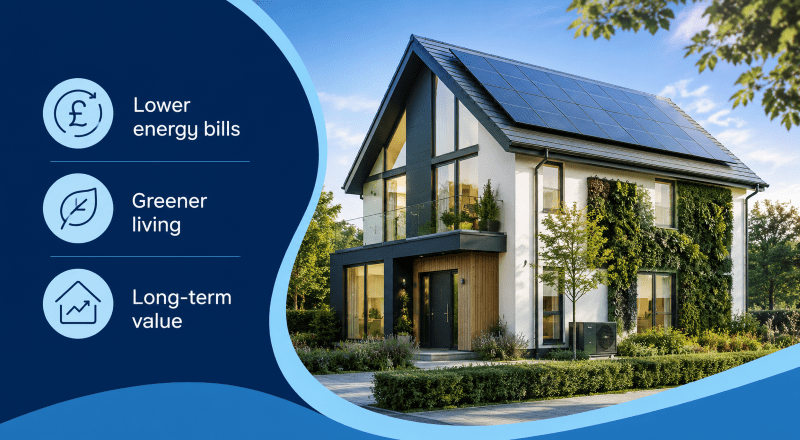
Why Eco-Friendly Homes are the Future of Living: Eco-friendly homes are becoming more important because they can reduce energy use, improve comfort, support long-term property value and influence mortgage conversations. A greener home is not only about solar panels. It is about insulation, heating, ventilation, water use, materials, EPC ratings and the cost of living inside the property.
A home is never just a structure.
It is a place where energy is used every day. Heat is kept or lost. Water is saved or wasted. Materials either last well or create future problems. The future of living is not only about how a home looks. It is about how well it performs.
That is why eco-friendly homes matter.
They bring together practical design, lower running costs and a more thoughtful way of owning property. In 2023, this became more important as energy bills, EPC ratings, green finance and long-term housing standards became part of the wider property conversation.
For buyers, homeowners and landlords, the question is no longer just “Can I afford the property?” It is also “Can I afford to run it, maintain it and improve it?”
What is an Eco-Friendly Home?
An eco-friendly home is designed or improved to use less energy, reduce waste and support healthier living.
This can include:
- Better loft, wall and floor insulation
- Double or triple glazing
- Efficient heating systems
- Solar panels or low-carbon technology
- Smart heating controls
- Low-energy lighting and appliances
- Water-saving fixtures
- Sustainable or recycled materials
- Good ventilation and moisture control
The key point is performance.
An eco-friendly home should work better in real life. It should stay warmer in winter, manage heat better in summer and use energy more carefully.
Why EPC Ratings Matter
An Energy Performance Certificate, known as an EPC, gives a property an energy efficiency rating from A to G.
A is the most efficient. G is the least efficient.
The EPC rating is based on features such as heating systems, insulation, windows, lighting and building materials. This matters because buyers, lenders and homeowners can use the EPC as a guide to a property’s efficiency.
The Office for National Statistics reported that EPC data uses information about a building’s energy features, including materials, heating systems and insulation. Its 2023 analysis showed that the median score in England was 68, which is equivalent to EPC band D.
You can read the official ONS EPC analysis here: energy efficiency of housing in England and Wales.
EPC ratings are not perfect. They do not always show every recent improvement. However, they give a useful starting point when comparing homes.
Why Eco-Friendly Homes Are Becoming More Valuable
Eco-friendly homes are gaining attention because they answer practical problems.
They may help reduce energy waste. They may support lower bills. They may improve comfort. They may also make a property more attractive to future buyers who care about running costs.
This is where philosophy and practicality meet.
A home should not simply shelter us. It should work with us. A poorly insulated property can quietly drain a household’s money every month. A better-performing home gives more control.
This does not mean every buyer must find a perfect green home. Many properties will need gradual improvement. The point is to understand what can be improved and how those improvements may affect long-term living costs.
The Technical Features That Make A Home Greener
A greener home is built in layers. One feature alone rarely solves everything.
Insulation
Insulation is often the foundation of an energy-efficient home.
Good insulation helps reduce heat loss through roofs, walls and floors. This may lower heating demand and make the home more comfortable.
Key areas include:
- Loft insulation
- Cavity wall insulation
- Solid wall insulation
- Floor insulation
- Draught reduction around doors and windows
Poor insulation means heat escapes faster. The heating system then has to work harder.
Windows And Doors
Glazing can have a major effect on heat retention.
Double glazing and triple glazing help reduce heat loss. Well-fitted doors can also reduce draughts. This is important because small gaps can make a home feel colder, even when the heating is on.
Heating Systems
Efficient heating is central to an eco-friendly home.
This may include a modern boiler, a heat pump, zoned heating, underfloor heating or smart heating controls. The best option depends on the property type, insulation level and household needs.
A heating system should not be considered alone. It should be reviewed alongside insulation, ventilation and hot water use.
Ventilation
A greener home still needs to breathe.
Better insulation and airtight construction can improve energy efficiency, but ventilation must be handled properly. Poor ventilation can lead to condensation, damp and mould.
A good eco-home balances warmth with air quality.
Solar Panels And Renewable Technology
Solar panels can help generate electricity from daylight. Battery storage may also help some households use more of the energy they generate.
Renewable technology can be useful, but it should be considered carefully. Roof direction, shading, installation cost, usage patterns and payback time all matter.
Water Efficiency
Eco-friendly living is not only about electricity and gas.
Water-saving taps, efficient showers, dual-flush toilets and rainwater collection can reduce water use. These features may seem small, but they support a more efficient home.
Materials
Sustainable materials can reduce environmental impact and improve indoor air quality.
This may include recycled materials, responsibly sourced timber, low-VOC paints and durable products that do not need replacing quickly.
A greener home is not only about what is installed. It is also about what lasts.
How Eco-Friendly Homes Connect To Mortgages
Eco-friendly homes are becoming more relevant to mortgage conversations.
The FCA said in April 2023 that green mortgages typically refer to products that offer an incentive to buy an energy-efficient property or to improve an existing property. Incentives may include a fixed-rate discount or cashback after improvements are completed.
You can read the FCA’s 2023 view here: The FCA’s view of green mortgages.
This does not mean every borrower will qualify for a green mortgage. Criteria vary by lender. Some may focus on EPC ratings. Others may support specific improvements.
If you are buying a home to live in, our Residential Mortgage page explains how to review mortgage options.
For first-time buyers, energy efficiency can be factored into the broader budget. Deposit, mortgage payments, bills, insurance and future maintenance all need to be considered. Our First-Time Buyer Mortgage page explains the wider buying process.
Can You Remortgage To Improve Energy Efficiency?
Some homeowners review their mortgages when they want to improve their properties.
This may include upgrades such as insulation, windows, heating systems or solar panels. The right route depends on equity, affordability, current mortgage terms and any early repayment charges.
A remortgage may be suitable for some homeowners. Others may need to compare different options before making a decision.
You can read more on our Remortgage page.
In 2023, GOV.UK confirmed funding for green finance projects aimed at helping homeowners improve energy efficiency. This included products linked to mortgages, heat pumps and energy-efficient upgrades.
You can read the GOV.UK announcement here: mortgage rate cut for energy-efficient homes under government-backed trials.
Could a Second-Charge Mortgage Help Fund Eco Improvements?
Some homeowners want to keep their current mortgage but still raise funds for home improvements.
A second charge mortgage may be considered in this situation. It is a separate loan secured against the home and runs alongside the existing mortgage.
This may be relevant if the current mortgage rate is competitive, or if remortgaging would trigger early repayment charges.
However, it is still secured borrowing. Affordability, equity, costs and repayment plans must be reviewed carefully.
Our Second Charge Mortgages page explains how this type of borrowing works.
Your home may be repossessed if you do not keep up repayments on your mortgage or any loan secured on it.
How Buyers Can Assess An Eco-Friendly Property
A buyer does not need to be an engineer to ask better questions.
Before buying, check:
- The current EPC rating
- The recommended EPC improvements
- Heating system age and type
- Insulation in the loft, walls and floors
- Window and door quality
- Signs of damp, condensation or poor ventilation
- Solar panel ownership, lease terms or warranties
- Running cost estimates
- Maintenance records for installed systems
The aim is not to find a perfect home. The aim is to understand what you are buying.
A lower EPC rating does not always mean a property should be avoided. It may mean the property needs planned improvements. That could affect budget, mortgage planning and future resale appeal.
Budgeting For An Eco-Friendly Home
Eco-friendly homes should be reviewed with the full cost of ownership in mind.
That means looking beyond the purchase price.
Consider:
- Mortgage repayments
- Energy bills
- Upgrade costs
- Maintenance costs
- Insurance
- Survey findings
- Long-term property plans
Our Residential Affordability Calculator can help you start thinking about affordability before you apply.
The Energy Saving Trust also provides practical guidance on reducing energy use, improving heating, reducing heat loss and using renewable technology.
You can read its guidance here: Energy at home.
Why Eco-Friendly Homes Are The Future Of Living
Eco-friendly homes are the future because they answer one of the most practical questions in property.
How well does the home serve the people who live in it?
A property that wastes less energy can be more comfortable. A home with better insulation may be easier to heat. A home with considered materials may feel healthier. A home with a stronger EPC rating may appeal to future buyers and lenders.
This is not about chasing trends. It is about building and buying homes that make more sense.
The future of living will not be defined only by size, location or decoration. It will also be defined by performance.
The best homes will not simply look good on the day of purchase. They will work well over time.
Speak With A Mortgage Adviser
If you are buying, remortgaging or improving a property, it may help to speak with a mortgage adviser before making decisions.
Connect Mortgages can help you understand the mortgage options that may fit your circumstances.
If you want to compare advisers by location, language or mortgage type, you can use Connect Experts.
FAQs: Why Eco-Friendly Homes Are The Future Of Living
What makes a home eco-friendly?
A home is eco-friendly when it is designed or improved to use less energy, reduce waste and support healthier living. This may include insulation, efficient heating, solar panels, water-saving fixtures and sustainable materials.
Why does an EPC rating matter?
An EPC rating gives an indication of a property’s energy efficiency. It can help buyers and homeowners understand likely performance and possible improvements.
Are eco-friendly homes more expensive to buy?
Some eco-friendly homes may cost more because they include better insulation, modern heating or renewable technology. However, running costs, comfort and long-term value should also be considered.
Can I get a mortgage for an eco-friendly home?
Yes, standard mortgage options may be available for eco-friendly homes. Some lenders may also offer green mortgage incentives, but criteria vary.
Can I borrow money to improve my home’s energy efficiency?
Some homeowners may consider remortgaging or a second charge mortgage to fund improvements. The right option depends on affordability, equity, current mortgage terms and the cost of the planned work.
Are solar panels enough to make a home eco-friendly?
No. Solar panels may help, but an eco-friendly home should also consider insulation, heating, ventilation, water use and materials.
Should first-time buyers care about energy efficiency?
Yes. First-time buyers should consider energy efficiency because it may affect running costs, comfort and future maintenance plans.
Is an older home always less eco-friendly?
Not always. Older homes can often be improved with insulation, better heating, draught reduction and careful ventilation. The cost and suitability of upgrades should be reviewed before work starts.