
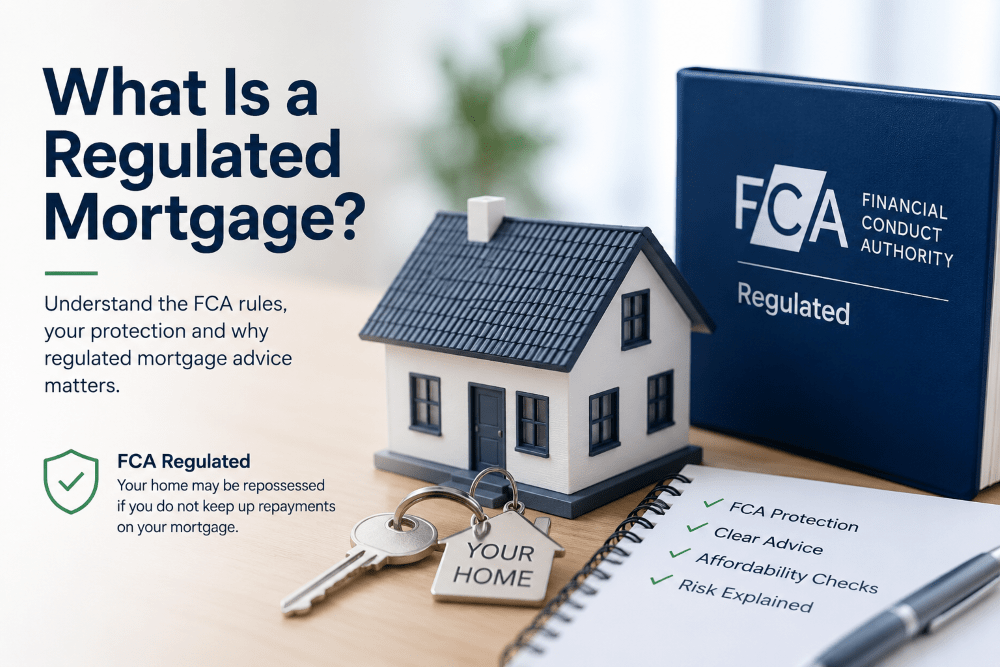
What Is a Regulated Mortgage? A regulated mortgage is one that falls under the Financial Conduct Authority’s rules.
In simple terms, it usually applies when an individual borrows money secured against a property used as a home. The rules exist to protect consumers, improve advice standards, and make sure risks are explained before someone commits to a mortgage.
What Is a Regulated Mortgage at a Glace?
A regulated mortgage is usually a loan secured against residential property in which at least 40% of the land is used, or intended to be used, as a dwelling.
This can include a mortgage used to buy your home, a remortgage, or borrowing against your home for personal reasons.
The key point is protection. Regulated mortgage advice must consider your needs, affordability, circumstances and the risks involved.
Your home may be repossessed if you do not keep up repayments on your mortgage or any loan secured on it.
Source-Backed Definition of a Regulated Mortgage
The FCA Handbook explains that a regulated mortgage contract must meet certain conditions when it is entered into.
These include:
- The lender provides credit to an individual or trustees.
- The borrower’s repayment obligation is secured by a mortgage on UK land.
- At least 40% of that land is used, or intended to be used, as or in connection with a dwelling.
Source: FCA Handbook: What is a regulated mortgage contract?
This means the definition depends on the borrower, the security, the property use and the purpose of the borrowing.
What Makes a Mortgage Regulated?
A mortgage may be regulated when it meets the FCA’s definition of a regulated mortgage contract.
In everyday terms, this usually means the mortgage is linked to a home rather than purely business or investment borrowing.
A regulated mortgage may apply when:
- You are buying a property to live in.
- You are remortgaging your home.
- You are borrowing against your home for personal use.
- A close family member will live in the property.
- The property meets the 40% dwelling use rule.
- The borrowing is secured by a mortgage on UK land.
A regulated mortgage is not limited to a first charge mortgage. FCA guidance states that a regulated mortgage can be secured by a first, second, or subsequent mortgage.
If you are considering additional borrowing against your property, our guide to second charge mortgages may help you understand how secured borrowing works.
Why Mortgage Regulation Matters
Mortgage regulation matters because a mortgage is a major financial commitment.
FCA rules help make sure borrowers receive suitable advice, clear information and fair treatment. They also support better checks before a mortgage is recommended or arranged.
For borrowers, regulated mortgage advice can help with:
- Understanding whether the mortgage is affordable.
- Comparing suitable mortgage options.
- Reviewing income, outgoings and credit history.
- Explaining risks before an application is made.
- Understanding fees, charges and repayment terms.
- Knowing where to complain if something goes wrong.
This does not remove every risk. However, it gives borrowers a clearer advice process before they decide.
Regulated Mortgage Examples
A regulated mortgage may include:
- A mortgage used to buy your main home.
- A remortgage on your current home.
- A second charge mortgage used for personal borrowing.
- A mortgage where a close family member will live in the property.
- Some later life or lifetime mortgages.
- Some regulated bridging loans linked to residential property.
If your situation involves credit issues, a regulated mortgage may still be possible. You can read more about this on our adverse credit mortgage page.
Mortgages That May Not Be Regulated
Not every property loan is regulated by the FCA.
Some mortgages and loans may fall outside regulated mortgage rules. This often depends on the borrower, property use and lending purpose.
Examples may include:
- Many buy-to-let mortgages.
- Mortgages taken by limited companies.
- Some commercial mortgages.
- Some business borrowing secured against property.
- Some investment property loans.
- Loans where the property does not meet the dwelling use requirement.
The FCA says buy-to-let loans and business mortgages are mostly not regulated by the FCA. However, some consumer buy-to-let cases may sit under a separate regime.
If you are unsure whether your case is regulated, speak with a qualified mortgage adviser before applying.
Regulated Mortgage Advice
Regulated mortgage advice must be provided by a suitably qualified adviser or authorised firm.
MoneyHelper says mortgage advisers must have a recognised mortgage advice qualification, such as CeMAP, and consumers should check that the firm is regulated by using the FCA register.
You can also use the FCA Firm Checker to check whether a firm is authorised and has permission to provide the services you need.
Connect Mortgages is a trading style of Connect IFA Ltd, which is authorised and regulated by the Financial Conduct Authority. You can also read our regulatory disclosure for more information.
How Regulated Mortgage Advice Helps You
A regulated mortgage adviser does more than search for a mortgage rate.
They review your circumstances before making a recommendation. This may include your income, commitments, deposit, credit profile, property details and future plans.
This can be useful if:
- You are buying your first home.
- You are moving home.
- You are remortgaging.
- You are self-employed.
- Your income is complex.
- You have adverse credit.
- You want to borrow more against your home.
- You need to understand protection in relation to your mortgage.
If you are buying your first property, visit our first-time buyer mortgage page.
If you want to understand wider home finance options, visit our residential mortgage page.
Regulated Mortgages and Protection
A regulated mortgage helps you buy, remortgage or borrow against a home. However, it does not protect your income, family, or repayments if your circumstances change.
That is why many mortgage conversations also include protection.
Protection may include life insurance, critical illness cover, income protection, buildings insurance or contents insurance. The right cover depends on your needs, budget and personal circumstances.
You can learn more about this through our mortgage protection and life insurance page.
How to Check Before You Apply
Before applying for a regulated mortgage, it may help to check the following:
- Is the firm authorised by the FCA?
- Does the adviser have the right mortgage advice permissions?
- Is the borrowing for personal residential use?
- Will at least 40% of the property be used as a dwelling?
- Is the mortgage secured against UK land?
- Are you borrowing as an individual or trustee?
- Are any fees clearly explained?
- Have the risks been discussed before you proceed?
You can also use our mortgage calculators to estimate possible borrowing and monthly payments before speaking with an adviser.
Find a Regulated Mortgage Adviser
Understanding whether a mortgage is regulated can be difficult without advice. The rules depend on the borrower, property, security and purpose of the loan.
Connect Mortgages can help you understand your options before you apply.
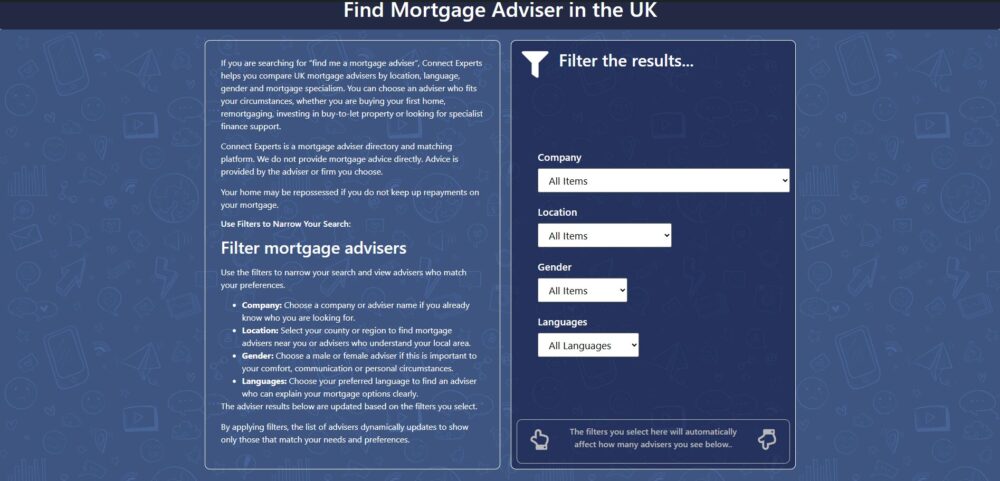
If you want to search by location, language or specialism, you can also use Connect Experts to find FCA-authorised mortgage advisers.
FAQs About Regulated Mortgages
What is a regulated mortgage?
A regulated mortgage is a mortgage that falls under FCA rules. It usually applies when an individual borrows money secured against residential property used as a home.
Is every residential mortgage regulated?
Many residential mortgages are regulated, but each case depends on the borrower, property use and loan structure. A mortgage adviser can confirm how the rules apply.
Are buy-to-let mortgages regulated?
Most buy-to-let mortgages are not regulated by the FCA. However, some consumer buy-to-let cases may be treated differently.
Can a second charge mortgage be regulated?
Yes. FCA guidance says a regulated mortgage can be secured by a first, second or subsequent mortgage.
Why does regulated mortgage advice matter?
Regulated advice helps make sure the recommendation considers your needs, affordability and circumstances. It also helps ensure key risks are explained clearly.
How can I check if a mortgage firm is authorised?
You can check a firm using the FCA Firm Checker. This helps confirm whether a firm is authorised and has relevant permissions.
Is Connect Mortgages authorised by the FCA?
Connect Mortgages is a trading style of Connect IFA Ltd, which is authorised and regulated by the Financial Conduct Authority. You can read the regulatory disclosure for more details.