First-Time Landlords’ Mortgage Advice: Becoming a landlord for the first time changes the way a mortgage is assessed.
A home is usually judged around personal affordability. A rental property is judged around rent, risk, property type, deposit, tax position and lender criteria.
This is why first-time landlords should not start with rates alone. The better starting point is understanding whether the property, rent and borrower profile fit lender expectations.
At Connect Mortgages, we help first-time landlords understand their mortgage options before they apply. This can reduce confusion, avoid unsuitable lender approaches and help you plan with clearer expectations.
Speak to Connect Mortgages
First-Time Landlords’ Mortgage Advice at a Glance
First-time landlords can get buy-to-let mortgages, but lender criteria vary.
Some lenders accept new landlords. Others prefer applicants with previous landlord experience or residential ownership.
Before applying, you should understand:
- How much deposit may be needed
- Whether the expected rent supports the loan
- How lenders assess rental income
- Whether personal or limited company ownership fits your plans
- What legal duties apply before letting
- How tax and ongoing costs affect profit
- Whether the property needs specialist lending, such as HMO finance
You can also use the Buy-to-Let Affordability Calculator to estimate whether the expected rent may support the borrowing.
What Is a First-Time Landlord?
A first-time landlord is someone letting a property for the first time.
This may include someone buying their first rental property. It may also include an accidental landlord who keeps their current home and rents it out after moving.
The mortgage route depends on your plan.
If you already have a residential mortgage and want to let the property, you usually need your lender’s permission. GOV.UK states that you must get permission from your mortgage lender if you have a mortgage on the property you want to rent out.
This may involve consent to let or switching to a buy-to-let mortgage.
For longer-term letting, a buy-to-let mortgage may be more suitable.
Can First-Time Landlords Get a Buy-to-Let Mortgage?
Yes, some first-time landlords can get buy-to-let mortgages.
However, lender criteria differ. A lender may review your deposit, credit history, personal income, expected rent, property type and landlord experience.
Some lenders may be comfortable with a new landlord. Others may prefer an applicant who already owns property or has landlord experience.
This is why the first question is not only “What is the rate?” It is also “Which lenders are likely to consider this case?”
A mortgage adviser can help check this before you apply.
How Lenders Assess First-Time Landlords
Buy-to-let lenders often place strong weight on rental income.
The lender will usually check whether the expected rent covers the mortgage payment by a set margin. This is often called rental coverage or a rental stress test.
The calculation may depend on:
- The loan amount
- The expected monthly rent
- The product term
- The lender’s stress rate
- The applicant’s tax position
- The ownership structure
- The property type
- The deposit size
A first-time landlord may also face closer checks because they have no letting history.
This does not mean a mortgage is impossible. It means preparation matters.
First-Time Landlord Mortgage Options
Not every first-time landlord needs the same mortgage route.
The right option depends on the property, the rental model and your long-term plan.
| Mortgage option |
When it may apply |
What to consider |
| Standard buy-to-let mortgage |
Renting one property to one household |
Rent, deposit, property type and lender criteria |
| Consent to let |
Letting your current home for a short period |
Permission comes from your existing lender |
| Buy-to-let remortgage |
Moving from residential use to rental use |
Useful when letting becomes long term |
| Limited company buy-to-let |
Buying through a company structure |
Tax, legal costs and lender choice need review |
| HMO mortgage |
Renting to several unrelated tenants |
Licensing, experience and criteria may be stricter |
| Portfolio landlord mortgage |
Planning to grow beyond one property |
Future borrowing may need wider portfolio checks |
If you are considering company ownership, read our Limited Company Buy-to-Let Mortgages guide.
If the property may be rented to several unrelated tenants, read our HMO Property guide.
Deposit and Rental Income
Buy-to-let mortgages usually need a larger deposit than residential mortgages.
The exact deposit depends on the lender, property, rent, loan size and borrower profile. Some property types may need a higher deposit.
This can include:
- HMOs
- Flats above commercial premises
- New-build flats
- Ex-local authority properties
- Limited company purchases
- Higher loan-to-value cases
- Applicants with credit issues
Rental income also matters. A property with weak rental income may limit borrowing, even with a strong deposit.
Before viewing properties, it helps to compare likely rent against possible mortgage costs.
Costs First-Time Landlords Should Plan For
A first-time landlord should not plan around the mortgage payment alone.
You may also need to budget for:
- Letting agent fees
- Repairs and maintenance
- Buildings insurance
- Landlord insurance
- Safety checks
- Void periods
- Service charges
- Ground rent, where applicable
- Accountancy or tax advice
- Licensing costs, where relevant
- Legal fees and mortgage fees
Landlords should also allow for months where rent is delayed or the property is empty.
You can read more about cover options on our Landlord Insurance page.
Tax and Ownership Structure
Rental income can be taxable.
GOV.UK explains that landlords must pay tax on profit from renting out property. Profit is calculated after rental income and allowable expenses or allowances are taken into account.
Mortgage interest relief has also changed for individual residential landlords. HMRC guidance explains that restrictions on finance cost relief apply to individual landlords.
This is why tax advice matters before choosing how to buy.
Some first-time landlords buy in their personal name. Others consider a limited company structure.
A limited company may suit some investors, but it is not automatically better. It can affect lender choice, rates, legal costs, accountancy work and future planning.
A mortgage adviser can explain lender options. A tax adviser can explain the tax position.
Legal Responsibilities Before Letting
A mortgage is only one part of becoming a landlord.
GOV.UK states that landlords must keep rented properties safe and free from health hazards. Landlords must also maintain gas and electrical equipment, provide an Energy Performance Certificate, protect deposits and check Right to Rent in England.
You may also need to consider:
- Gas safety checks
- Electrical safety checks
- Smoke alarms
- Carbon monoxide alarms
- Tenancy deposit protection
- Energy performance requirements
- Tenant rights
- Local licensing rules
- HMO licensing, where relevant
The Renters’ Rights Act has also changed how landlords let private properties in England. GOV.UK states these changes came into effect on 1 May 2026.
Because rules can change, landlords should check official guidance before letting a property.
Common First-Time Landlord Mistakes
Many first-time landlords make decisions in the wrong order.
Common mistakes include:
- Viewing properties before checking mortgage options
- Assuming residential mortgage rules still apply
- Forgetting to ask the current lender for permission
- Relying on optimistic rent figures
- Ignoring tax before choosing ownership structure
- Underestimating maintenance and void periods
- Applying to lenders who do not accept new landlords
- Treating an HMO like a standard buy-to-let
- Forgetting that some buy-to-let mortgages are not FCA-regulated
Most buy-to-let mortgages are not regulated by the Financial Conduct Authority. Your adviser will explain whether your case is regulated or unregulated.
When Advice Helps Most
First-time landlord mortgage advice helps before you commit to a property.
It can help you understand:
- Whether the rent is likely to support the mortgage
- Which lenders may consider first-time landlords
- Whether the deposit is realistic
- Whether the property type may cause issues
- Whether a limited company route may need review
- Whether the case may need specialist lending
- What documents lenders may request
- How the first property may affect future borrowing
This is especially important if the case involves an HMO, a limited company, an unusual property or a low rental yield.
Find a First-Time Landlord Mortgage Adviser
Connect Mortgages can help you review your buy-to-let mortgage options.
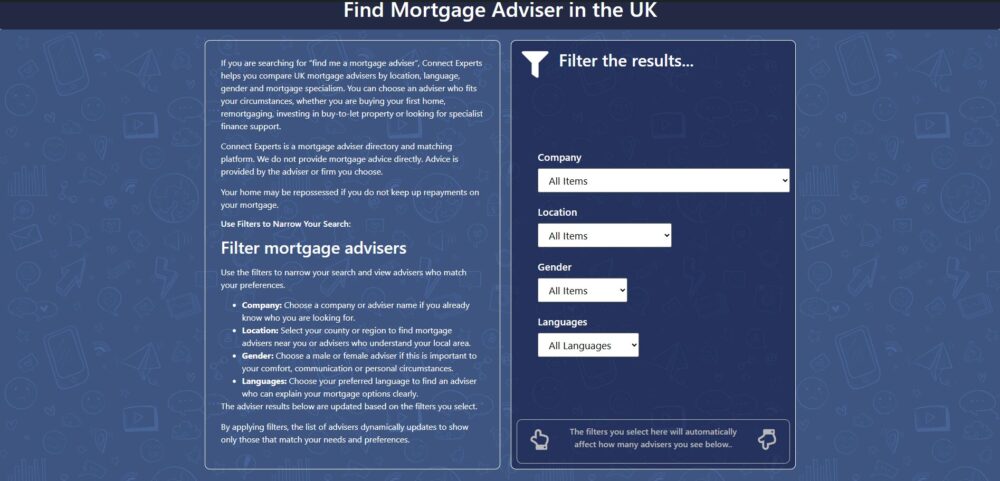
If you want to compare advisers by location, language or specialist area, you can also use Connect Experts.
The First-Time Landlord Mortgage Brokers page helps new landlords find advisers who understand buy-to-let criteria, rental income checks, deposits and ownership structure.
For broader landlord support, you can also compare Buy-to-Let Mortgage Brokers through Connect Experts.
This can be useful if you want to review adviser profiles before making contact.
First-Time Landlord Mortgage Checklist
Before applying, prepare the basics.
- Confirm whether you are buying or remortgaging
- Check if your current lender needs to give permission
- Estimate the expected monthly rent
- Review your deposit
- Check your credit file
- Consider whether the property may need specialist lending
- Decide whether personal or company ownership needs tax advice
- Budget for repairs, insurance and void periods
- Check landlord duties on GOV.UK
- Speak to a mortgage adviser before submitting an application
Speak to Connect Mortgages
Your first rental property should start with clear questions.
- Can the rent support the mortgage?
- Will lenders consider your profile?
- Does the property fit standard buy-to-let criteria?
- Do you need specialist advice before applying?
Connect Mortgages can help you understand your options before you take the next step.