
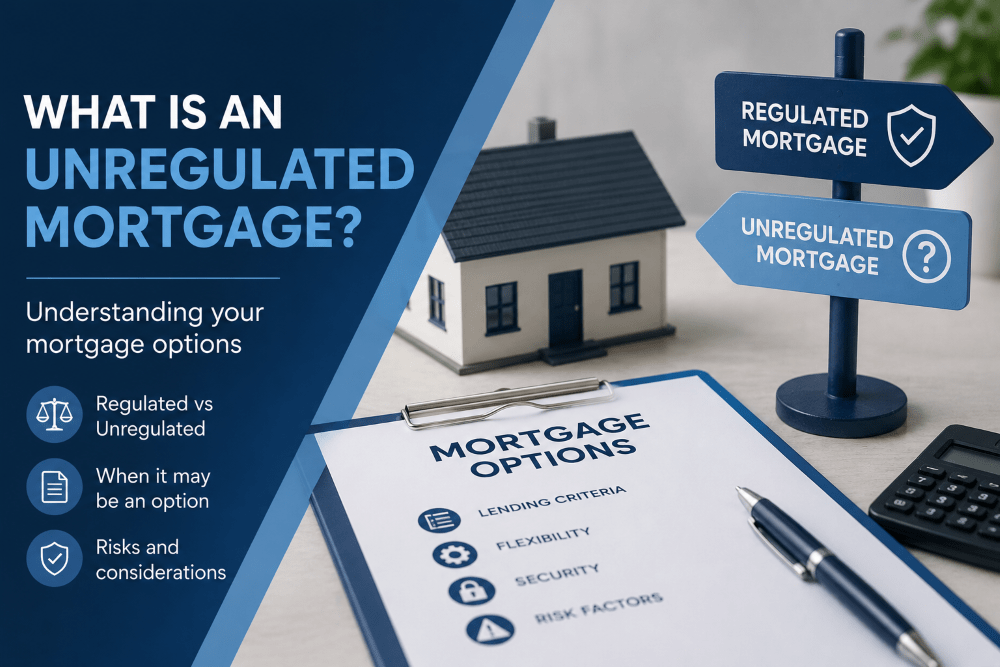
What is an Unregulated Mortgage? An unregulated mortgage is a property loan that does not fall under the same FCA mortgage rules as a regulated residential mortgage. It is often linked to business, investment, commercial or specialist property borrowing.
This does not automatically make the loan wrong or unsafe. However, it does mean the borrower may not receive the same protections afforded by many residential mortgage contracts.
Because the difference matters, the first question is not always “What can I borrow?” It is often “What type of mortgage am I entering into?”
What Is an Unregulated Mortgage in a Glance?
An unregulated mortgage is usually a mortgage or property loan that falls outside standard FCA residential mortgage regulation.
It may apply where borrowing is for business, investment, commercial property or certain buy-to-let purposes.
Common examples include some commercial mortgages, business buy-to-let mortgages, development finance and some bridging loans.
The main issue is protection. Regulated mortgage contracts have clearer FCA rules around advice, disclosure, affordability and conduct. Unregulated lending may give lenders more flexibility, but borrowers must understand the risks, costs, repayment plan and exit route.
If you are unsure, speak to Connect Mortgages before you apply.
What Is an Unregulated Mortgage?
An unregulated mortgage is a loan secured against property where the agreement does not fall under the usual FCA rules for regulated mortgage contracts.
The FCA Handbook explains that a regulated mortgage contract generally involves credit provided to an individual or trustees, secured by a mortgage on land, where at least 40% of that land is used, or intended to be used, as or in connection with a dwelling.
Source: FCA Handbook, PERG 4.4, “What is a regulated mortgage contract?”
If a property loan does not meet the conditions for a regulated mortgage contract, it may be unregulated. However, the position depends on the borrower, the security, the property use and the purpose of the loan.
That is why advice and classification matter from the start.
Why Does Regulation Matter?
Regulation affects how a mortgage is sold, assessed, documented and managed.
With a regulated mortgage contract, FCA mortgage conduct rules may apply. These rules can affect advice standards, affordability checks, disclosure, arrears handling and redress routes.
With an unregulated mortgage, the same mortgage conduct protections may not apply. The lender may have more freedom to assess the case, structure the loan and price the risk.
This can be helpful for experienced borrowers who need speed or flexibility. However, it can create more risk if the borrower does not fully understand the terms.
When Can a Mortgage Be Unregulated?
A mortgage may be unregulated where the borrowing is not mainly linked to a home used by the borrower or their close family.
It may also be unregulated where the borrower is acting for business or investment purposes.
Common examples include:
- Borrowing against commercial premises.
- Raising finance for business property.
- Funding a property development project.
- Buying or refinancing an investment property.
- Taking short-term finance for an auction purchase.
- Using a bridging loan for investment or commercial purposes.
- Borrowing through a limited company for property investment.
- Arranging finance against mixed-use or specialist property.
The final position depends on the full facts of the case.
Regulated vs Unregulated Mortgages
A regulated mortgage is usually linked to residential borrowing where the property is used, or intended to be used, as a dwelling by the borrower or connected people.
An unregulated mortgage is more likely to involve business, investment or commercial borrowing.
Key Differences
- Purpose: Regulated mortgages often relate to residential homes. Unregulated mortgages often relate to business, commercial or investment property.
- Protection: Regulated mortgages usually carry stronger FCA mortgage conduct protections.
- Assessment: Regulated lenders typically adhere to structured affordability rules. Unregulated lenders may focus more on security, value, borrower experience and exit strategy.
- Speed: Unregulated lending can sometimes move more quickly, especially for short-term or specialised cases.
- Cost: Unregulated lending may involve higher rates, fees or shorter terms.
- Risk: Borrowers may have fewer regulatory protections if the loan becomes unsuitable or unaffordable.
Is Buy-to-Let Regulated or Unregulated?
Buy-to-let can be more complex than many borrowers expect.
Some buy-to-let lending may sit outside standard residential mortgage regulation, especially where the borrower is acting as a landlord or property investor.
However, consumer buy-to-let has its own regulatory treatment. The FCA Handbook explains that certain consumer buy-to-let credit business is excluded from the Regulated Activities Order and regulated under the MCD Order.
Source: FCA Handbook, PERG 4.10B, “Regulation of buy-to-let lending.”
This means the answer depends on the borrower and the reason for the borrowing.
For example, a landlord buying through a limited company may be treated differently from someone who becomes a landlord by inheritance.
If your case involves rental property, you may also want to read about buy-to-let mortgages or limited company buy-to-let mortgages.
Are Bridging Loans Regulated or Unregulated?
A bridging loan can be regulated or unregulated.
A regulated bridging loan may apply where the security is your current home, future home or a property occupied by a close family member.
An unregulated bridging loan may apply where the finance is for investment, commercial, business or development purposes.
For example, a bridge used to complete quickly on an auction property for resale may be unregulated. A bridge used to buy a new main residence before selling your current home may be regulated.
The purpose, property and occupancy position matter.
You can read more in our guide to bridging loans.
Are Commercial Mortgages Unregulated?
Many commercial mortgages are not regulated by the FCA in the same way as residential mortgages.
This is because the property is usually used for business or investment purposes. Examples may include offices, shops, warehouses, industrial units, restaurants, care homes or mixed-use buildings.
A commercial mortgage may be used to buy, refinance or raise capital against business premises.
If the case is complex, you can also compare commercial mortgage brokers through Connect Experts.
Common Uses for Unregulated Mortgages
Unregulated mortgages are often used when standard residential mortgage rules do not fit the transaction.
They may support:
- Property investment.
- Business premises purchases.
- Commercial property refinance.
- Limited company buy-to-let borrowing.
- Semi-commercial property finance.
- Auction purchases.
- Property refurbishment.
- Development projects.
- Short-term bridging finance.
- Capital raising for business use.
For heavier building works, development finance may be more relevant than a standard mortgage.
What Are the Risks of an Unregulated Mortgage?
The main risk is reduced protection.
An unregulated mortgage may still be arranged professionally. However, the borrower should not assume the same protections apply as with a regulated residential mortgage.
Risks may include:
- Higher interest rates.
- Higher arrangement fees.
- Shorter repayment terms.
- Complex repayment structures.
- Strict default terms.
- Valuation risk.
- Exit strategy risk.
- Refinance risk.
- Fewer complaint or redress routes.
- Loss of property if repayments are not maintained.
Your property may be repossessed if you do not keep up repayments on your mortgage or any loan secured on it.
What Should You Check Before Taking an Unregulated Mortgage?
Before proceeding, check the following points carefully:
- Why the loan is classed as unregulated.
- Whether a regulated option is available.
- The total cost of borrowing.
- The interest rate and how interest is charged.
- The term and repayment deadline.
- Any exit fees or early repayment charges.
- The valuation basis.
- The legal fees and lender fees.
- The repayment plan.
- What happens if the exit strategy fails.
- Whether the loan fits your experience and risk appetite.
The exit strategy is especially important with short-term finance. If a sale or refinance does not happen on time, costs can rise quickly.
Why Advice Matters
An unregulated mortgage should not be chosen just because it is faster or more flexible.
The right advice should test the purpose, property, borrower profile, costs, risks and repayment route.
At Connect Mortgages, we can help you understand whether your case may need regulated or unregulated finance. We can also compare the route with other options, such as a second-charge mortgage, buy-to-let mortgage, commercial mortgage, or bridging loan.
Where helpful, you can also find a mortgage adviser by location, language or specialist area through Connect Experts.
Source Note
This guide is based on FCA Handbook guidance, including:
- FCA Handbook PERG 4.4, “What is a regulated mortgage contract?”
- FCA Handbook MCOB 1.6, “Distinguishing regulated mortgage contracts and regulated credit agreements.”
- FCA Handbook PERG 4.10B, “Regulation of buy-to-let lending.”
- FCA Handbook MCOB 11.6, “Responsible lending and financing.”
FCA guidance confirms that firms should take reasonable steps to establish whether a mortgage will be a regulated mortgage contract and therefore subject to MCOB.
Speak to Connect Mortgages
If you are considering an unregulated mortgage, speak to Connect Mortgages before you apply.
We can help you understand the type of finance involved, how the lender may assess the case and what risks you should consider.
Some forms of buy-to-let, commercial mortgage, bridging finance and business finance are not regulated by the Financial Conduct Authority.
Frequently Asked Questions
What is an unregulated mortgage?
An unregulated mortgage is a property loan that does not fall under the same FCA mortgage rules as a regulated residential mortgage. It is often used for business, investment or commercial property purposes.
Is an unregulated mortgage illegal?
No. An unregulated mortgage is not illegal by default. It simply means the loan does not fall under the same FCA mortgage regulation as many residential mortgage contracts.
Is an unregulated mortgage risky?
It can carry more risk because fewer standard mortgage protections may apply. The level of risk depends on the loan terms, borrower experience, property, repayment plan and exit strategy.
Are all bridging loans unregulated?
No. Some bridging loans are regulated, and some are unregulated. The difference often depends on whether the property is used as a home by the borrower or a close family member.
Are all buy-to-let mortgages unregulated?
No. Buy-to-let regulation depends on the borrower, property use and whether the borrower is acting as a consumer or for business purposes.
Are commercial mortgages regulated by the FCA?
Some forms of commercial borrowing are not regulated by the FCA in the same way as residential mortgages. This is why the loan purpose and borrower type must be checked before proceeding.
Can I complain about an unregulated mortgage?
Complaint rights may differ from a regulated mortgage. You should ask the adviser or lender what protections, complaint routes and redress options apply before you proceed.
Should I get advice before taking an unregulated mortgage?
Yes. Advice is important because the costs, risks and protections can differ from a regulated residential mortgage.