First Charge Bridging Loans | When the auction room fell silent, Sarah realised she had just secured the property she had been chasing for months. The problem was not the price. It was the deadline. Completion was required in less than four weeks. Her bank could not move quickly enough. That was when she turned to First Charge Bridging Loans, a solution designed for moments when speed, certainty, and flexibility matter most.
First Charge Bridging Loans are a form of short-term property finance used when traditional mortgages are too slow or unsuitable. They are commonly used by buyers, investors, and developers who need funds quickly and have a clear exit strategy.
What Are First Charge Bridging Loans
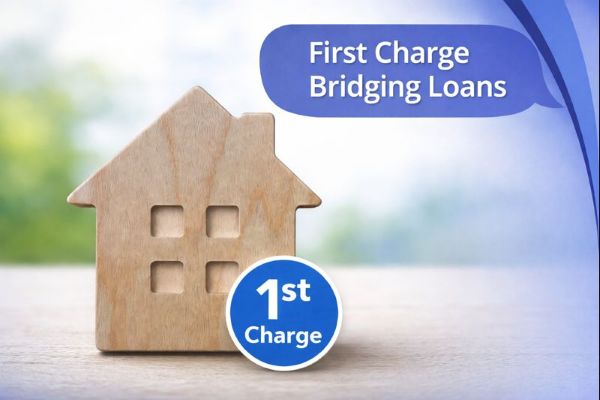
First Charge Bridging Loans are short-term loans secured against a property as the primary or first charge. This means the lender has first priority on the property if it must be sold.
These loans are typically arranged for periods ranging from a few months to twelve months. The focus is on the property’s value and how the loan will be repaid, rather than on long-term affordability.
First Charge Bridging Loans are often used alongside other bridging loans, making them a key part of short-term property finance planning.
The Difference Between First Charge and Second Charge Bridging Loans
The key difference between first-charge and second-charge bridging loans is the order in which lenders are repaid if a property is sold.
A first-charge bridging loan is secured against a property with no existing secured borrowing, or where any previous lending has been repaid. Because the lender is repaid first from the sale proceeds, the risk is lower. This often results in lower interest rates and fees than second charge lending.
A second charge bridging loan is secured on a property that already has a mortgage or another loan in place. If the property is sold, the existing first-charge lender is repaid before the second-charge lender. This increases the risk for the second lender, which usually leads to higher interest rates and costs. However, it allows borrowers to raise funds against available equity without refinancing their main mortgage.
When First Charge Bridging Loans Are Used
First Charge Bridging Loans are suitable for a wide range of time-sensitive situations.
Common uses include:
- Purchasing property at auction
- Completing quickly when a property chain breaks
- Buying before selling an existing property
- Funding refurbishment prior to a remortgage or sale
- Acquiring semi-commercial or commercial property
In some cases, borrowers may compare first-charge options with second-charge mortgages, depending on existing borrowing and property equity.
How First Charge Bridging Loans Work
The lender provides funds as a percentage of the property’s value. This is known as loan-to-value.
Interest is usually charged monthly and can often be rolled up, meaning no monthly payments are required during the loan term. Fees and interest are typically repaid when the loan exits.
An exit strategy is essential. This is usually one of the following:
- Sale of the property
- Remortgage onto a standard residential or commercial mortgage
- Refinancing onto a longer-term buy-to-let mortgage
Without a clear exit, a bridging loan may not be suitable.
Benefits of First Charge Bridging Loans
First Charge Bridging Loans offer several advantages in the right circumstances.
- Fast completion compared to traditional mortgages
- Flexible underwriting focused on the property
- Suitable for non-standard properties
- Useful where income or credit history is complex
These benefits make First Charge Bridging Loans a practical solution for experienced investors and buyers facing tight deadlines.
Important Risks and Considerations
First Charge Bridging Loans are short-term financial products and are not suitable for every borrower.
You should be aware that:
- Interest rates are higher than standard mortgages
- Fees can be significant if the loan runs longer than planned
- A delayed exit can increase overall borrowing costs
Your property may be repossessed if you do not keep up repayments on a mortgage or other loan secured on it.
Professional advice is essential before proceeding.
Why Use Connect Mortgages for First Charge Bridging Loans
Connect Mortgages provides access to a wide range of specialist lenders offering First Charge Bridging Loans across the UK.
We work with lenders who understand complex cases, time-sensitive purchases, and non-standard properties. Our advisers carefully assess your circumstances and structure the loan to align with your exit strategy.
If you are unsure whether a first-charge option is right for you, our team can discuss alternatives, such as remortgaging or structured short-term finance.
You can contact our team to discuss your options and receive clear guidance based on your situation.
Part of the Connect Group
Connect Mortgages is part of the Connect Group. Connect Experts and Connect for intermediaries are trading divisions of Connect IFA Ltd. This group structure provides access to a broad network of advisers, lenders, and specialist support.
Mortgage professionals looking to grow their business can Join Our Mortgage Network. Customers seeking regulated advice from experienced advisers can “Find Mortgage Advisers”.
First-charge bridging loans can be an effective solution when speed and flexibility are critical. They are best used with a clear plan, a realistic exit strategy, and expert advice.
When arranged correctly, they can help unlock opportunities that would otherwise be lost due to timing constraints. Speaking with an experienced adviser ensures the risks, costs, and alternatives are fully understood before proceeding.
Thank you for reading our “First Charge Bridging Loans | Connect Mortgages” publication. Stay “Connect“-ed for more updates soon!