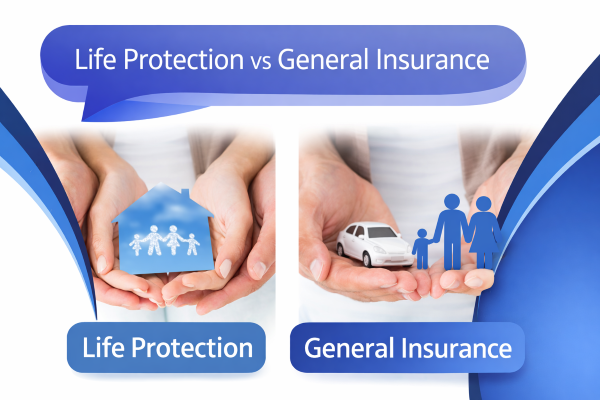
Life Protection vs General Insurance: What You Need to Know | Choosing the right insurance for your needs starts with understanding what each type of cover offers. In this article, we explain the key differences between life protection and general insurance, and how each can play a vital role in securing your home, income, and family.
What Is Life Protection?
Life protection, also known as life cover, is a type of insurance that pays out a lump sum to your loved ones if you pass away during the policy term. It is often used to:
- Pay off a mortgage balance
- Replace lost household income
- Cover essential expenses like childcare or bills
- Provide financial support for dependants
There are different forms of life insurance, including level term, decreasing term, and whole-of-life policies. Each can be tailored to your specific needs and mortgage type. Learn more in our detailed Life Cover guide.
What Is General Insurance?
General insurance protects physical assets rather than people. Common examples include:
- Buildings insurance – covers the structure of your home against damage
- Contents insurance – covers possessions inside your home
- Landlord insurance – designed for rental properties
- Income protection or accident & sickness cover – short-term policies to support your finances during illness or unemployment
Most mortgage lenders require at least buildings insurance as a condition of your home loan. Without it, you may not be able to complete your mortgage agreement.
Key Differences Between Life and General Insurance
| Feature | Life Protection | General Insurance |
|---|---|---|
| Who it protects | Your loved ones | Your property or possessions |
| Payout type | Lump sum on death or illness | Cost of repairs, replacement, or loss |
| Coverage duration | Long-term (10–30+ years) | Often annual, renewable |
| Example use | Mortgage balance, income support | Home damage, lost items, fire, theft |
Why You May Need Both
Life protection and general insurance serve different purposes. Having both ensures full financial security. Life cover safeguards your family’s future. General insurance protects the physical home and contents you worked hard to afford.
You can combine these types of cover as part of a mortgage protection plan tailored to your situation. For example, pairing decreasing term life cover with buildings insurance provides comprehensive protection for both people and property.
How to Choose the Right Protection
Every household has unique needs. Factors to consider include:
- Mortgage type (repayment or interest-only)
- Dependants and income sources
- Value of personal possessions
- Long-term goals for your family
The Role of a Mortgage Broker in Life Protection and General Insurance
When it comes to arranging life protection and general insurance, a mortgage broker plays a central role in helping clients choose the right cover. Brokers simplify complex terms and ensure the advice meets the customer’s individual needs. They also have a regulatory duty to act in the client’s best interests at every stage of the journey.
Explore more about Life Protection and General Insurance to understand the options brokers work with.
Expert Guidance Clients Can Rely On
Brokers are expected to deliver expert, up-to-date guidance. Their knowledge spans policy options, insurer criteria, and compliance rules. A skilled broker explains the key differences between mortgage life insurance, buildings insurance, and contents cover, ensuring each client receives advice aligned to their circumstances.
By tailoring options to the client’s mortgage type and family situation, brokers help avoid underinsurance or unnecessary extras. Their goal is to recommend cover that supports long-term financial protection and peace of mind.
Personalised Assessment of Needs
No two clients have the same needs. A broker’s job is to assess each individual’s financial position, dependents, and protection goals. This means understanding whether a client requires:
- Decreasing term life cover to align with a repayment mortgage
- Level term cover to leave behind a lump sum
- General insurance, such as home and contents policies
- Income protection in the case of illness or redundancy
By reviewing each case thoroughly, the broker can suggest the most suitable products, giving the client confidence in their decision.
For more on protection types, visit our Mortgage Protection guide.
Clear, Transparent Communication
Mortgage brokers must maintain full transparency when presenting policy recommendations. This includes:
- Explaining policy terms and conditions
- Outlining any exclusions, waiting periods, or claim restrictions
- Providing documents in plain language
Clients should always understand what they’re buying, how it works, and what is not covered. This level of clarity helps build trust and ensures the policy meets the expectations set during the advice process.
If clients are unsure about their options, they can “find mortgage advisers” trained to guide them every step of the way.
Supporting Brokers in Their Role
If you’re a mortgage broker providing insurance advice, joining a support network can strengthen your offering. You gain access to more providers, compliance guidance, and tailored tools.
You can “Join our Mortgage network” for access to protection panels, business growth support, and ongoing training.
Life protection and general insurance are not interchangeable. They serve different roles but work together to provide complete peace of mind. Whether you’re buying a home, protecting your income, or securing your family’s future, choosing the right cover is essential.
Thank you for reading our “Life Protection vs General Insurance | What You Need to Know” publication. Stay “Connect“-ed for more updates soon!