
10 First-Time Buyer Mortgage Points to Consider: Buying your first home is not only a property decision. It is a financial structure that may shape your budget for years.
In August 2023, first-time buyers were facing a very different mortgage market from the one seen during the low-rate years. The Bank of England increased Bank Rate to 5.25% on 3 August 2023, which made mortgage affordability, rate type, fees and repayment planning more important.
That is why the cheapest first-time buyer mortgage is not always the one with the lowest headline rate.
A mortgage should be judged by what it costs, how it fits your income, and whether it remains manageable after you move in.
At a Glance
A first-time buyer mortgage should be reviewed through ten practical points:
- Compare lenders and interest rates.
- Check the mortgage term.
- Review product fees and other charges.
- Test monthly payment affordability.
- Build a full home-buying budget.
- Compare fixed and variable rates.
- Include buildings insurance and protection costs.
- Check early repayment options.
- Calculate the total mortgage cost.
- Review first-time buyer support schemes.
The aim is not just to get a mortgage approved. The aim is to choose a mortgage that fits your life after completion.
1. Compare Lenders and Interest Rates
Interest rates matter because they affect your monthly payment and total mortgage cost.
However, the lowest rate may not always be the lowest-cost option. Some mortgage products include arrangement fees, valuation fees, booking fees, or higher charges after the initial deal period ends.
First-time buyers should compare:
- Initial interest rate.
- Product fee.
- Reversion rate.
- Loan-to-value band.
- Monthly repayment.
- Total cost over the initial deal period.
- Early repayment charges.
- Lender criteria.
This is where comparison becomes more than price checking. A mortgage is a promise between today’s income and tomorrow’s responsibility.
A lower rate with a high fee may suit one buyer but not another. For example, a larger mortgage may benefit more from a lower rate. A smaller mortgage may not gain enough to justify a large fee.
For a wider guide to first-time buyer mortgage options, visit the First-Time Buyer Mortgage page.
2. Consider the Mortgage Term
The mortgage term is the number of years used to repay the loan.
A longer term can reduce monthly payments. This may help affordability when rates are high or household budgets are tight.
However, a longer term can increase the total interest paid over the life of the mortgage. It may also mean you build equity more slowly.
A shorter term can reduce total interest, but monthly payments are usually higher. This may leave less room for bills, repairs, family costs, or future changes.
First-time buyers should ask:
- Can I afford this payment now?
- Could I afford it if costs rise?
- Does the term fit my retirement plans?
- Can I overpay later if my income improves?
- Does the lender allow term changes in future?
The right term is not always the shortest term. It is the one that balances monthly control with long-term cost.
3. Look for Fees and Charges
A mortgage is not only the amount borrowed.
First-time buyers may need to budget for costs before, during and after the mortgage application.
Common costs may include:
- Mortgage product fee.
- Valuation fee.
- Broker fee, if charged.
- Solicitor or conveyancing fees.
- Search fees.
- Survey cost.
- Bank transfer fee.
- Land Registry fee.
- Buildings insurance.
- Moving costs.
- Initial repairs or furniture.
Some fees can be added to the mortgage. However, this usually means interest may be charged on that fee over the mortgage term.
That small decision can have a long tail.
Before choosing a product, compare the total cost rather than the rate alone. A fee-free product may sometimes be better than a lower-rate product with a high fee.
4. Check Your Payment Capability
Affordability is not the same as approval.
A lender may agree to lend a certain amount, but the monthly payment still needs to fit real life.
First-time buyers should review income and spending carefully before applying. This includes committed costs, lifestyle costs and likely costs after moving in.
Lenders may consider:
- Basic salary.
- Overtime, bonuses or commission.
- Self-employed income.
- Credit cards.
- Personal loans.
- Car finance.
- Childcare costs.
- Student loans.
- Dependants.
- Credit history.
- Deposit size.
- Mortgage term.
Two buyers with similar incomes may receive different lending outcomes. This is because lenders use different affordability models and risk rules.
You can use the Residential Affordability Calculator as a starting point before speaking to an adviser.
5. Build a Full Home-Buying Budget
A first-time buyer budget should not stop at the mortgage payment.
The first month in a home can be more expensive than expected. The mortgage payment may be affordable, but the full household cost may feel different.
A practical first-time buyer budget should include:
- Mortgage payment.
- Council Tax.
- Gas and electricity.
- Water.
- Broadband.
- Buildings insurance.
- Contents insurance.
- Service charge, if leasehold.
- Ground rent, if applicable.
- Maintenance.
- Repairs.
- Moving costs.
- Furniture.
- Emergency savings.
This is the difference between buying a property and living in it.
A mortgage can open the door. A budget keeps the household stable after the keys are collected.
6. Review Fixed and Variable Rates
In 2023, rate type was a major decision for first-time buyers.
A fixed-rate mortgage keeps the interest rate the same for a set period. This can help with budgeting because monthly payments remain stable during the fixed period.
A variable or tracker mortgage can move up or down. This may offer flexibility, but payments can change.
First-time buyers should compare:
- Fixed-rate period.
- Tracker margin.
- Standard variable rate.
- Early repayment charge.
- Product fee.
- Overpayment rules.
- Portability.
- Total cost during the initial period.
A fixed rate may suit buyers who need certainty. A variable or tracker rate may suit buyers who can handle payment changes.
The point is not to guess the market. The point is to know how much risk your budget can carry.
For broader planning tools, visit the Mortgage Calculators page.
7. Think About Buildings Insurance and Protection
Buildings insurance is usually required when you buy a property with a mortgage.
It protects the home’s structure against insured risks. This may include fire, flood, storm damage or other covered events, depending on the policy.
First-time buyers should also think about contents insurance and protection.
Protection may include life insurance, critical illness cover or income protection. The right option depends on personal circumstances, dependants, income and debts.
A mortgage is often the largest financial commitment a buyer has taken on. Therefore, protection should not be treated as an afterthought.
It is easier to plan for risk before a problem appears.
You can use the Home Insurance Calculator to start estimating potential cover costs.
8. Check Early Repayment Options
Early repayment options matter if you plan to overpay, move home, or repay part of the mortgage sooner.
Some mortgages allow overpayments up to a set limit each year. Others may charge early repayment charges during the initial deal period.
First-time buyers should ask:
- Can I make monthly overpayments?
- Can I pay a lump sum?
- Is there an annual overpayment limit?
- What early repayment charge applies?
- Does the charge reduce each year?
- Can I move the mortgage to another property?
Overpayment flexibility can be useful if income rises later. It may also help reduce interest and shorten the mortgage term.
However, flexibility should be weighed against product cost. A flexible product is only valuable if you are likely to use it.
9. Calculate the Total Cost of the Mortgage
A mortgage should be reviewed by the total cost, not only the monthly payment.
The total cost should include:
- Interest rate.
- Product fee.
- Valuation fee.
- Broker fee, if charged.
- Legal costs.
- Early repayment charges.
- Insurance costs.
- Stamp Duty, if applicable.
- Reversion rate risk.
Stamp Duty can also affect upfront costs. In England and Northern Ireland, Stamp Duty Land Tax rules are set by the government and can change over time.
For current property tax estimates, use the Stamp Duty Calculator. You can also check the official GOV.UK Stamp Duty Land Tax guidance.
The deeper question is simple: can the mortgage still make sense when every cost is included?
If the answer is unclear, the product needs closer review.
10. Research First-Time Buyer Support Schemes
Some first-time buyers may qualify for support schemes or savings routes.
In 2023, buyers often reviewed options such as Shared Ownership, First Homes, Lifetime ISA savings, gifted deposits and family-assisted mortgage options.
However, scheme rules can depend on location, income, property type and eligibility. They can also change.
First-time buyers should check:
- Whether the scheme applies in their area.
- Whether there are income limits.
- Whether the property qualifies.
- Whether resale restrictions apply.
- Whether future staircasing costs apply.
- Whether the lender accepts the scheme.
Support can help buyers enter the market, but it should still be understood clearly.
A scheme is not only a way in. It can also shape future choices.
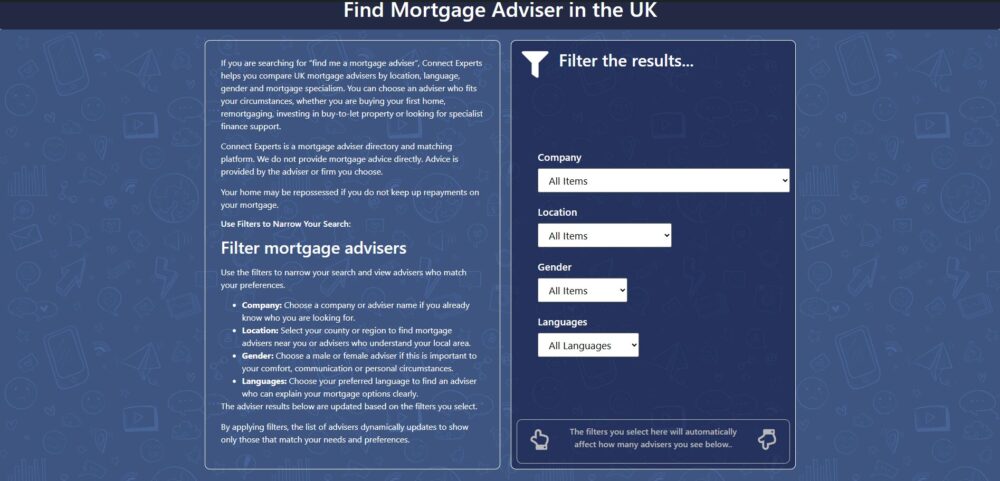
If you want to compare advisers who can help with first-time-buyer mortgage planning, visit First-Time Buyer Mortgage Advisers.
How to Approach a First-Time Buyer Mortgage in 2023
The first-time buyer mortgage market in 2023 rewarded preparation.
Rates were higher than many buyers had expected. Lenders were careful with affordability. Buyers needed to understand fees, deposits, credit history and monthly costs before applying.
A good mortgage decision should answer three questions:
- What can I borrow?
- What can I afford?
- What will the mortgage cost over time?
Those questions are connected, but they are not the same.
Borrowing power tells you what a lender may consider. Affordability tells you what your household can manage. Total cost tells you what the mortgage may mean over the longer term.
For a wider buying journey, you can also read the First-Time Buyer Guide.
FAQs
What should first-time buyers compare before choosing a mortgage?
First-time buyers should compare interest rates, product fees, monthly payments, mortgage term, lender criteria, early repayment charges and total cost.
Is the lowest mortgage rate always the best option?
No. A low rate may come with a high fee. First-time buyers should compare the total cost over the initial deal period.
Why does mortgage term matter for first-time buyers?
The mortgage term affects monthly payments and total interest. A longer term may lower payments, but it can increase total interest.
Should first-time buyers choose a fixed or variable rate?
It depends on budget and risk tolerance. A fixed rate may give payment certainty. A variable rate can change, which may increase or reduce payments.
What extra costs should first-time buyers budget for?
Buyers should budget for legal fees, valuation fees, surveys, insurance, moving costs, Stamp Duty where applicable, repairs and household bills.
Do first-time buyers need buildings insurance?
Buildings insurance is usually required when buying with a mortgage. It should normally be in place from exchange of contracts.
Can first-time buyers make overpayments?
Some mortgage products allow overpayments, often up to a set limit. Buyers should check the lender’s early repayment rules before choosing a deal.
Why is affordability different from how much I can borrow?
A lender’s affordability figure shows what may be available. Your personal budget shows what is manageable after bills, insurance and living costs.