360 Portfolio Review for Landlords: A property portfolio can look strong on paper and still carry hidden pressure.
One mortgage may be ending soon. Another property may have weaker rental cover. A limited company loan may need different documents. An HMO may need a lender that understands licensing, valuation and rental structure.
That is why a 360 Portfolio Review looks at the full position, not one mortgage in isolation.
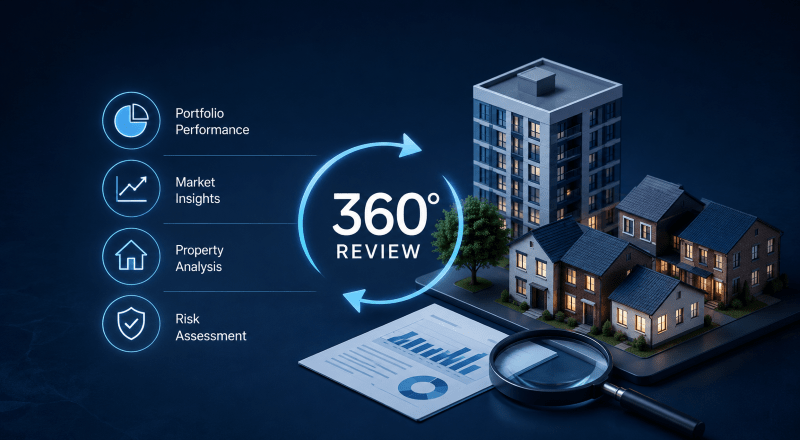
At Connect Mortgages, our 360 Portfolio Review helps landlords assess their buy-to-let borrowing, rental income, loan-to-value levels, fixed-rate expiry dates, lender exposure and future plans. The aim is simple. It helps you understand whether your current mortgage structure still fits the market, your cash flow and your next property decision.
At a Glance
A 360 Portfolio Review is a structured review of landlord mortgages.
It helps you assess:
- Mortgage rates and fixed-rate expiry dates
- Rental income and interest cover
- Loan-to-value levels across the portfolio
- Personal and limited company ownership
- HMO, multi-unit or specialist property exposure
- Product transfer and remortgage options
- Lender concentration risk
- Documents needed for future borrowing
- Whether your portfolio still supports your long-term plan
It is most useful for landlords with several buy-to-let properties, upcoming remortgages or plans to restructure, release equity or buy again.
What Is a 360 Portfolio Review?
A 360 Portfolio Review is a full review of a landlord’s mortgage position.
It does not only look at the next rate ending. It reviews the full portfolio and asks a more important question.
Does the current structure still work?
That question matters because buy-to-let lending is rarely judged on one property alone. Lenders may review rental income, borrowing levels, ownership structure, property type, landlord experience and the wider portfolio position.
This is especially important for portfolio landlords. If you own four or more mortgaged buy-to-let properties, many lenders may assess your application in more detail.
You can also read our guide to Buy-to-Let Portfolio Mortgages for a deeper explanation of portfolio landlord lending.
Why Landlords Need to Review the Whole Portfolio
A landlord’s portfolio is not just a collection of properties.
It is a connected financial structure.
One weak rental calculation can affect the next application. A high loan-to-value property may limit future borrowing. A fixed-rate expiry can change cash flow. A lender’s exposure limit can affect where the next mortgage should go.
A 360 Portfolio Review helps identify these points before they become problems.
It can help landlords understand:
- Which mortgages are due to end soon
- Which properties may need refinancing first
- Whether rental income still supports borrowing
- Whether current loan-to-value levels are suitable
- Whether product transfers may be available
- Whether remortgaging could offer better flexibility
- Whether company ownership affects lender choice
- Whether the portfolio is ready for further purchases
This turns a reactive mortgage decision into a planned review.
The Technical Areas Reviewed
A good portfolio review should be practical.
It should not only say whether rates are higher or lower. It should review the numbers lenders are likely to check.
1. Fixed-Rate Expiry Dates
The first step is to list every mortgage and its current product end date.
This helps identify which loans need attention first. It can also reduce the risk of moving onto a higher standard variable rate without a plan.
A review may compare a product transfer with a full remortgage. The right route depends on lender criteria, valuation, rental cover and future plans.
If you are already approaching a rate end date, our Buy-to-Let Remortgage page explains how refinancing works.
2. Rental Income and Interest Cover
Lenders often assess whether rent covers the mortgage payment by a required margin.
This is usually called the interest coverage ratio, or ICR. The calculation can vary by lender, tax position, product type and ownership structure.
A review should check whether each property still passes likely lender rental stress tests.
This matters because rent that worked three years ago may not support the same borrowing today.
3. Loan-to-Value Across the Portfolio
Loan-to-value compares the mortgage balance with the property value.
A single property may appear acceptable. However, the wider portfolio may show higher borrowing than expected.
A 360 Portfolio Review can help identify:
- Properties with strong equity
- Properties with limited equity
- Mortgages that may need reducing
- Cases where refinancing could be difficult
- Opportunities to rebalance borrowing
This is useful when planning future purchases or capital raising.
4. Lender Exposure
Some landlords build their portfolio with one or two lenders.
That can work for a period. However, it may create exposure risk if those lenders change criteria, restrict borrowing or limit further applications.
A review can show whether the portfolio is too dependent on one lender.
It can also help identify whether future borrowing should be placed elsewhere.
5. Ownership Structure
The review should separate properties held personally from those held through a limited company.
This matters because lender options, tax treatment, documents and affordability can differ.
A limited company route may suit some landlords, but it will not suit everyone. Landlords should speak to a tax adviser before changing ownership structure.
For mortgage information, read our guide to Limited Company Buy-to-Let Mortgages.
6. Property Type
Not every rental property is assessed in the same way.
A standard single let may be simpler than an HMO, multi-unit block or semi-commercial property.
A review should identify specialist property types early because they can affect:
- Lender choice
- Valuation method
- Rental assessment
- Required documents
- Licensing checks
- Landlord experience requirements
If your portfolio includes shared housing, our HMO Property Mortgage page explains the key mortgage points.
Why Market Timing Matters
Buy-to-let mortgage decisions are closely linked to rate cycles.
UK Finance reported that buy-to-let lending growth in Q4 2025 was concentrated in remortgage activity. This shows that many landlords are still actively reviewing existing borrowing rather than only buying new property.
You can read the latest UK Finance buy-to-let lending data for wider market context.
A 360 Portfolio Review helps landlords respond to such market movements with better information.
It does not guarantee a lower rate. However, it can help identify which options are realistic before a decision is made.
How Lenders May Assess Portfolio Landlords
Portfolio landlords may face more detailed underwriting.
The Bank of England’s Prudential Regulation Authority sets expectations for buy-to-let underwriting standards. These include affordability and interest coverage testing.
You can read the PRA buy-to-let underwriting standards for the regulatory background.
In practice, lenders may ask for:
- A full property schedule
- Mortgage balances
- Monthly rental income
- Monthly mortgage payments
- Current property values
- Tenancy details
- Bank statements
- Proof of income
- Limited company documents
- HMO licence details, where relevant
- Details of future borrowing plans
A prepared portfolio can make the application process clearer.
It can also reduce delays caused by missing information.
Product Transfer or Remortgage?
A 360 Portfolio Review can help compare two common routes.
A product transfer means switching to a new deal with the current lender. It may be quicker and may involve less underwriting.
A remortgage means moving the loan to a new lender. It may offer different rates, criteria or capital raising options.
Neither route is automatically better.
The right choice depends on:
- Current lender options
- Rental stress testing
- Loan-to-value
- Fees and valuation costs
- Future borrowing plans
- Whether capital raising is needed
- Whether the property still fits lender criteria
A broker can help compare both routes before the landlord commits.
What Documents Should Landlords Prepare?
A 360 Portfolio Review works best when the information is complete.
Landlords should prepare:
- A full property schedule
- Current mortgage statements
- Product end dates
- Rental income for each property
- Tenancy details
- Estimated property values
- Details of personal or company ownership
- Company accounts, where relevant
- SA302s or income documents, where required
- HMO licences, where relevant
- Details of future purchase plans
This helps the adviser assess the portfolio with fewer assumptions.
It also helps identify which lenders may be suitable before an application begins.
The Philosophical Point: Review Before Pressure Arrives
A portfolio should not only be reviewed when something goes wrong.
It should be reviewed while there is still time to choose.
That is the value of a 360 Portfolio Review. It creates space between the landlord and the deadline.
It helps turn scattered mortgage dates, rents and balances into a clearer plan.
Property investment is built on numbers. Yet good decisions also need timing, structure and perspective.
A landlord who can see the whole position can make better choices about the next step.
Who May Benefit from a 360 Portfolio Review?
A 360 Portfolio Review may suit landlords who:
- Own several buy-to-let properties
- Have four or more mortgaged rental properties
- Have fixed rates ending soon
- Hold properties across different lenders
- Use both personal and limited company ownership
- Own HMOs or specialist rental property
- Want to release equity
- Want to restructure existing borrowing
- Plan to buy another rental property
- Need clearer lender options before applying
If you are still comparing basic buy-to-let options, our Buy-to-Let Mortgage page may be a useful starting point.
Using Calculations Before Making a Decision
A review should be based on evidence, not guesswork.
Before applying, landlords may want to review rental income, borrowing levels and affordability.
Our Buy-to-Let Affordability Calculator can help you understand the type of figures that may affect borrowing.
A calculator is not advice. However, it can help landlords prepare for a more useful mortgage discussion.
Finding the Right Adviser
Some landlords want advice directly from Connect Mortgages.
Others may want to search for an adviser by location, language or specialist area.
Connect Experts can help landlords search for a Portfolio Landlord Mortgage Adviser across the UK.
You can also read more about Portfolio Landlord Mortgage Brokers to understand what specialist advisers may check.
Connect Experts does not provide mortgage advice directly. Advice is provided by the adviser or firm selected by the customer.
How Connect Mortgages Can Help
Connect Mortgages helps landlords review buy-to-let borrowing with a practical portfolio-led approach.
We can help you:
- Review your current mortgage structure
- Check upcoming product end dates
- Assess rental income and lender affordability
- Compare product transfer and remortgage routes
- Review limited company mortgage options
- Consider HMO and specialist property requirements
- Prepare documents for lender assessment
- Plan future refinancing or purchases
- Avoid unsuitable lender routes
A 360 Portfolio Review does not replace tax, legal or investment advice.
However, it can help you clearly understand your mortgage position before making your next decision.
Frequently Asked Questions
What is a 360 Portfolio Review?
A 360 Portfolio Review is a full mortgage review for landlords with buy-to-let property. It checks mortgage dates, rental income, loan-to-value levels, lender exposure, ownership structure and future borrowing plans.
Is a 360 Portfolio Review only for large landlords?
No. It can help any landlord with more than one rental property. However, it is especially useful for portfolio landlords with several mortgaged buy-to-let properties.
When should I review my buy-to-let portfolio?
You should review your portfolio before fixed rates end, before buying another property, before refinancing, or when rental income, rates or lender criteria change.
What does a lender check for portfolio landlords?
Lenders may check your property schedule, rental income, mortgage balances, loan-to-value levels, ownership structure, landlord experience and future plans.
Can a portfolio review help with remortgaging?
Yes. A review can help compare product transfer and remortgage options. It can also identify possible affordability issues before an application is submitted.
Does a 360 Portfolio Review include tax advice?
No. It focuses on mortgage structure and lender options. Landlords should speak to a qualified tax adviser for tax planning or ownership structure advice.
Can limited company landlords use a 360 Portfolio Review?
Yes. The review can include limited company buy-to-let mortgages, SPV structures, company documents and lender requirements.
Can HMO landlords use this review?
Yes. HMO properties can be included. The review may consider licensing, valuation approach, rental income and specialist lender criteria.
Will a review guarantee a better mortgage rate?
No. Mortgage rates and lender decisions depend on the market, criteria and the landlord’s circumstances. A review helps identify suitable routes before applying.
How do I start a 360 Portfolio Review?
You can contact Connect Mortgages and provide details of your properties, mortgages, rental income and future plans. An adviser can then review the next suitable steps.