
Can I Get a Mortgage Without an Adviser?
Yes, you can get a mortgage without an adviser.
Some borrowers apply directly to a bank, building society or lender. This is often called going direct. In some cases, the application may be handled on an execution-only basis, where you choose the mortgage product without receiving a personal recommendation.
That sounds simple. Sometimes it is. But a mortgage is not only a rate on a screen. It is a long-term secured loan linked to your income, deposits, credit history, property type, and future plans. The right question is not only whether you can apply without an adviser. It is whether you should.
A mortgage decision can look technical, but it is also personal. The product must fit the borrower, not just the property.
At a Glance
You can apply for a mortgage without an adviser, but you take more responsibility for the choice.
Going direct may suit borrowers with simple income, strong credit, clear affordability and confidence comparing lender criteria. It may not suit applicants with self-employed income, credit issues, unusual property types, buy-to-let plans, complex income or uncertainty about costs.
A mortgage adviser can assess your circumstances, compare suitable options and explain the risks before you apply. If you want to understand the basic route first, start with our Residential Mortgage guide.
What Does Applying Without an Adviser Mean?
Applying without an adviser usually means you choose the lender and product yourself.
You may compare rates online, use lender websites, check affordability calculators and submit your own application. The lender will then assess whether you meet its criteria.
This can work when your case is straightforward. For example, you may have employed income, a clear deposit source, strong credit conduct and a standard property.
However, direct applications have limits. A lender can usually only discuss its own products. It may not compare the wider market for you. It may also decline the case if your circumstances fall outside its policy.
An adviser looks at your situation before matching it to lender criteria. That can reduce the risk of applying to the wrong lender first.
What Is Execution-Only?
Execution-only means you proceed without receiving regulated mortgage advice or a personal recommendation.
You make the product choice yourself. The firm may provide information, but it does not advise you that the product is suitable for your needs.
This distinction matters. If you receive advice, the adviser must recommend a mortgage based on your circumstances. If you choose execution-only, you accept more responsibility for whether the mortgage is right for you.
The FCA Handbook explains rules around execution-only mortgage sales, including how firms must treat these cases. You can read the FCA’s information on execution-only mortgage sales.
When Might Going Direct Work?
Going direct may be suitable if your case is simple and you understand the mortgage decision.
It may work if:
- Your income is straightforward
- Your deposit source is clear
- Your credit history is strong
- The property is standard construction
- You know the product type you want
- You understand fees, early repayment charges and rate changes
- You are comfortable managing the application yourself
You should still compare more than the interest rate. Arrangement fees, valuation costs, product fees, incentives, term length and repayment structure can all affect the true cost.
If you are at the early budgeting stage, use the Quick Mortgage Calculator to estimate possible payments before you compare products.
What Could Go Wrong Without Advice?
The main risk is choosing a product that looks attractive but does not fit your circumstances.
A low rate may not be the best option if the fee is high, the term is unsuitable, or the lender’s criteria do not match your income. A rejected application can also slow down your plans and may create extra pressure if you are buying to a deadline.
Common issues include:
- Choosing a lender before checking full criteria
- Misunderstanding affordability
- Missing product fees or early repayment charges
- Applying with incomplete documents
- Using the wrong income evidence
- Choosing a term that affects future borrowing
- Forgetting protection needs linked to the mortgage
- Not understanding what happens when the fixed rate ends
Mortgage decisions are rarely isolated. A choice made today can affect monthly payments, remortgage options and financial flexibility later.
When Is Mortgage Advice More Important?
Mortgage advice becomes more important when the application needs explanation.
This may apply if you are self-employed, paid dividends, working on a contract, working overtime, applying with past credit issues, buying a non-standard property, or borrowing in later life.
It can also matter if you are buying your first home. First-time buyers often need help with deposit evidence, affordability, solicitor questions, lender checks and product choice. Our First-Time Buyer Mortgage page explains this in more detail.
Advice may also help if your current mortgage deal is ending. A remortgage decision is not only about moving to a new rate. It may involve affordability, property value, product transfers, early repayment charges and whether extra borrowing is needed. Read our Remortgage guide if your current deal is due for review.
What Will Lenders Check?
Whether you apply direct or through an adviser, lenders still need to assess the case.
They may review:
- Your income
- Your spending
- Your deposit
- Your credit history
- Your employment status
- Your age and mortgage term
- Your dependants
- Existing loans or credit cards
- The property value and condition
- The loan-to-value ratio
Each lender has its own criteria. That is why two lenders may look at the same borrower differently.
Before applying, check your likely borrowing position with the Residential Affordability Calculator. It should not replace advice, but it can help you start with a clearer budget.
Why Self-Employed Borrowers Should Be Careful
Self-employed mortgage applications can be more technical.
Lenders may assess sole traders, limited company directors and contractors differently. Some may use net profit. Others may consider salary and dividends. Some may review retained profits, day rates or trading history.
This is where direct applications can become difficult. The issue is not only whether you earn enough. It is about whether the lender will accept your evidence as presented.
If your income is not straightforward, visit our Self-Employed Mortgage page before deciding whether to apply alone.
What If You Have Credit Issues?
Credit history can affect lender choice.
Some lenders may decline applications with recent missed payments, defaults, county court judgments, debt management plans or high credit usage. Others may consider the case if the issue is older, explained properly and supported by wider affordability.
Applying to the wrong lender can waste time. It may also create stress if you are already close to a purchase deadline.
If this applies to you, read our Adverse Credit Mortgage guide before choosing a route.
Adviser Or No Adviser: How To Decide
The practical test is simple.
Ask yourself:
- Do I understand the difference between product rate and total cost?
- Do I know which lenders may accept my income?
- Have I checked affordability properly?
- Am I confident the property meets lender criteria?
- Do I understand early repayment charges?
- Do I know what happens when the deal ends?
- Have I considered protection if income, illness or death affects repayments?
- Am I comfortable taking responsibility for the product choice?
If the answer is yes, a direct application may be possible.
If the answer is no, advice may be worth considering before you proceed. MoneyHelper explains how mortgage advisers can help borrowers compare options and understand which mortgages are suitable. You can read the MoneyHelper guide to choosing a mortgage and getting advice.
Can an Adviser Access Better Deals?
Advisers may sometimes have access to intermediary-only products. These are mortgage deals available through brokers rather than directly to the public.
However, the value of advice is not only access to deals. It is also the filtering process. A suitable mortgage is one that fits the borrower’s circumstances, costs, term, repayment method and future plans.
A deal is only useful if the lender is likely to accept the case.
How To Find A Mortgage Adviser
If you decide advice is the better route, choose someone who can support your specific situation.
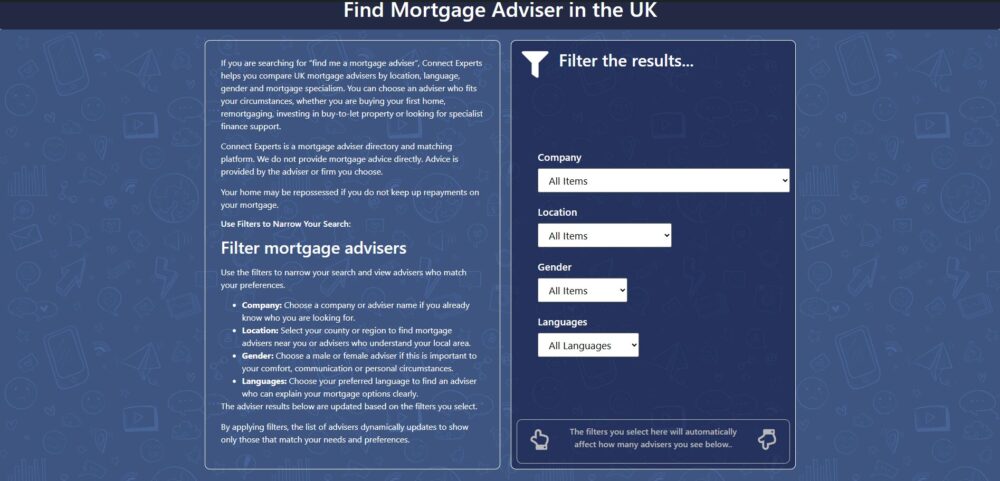
You may want an adviser based on location, mortgage type, language, adviser preference or area of experience. Connect Experts lets users search for advisers across the UK by these factors. You can start with the Find a Mortgage Adviser directory.
Connect Experts is a directory and matching platform. Mortgage advice is provided by the adviser or firm you choose.
A Clearer Way To Decide
You can get a mortgage without an adviser. The route exists, and for some borrowers it may work.
But a mortgage is not only about getting accepted. It is about choosing a structure you can live with, afford and review when life changes.
If your case is simple and you understand the risks, going direct may be suitable. If your circumstances need interpretation, advice can help turn a complicated decision into a clearer one.
FAQ: Can I Get A Mortgage Without An Adviser?
Can I apply for a mortgage directly with a bank?
Yes. Many banks and building societies allow direct mortgage applications. You will need to meet that lender’s criteria and choose the product yourself unless advice is provided.
Is it cheaper to get a mortgage without an adviser?
It may reduce adviser fees if a fee would otherwise apply. However, cost should be judged across the whole mortgage. Product fees, rates, incentives, term length and early repayment charges can all affect the total cost.
Is a mortgage adviser the same as a broker?
In many cases, yes. A mortgage adviser or mortgage broker helps assess your circumstances and may recommend a mortgage product. Some advisers search a broad range of lenders, while others may be restricted.
Can I complain if I choose the mortgage myself?
Your rights may differ if you proceed execution-only because you have not received a personal recommendation. If you receive regulated advice, the adviser is responsible for recommending a suitable mortgage based on your circumstances.
Should first-time buyers use a mortgage adviser?
Many first-time buyers find advice useful because the process can involve affordability checks, deposit evidence, solicitor queries, product choice and lender requirements.
Do I need advice if I am remortgaging?
Not always. Some borrowers choose a direct product transfer or apply to a new lender themselves. Advice can help if your income, property value, credit profile or borrowing needs have changed.
Can I get a mortgage without advice if I am self-employed?
Yes, but it can be harder. Lenders assess self-employed income in different ways. Advice may help you understand which lenders may consider your income evidence.
What is the biggest risk of applying without advice?
The biggest risk is choosing a lender or product that does not fit your circumstances. This can lead to delays, declined applications or a mortgage that costs more than expected.