
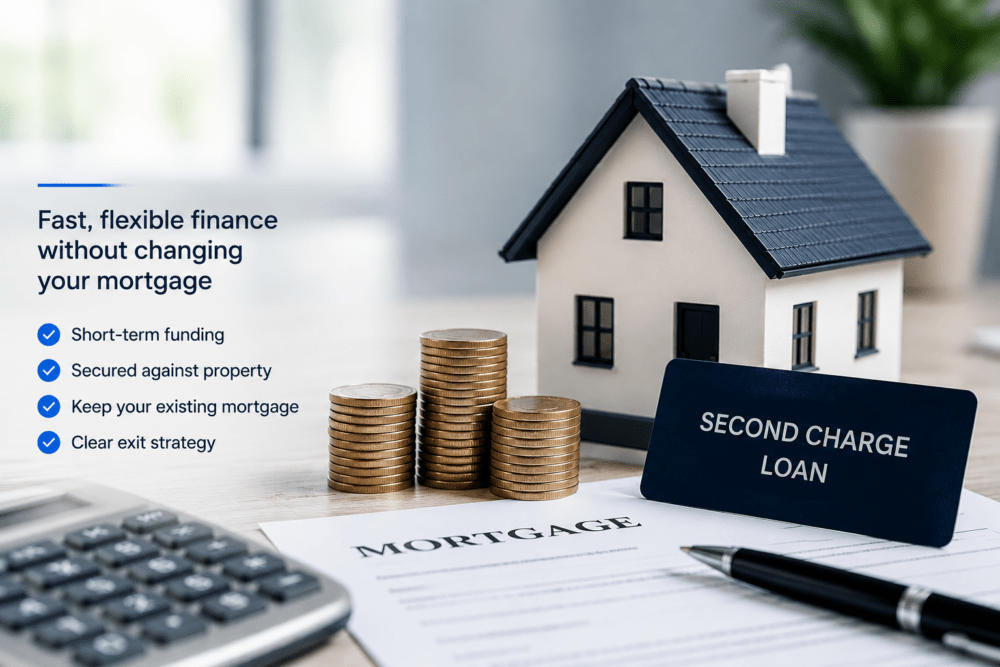
A second charge bridging loan is not just fast finance. It is short-term borrowing secured behind an existing mortgage.
It may help when you need funds quickly but do not want to replace your current mortgage. This could be because your current rate is worth keeping, your mortgage has early repayment charges, or a full remortgage would take too long.
However, this type of borrowing needs careful advice. The loan is secured against property. It also needs a clear exit strategy from the start.
Your home may be repossessed if you do not keep up repayments on your mortgage or any loans secured on it.
Second Charge Bridging Loans
- A second charge bridging loan is short-term borrowing secured against a property.
- It sits behind your existing mortgage, which remains in place.
- It may be used when speed matters and remortgaging is not suitable.
- Common uses include chain breaks, auction purchases, urgent capital raising and short-term property funding.
- The lender will assess equity, affordability, property value and your exit strategy.
- Costs can be higher than standard mortgage borrowing.
- A clear repayment route is essential before you apply.
- You should compare it with second-charge mortgages, remortgaging, and other forms of bridging finance.
What Is a Second Charge Bridging Loan?
A second charge bridging loan is a short-term secured loan.
It is called “second charge” because your existing mortgage lender keeps the first legal charge over the property. The bridging lender takes a second legal charge behind that lender.
This matters because the first lender is repaid before the property is sold. The second-charge lender carries more risk, so borrowing can cost more than standard mortgage finance.
A second charge bridging loan may allow you to raise funds from property equity without changing your main mortgage. It differs from a standard second-charge mortgage because it is usually short-term and linked to a planned exit.
That exit could be:
- Sale of a property
- Refinance onto a longer-term mortgage
- Repayment from another confirmed source
- Completion of a delayed transaction
- Release of funds from another asset sale
Why Would Someone Use a Second Charge Bridging Loan?
A second charge bridging loan may be considered when timing creates pressure.
For example, you may need to complete a property purchase before your current property sells. You may need to stop a chain from collapsing. You may need to buy at auction, where deadlines are strict. You may also need short-term capital while keeping your existing mortgage untouched.
Common reasons include:
- Buying a new property before selling an existing one
- Completing after a chain delay
- Raising funds against property equity
- Supporting an auction purchase
- Funding light refurbishment before sale or refinance
- Covering a short-term funding gap
- Supporting business or investment plans, where suitable
- Avoiding early repayment charges on your current mortgage
If the case involves business property, mixed-use property or investment property, commercial bridging finance may also need to be reviewed.
How Second Charge Bridging Loans Work
A lender will look at the property, the existing mortgage and the repayment plan.
The process usually includes:
- Reviewing the current mortgage balance
- Checking the property value
- Calculating available equity
- Checking the proposed loan-to-value
- Understanding why the money is needed
- Assessing the exit strategy
- Reviewing affordability, where required
- Checking consent from the first charge lender, where needed
- Completing valuation and legal work
Because the existing mortgage stays in place, the first lender’s position must be considered. Some first charge lenders may need to consent to a second charge being registered.
This is one reason specialist advice can help. The adviser can review whether a second charge bridge is realistic before you spend time and money on an application.
Second Charge Bridge vs Standard Bridging Loan
A standard bridging loan may be a first charge or a second charge.
A first charge bridge usually applies when there is no existing mortgage on the property being used as security, or when the bridge replaces the current borrowing.
A second charge bridge applies when there is already a mortgage secured on the property and that mortgage remains in place.
| Feature | First Charge Bridging Loan | Second Charge Bridging Loan |
|---|---|---|
| Existing mortgage | Usually no existing mortgage, or it is being replaced | Existing mortgage stays in place |
| Legal charge | New lender takes first charge | New lender sits behind the first lender |
| Main use | Purchase, refinance or short-term funding | Raise funds without changing current mortgage |
| Risk position | Lender is first in repayment order | Lender is second in repayment order |
| Advice need | Important | Very important because two secured debts are involved |
Second Charge Bridge vs Second Charge Mortgage
A second charge bridge is usually short-term. A second charge mortgage is usually longer-term.
A second charge mortgage may suit borrowing that needs to be repaid over several years. A second charge bridging loan may suit a temporary funding gap with a planned exit.
You may want to compare both options if you need to raise money without remortgaging. Read more about second charge mortgages before deciding which route may fit your circumstances.
When Remortgaging May Not Be the Right Route
Remortgaging can be useful when your current deal is ending or when a new mortgage offers suitable terms.
However, it may not work well when:
- You have a low fixed rate you want to keep
- Your current mortgage has early repayment charges
- You need funds faster than a remortgage can complete
- Your income or credit position has changed
- Your current lender cannot offer the extra borrowing needed
- The borrowing only needs to be short-term
In these cases, a second-charge bridging loan may be an option to consider. However, it should still be compared with remortgaging, a further advance, a standard second charge mortgage or other funding routes.
Why the Exit Strategy Comes First
A second charge bridging loan should start with the repayment plan.
The exit strategy explains how the loan will be cleared. It should be realistic, evidenced and timed properly.
Common exit routes include:
- Selling the current property
- Selling another property
- Refinancing to a residential mortgage
- Refinancing to a buy-to-let mortgage
- Refinancing to a commercial mortgage
- Repayment from confirmed funds
- Repayment after works increase property value
A weak exit strategy can make the loan harder to place. It can also increase the risk of extra fees, delays and repayment pressure.
Before applying, ask:
- What is the main exit route?
- What could delay that exit?
- Is there a backup repayment route?
- What happens if the property sells for less than expected?
- What happens if refinance is not approved?
- Can the loan still be repaid if the timeline moves?
Costs to Consider
Second charge bridging loans can be more expensive than standard mortgages.
Costs may include:
- Monthly interest
- Rolled-up interest
- Arrangement fees
- Valuation fees
- Legal fees
- Broker fees
- Exit fees, where applicable
- Administration fees
- Higher pricing for complex cases
The lowest interest rate may not mean the lowest overall cost. You should look at the total amount repayable, fees, loan term and exit plan.
You can also use our mortgage calculators to review wider borrowing figures. If your bridging loan relates to a property purchase, our stamp duty calculator may also help with planning.
Risks of Second Charge Bridging Loans
Second charge bridging loans can be useful, but they carry risk.
Important risks include:
- Your property is used as security
- Interest can build quickly
- Fees can increase the total cost
- A sale may take longer than expected
- Refinance may not be approved
- Your first lender may not agree to the second charge
- Property values can change
- You may have two secured loans linked to the same property
- Some bridging loans are not regulated by the Financial Conduct Authority
You should not use short-term bridging finance as a long-term borrowing solution. The exit route must be clear before the loan completes.
Your home may be repossessed if you do not keep up repayments on your mortgage or any loans secured on it.
What Lenders May Look At
Every lender has its own criteria. However, second charge bridging lenders will often review:
- Property value
- Existing mortgage balance
- Available equity
- Loan-to-value
- Loan purpose
- Credit profile
- Income and affordability, where required
- First lender consent
- Property type
- Legal title
- Valuation outcome
- Exit strategy
- Backup exit route
- Timescale
A strong application clearly explains the purpose, security, risks, and repayment plan.
Example: Buying Before Selling
You have found a new property, but your current property sale has not completed.
Your existing mortgage has a competitive fixed rate. Remortgaging now could trigger charges or delay the purchase.
A second charge bridging loan may help you raise short-term funds against your current property while keeping the main mortgage in place. The loan could then be repaid when your property sells.
This route should only be considered if the sale and repayment plan are realistic.
Example: Urgent Capital Raise
You own a property with equity and need funds quickly for a time-sensitive reason.
Your current mortgage lender cannot provide extra borrowing in time. You also do not want to replace the main mortgage.
A second charge bridge may provide temporary funding. However, the adviser would need to review the exit route, affordability, cost and lender criteria before making a recommendation.
Alternatives to Consider
A second charge bridging loan should be compared with other options.
These may include:
- Remortgaging
- Further advance from your current lender
- Second charge mortgage
- Personal loan, where suitable
- Family support, where appropriate
- Sale of assets
- Standard bridging finance
- Commercial bridging finance, where the property or purpose is commercial
The right option depends on your property, income, timescale, risk level and repayment plan.
How Connect Mortgages Can Help
Connect Mortgages can help you review whether a second charge bridging loan may be suitable.
We can look at:
- Your current mortgage position
- Your property value and equity
- Your reason for borrowing
- Your timescale
- Your exit strategy
- Your wider mortgage options
- Your affordability position
- The risks and costs involved
We are a credit broker, not a lender. We will explain the options available and help you understand whether a second charge bridge, standard bridge, remortgage, further advance or second charge mortgage may fit your needs.
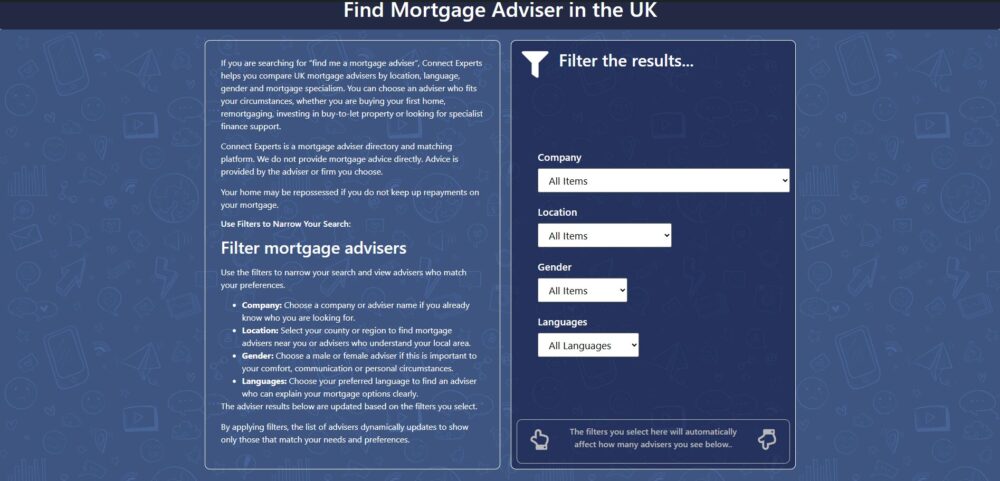
If you want to compare adviser options, you can also find a second charge mortgage adviser through Connect Experts. For wider short-term finance support, you can also find a bridging loan mortgage broker.
Speak to Connect Mortgages About Second Charge Bridging Loans
Second charge bridging loans can help when timing matters, but they should never be rushed without advice.
A suitable recommendation should explain the purpose, cost, risk, lender position and exit route.
FAQs About Second Charge Bridging Loans
What is a second charge bridging loan?
A second charge bridging loan is short-term borrowing secured against a property that already has a mortgage. The current mortgage stays in place, and the bridging lender takes a second legal charge.
Is a second charge bridging loan the same as a second charge mortgage?
No. A second charge mortgage is usually longer-term borrowing. A second charge bridging loan is usually short-term and needs a planned exit route.
Can I get a second charge bridge if I already have a mortgage?
Possibly. The lender will review your equity, existing mortgage balance, property value, loan purpose and exit strategy. The first mortgage lender’s consent may also be needed.
What can a second charge bridging loan be used for?
It may be used for buying before selling, chain breaks, auction purchases, urgent capital raising, refurbishment funding or short-term property finance. The use must meet lender criteria.
Is a second charge bridging loan regulated?
It depends on the borrower, property and purpose. Some bridging loans are regulated by the Financial Conduct Authority. Some commercial, investment or business-related loans may not be regulated.
What is an exit strategy?
An exit strategy is the planned method for repaying the bridging loan. Common exits include property sale, refinance or repayment from confirmed funds.
Are second charge bridging loans risky?
Yes, they can be. The loan is secured against property, costs can be higher than standard mortgages, and repayment depends on the exit plan working.
Should I compare alternatives first?
Yes. You should compare a second charge bridge with remortgaging, a further advance, a second charge mortgage and other short-term finance options before deciding.
Source References
MoneyHelper explains that second mortgages are secured loans behind the first mortgage lender, and that failure to repay can put the property at risk.
The Financial Conduct Authority has reviewed second charge mortgage advice, fees, charges and affordability assessments, highlighting the importance of suitable advice and good customer outcomes.
Which? explains that bridging loans are short-term finance and that first and second charge bridging loans depend on the legal charge placed against the property.