
Buy-to-Let Mortgage Tips for Smarter Landlords: A buy-to-let mortgage is not just a way to buy a rental property. It is a test of judgement.
The property may look right. The rent may look strong. The rate may look attractive. Yet a buy-to-let mortgage only works when the numbers, lender criteria, property type and long-term plan all support each other.
This guide gives practical buy-to-let mortgage tips for UK landlords. It focuses on the mortgage decisions that matter before you apply.
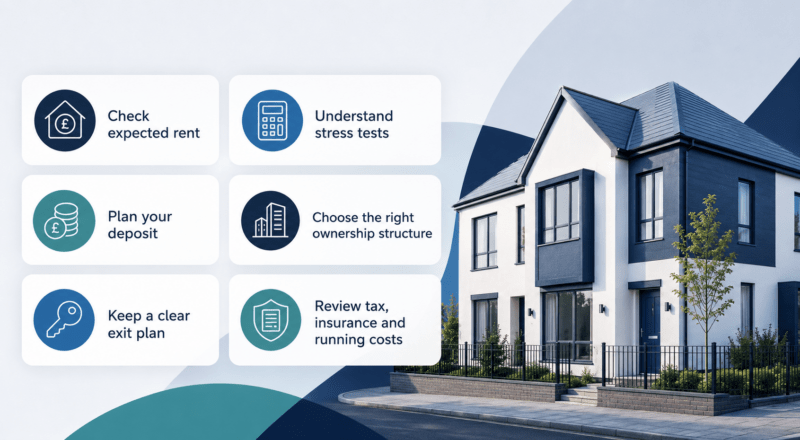
Buy-to-Let Mortgage Tips at a Glance
- Check the expected rent before focusing on the purchase price.
- Understand how lenders stress test rental income.
- Build your deposit around lender criteria, not just your savings.
- Decide whether personal or limited company ownership fits your plans.
- Check whether the property type limits your lender choice.
- Keep a clear repayment or exit plan if choosing interest-only.
- Review tax, insurance and running costs before you commit.
- Speak with a buy-to-let mortgage adviser before making assumptions.
For a wider overview of available options, read our Buy-to-Let Mortgages guide.
1. Start with Rent, Not Emotion
A rental property should be judged differently from a home.
With a residential mortgage, the lender focuses heavily on your personal income and outgoings. With buy-to-let, the expected rent often becomes the central figure.
That does not mean your personal position is ignored. However, the property must usually demonstrate that the rent can cover the mortgage payments.
Before you fall in love with the property, ask:
- What rent is realistic for the area?
- Is the rent based on evidence or hope?
- Would the rent still work if rates were higher?
- Could the property sit empty for a short period?
- Are repairs likely to reduce your first-year return?
A good buy-to-let decision starts with measured confidence. The rent should not simply make the mortgage possible. It should give the investment room to breathe.
You can use the Buy-to-Let Affordability Calculator to estimate how rental income may affect borrowing.
2. Understand the Lender’s Stress Test
A buy-to-let mortgage application is not judged only on today’s interest rate.
Lenders often test whether the rent could cover mortgage payments at a higher assumed rate. This is sometimes called rental stress testing.
The exact calculation can vary by lender. It may depend on:
- Whether the mortgage is fixed or variable
- The length of the fixed-rate period
- Your tax position
- Whether you apply personally or through a company
- Whether you are a basic-rate or higher-rate taxpayer
- The property type
- Your landlord experience
This is why two landlords can receive different outcomes on similar properties.
The lowest rate is not always the best answer. A product with a slightly higher rate may still work better if the lender’s criteria fit your case.
That is the practical truth behind buy-to-let borrowing. The mortgage is not just priced. It is tested.
3. Treat Your Deposit as a Risk Buffer
Buy-to-let mortgages usually require a larger deposit than many residential mortgages.
Many landlords think only about the minimum deposit. That can be a mistake.
A stronger deposit may help with:
- Lower loan-to-value borrowing
- Wider lender choice
- Better product access
- Stronger rental coverage
- More resilience if property values change
- Lower monthly interest payments
However, using every available pound for the deposit can also create risk.
You may still need funds for stamp duty, legal fees, valuation fees, insurance, repairs, furniture, licensing, void periods and tax planning.
A landlord with no cash reserve can become exposed quickly. Property investment rewards planning, not just entry.
4. Decide Whether Interest-Only Fits Your Plan
Many buy-to-let mortgages are arranged on an interest-only basis.
This can keep monthly payments lower because you pay the interest rather than reducing the loan balance. That may support cash flow.
However, the debt remains in place.
That means you need a clear plan for the end of the mortgage term. You may plan to sell the property, refinance, use savings, or repay the loan another way.
Interest-only can be useful. It can also create false comfort if there is no repayment strategy.
The key question is simple: how does this mortgage end?
A good buy-to-let mortgage decision should answer that before completion, not years later.
5. Check Your Ownership Structure Early
Some landlords buy in their personal name. Others use a limited company.
This choice can affect taxation, lending criteria, product selection, legal work, and long-term planning. It can also affect how lenders assess rental coverage.
A limited company may suit some landlords, especially those growing a portfolio. However, it is not automatically the right answer for everyone.
Before deciding, consider:
- Your income tax position
- Your long-term property plans
- Whether you already own rental property
- How profits may be used
- Whether you plan to retain or sell properties
- Accountancy and company administration costs
- Lender product availability
Mortgage advice and tax advice are different. A mortgage adviser can explain lender options. A qualified tax adviser can help with tax structure.
If company ownership is relevant, read our Limited Company Buy-to-Let Mortgages guide.
6. Match the Mortgage to the Property Type
Not every rental property is treated the same by lenders.
A standard single-family rental may have more lender options than a specialist property. More complex properties may need specialist buy-to-let lenders.
Property type can matter if the property is:
- An HMO
- A multi-unit freehold block
- A holiday let
- Above or near commercial premises
- Ex-local authority
- Unusual construction
- In need of refurbishment
- Let to students
- Let to a company
- Used for serviced accommodation
The mortgage should fit the property’s real use.
For example, an HMO may produce higher rent, but it may also involve licensing, management and lender criteria that differ from standard buy-to-let.
If this applies to your plans, read our HMO Property guide.
7. Think Like a Portfolio Landlord Before You Become One
A first buy-to-let property may feel like a single decision. Yet it can shape every purchase after it.
Lenders may look more closely at landlords with several mortgaged rental properties. They may review the whole portfolio, not just the next property.
That means your early choices matter.
Before buying, think about:
- Whether the property helps your future borrowing
- Whether the rent is strong enough for later refinancing
- Whether the loan-to-value is sustainable
- Whether the ownership structure supports future plans
- Whether the property type adds complexity
- Whether the mortgage term gives enough flexibility
A weak first purchase can restrict the second. A well-planned first purchase can make future decisions easier.
If you already own several rental properties, read our Buy-to-Let Portfolio Mortgages guide.
8. Do Not Ignore Tax and Stamp Duty
A buy-to-let mortgage should be reviewed alongside tax, not after tax.
In England and Northern Ireland, additional residential property purchases may attract higher Stamp Duty Land Tax. Different rules apply in Scotland and Wales.
Landlords may also need to consider income tax, allowable expenses, capital gains tax, company tax rules and accountancy costs.
This is not just paperwork. It affects the real return.
A property with a strong rent may look less attractive once taxes, financing costs, insurance, repairs, and void periods are included.
Before applying for a mortgage, speak with a qualified tax adviser. Then speak with a mortgage adviser who understands buy-to-let lending.
Good advice does not remove risk. It helps you see the risk before it becomes expensive.
9. Plan for Voids, Repairs and Insurance
A buy-to-let mortgage is paid every month, even when rent is not received.
That is why cash flow planning matters.
Landlords should allow for:
- Empty periods between tenants
- Repairs and maintenance
- Safety checks
- Letting agent fees
- Service charges
- Ground rent where applicable
- Insurance
- Licence fees where relevant
- Higher payments after a rate change
Insurance should also be reviewed properly. Standard home insurance may not be suitable for a rental property.
Landlords may need cover for buildings, contents, liability, rent protection or legal expenses, depending on the property and tenancy.
You can read more in our Landlord Insurance guide.
10. Review the Remortgage before the Rate Ends
A buy-to-let mortgage should not be left until the last month of the fixed rate.
Lenders may change criteria. Rental income may no longer pass the same stress test. Property values may move. Your own tax position may also change.
A remortgage review can help you assess:
- Whether the current lender still fits
- Whether the rent supports new borrowing
- Whether equity can be released
- Whether the loan-to-value has changed
- Whether the ownership structure still works
- Whether the property should remain in the portfolio
Sometimes the right decision is to refinance. Sometimes it is to reduce borrowing. Sometimes it is to hold the property without changing the plan.
The best landlords review before pressure arrives.
11. Keep Your Paperwork Ready
Buy-to-let mortgage applications can slow down when documents are missing.
You may need:
- Proof of income
- Bank statements
- Existing mortgage statements
- Tenancy agreement
- Rental valuation
- Property schedule
- Company documents if applying through a limited company
- Tax calculations or accounts
- Identification and address documents
- Details of other rental properties
Portfolio landlords may need more information than first-time landlords.
Clear paperwork helps the adviser and lender understand the case. It can also reduce delays.
A buy-to-let mortgage application should not feel like a scramble. It should feel prepared.
12. Use Advice Before Making the Offer
Many landlords speak to an adviser after finding a property.
That can still help. However, earlier advice can be more valuable.
Before making an offer, an adviser may help you understand:
- Likely deposit requirements
- Rental stress testing
- Possible lender appetite
- Product options
- Property type concerns
- Limited company options
- Portfolio impact
- Whether the case looks realistic
This can help you avoid unsuitable properties, weak margins and avoidable delays.
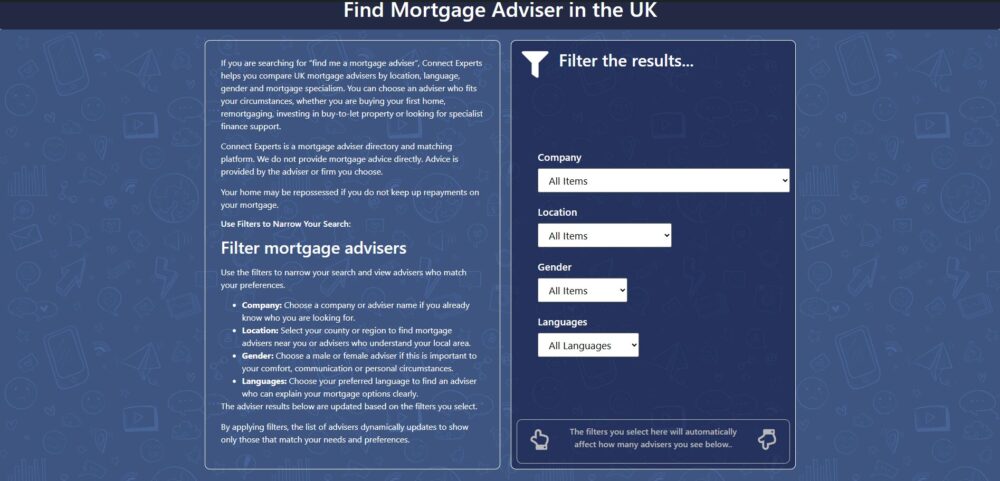
If you want to compare adviser support by location or expertise, you can use Connect Experts to find buy-to-let mortgage brokers.
A Good Buy-to-Let Mortgage Starts Before the Application
The smartest buy-to-let mortgage tip is not to chase the first attractive rate.
A rate matters. Yet it is only one part of the decision.
The stronger question is this: does the mortgage support the property, the rent, the structure, the risk and the long-term plan?
A buy-to-let property should be treated as an investment with responsibilities attached. The mortgage should be built around that reality.
When the numbers work, the criteria fit, and the plan is clear, the mortgage becomes more than borrowing. It becomes a structure.
Speak to Connect Mortgages if you want to review your buy-to-let mortgage options before you apply.
Buy-to-Let Mortgage Tips FAQs
What is the most important buy-to-let mortgage tip?
The most important tip is to check the rental income before focusing on the mortgage rate. Lenders usually need the rent to support the mortgage under their assessment rules.
Are buy-to-let mortgages based only on rent?
No. Rent is important, but lenders may also review your income, deposit, credit profile, property type, landlord experience and wider portfolio.
Is interest-only better for buy-to-let?
Interest-only can support cash flow, but the loan balance does not reduce. You need a clear repayment or exit plan before choosing this route.
How much deposit do landlords usually need?
Buy-to-let mortgages often need a larger deposit than residential mortgages. The amount can vary by lender, property type and applicant profile.
Should I buy personally or through a limited company?
That depends on your tax position, lender options and long-term plans. Speak with a mortgage adviser and a qualified tax adviser before deciding.
Do portfolio landlords need different advice?
Yes. Landlords with several mortgaged rental properties may face more detailed lender checks. The whole portfolio may be reviewed.
Can I let out my home on a normal mortgage?
You should speak to your lender first. GOV.UK states that landlords with a mortgage on a property they want to rent out must get permission from the mortgage lender.
Should I speak to a mortgage adviser before making an offer?
Yes. Early advice can help you understand lender criteria, rental stress testing, deposit needs and possible issues with the property.