

Commercial Bridge Loans: A commercial property decision often turns on timing.
A buyer may have found the right unit, but the auction deadline is close. A landlord may need to refinance before works can begin. A business may own a property with value, but not have the time to arrange a long-term loan.
A commercial bridge loan exists for that space between intention and completion. It is not designed to be permanent finance. It is designed to create time, movement and structure when a commercial property transaction cannot wait for a standard route.
Commercial Bridge Loans
A commercial bridge loan is a short-term loan secured against commercial property, semi-commercial property or another acceptable property asset.
It is usually used when speed, flexibility or temporary funding is needed.
Common uses include:
- Buying commercial property at auction
- Refinancing existing commercial borrowing
- Funding refurbishment before sale or refinance
- Raising short-term capital from commercial property
- Supporting a time-sensitive business property purchase
- Completing a mixed-use property transaction
- Bridging the gap before a commercial mortgage completes
The lender will normally focus on the property, loan purpose, valuation, security, borrower profile, exit strategy and risk.
A clear exit strategy is essential. This may include a sale, refinancing, repayment from another facility, or moving to a longer-term commercial mortgage.
Commercial bridge loans can be useful but also expensive. Borrowers should understand the costs, fees, risks and repayment plan before proceeding.
What Is a Commercial Bridge Loan?
A commercial bridge loan is short-term finance secured against commercial or business-related property.
It can help borrowers move quickly when a standard mortgage or longer-term commercial facility cannot complete in time. The loan is usually repaid when the property is sold, refinanced, or transferred to a longer-term funding arrangement.
This type of finance may be used by:
- Business owners
- Property investors
- Commercial landlords
- Developers
- Limited companies
- Partnerships
- Experienced property borrowers
- Investors buying semi-commercial property
Commercial bridge loans are different from standard commercial mortgages. A commercial mortgage is usually arranged for a longer period. A bridge loan is built around a short-term need and a defined repayment route.
For longer-term property finance, read our commercial mortgage guide.
How Commercial Bridge Loans Work
A commercial bridge loan is usually structured around four key points.
First, the lender reviews the security property. This may include the property type, location, condition, value, tenure, lease terms and market demand.
Second, the lender reviews the purpose of the loan. A purchase, refinance, refurbishment or capital raise may each need different evidence.
Third, the lender reviews the borrower. This may include experience, credit profile, business background, company structure and existing borrowing.
Fourth, the lender reviews the exit strategy. This is the planned repayment schedule for the loan.
Without a credible exit, the loan may not fit. Speed matters, but certainty matters more.
When Commercial Bridge Loans May Be Used
Commercial bridge loans are usually considered when timing is important.
They may support:
- Auction purchases with short completion deadlines
- Commercial property purchases that need fast funding
- Semi-commercial property transactions
- Retail, office, industrial or warehouse purchases
- Refurbishment before sale or refinance
- Leasehold or title issues that need time to resolve
- Temporary refinance of existing commercial borrowing
- Capital raising against commercial premises
- Business expansion linked to property ownership
- Property transactions where a long-term lender is not yet ready
A bridge loan should not be used simply because it is fast. It should be used because the short-term structure fits the transaction.
Commercial Property and Mixed-Use Property
The property type matters.
A commercial bridge loan may be secured by a property used primarily for business or investment purposes. This may include offices, shops, restaurants, warehouses, industrial units, care premises, clinics, hotels, pubs or mixed-use buildings.
Mixed-use property needs careful review. A building may include a shop on the ground floor and flats above. The lender will need to understand the split between commercial and residential use.
This distinction can affect lender choice, regulation, valuation and exit strategy.
The FCA Handbook explains that a regulated mortgage contract can depend on whether at least 40% of the land is used, or intended to be used, as or in connection with a dwelling. You can read the FCA guidance on regulated mortgage contract rules.
Because mixed-use cases can be technical, borrowers should not rely on simple assumptions. The property use, borrower type, and loan purpose should be checked before approaching a lender.
Commercial Bridge Loans vs Bridging Loans
A commercial bridge loan is a type of bridging loan.
However, not every bridging loan is commercial. Some bridging loans relate to residential property, buy-to-let property, inherited property, chain breaks or regulated residential needs.
Commercial bridge loans usually focus on business, investment or commercial property purposes.
If you want a wider explanation of short-term property funding, read our bridging loan guide.
Commercial Bridge Loans vs Development Finance
Commercial bridge loans and development finance are both short-term funding options. However, they are not the same.
A commercial bridge loan may suit a purchase, refinance, light refurbishment or temporary funding gap.
Development finance may be more suitable for ground-up building, conversion work, structural change or projects where funds are released in stages.
A bridge loan is often based on current value and exit.
Development finance may focus more on planning, build costs, gross development value, professional team and staged drawdowns.
For construction, conversion or major refurbishment, read our development finance guide.
First Charge and Second Charge Commercial Bridge Loans
Commercial bridge loans are secured against property.
The charge position shows the lender’s priority if the property is sold or repossessed.
A first-charge bridge loan is usually used when there is no existing mortgage or secured loan on the property. The bridging lender takes first priority.
A second-charge bridge loan may apply where another lender already holds a first charge. The bridge lender sits behind the first lender.
Second charge lending can be more complex. The first charge lender may need to consent. Pricing, risk and available loan size may also differ.
If you want to understand second-charge lending in more detail, read our second-charge mortgage guide.
What Lenders May Check
Every lender has its own criteria. However, many commercial bridge loan applications are assessed around similar points.
A lender may review:
- Property type
- Property value
- Loan-to-value
- Borrower experience
- Company structure
- Credit profile
- Lease terms
- Planning position
- Current property condition
- Refurbishment scope
- Exit strategy
- Valuation evidence
- Legal title
- Existing borrowing
- Personal or company guarantees
- Evidence of deposit or equity
- Business purpose
- Timescale
The stronger the evidence, the easier it can be to assess suitable lender options.
Exit Strategy: The Most Important Part
A commercial bridge loan starts with the exit.
That may sound unusual, but it is central to the lending decision. The lender needs to understand how the loan will be repaid before agreeing the facility.
Common exit routes include:
- Sale of the property
- Refinance onto a commercial mortgage
- Refinance onto a buy-to-let mortgage
- Sale of another asset
- Repayment from business funds
- Refinance after refurbishment
- Completion of a longer-term facility
- Development exit finance, where relevant
A weak exit strategy can create problems. The loan may become expensive if repayment is delayed. Fees, interest and default charges may also increase.
A good bridge is not only about getting in. It is about getting out safely.
Interest, Fees and Total Cost
Commercial bridge loans are usually short-term and may cost more than longer-term finance.
The interest rate depends on the lender, security, loan size, loan-to-value, borrower profile, property type, term and exit strategy.
Borrowers should also review the wider cost.
This may include:
- Arrangement fees
- Valuation fees
- Legal fees
- Broker fees
- Lender exit fees
- Administration fees
- Monitoring fees, where relevant
- Default interest, if terms are breached
Interest may be paid monthly, retained, rolled up or deducted from the gross loan. The right structure depends on the lender’s and borrower’s positions.
The lowest headline rate is not always the best outcome. The total cost and repayment route matter more.
Documents You May Need
Preparing documents early can help the application move more smoothly.
You may need:
- Proof of identity
- Proof of address
- Company details
- Property details
- Purchase contract
- Auction pack, where relevant
- Lease information
- Existing mortgage statement
- Valuation or comparable evidence
- Refurbishment schedule
- Planning documents, where relevant
- Exit strategy evidence
- Bank statements
- Business accounts
- Asset and liability details
- Solicitor details
The exact documents will depend on the lender, property and loan purpose.
When a Commercial Bridge Loan May Not Be Suitable
A commercial bridge loan may not be suitable if there is no clear repayment route.
It may also be unsuitable if the borrower needs long-term borrowing from the start, cannot support the costs or is relying on uncertain future events.
Caution may be needed where:
- The exit depends only on rising property values
- The sale route is uncertain
- Planning consent is not secure
- Works may exceed the loan term
- The borrower cannot cover fees or interest
- Existing lenders will not consent
- The property has complex legal issues
- The valuation may not support the loan required
Short-term finance can solve a timing problem. It should not create a larger financial problem.
Commercial Bridge Loan or Business Loan?
A commercial bridge loan is usually secured against property.
A business loan may be secured or unsecured and used for a wide range of business needs. This may include stock, equipment, cash flow or working capital.
If the funding need is mainly linked to business operations, a business loan may be more suitable.
If the funding need is linked to property security, purchase timing or short-term refinance, a commercial bridge loan may be considered.
For wider funding needs, read our business loans guide.
Why Advice Matters
Commercial bridge loans can be practical, but they are technical.
The lender will not only ask what the borrower wants to do. The lender will ask whether the plan works, whether the property supports the loan and whether the exit is credible.
A broker can help assess:
- Which lenders may consider the property
- Whether the loan purpose fits commercial bridging criteria
- How the charge structure may work
- Whether the exit route is realistic
- What documents may be needed
- How costs compare across suitable options
- Whether another type of finance may be better
Commercial property finance is rarely just about speed. It is about using time properly.
Speak to a Commercial Bridging Adviser
Commercial bridge loans can help when a commercial property transaction needs fast, structured funding.
However, the decision should still be measured. The loan should fit the property, the borrower, the exit and the timescale.
Connect Mortgages can help you understand whether a commercial bridge loan may suit your needs.
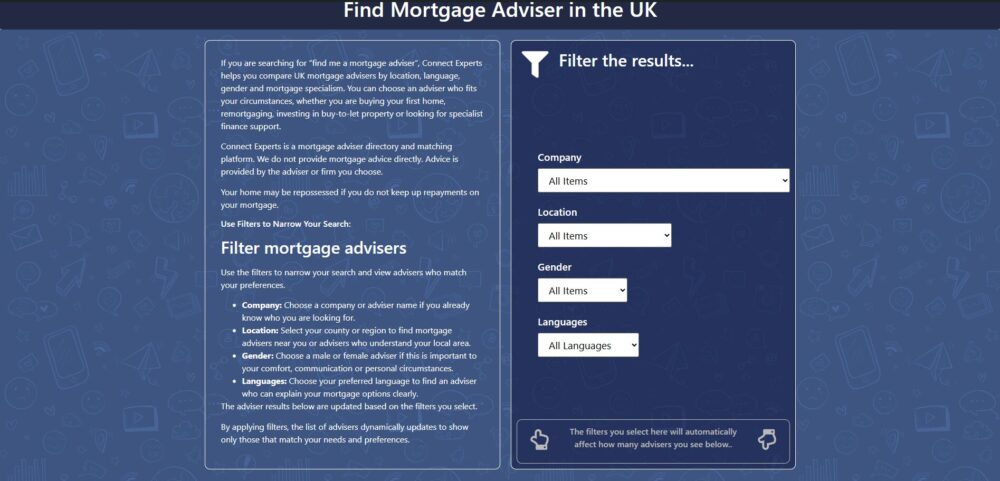
You can also search for a specialist adviser through the Commercial Bridging Loan Adviser Search on Connect Experts.
FAQs: Commercial Bridge Loans
What is a commercial bridge loan?
A commercial bridge loan is short-term finance secured against commercial or business-related property. It is usually repaid through sale, refinance or another planned exit.
How long does a commercial bridge loan last?
Terms vary by lender and case type. Many commercial bridge loans are arranged for short periods, often months rather than years.
Can I use a commercial bridge loan to buy at auction?
Yes, a commercial bridge loan may be used for auction purchases where completion deadlines are tight. The property, valuation, legal pack and exit strategy still need lender approval.
What properties can be used for commercial bridge loans?
Suitable properties may include offices, shops, warehouses, industrial units, care premises, hotels, pubs, restaurants, mixed-use buildings and other commercial premises.
Do I need an exit strategy?
Yes. A clear exit strategy is central to commercial bridging. The lender will want to know how the loan will be repaid.
Is a commercial bridge loan the same as a commercial mortgage?
No. A commercial bridge loan is short-term finance. A commercial mortgage is usually longer-term borrowing secured against commercial property.
Can a commercial bridge loan fund refurbishment?
Yes, it may support light or moderate refurbishment. Development finance may be more suitable for structural works, heavy conversion or staged building projects.
Can I get a second charge commercial bridge loan?
It may be possible, depending on the existing lender, available equity, loan purpose and borrower profile. The first charge lender may need to consent.
Are commercial bridge loans expensive?
They can cost more than longer-term finance because they are short-term and often used in time-sensitive situations. Borrowers should review the total cost, not only the rate.
Who can apply for a commercial bridge loan?
Applicants may include business owners, investors, landlords, developers, limited companies, partnerships and experienced property borrowers. Criteria vary by lender.
Risk Note
Commercial bridge loans are not suitable for everyone.
All lending is subject to status, valuation, lender criteria and affordability where applicable. Your property may be at risk if you do not keep up repayments on a mortgage or loan secured against it.
Some forms of commercial mortgage, business buy-to-let and commercial lending may not be regulated by the Financial Conduct Authority.