
First-Time Buyer Mortgage Help: Buying a first home is rarely just a property decision.
It is a test of timing, preparation, affordability and confidence. A buyer may find the right home before they fully understand what a lender wants to see. That is where many first-time buyers lose time.
A mortgage is not only about wanting to buy. It is about proving that the borrowing is affordable, the deposit is acceptable, the credit file is ready, and the property fits lender criteria.
This guide reflects the market position around March 2023. At that time, many first-time buyers were still adjusting to higher house prices, stricter affordability checks, changing work patterns and the end of Help to Buy.
The good news was that options still existed. However, they needed to be understood properly.
At a Glance
First-time buyers can improve their mortgage chances by preparing before they apply.
The main areas to review are:
- Deposit size and source
- Income and employment
- Monthly commitments
- Credit file accuracy
- Bank statement conduct
- Property type
- Scheme eligibility
- Documents required by lenders
A buyer with a smaller deposit may still have options. However, the lender will look closely at affordability, credit history and the property being purchased.
For a full product guide, read our first-time buyer mortgage advice page.
Why First-Time Buyers Needed More Clarity in 2023
In 2023, many first-time buyers faced a difficult balance.
House prices had risen over previous years. Monthly mortgage costs had become harder to judge. Meanwhile, saving for a deposit remained one of the biggest barriers.
Remote working also changed how some buyers thought about location. A buyer no longer had to focus only on areas close to an office. For some, this opened the door to cheaper locations or larger homes.
However, cheaper property does not automatically mean easier borrowing.
Lenders still consider income, outgoings, credit commitments, deposit source and property condition. A lower purchase price can help, but the mortgage must still pass affordability checks.
Start With Affordability, Not the Property Search
Many buyers begin with Rightmove, Zoopla or estate agent windows.
That is understandable. A first home is emotional. It represents security, independence and progress.
However, the mortgage process starts with numbers.
Before making an offer, a first-time buyer should understand:
- How much deposit is available
- Whether the deposit source is acceptable
- How much the lender may offer
- What the monthly payments may look like
- Which costs sit outside the deposit
- Whether any debts reduce borrowing
- Whether the credit file needs attention
A buyer may earn enough to borrow in theory. Yet credit cards, loans, childcare, car finance or student loans can reduce the final amount.
You can check how much you may be able to borrow before speaking with an adviser.
How Much Deposit Did First-Time Buyers Need?
In 2023, many first-time buyers looked at 95% mortgages.
A 95% mortgage means the buyer provides a 5% deposit. The lender then provides the remaining 95%, subject to approval.
For example, a £250,000 property would need a £12,500 deposit at 5%.
However, a 5% deposit does not guarantee approval. Lenders may ask for more deposit where risk is higher.
This may happen if:
- The buyer has recent credit issues
- Income is complex
- The property is non-standard
- Affordability is tight
- The buyer is self-employed
- The mortgage term needs to be longer
- The property is a new build flat
A larger deposit can sometimes improve product choice. It may also reduce monthly payments.
Gifted Deposits Can Help, But They Must Be Declared
Some first-time buyers receive help from family.
A gifted deposit can come from parents, grandparents, siblings or other close relatives. However, lenders need to understand whether the money is a gift or a loan.
This distinction matters.
If the money must be repaid, the lender may treat it as a financial commitment. That can affect affordability.
Most lenders will ask for a gifted deposit letter. They may also ask for evidence of where the funds came from.
A gifted deposit should be discussed before the mortgage application. It should not be treated as an informal arrangement.
What Schemes Helped First-Time Buyers in 2023?
Several options were relevant to first-time buyers in 2023.
Not every buyer qualified for every scheme. Also, not every lender accepted every route. The right option depended on the property, deposit, income and personal circumstances.
95% Mortgages
A 95% mortgage helped some buyers purchase with a 5% deposit.
This was useful for buyers who had stable income but struggled to save a larger deposit. However, rates and affordability checks could be stricter than lower loan-to-value mortgages.
Deposit Unlock
Deposit Unlock was designed to help buyers purchase selected new-build homes with a 5% deposit.
It was available through participating builders and lenders. Buyers still had to meet normal mortgage checks.
This option was useful for some new-build buyers, but it was not suitable for every property.
Shared Ownership
Shared Ownership allowed eligible buyers to purchase part of a property and pay rent on the remaining share.
This reduced the mortgage amount needed at the start. However, buyers also had to budget for rent, service charges and future staircasing costs.
It could help some buyers enter the market sooner. Yet it required careful budgeting.
First Homes Scheme
The First Homes Scheme offered eligible first-time buyers a discount on certain new-build homes.
The discount could make the purchase price more affordable. However, availability depended on location and participating developments.
Buyers also had to meet eligibility rules.
Stamp Duty Relief Was Important in 2023
Stamp Duty was another key cost for first-time buyers in England and Northern Ireland.
At the time this article was written, first-time buyer relief had changed following the September 2022 announcement. Many eligible first-time buyers paid no Stamp Duty on the first £425,000 of the purchase price.
This mattered because Stamp Duty can affect the amount of cash needed at completion.
However, tax rules can change. Buyers should always check the position before making an offer.
You can estimate your Stamp Duty position before deciding your budget.
Why Credit Files Matter Before Applying
A credit file does not need to be perfect for every mortgage.
However, it does need to be understood.
Lenders may review:
- Missed payments
- Defaults
- County Court Judgments
- Credit card balances
- Loan balances
- Payday loan use
- Electoral roll registration
- Address history
- Recent credit searches
A small issue may not stop a mortgage. However, a recent issue can reduce lender choice.
First-time buyers should check their credit file early. This gives time to correct errors, reduce balances and avoid unnecessary searches.
The worst time to discover a problem is after finding a property.
Multiple-Income Mortgages and Higher Affordability
Some first-time buyers needed higher borrowing in 2023.
This was common in areas where property prices were high compared with income. Some lenders considered higher income multiples, subject to strict criteria.
Many lenders worked around 4 to 4.5 times income. Some could go higher for certain applicants. However, this depended on income level, employment type, credit profile and wider affordability.
Higher borrowing is not always better.
A mortgage should be sustainable. The right question is not only “How much can I borrow?” It is also “Can I still live properly after the mortgage payment?”
That is why advice can matter.
Green Mortgages Were Another Area to Consider
Energy efficiency became more important for some buyers.
Some lenders offered green mortgages for energy-efficient homes. These could include cashback or rate incentives, depending on the lender and product.
This was not the main route for every first-time buyer. However, it was worth checking where the property had a strong energy rating.
A lower running cost can also support long-term budgeting.
What Documents Should First-Time Buyers Prepare?
A mortgage application often moves faster when documents are ready.
First-time buyers should usually prepare:
- Proof of ID
- Proof of address
- Latest payslips
- Latest bank statements
- Proof of deposit
- Gifted deposit letter, where relevant
- Credit commitment details
- Tax documents, if self-employed
- Details of the property being purchased
Self-employed buyers may need extra evidence. This can include accounts, tax calculations and tax year overviews.
The exact documents depend on the lender and case.
Why One Buyer’s Experience Should Not Set Your Expectations
First-time buyers often compare stories.
One friend may get approved quickly. Another may be declined. A family member may say a 10% deposit is essential. Someone else may say a 5% deposit is enough.
All of these can be true in different cases.
Mortgage lending is personal. The result depends on the buyer, the property, the lender and the timing.
That is why first-time buyers should avoid guessing.
The right preparation can stop a buyer applying to the wrong lender first.
When Should a First-Time Buyer Speak to an Adviser?
A first-time buyer should speak to an adviser before making an offer where possible.
This can help confirm:
- The likely borrowing range
- Whether the deposit source is acceptable
- Whether the credit file may cause issues
- Which lender types may fit
- Whether a scheme is relevant
- What documents are needed
- What costs must be budgeted for
Some buyers only need standard guidance. Others need specialist help due to credit, income, deposit source or property type.
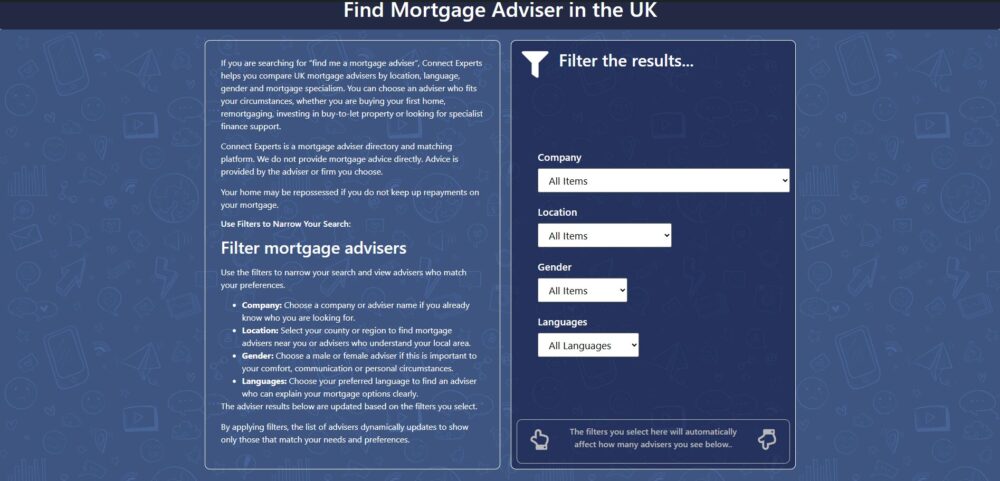
If you want to compare advisers, you can search for a first-time buyer mortgage adviser through Connect Experts.
Connect Experts is part of the Connect Group. Advice is provided by the adviser or firm selected by the customer.
FAQs
FAQ 1: Can first-time buyers get a mortgage with a 5% deposit?
Yes, some first-time buyers may be able to get a mortgage with a 5% deposit. This usually means applying for a 95% loan-to-value mortgage. Approval still depends on income, credit history, affordability, property type and lender criteria.
FAQ 2: Can parents help with a first-time buyer deposit?
Yes, many lenders accept gifted deposits from parents or close family. The gift must usually be declared, and the lender may ask for a signed gifted deposit letter.
FAQ 3: What stopped first-time buyers getting mortgages in 2023?
Common barriers included small deposits, high property prices, affordability pressure, credit issues, debts, unstable income and unsuitable property types.
FAQ 4: Is Shared Ownership suitable for first-time buyers?
Shared Ownership can help some first-time buyers purchase part of a home. However, buyers must also budget for rent, service charges and future staircasing costs.
FAQ 5: Should first-time buyers speak to a mortgage adviser before viewing homes?
Yes. Speaking to an adviser early can help buyers understand their borrowing range, deposit position, monthly costs and possible lender options.