Mortgage Approval Process | Step-by-Step Guide. Applying for a mortgage can feel overwhelming, especially if it’s your first time. At Connect Mortgages, we break down the mortgage approval process into clear, manageable steps so you can apply with confidence.
Whether you’re buying your first home, moving up the property ladder, or investing in a buy-to-let mortgage, understanding how lenders assess applications gives you an edge. We combine expert advice with tailored solutions to guide you through every milestone, saving you time, reducing stress, and improving your chances of approval.
Our FCA-regulated team helps hundreds of clients every month secure mortgage offers, often with lenders that many borrowers wouldn’t know how to access directly. You’ll receive clear communication, full transparency, and support from a named adviser from start to finish.
Let’s walk through each stage of the process below.
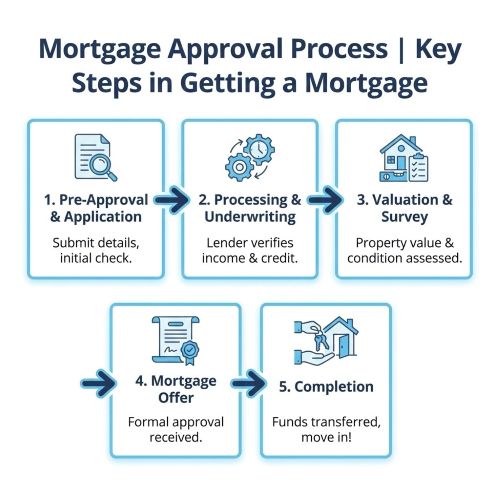
| Step | Description |
|---|---|
| Step 1: Initial Chat With a Mortgage Adviser | Your journey starts with a no-obligation conversation. During this session, we’ll explore your goals, budget, and any existing financial commitments. |
| Step 2: Pre-Approval & Affordability Check | Next, we assess how much you could borrow. We’ll review your income, outgoings, credit history, and deposit. This helps us recommend lenders likely to approve your application.
Use our mortgage calculator to get a quick estimate. |
| Step 3: Mortgage Product Recommendation | As independent mortgage brokers, we search the whole market—over 170 lenders—to find the most suitable product for your needs. Whether you’re a first-time buyer or planning to remortgage, we match you with competitive, compliant options. |
| Step 4: Document Submission | You’ll need to provide supporting documents like:
We’ll guide you through exactly what’s required. |
| Step 5: Mortgage Application Submission | We submit your mortgage application on your behalf. Our brokers liaise directly with the lender to ensure a smooth, compliant process. You’ll receive updates every step of the way. |
| Step 6: Valuation and Underwriting | The lender carries out a property valuation and completes underwriting checks. This ensures both you and the property meet their criteria.
If you’re applying with adverse credit, we’ll only approach lenders who consider specialist applications. |
| Step 7: Formal Mortgage Offer | Once approved, you will receive a formal mortgage offer, usually within 7 to 14 days of your application. We’ll review the offer with you to make sure it aligns with expectations and regulatory guidelines. |
| Step 8: Exchange and Completion | You exchange contracts with the seller (for purchases) and agree on a completion date. Funds are released, and the mortgage process is complete!
🏡 You now own your new home or investment property. |
What to Do if Your Mortgage Application Is Declined
Declining a mortgage application can be disappointing, but it’s not the end of the road. Lenders reject applications for various reasons, and the first step is to double-check the information you submitted. Errors can occur on your end or the lender’s, so it’s important to review your documents carefully.
If the decision was based on affordability, the lender may have concluded that your income is insufficient or that your outgoings are too high. In this case, consider adjusting the loan amount you’re applying for and reviewing your monthly budgeting to strengthen your financial profile.
Another option is to apply for a guarantor mortgage. This involves a family member or trusted friend agreeing to cover your repayments if you’re unable to meet them, providing the lender with added security.
Worried About Buying a House With Bad Credit?
A poor credit history, such as missed payments, defaults, or past insolvency, can make securing a mortgage more challenging. That said, it’s not impossible.
Before applying, it’s essential to review your credit report carefully. This allows you to spot any inaccuracies or issues that could raise concerns with potential lenders.
If you’re facing credit challenges, check out our guide on how to improve your credit profile and boost your chances of mortgage approval.
For additional tips, check out our guide on how to improve your credit profile and boost your chances of mortgage approval.
For additional tips, see our guide on Adverse Credit Mortgages.
Thank you for reading our “Mortgage Approval Process | Key Steps in Getting a Mortgage” publication. Stay “Connect“-ed for more updates soon!
Frequently Asked Questions
How long does mortgage approval take?
From application to offer, it typically takes 2–6 weeks. More complex cases may take longer, especially if further documentation or specialist lending is required.
Do I need a deposit before applying?
Yes, most lenders require at least a 5–10% deposit. The exact amount depends on your credit profile and the type of mortgage you’re applying for.
Can I get approved with bad credit?
Yes. We work with specialist lenders who consider applications from clients with adverse credit, including CCJs, defaults, or missed payments.
What documents do I need to apply?
You’ll typically need proof of ID, proof of address, recent payslips or accounts, and bank statements. We’ll provide a full checklist tailored to your situation.
Can I get a mortgage if I’m self-employed?
Yes, we help many self-employed applicants. Most lenders require 1–2 years of accounts or SA302s. View our self-employed mortgage guide.
What is an Agreement in Principle (AIP)?
An AIP is a lender’s statement indicating how much you can borrow. It’s not a formal offer, but it helps demonstrate to sellers that you’re serious. It doesn’t affect your credit score with most lenders.
Do you charge broker fees?
In most cases, we don’t charge upfront broker fees. Our goal is to make mortgage advice as accessible and transparent as possible.
What’s the difference between pre-approval and final approval?
Pre-approval (AIP) is an initial check based on your income and credit. Final approval follows underwriting, valuation, and document review.