
New Build Homes: What First-Time Buyers Should Know – Buying a new build as a first-time buyer can feel simple at first.
The property is new. The sales office is ready. The brochure looks clear. The chain may be shorter. The home may come with modern fittings, energy-efficient features and a warranty.
Yet a new build purchase still needs careful mortgage planning.
A first home is not only a place to live. It is also a long-term financial commitment. The right question is not just, “Can I buy this home?” It is, “Can I afford this home properly, now and after I move in?”
New Build Homes: Quick Answer
A new build home can be suitable for a first-time buyer, but the mortgage, deposit, legal process and completion timing need checking early.
Before reserving a plot, first-time buyers should understand:
- How much deposit they need
- Whether the lender accepts the property type
- How long the mortgage offer lasts
- Whether developer incentives affect the valuation
- What fees sit outside the deposit
- Whether the home is freehold, leasehold or shared ownership
- What warranty or building cover applies
- Whether the completion date could change
A new build can be a good route onto the property ladder, but the details matter.
Why New Build Mortgages Need Careful Planning
A new build mortgage is still a residential mortgage. You borrow money from a lender and repay it over an agreed term.
However, new build purchases can involve extra timing and property checks. This is because the home may not be finished when you reserve it.
Lenders may look closely at:
- The loan-to-value
- The build stage
- The warranty provider
- The developer
- The property type
- The valuation
- Any incentives offered by the builder
- The expected completion date
This matters because a mortgage offer only lasts for a set period. If the build is delayed, the offer may need extending or replacing.
That can create risk if rates, income, credit commitments or lender criteria change before completion.
You can read more about the wider mortgage process on our First-Time Buyer Mortgage page.
How Much Deposit Does a First-Time Buyer Need for a New Build?
Many first-time buyers start by thinking about a 5% deposit.
That can be possible in some cases, subject to lender criteria, affordability and the property itself. However, a larger deposit may help improve choice.
A bigger deposit may give access to:
- More lenders
- Lower loan-to-value bands
- Potentially lower rates
- Lower monthly repayments
- More flexibility if the valuation is lower than expected
For example, a buyer with a 10% deposit may have more lender options than a buyer with a 5% deposit. That does not mean every buyer needs a larger deposit, but it should be considered before reserving a new home.
The key point is simple. The deposit should support the mortgage application, not just meet the sales office requirement.
Check Affordability Before You Reserve
A reservation fee can make the purchase feel real. It can also create pressure.
Before paying it, check how much you can borrow and what the monthly payments might look like.
A lender may assess:
- Basic salary
- Overtime, bonus or commission
- Self-employed income
- Existing loans
- Credit cards
- Student loans
- Car finance
- Childcare costs
- Dependants
- Bank statements
- Credit history
A first-time buyer may be able to borrow more with one lender than another. This is because lenders use different affordability rules.
You can start with the Residential Affordability Calculator before speaking to an adviser.
Mortgage Type and Term
First-time buyers should look beyond the headline rate.
A mortgage should be judged by the full structure, not one number.
You may need to consider:
- Fixed-rate mortgages
- Tracker mortgages
- Variable-rate mortgages
- Repayment mortgages
- Mortgage term length
- Product fees
- Early repayment charges
- Overpayment rules
Many first-time buyers prefer a fixed rate because it gives payment certainty for a set period. That can help when moving from renting to homeownership.
The mortgage term also matters.
A longer term may reduce monthly payments, but it can increase the total interest paid over the life of the mortgage. A shorter term may reduce long-term interest, but the monthly payment may be higher.
The right term should fit the buyer’s income, budget and future plans.
New Build Incentives and Valuation
Developers may offer incentives to help buyers reserve a new home.
These may include:
- Deposit contributions
- Flooring
- Legal fee support
- Cashback
- Upgraded fittings
- Stamp Duty contributions
- Furniture packages
Incentives can be helpful, but they must be declared to the lender.
The lender’s valuer may consider whether the incentive affects the property’s true value. If the valuation is lower than the agreed purchase price, the buyer may need to renegotiate, increase the deposit or review mortgage options.
This is why advice should begin before the buyer becomes emotionally attached to a single plot.
Shared Ownership and New Build Homes
Shared ownership may help some first-time buyers purchase a new build home when buying the full property is not affordable.
With shared ownership, you buy a share of the property and pay rent on the remaining share. Over time, you may be able to buy more shares. This is known as staircasing.
Shared ownership can reduce the mortgage size, but it does not remove the need for careful budgeting.
You may still need to pay:
- Mortgage payments
- Rent on the unsold share
- Service charges
- Buildings insurance
- Legal fees
- Valuation fees
- Staircasing costs, if you buy more shares later
Many shared ownership homes are leasehold. Buyers should understand the lease, rent review terms, service charge position and future staircasing rules before proceeding.
You can read the official government guidance on shared ownership for more details.
Stamp Duty for First-Time Buyers
Stamp Duty rules can change, so buyers should always check the position before making an offer.
For the 2023 period of this blog, first-time buyer relief in England and Northern Ireland applied differently from the older £300,000 threshold.
From 23 September 2022, the first-time buyer nil-rate threshold was temporarily increased to £425,000. The maximum property price eligible for first-time buyer relief was increased to £625,000.
This means the buyer’s tax position depended on the purchase price, location and eligibility.
You can estimate possible costs with our Stamp Duty Calculator.
Help to Buy and the 2023 New Build Market
First-time buyers researching new builds in 2023 may still have seen references to Help to Buy.
However, the Help to Buy Equity Loan from 2021 to 2023 closed to new applications on 31 October 2022. Final legal completions were generally expected by 31 March 2023, with limited extension arrangements.
That means new-build buyers needed to consider other routes, such as standard residential mortgages, shared ownership, family support, Deposit Unlock where available, or other lender-specific products.
The lesson is important. A scheme can help, but it should not be the only reason a buyer chooses a property.
The mortgage, affordability and long-term budget still need to work.
New Build Warranty and Snagging
A new home does not mean a perfect home.
Buyers should ask what warranty applies and what process exists for reporting defects after completion.
Many new homes come with a 10-year warranty, such as an NHBC Buildmark warranty. This type of cover is usually split into two periods: an initial builder-responsibility period and later insurance cover for certain defects.
You can read more about NHBC Buildmark cover before buying.
First-time buyers should also consider a snagging inspection. This checks the property for defects, unfinished work or poor workmanship.
Common snagging issues may include:
- Paintwork defects
- Poorly fitted doors or windows
- Plumbing issues
- Electrical issues
- Cracked tiles
- Damaged fixtures
- Heating faults
- External drainage concerns
- Garden or boundary issues
Snagging should be dealt with in writing. Keep records, photos and dates.
Budget for More Than the Deposit
The deposit is only one cost.
First-time buyers should also budget for:
- Solicitor or conveyancing fees
- Mortgage valuation fees
- Product or arrangement fees
- Survey or snagging report costs
- Stamp Duty, where payable
- Removal costs
- Furniture and appliances
- Curtains, flooring or upgrades
- Buildings insurance
- Contents insurance
- Service charges, if leasehold or shared ownership
- Estate charges, where relevant
A new build can come with clean walls and modern fittings, but it can also come with costs that are easy to miss.
A written budget can help. It should include both buying costs and the first six months after moving in.
Freehold, Leasehold and Estate Charges
First-time buyers should check the ownership structure before committing.
Some new build houses are freehold. Some flats and shared ownership homes are leasehold. Some developments may include estate charges for maintaining shared areas, roads, landscaping or communal facilities.
Ask early:
- Is the property freehold or leasehold?
- What is the service charge?
- Can the service charge increase?
- Are there ground rent terms?
- Are roads adopted by the local authority?
- Are there estate management charges?
- What permissions are needed for changes to the home?
These details affect long-term affordability and future saleability.
What Documents Should First-Time Buyers Prepare?
A smoother mortgage application often starts with better preparation.
Lenders may ask for:
- Proof of ID
- Proof of address
- Payslips
- Bank statements
- Proof of deposit
- Gifted deposit letter, where relevant
- Credit commitment details
- Tax documents, if self-employed
- Details of the new build property
- Reservation agreement
- Developer incentive form
- Solicitor details
If the property is not complete, the lender may also need build stage details, warranty information and expected completion dates.
Should You Use the Developer’s Recommended Broker or Solicitor?
A developer may recommend a broker or solicitor.
That does not mean you must use them.
A recommended firm may understand the development and deadlines, but first-time buyers should still feel free to choose advice that suits their circumstances.
The most important thing is that the adviser understands new-build mortgage timing, lender criteria, offer expiry risk and the buyer’s budget.
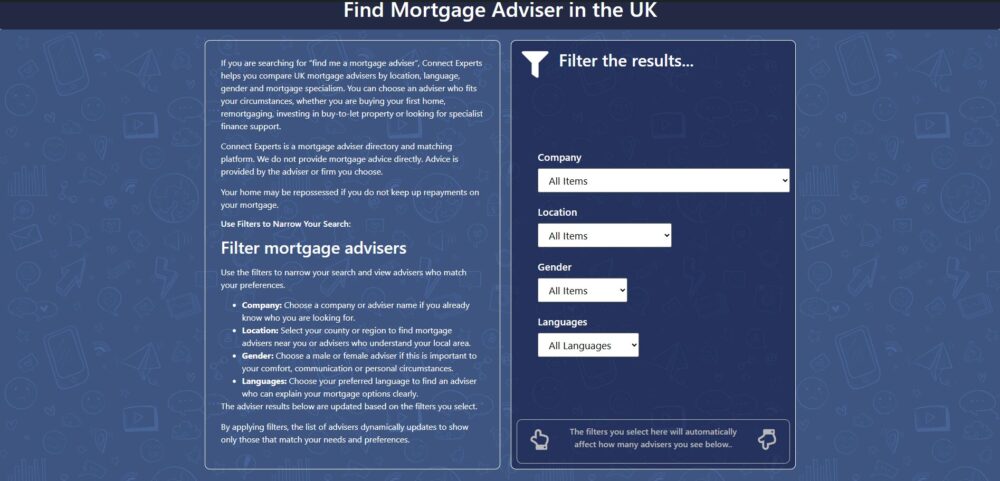
If you want to compare support, you can use Connect Experts to find a mortgage adviser for first-time buyers.
Connect Experts is part of the Connect Group. It helps users search by location, language, gender and area of expertise. Advice is provided by the adviser or firm selected by the customer.
New Build Home Checklist for First-Time Buyers
Before reserving a new build, check:
- Your deposit is enough for the lender and purchase price
- Your affordability has been reviewed
- The property type is acceptable to the lender
- The mortgage offer period fits the build timeline
- Developer incentives have been disclosed
- Stamp Duty has been checked
- Legal fees and moving costs have been budgeted
- Warranty cover has been confirmed
- Snagging plans are clear
- Service charges and estate charges are understood
- Your solicitor understands new-build purchases
- You have asked what happens if completion is delayed
A home should not be bought on excitement alone. Excitement starts the journey, but clarity protects it.
What Next?
If you are buying a new build as your first home, the mortgage should be checked before you commit to the plot.
Start with the numbers. Then check the property. Then check the timing.
You can read more on our Residential Mortgage page or use the UK Mortgage Guides on Connect Experts to understand which route may be the right next step for you.
FAQs: New Build Homes for First-Time Buyers
Is a new build mortgage different from a normal mortgage?
A new build mortgage is still a residential mortgage, but the lender may apply extra checks. These can include the property type, warranty, valuation, developer incentives and completion timing.
Can a first-time buyer get a 5% deposit mortgage on a new build?
Some first-time buyers may be able to buy with a 5% deposit, subject to lender criteria, affordability and the property. A larger deposit may improve lender choice.
Do new build homes come with a warranty?
Many new build homes come with a 10-year warranty, such as NHBC Buildmark or another recognised warranty provider. Buyers should check the cover before exchange.
What happens if my new build is delayed?
If completion is delayed, your mortgage offer may need extending. If the offer expires, you may need a new application. This could be affected by rates, income, credit history and lender criteria at that time.
Are developer incentives allowed?
Developer incentives can be allowed, but they must be disclosed to the lender. The lender and valuer may consider whether they affect the property value or mortgage terms.
Is shared ownership only for new builds?
Shared ownership is often linked with new build homes, but it is not limited to them. Buyers should check rent, service charges, lease terms and staircasing costs before proceeding.
Do first-time buyers pay Stamp Duty on new builds?
It depends on the property price, location and rules at the time of purchase. For the 2023 period, first-time buyer relief in England and Northern Ireland used the temporary £425,000 nil-rate threshold and £625,000 maximum property value limit.