
Raising Capital Using a Second Charge: A second charge mortgage can help homeowners raise capital without replacing their current mortgage. This may be useful if you want to keep your existing mortgage rate, avoid early repayment charges, or borrow more when your current lender cannot offer further funds. However, it is still a loan secured against your home, so the costs, risks, and alternatives should be reviewed carefully.
According to the Finance & Leasing Association, second charge mortgage new business reached £2.142bn in 2025. The market also recorded 41,760 new agreements, with volumes up 17% compared with the previous year. The same FLA data shows that many borrowers used second-charge lending for debt consolidation, home improvements, or a mix of both.
If you are considering this route, it may help to compare second charge mortgages with a remortgage before deciding.
Why Homeowners Raise Capital Using a Second Charge
Homeowners raise capital for different reasons. Lenders will want to understand the purpose of the borrowing before they make a decision.
Common reasons include:
- Home improvements.
- Debt consolidation.
- Family support.
- School fees.
- Business funding.
- Tax bills.
- Buying another property.
- Large planned expenses.
The Finance & Leasing Association reported that in 2025, 58.3% of second-charge new business volumes were solely for consolidating existing loans. A further 23% were for home improvements and loan consolidation, while 12% were for home improvements only.
These figures show why advice matters. Debt consolidation can reduce monthly payments, but it may also increase the total amount paid over time. It can also turn unsecured borrowing into debt secured against your home.
Why Use a Second Charge Instead of Remortgaging?
A second charge mortgage may be considered when remortgaging is not the most suitable route.
For example, you may have a low fixed rate on your current mortgage. Replacing that mortgage could move your full balance to a higher rate. You may also face early repayment charges if you leave your current deal early.
In that situation, a second-charge mortgage may allow you to borrow only the additional amount needed. Your existing mortgage remains in place.
This does not mean a second charge is automatically cheaper. The correct comparison should include:
- The rate on your current mortgage.
- The rate on the proposed second charge.
- Early repayment charges.
- Arrangement fees.
- Valuation fees.
- Legal costs.
- Broker fees.
- Monthly payment impact.
- Total amount repayable over the full term.
You can also read our guide on remortgage vs second charge loan for a deeper comparison.
Second Charge Mortgage vs Further Advance vs Remortgage
| Option | How it works | When it may help | What to check |
|---|---|---|---|
| Second charge mortgage | A separate loan secured behind your current mortgage | You want to keep your first mortgage unchanged | Rate, fees, affordability, risk, total repayable |
| Further advance | Extra borrowing from your current lender | Your lender offers suitable extra borrowing | Rate, term, criteria, purpose, total cost |
| Remortgage | Replaces your current mortgage with a new deal | You can refinance without high penalties | New rate, fees, early repayment charges, full balance cost |
| Personal loan | Unsecured borrowing | You need a smaller amount over a shorter term | Rate, term, affordability, monthly payment |
| Bridging finance | Short-term property finance | You need temporary funding with a clear exit route | Cost, risk, exit strategy, timescale |
A mortgage adviser can compare these routes based on your figures, not general assumptions.
Debt Consolidation: Why Extra Care Is Needed
Some homeowners use second charge borrowing to consolidate debts.
This may reduce monthly payments by spreading debt over a longer period. However, a lower monthly payment does not always mean a lower total cost. You may pay more interest over time.
You may also be securing previously unsecured debts against your property. This increases the risk of missed payments.
Before consolidating debt through a second charge mortgage, it is important to review:
- The debts being repaid.
- Current monthly payments.
- Existing interest rates.
- The new secured loan rate.
- The full term of the new borrowing.
- The total amount repayable.
- Whether spending habits have changed.
- Whether free debt advice may be more suitable.
If you are already struggling with payments, speak to your lender as early as possible. You may also need independent debt advice before securing more borrowing against your home.
What the FCA Says About Second Charge Mortgages
The Financial Conduct Authority reviewed second charge mortgage advice, fees, charges, and affordability assessments. It found examples of good practice, but it also found poor practice that could create poor outcomes for customers.
This matters because second charge mortgages can involve higher rates, debt consolidation, and borrowers with lower financial resilience.
A suitable advice process should consider the full position. This includes affordability, loan purpose, alternatives, fees, repayment risk, and whether the recommendation gives the customer a good outcome.
How Much Can You Borrow?
The amount you can borrow depends on your equity, income, credit profile, property value, and lender criteria.
Equity is the difference between your property value and the mortgage debt already secured against it.
For example:
| Example | Amount |
|---|---|
| Estimated property value | £350,000 |
| Current mortgage balance | £220,000 |
| Estimated equity before costs | £130,000 |
This does not mean you can borrow the full amount of equity. Lenders apply loan-to-value limits and affordability checks.
You can use our mortgage calculator to understand payment examples. However, a calculator is only a guide. It does not confirm whether a lender will approve an application.
Adviser Checklist Before Recommending a Second Charge
A second charge recommendation should be based on more than loan availability.
The adviser should review:
- Why does the client want to raise capital?
- Whether the reason is acceptable to lenders.
- Whether the client can afford both payments.
- Whether a further advance is available.
- Whether a remortgage would be cheaper.
- Whether the first mortgage has early repayment charges.
- Whether the client has credit issues.
- Whether the term increases the total cost.
- Whether the client understands the secured borrowing risk.
- Whether protection needs should be reviewed.
This creates a clearer, more responsible advice journey.
Finding a Second Charge Mortgage Adviser
Some borrowers prefer to search for an adviser with second charge experience.
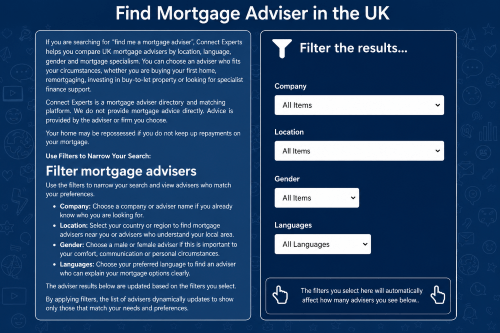
You can use Connect Experts to find a second charge mortgage adviser by location, language, and adviser preference. Connect Experts is a directory and matching platform. Mortgage advice is provided by the adviser or firm selected by the customer.
You can also compare second-charge brokers to understand how broker support may help with secured loan options.
Speak to Connect Mortgages
Raising capital using a second charge mortgage can be useful in the right circumstances. However, it should be compared with the main alternatives before you apply.
Connect Mortgages can help you review:
- Your current mortgage position.
- Your equity.
- Your reason for borrowing.
- Your affordability.
- Your repayment plans.
- Your remortgage options.
- Your second charge options.
- Any protection needs linked to the new borrowing.
Your home may be repossessed if you do not keep up repayments on your mortgage or any loan secured on it.
FAQs: Raising Capital Using a Second Charge Mortgage
What does raising capital mean?
Raising capital means borrowing extra money, often against property equity. Homeowners may do this for home improvements, debt consolidation, family support, business needs, or another legal purpose.
Is a second charge mortgage the same as a second mortgage?
Yes, the terms are often used in the same way. A second charge mortgage is an additional loan secured against a property that already has a mortgage.
Does a second charge replace my current mortgage?
No. Your existing mortgage usually stays in place. The second charge mortgage runs alongside it as a separate secured loan.
Why would someone use a second charge instead of remortgaging?
A second charge may help if the borrower wants to keep their current mortgage rate, avoid early repayment charges, or borrow extra funds without refinancing the full mortgage balance.
Are second charge mortgages regulated?
Many second charge mortgages are regulated by the Financial Conduct Authority. The exact position can depend on the property, borrower, and purpose of the loan.
Can I use a second charge mortgage for debt consolidation?
Yes, some borrowers use second charge mortgages to consolidate debt. However, this should be reviewed carefully because unsecured debts may become secured against your home.
Can I use a second charge mortgage for home improvements?
Yes, home improvements are a common reason for second charge borrowing. Lenders will still assess affordability, equity, credit history, and the purpose of the borrowing.
What are the main risks?
The main risk is that your home may be repossessed if you do not keep up repayments. You should also check interest rates, fees, total repayable, and the impact of a longer term.
Is a further advance better than a second charge?
Sometimes. A further advance from your current lender may be cheaper, but not always. It depends on the rate, lender criteria, term, fees, and your circumstances.
Should I get advice before applying?
Yes. Advice can help you compare a second charge mortgage with a remortgage, further advance, personal loan, or another route. This is important because the loan is secured against your property.