

Should You Brave Remortgaging? Remortgaging is not just a rate decision. It is a timing decision, a risk decision and a household budget decision.
When a mortgage rate ends, many borrowers face a quiet moment of judgement. Do they stay with their current lender? Do they move to a new one? Do they fix again, consider a tracker, or accept the lender’s standard variable rate for a while?
The answer is rarely found in one headline rate. It sits inside the detail.
A remortgage may change your interest rate, monthly payment, mortgage term, lender, product fee, early repayment charge, loan-to-value position and future flexibility. Therefore, the best route depends on your mortgage balance, property value, income, credit profile, current deal and future plans.
If your rate is ending soon, you can start by reading Connect Mortgages’ guide to remortgage advice. This can help you understand the wider process before comparing options.
At a Glance
Remortgaging may be worth considering if your current fixed rate is ending, you are on your lender’s standard variable rate, or your circumstances have changed.
However, the cheapest rate is not always the cheapest mortgage. Fees, early repayment charges, valuation, legal work, affordability checks and loan-to-value can all change the final cost.
Many borrowers can review options several months before their current deal ends. This may help them avoid moving automatically onto a standard variable rate.
A product transfer with your current lender may be simpler. A remortgage to a new lender may offer wider choice. A second charge mortgage may be worth reviewing if you want to raise funds but keep your current mortgage.
The right decision should be based on total cost, affordability and your plans, not fear of the market.
What does remortgaging mean?
Remortgaging means replacing your current mortgage deal with a new one.
This can happen in two main ways:
- You switch to a new deal with your current lender
- You move your mortgage to a different lender
The first route is often called a product transfer. The second route is usually called an external remortgage.
Both can be useful. However, they are not the same.
A product transfer may involve less paperwork because you remain with your current lender. In many cases, it may not require a full affordability assessment or property valuation.
An external remortgage gives you access to other lenders. However, it may involve underwriting, affordability checks, credit searches, conveyancing and valuation.
This is why the question is not simply, “Which rate is lowest?” The better question is, “Which option gives me the right cost, security and flexibility?”
Why remortgaging feels harder when rates move
Mortgage decisions feel easy when rates are low and stable. They feel harder when the market changes.
However, uncertainty does not remove the need for action. It only makes preparation more important.
The Bank of England Bank Rate affects borrowing costs across the economy. When Bank Rate rises, lenders often increase the cost of loans and mortgages. When it falls, mortgage pricing may reduce, although not always immediately.
This matters because mortgage pricing is also shaped by swap rates, lender funding costs, inflation expectations, competition and borrower risk. Therefore, mortgage rates do not always move in a straight line with Bank Rate.
A borrower may see one headline about rates falling, then receive a mortgage quote that feels higher than expected. This is why personal circumstances matter.
Lenders may assess:
- Loan-to-value
- Income and employment type
- Credit history
- Mortgage term
- Property type
- Current mortgage balance
- Existing debts
- Monthly commitments
- Dependants
- Repayment method
For a clearer starting point, you can use Connect Mortgages’ mortgage calculators to estimate repayments before speaking to an adviser.
The technical parts of a remortgage
A remortgage can look simple from the outside. In practice, several moving parts affect the final decision.
| Technical point | Why it matters |
|---|---|
| Interest rate | Affects monthly payments and total interest |
| Product fee | A lower rate may come with a higher fee |
| Loan-to-value | Lower LTV bands may offer better rates |
| Mortgage term | A longer term can reduce payments but increase total interest |
| Early repayment charge | Leaving a deal early may create extra cost |
| Standard variable rate | Usually offers flexibility but can be expensive |
| Valuation | A property value change can affect LTV |
| Affordability | Lenders must assess whether the mortgage is sustainable |
| Legal work | Some remortgages require conveyancing |
| Credit profile | Missed payments or new debts can affect options |
This is where the practical work begins.
A borrower with a low mortgage balance may not benefit from paying a high product fee for a slightly lower rate. Another borrower with a larger balance may find the same fee worthwhile.
A borrower with improved property value may move into a lower LTV band. Another borrower may find that a fall in value limits their options.
A borrower with stable employment may pass affordability checks more easily. A self-employed borrower, contractor or someone with variable income may need a lender that understands their income pattern.
Therefore, remortgaging should be judged by the full structure, not the headline rate alone.
Product transfer or remortgage to a new lender?
Many borrowers start with their current lender. This can make sense, especially if speed and simplicity matter.
A product transfer may be suitable if:
- Your current lender offers a competitive deal
- Your circumstances have changed since your last mortgage
- You want to avoid a full application
- You do not need to borrow more
- You want a simpler route before your rate ends
A remortgage to a new lender may be suitable if:
- Your current lender’s deals are not competitive
- Your property value has increased
- Your income now fits another lender better
- You want to change the mortgage term
- You want to raise additional funds
- You need a lender with different criteria
Neither route is automatically better. The right route depends on total cost, criteria and your plans.
If you want to compare adviser options before deciding, Connect Experts has a useful remortgage guide UK for borrowers reviewing their next step.
Should you fix your mortgage again?
A fixed-rate mortgage gives payment certainty for a set period. This can help households budget, especially when income and outgoings are already stretched.
A fixed rate may suit you if:
- You want predictable monthly payments
- You have limited room for payment increases
- You plan to stay in the property
- You value certainty over flexibility
- You do not want to track market movements each month
However, fixed rates can carry early repayment charges. This may matter if you plan to move, repay a large amount, sell the property, or change ownership.
A longer fixed rate may offer more certainty. A shorter fixed rate may offer more flexibility.
The decision is philosophical as much as financial. Some people pay for certainty because it helps them sleep. Others accept movement because flexibility matters more.
Both positions can be reasonable. The key is knowing which risk you are choosing.
Should You Consider a Tracker Mortgage?
A tracker mortgage usually follows the Bank of England Bank Rate, plus a set percentage.
For example, if Bank Rate changes, your mortgage rate may change too. This can work in your favour if rates fall. It can also increase your payments if rates rise.
A tracker may suit you if:
- You can afford payment movement
- You expect rates may fall
- You want more flexibility
- You may move or repay early
- You are comfortable with some uncertainty
However, tracker mortgages are not risk-free. A lower starting rate may become more expensive if rates rise. Some tracker products also include fees or early repayment charges.
The practical test is simple. Could your budget cope if payments increased?
If not, a fixed rate may give better peace of mind.
Should You Stay on the Standard Variable Rate?
A lender’s standard variable rate, often called SVR, is the rate you may move onto when your current mortgage deal ends.
SVRs can be flexible. They may allow overpayments or repayment without early repayment charges. However, they are often higher than new fixed or tracker deals.
Staying on SVR may be considered if:
- You plan to sell very soon
- You expect to repay the mortgage shortly
- You are waiting for a specific life event
- You need short-term flexibility
- Early repayment charges make switching unattractive
However, staying on SVR without a plan can be costly.
If your rate is ending within the next few months, it may be sensible to review options early. Many borrowers can secure a new deal before their current one finishes.
When Should You Start Looking at Remortgage Options?
A good time to review your mortgage is around six months before your current deal ends.
This gives you time to check your current balance, property value, income, credit file, fees and lender options. It also gives you time to compare a product transfer against an external remortgage.
Leaving it too late can reduce choice. It may also increase the risk of moving onto your lender’s SVR.
A practical timeline may look like this:
| Time before rate ends | What to do |
|---|---|
| 6 months | Check your current deal, balance and end date |
| 5 months | Estimate property value and loan-to-value |
| 4 months | Review income, credit file and monthly commitments |
| 3 months | Compare product transfer and remortgage options |
| 2 months | Prepare documents and submit an application if needed |
| 1 month | Confirm completion date and avoid SVR where possible |
This timeline is not fixed. Some borrowers need longer, especially where income, credit history or property type is more complex.
What Documents May You Need?
A remortgage can involve a full mortgage application, especially if you move to a new lender.
You may need:
- Proof of identity
- Proof of address
- Payslips
- Bank statements
- Latest mortgage statement
- Evidence of bonuses or overtime
- Self-employed accounts or tax calculations
- Details of credit commitments
- Buildings insurance details
- Property information
Self-employed applicants may need extra care. Lenders can assess income differently, depending on trading history, company structure and retained profits.
If your income has changed since your last mortgage, do not assume your existing borrowing level will be accepted automatically.
How Loan-to-Value Affects Remortgaging
Loan-to-value, or LTV, compares your mortgage balance with your property value.
For example, if your home is worth £300,000 and your mortgage is £210,000, your LTV is 70%.
LTV matters because lenders often price products in bands. A lower LTV can sometimes improve the rates available.
Your LTV may improve if:
- Your property value has increased
- You have reduced your mortgage balance
- You have made overpayments
- You are borrowing less than before
Your LTV may worsen if:
- Property values have fallen
- You want to borrow more
- You have an interest-only mortgage
- Your mortgage balance has not reduced much
This is why valuation matters. A small difference in property value can sometimes move you into a different LTV band.
Borrowing More When You Remortgage
Some borrowers remortgage because they want to raise extra funds.
This may be for home improvements, debt consolidation, family support, business needs or another purpose. However, borrowing more against your home increases the debt secured on it.
Lenders will assess affordability and purpose. They may also restrict certain uses.
Before borrowing more, consider:
- The new monthly payment
- The total interest over the term
- Whether the mortgage term is being extended
- Product fees and legal costs
- Whether unsecured debt is being moved into secured debt
- Whether a second charge mortgage may be more suitable
Debt consolidation can reduce monthly outgoings. However, it may cost more over the full term if short-term debts are spread over many years.
If you want to compare this route, read Connect Mortgages’ guide to remortgage vs second charge loan.
When a Second Charge Mortgage May Be Worth Reviewing
A second charge mortgage is a separate loan secured against your property. It sits behind your main mortgage.
It may be worth reviewing if you want to raise funds without disturbing your current mortgage.
This can matter if:
- Your existing mortgage has a low rate
- Your early repayment charge is high
- Your current lender will not offer further borrowing
- You need a lender with different criteria
- You want to keep your main mortgage in place
However, a second charge mortgage adds another monthly payment. It is also secured on your home.
The comparison should look at total cost, not just speed or convenience. Connect Mortgages explains this further in its guide to second charge mortgages.
How Affordability Affects Your Remortgage
Affordability is one of the most important parts of remortgaging.
Even if you have paid your current mortgage well, a new lender may still assess your income, spending and debts. This is because the new lender must decide whether the mortgage is affordable now.
Affordability can be affected by:
- Higher household bills
- New credit commitments
- Childcare costs
- Reduced income
- Self-employed income changes
- Recent missed payments
- Dependants
- Mortgage term changes
- Retirement age
This is why preparation matters. A mortgage that was affordable three years ago may not pass every lender today.
You can use the residential affordability calculator as an early guide before taking advice.
Remortgaging and protection
A remortgage is also a useful time to review protection.
Your mortgage may be changing. Your payment may be changing. Your household responsibilities may have changed too.
Protection is not just an add-on. It is part of the question, “Could this mortgage still be maintained if life changed?”
You may want to review:
- Life insurance
- Critical illness cover
- Income protection
- Buildings insurance
- Contents insurance
- Family protection needs
This is especially important if you are increasing your mortgage, extending the term, changing repayment method or adding another borrower.
Connect Mortgages has more information on mortgage protection and life insurance.
Practical Remortgage Checklist
Before choosing a new deal, check the following:
- When does your current rate end?
- What is your current mortgage balance?
- What is your current monthly payment?
- What is your lender’s SVR?
- Are there early repayment charges?
- What is your estimated property value?
- What is your current loan-to-value?
- Has your income changed?
- Has your credit profile changed?
- Do you need to borrow more?
- Do you plan to move soon?
- Do you need payment certainty?
- Could your budget cope with rate movement?
- Are product fees worth paying?
- Have you compared product transfer and remortgage options?
This checklist helps keep the decision grounded.
A mortgage is not just a product. It is a promise made against future income. The better the preparation, the less that promise depends on guesswork.
Should You Brave Remortgaging?
You should consider remortgaging if your current deal is ending, your lender’s SVR is expensive, or your mortgage no longer fits your plans.
However, bravery should not mean rushing.
A good remortgage decision is calm, structured and evidence-led. It looks at rates, fees, term, flexibility, affordability and risk. It also considers whether staying with your current lender is better than moving elsewhere.
For many homeowners, the danger is not choosing the wrong headline rate. The danger is doing nothing until the old deal ends.
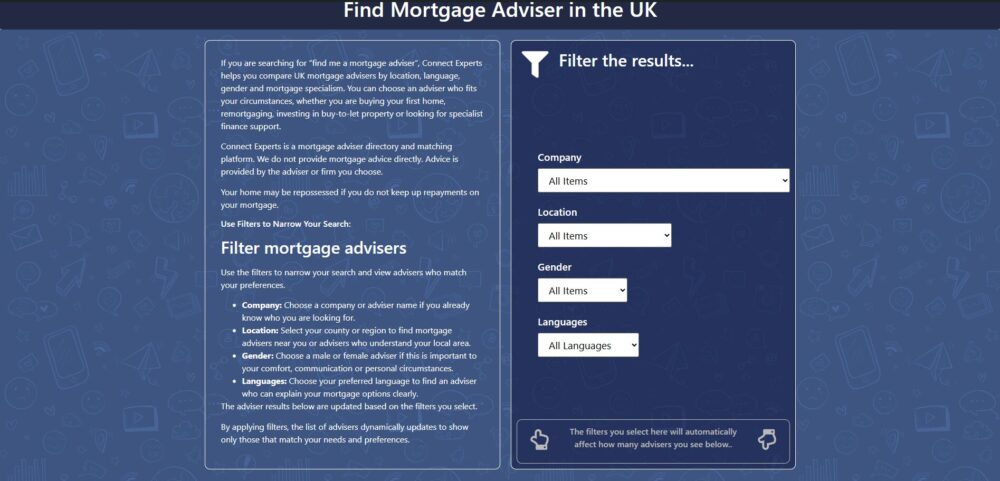
If your mortgage rate is ending soon, compare your options early. If you want to find an adviser who handles rate-ending cases, you can search Connect Experts for mortgage rate-ending advisers.
FAQs
Is remortgaging always cheaper than staying with my lender?
No. A remortgage to a new lender may offer a lower rate, but fees, legal work and affordability checks can affect the outcome. A product transfer with your current lender may be simpler and sometimes cheaper overall.
How early should I review my mortgage before the rate ends?
It is sensible to start reviewing your mortgage around six months before your current rate ends. This gives you time to compare options and avoid moving onto the lender’s standard variable rate without a plan.
What is the difference between a remortgage and a product transfer?
A remortgage usually means moving to a new lender. A product transfer means switching to a new deal with your current lender. A product transfer may involve less paperwork, but it may not always offer the best overall choice.
Can I remortgage if my income has changed?
Yes, but your options may depend on the type of income change. Lenders assess employed, self-employed, contractor, bonus and variable income differently. Some cases need a lender with more flexible criteria.
Can I borrow more when I remortgage?
You may be able to borrow more, subject to lender criteria, affordability and property value. However, increasing borrowing raises the debt secured against your home and may increase total interest.
Is a tracker mortgage better than a fixed rate?
Not always. A tracker may offer flexibility and may benefit if rates fall. However, your payments can rise if rates increase. A fixed rate may be better if you need payment certainty.
What happens if I do nothing when my mortgage deal ends?
You may move onto your lender’s standard variable rate. This can be more expensive than a new deal. However, some borrowers may accept SVR briefly if they need flexibility or plan to repay soon.
Does remortgaging affect my credit file?
A full remortgage application may involve credit checks. Missed payments, high credit use or recent borrowing can affect lender decisions. A product transfer may involve fewer checks, depending on the lender.
Should I remortgage or take a second charge mortgage?
A remortgage may suit you if your current deal is ending or a new lender offers better overall terms. A second charge mortgage may be worth reviewing if you want to raise funds but keep your current mortgage in place.
Do I need advice before remortgaging?
Advice can help if you are unsure about rates, fees, affordability, product transfers, borrowing more, credit issues or future plans. A mortgage is secured on your home, so the decision should be reviewed carefully.
Your home may be repossessed if you do not keep up repayments on your mortgage or any loan secured on it.