
Bad Credit Mortgages: How Lenders Assess Applications – A bad credit mortgage is not a different type of mortgage in law. It is a way of describing a mortgage application where the borrower has past or current credit issues.
That detail matters.
A mortgage is not only about the house. It is also about risk, timing, evidence and trust. A lender looks at the property, the deposit, the borrower’s income and the story shown by the credit file. Sometimes that story is simple. Sometimes it needs explaining.
Bad credit does not always mean a mortgage is impossible. However, it can affect the lenders available, the interest rate, the deposit needed and the checks carried out before approval.
This guide explains the technical and practical parts of bad credit mortgages. It is written for UK borrowers who want to understand what lenders may review before they apply.
Your home may be repossessed if you do not keep up repayments on your mortgage.
Bad Credit Mortgages
A bad credit mortgage may be possible if your credit history includes missed payments, defaults, County Court Judgments, debt management plans, IVAs, bankruptcy or other credit issues.
Lenders usually assess:
- The type of credit issue
- When it happened
- The amount involved
- Whether it has been settled
- Your deposit or equity
- Your income and affordability
- Your recent bank conduct
- The property you want to buy or remortgage
Older, settled issues may be viewed differently from recent or unpaid issues. A larger deposit may also improve the number of lender options. Before applying, it helps to review your credit file, check affordability and speak with a mortgage adviser who understands specialist lending.
What Is a Bad Credit Mortgage?
A bad credit mortgage is a mortgage considered by lenders who may accept borrowers with credit issues.
It may also be called an impaired credit mortgage, poor credit mortgage or adverse credit mortgage. These terms are often used in similar ways, but lenders do not all define them the same way.
Bad credit may include:
- Missed payments
- Late payments
- Defaults
- County Court Judgments, also called CCJs
- Debt management plans
- Individual Voluntary Arrangements, also called IVAs
- Bankruptcy
- Repossession
- Payday loan history
- High credit use
- Previous mortgage declines
A lender will not usually look at one item in isolation. They will look at the whole case.
That is where the practical work begins.
Why Bad Credit Mortgages Are Different
A standard mortgage application often follows cleaner lender criteria. The borrower has stable income, acceptable credit conduct and enough deposit for the product selected.
A bad credit mortgage application may need more assessment. The lender may want to understand what happened, whether the issue has been resolved and whether the borrower’s current position is now stable.
This can affect:
- The interest rate
- The maximum loan size
- The deposit required
- The documents requested
- The lender available
- The speed of the application
- The chance of approval
The product is not just about access. It is about whether the lending remains suitable and affordable.
How Lenders Assess Bad Credit
Lenders usually assess bad credit through several practical questions.
What type of credit issue was recorded?
A missed mobile phone payment may be assessed differently from recent mortgage arrears. A small settled default may be viewed differently from an unpaid CCJ.
The type of credit issue matters because it shows the lender what kind of risk was involved.
When did it happen?
Recent credit issues are usually more important than older ones.
A lender may view a problem from last month differently from an issue several years ago. Time can help, but it does not remove the need for clear evidence.
Has the debt been settled?
A satisfied credit issue may be viewed more positively than an unpaid one.
Settlement does not guarantee approval. However, it can show that the borrower has taken steps to resolve the issue.
How much was involved?
The value of the debt can matter.
A lender may treat a small missed payment differently from a large unpaid default. They may also check whether several small issues show a wider pattern.
What is your current financial position?
Lenders will usually look at current income, spending, commitments and recent bank conduct.
A past problem may be easier to explain if your recent finances are stable.
Credit Score vs Credit File
A credit score can help you understand your general position. However, mortgage lenders do not rely only on the score shown by a credit reference agency.
They usually review the credit file behind the score.
That file can show:
- Payment history
- Credit limits
- Credit use
- Defaults
- CCJs
- Linked addresses
- Financial associations
- Recent credit searches
- Open and closed accounts
Before speaking with a lender, it may help to review your credit file. This can help identify errors, old addresses, missed accounts or issues that need explaining.
Deposit and Loan-to-Value
Deposit is one of the most important parts of a bad credit mortgage application.
The deposit affects the loan-to-value, often called LTV. This shows the mortgage as a percentage of the property value.
For example, if you buy a property for £300,000 and borrow £240,000, the LTV is 80%.
A lower LTV can reduce lender risk. This may help if the credit issue is older, settled or less severe.
A higher LTV may still be possible in some cases, but the lender may apply stricter criteria. The interest rate may also be higher.
The principle is simple. The more risk the lender sees in the credit file, the more important the rest of the application becomes.
Affordability Still Comes First
Bad credit does not remove affordability checks.
A lender still needs to assess whether the mortgage is affordable. They may review income, spending, debts, dependants, employment and regular commitments.
They may also review bank statements to understand how money is managed each month.
This can include:
- Salary credits
- Rent or mortgage payments
- Loan repayments
- Credit card balances
- Overdraft use
- Gambling transactions
- Returned payments
- Regular subscriptions
- Childcare costs
- Household bills
A clean recent bank conduct pattern may help support the application. Repeated returned payments or heavy overdraft use may raise concerns.
You can use the residential affordability calculator to get an initial view of borrowing potential before seeking advice.
The Main Credit Issues Lenders May Review
Different lenders use different criteria. However, most bad credit mortgage assessments focus on the same broad areas.
| Credit issue | What lenders may check |
|---|---|
| Missed payments | What was missed, how recently it happened and whether payments are now up to date |
| Defaults | Date registered, value, reason, settlement status and current credit conduct |
| CCJs | Amount, registration date, whether paid and whether wider finances have improved |
| Debt Management Plan | Whether it is active, completed and how payments have been maintained |
| IVA | Whether it is active, completed or discharged, and how much time has passed |
| Bankruptcy | Discharge date, deposit size, current stability and lender appetite |
| Repossession | Date, reason, debt position and strength of current finances |
| Payday loans | Frequency, recency and whether they suggest financial pressure |
This is why a bad credit mortgage is rarely judged by one factor. The lender usually wants to see the full pattern.
Timing Can Change the Outcome
With bad credit mortgages, timing can be just as important as deposit.
Applying too early may reduce the number of lender options. Waiting too long may also create problems if rates rise, rent costs increase or the right property is lost.
A broker may help you decide whether to apply now or prepare first.
You may need time to:
- Correct credit file errors
- Settle unpaid debts
- Reduce credit card balances
- Build deposit
- Avoid new credit applications
- Improve bank conduct
- Gather documents
- Show stable income
Sometimes, patience is not delay. It is preparation.
Why Multiple Mortgage Applications Can Be Risky
Each application should be considered carefully.
Submitting several applications to unsuitable lenders can create unnecessary credit searches. It may also increase the chance of decline.
A decline does not always mean no lender will help. It may mean the wrong lender reviewed the wrong case at the wrong time.
This is why preparation matters. The aim is not to apply everywhere. The aim is to apply where the case has a realistic chance.
Documents You May Need
A bad credit mortgage application may need more supporting documents than a standard case.
You may be asked for:
- Proof of ID
- Proof of address
- Payslips
- P60
- Bank statements
- Tax calculations if self-employed
- Business accounts if self-employed
- Proof of deposit
- Gifted deposit letter if relevant
- Credit report
- Explanation of credit issues
- Evidence that debts have been settled
- Current mortgage statement if remortgaging
The documents help the adviser understand the case before a lender reviews it.
They also help explain the difference between a past problem and your current financial position.
First-Time Buyers with Bad Credit
First-time buyers may still have mortgage options after credit issues.
However, the lender may look closely at deposit, income, recent spending and the type of credit issue involved.
A first-time buyer with an older settled default may be viewed differently from someone with recent unpaid debts.
If you are also comparing wider buying routes, you can read more about first-time buyer mortgages.
Remortgaging with Bad Credit
Bad credit can also affect remortgage options.
This may apply if your credit position has changed since your current mortgage started. It may also matter if you want to raise funds, change lender or avoid moving onto a higher variable rate.
A remortgage with bad credit may be considered for:
- Replacing an existing mortgage deal
- Reviewing current monthly payments
- Raising funds for home improvements
- Consolidating debts
- Moving away from a lender’s standard variable rate
- Restructuring borrowing after financial pressure
Debt consolidation is not suitable for everyone. It can increase the total amount repaid if debts are spread over a longer term.
For wider guidance, read our remortgage advice.
Second Charge Mortgages and Bad Credit
A second charge mortgage may be considered if you already own a property and need to borrow against available equity.
It sits behind your existing mortgage. It does not replace your first mortgage.
This route may be considered where changing the main mortgage is not suitable. However, it increases secured borrowing and monthly commitments.
Before considering this route, read our guide to second charge mortgages.
Bad Credit Mortgage Rates
Bad credit mortgage rates are often higher than standard mortgage rates.
This is because the lender may view the case as higher risk. The rate may depend on the credit issue, deposit size, property type, loan amount and wider affordability.
The lowest rate is not always the right measure at the start. The first question is whether the lender can consider the case at all.
After that, the adviser can compare suitable products and explain the costs.
You can use the quick mortgage calculator to estimate monthly repayments. This gives an indication only and is not a mortgage offer.
When It May Be Better to Wait
A bad credit mortgage is not always the right immediate step.
It may be better to wait if:
- The credit issue is very recent
- Debts remain unpaid
- Bank conduct is unstable
- Deposit is too low
- Income has changed recently
- Documents are incomplete
- Affordability is too tight
- A credit file error needs correcting
Good advice is not always about rushing forward. Sometimes, it is about knowing when the case is not ready.
A stronger application may lead to more lender options later.
How a Mortgage Adviser Can Help
A mortgage adviser can review the case before an application is submitted.
This can help reduce the risk of applying to unsuitable lenders.
An adviser may help you understand:
- Which credit issues matter most
- Whether the timing is right
- What deposit may be needed
- How affordability may be assessed
- Which documents to prepare
- Whether a lender may consider the case
- What risks and costs should be reviewed
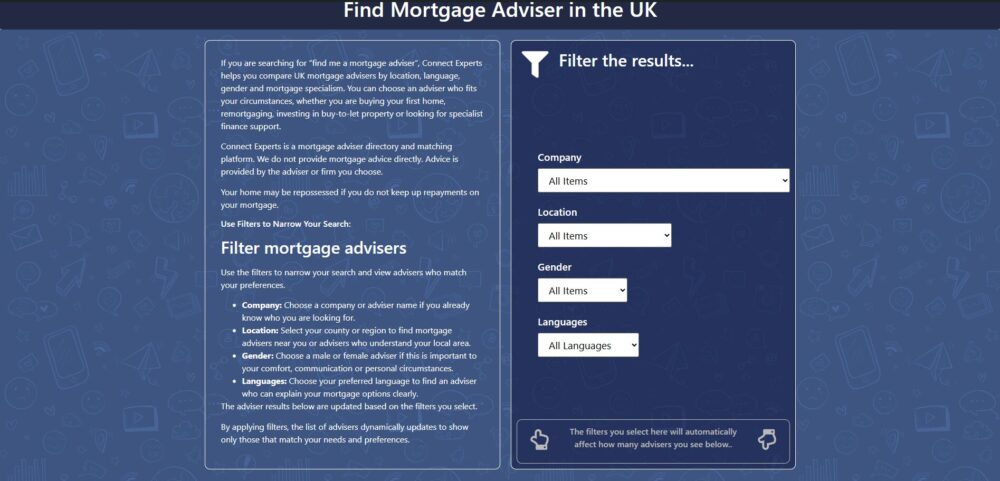
If you would prefer to compare adviser options by location, language or specialism, you can use Connect Experts to find a mortgage adviser in the UK.
Why Speak to Connect Mortgages?
Bad credit mortgage cases need careful assessment.
At Connect Mortgages, we review your credit position, income, deposit, property plans and current commitments before discussing lender options.
We can help you understand whether now may be the right time to apply, or whether preparation may improve your position.
If you want to speak with our team, you can contact Connect Mortgages and explain your situation.