

Need to Remortgage? What to Check Before You Switch – A mortgage is not just a loan. It is a long agreement with changing points along the way.
For many homeowners, one of the most important points is the end of a fixed, tracker or discount rate. That is when the mortgage may move to the lender’s Standard Variable Rate. It is also when many people ask a simple question with serious consequences: do I need to remortgage?
The answer depends on the product, the timing, the fees, the equity in the property, and your current circumstances.
A remortgage can help you review your rate, change lender, raise money, alter your term or move to a different mortgage structure. However, it is not always the right route. Sometimes, a product transfer with your existing lender may be more suitable.
The value is not only in switching. The value is in knowing what you are comparing.
At a Glance
You may need to remortgage if your current mortgage deal is ending, your payment may rise, or your circumstances have changed.
Before you decide, check:
- When your current rate ends
- Whether an early repayment charge applies
- Your current mortgage balance
- Your estimated property value
- Your loan-to-value
- Your income and outgoings
- Your credit file
- Any product, valuation or legal fees
- Whether a product transfer may be better
- Whether borrowing more would increase long-term cost
For wider support, read our remortgage advice page.
What Does Remortgaging Actually Mean?
Remortgaging usually means replacing your current mortgage with a new mortgage on the same property.
You are not moving home. Instead, you are reviewing the mortgage secured against your current home.
A remortgage may involve moving to a different lender. The new mortgage pays off the old mortgage, and your future payments move to the new lender.
However, not every new deal is a full remortgage. You may also be offered a product transfer by your current lender. This means you stay with the same lender but switch to a new product.
Both routes can be useful. The right route depends on cost, criteria and timing.
Why Do Homeowners Start Looking at a Remortgage
Most homeowners start looking because their current deal is coming to an end.
When a fixed, tracker or discount period ends, the lender may move the mortgage onto its Standard Variable Rate. This rate can be higher than the current deal.
That change can affect monthly payments. It can also affect household planning.
However, a lower rate is not the only reason to review your mortgage. You may also want to:
- Borrow more for home improvements
- Change the mortgage term
- Move from interest-only to repayment
- Move from variable to fixed
- Review your lender after income changes
- Check whether your loan-to-value has improved
- Consolidate debts, where suitable
- Review protection linked to the mortgage
A mortgage review should not begin with the question, “What is the cheapest rate?”
It should begin with, “What does this mortgage need to do now?”
When Should You Start Looking?
You should usually start reviewing your options several months before your current deal ends.
This gives you time to compare your existing lender’s offer with other lenders. It also gives time to check affordability, documents, property value and possible fees.
Leaving the review too late can reduce your options. It may also leave you exposed to the lender’s Standard Variable Rate.
A simple timeline can help:
- Six months before expiry: check your current deal end date
- Five months before expiry: review your balance and property value
- Four months before expiry: compare product transfer and remortgage options
- Three months before expiry: prepare documents
- Two months before expiry: submit an application where suitable
- One month before expiry: check completion timing
Some lenders allow rates to be secured in advance. However, rules vary between lenders and products.
Remortgage or Product Transfer?
A remortgage and a product transfer are often discussed together. They are not the same.
| Option | What it means | When it may fit |
|---|---|---|
| Remortgage | You move your mortgage to a new lender | You want wider market options, extra borrowing, or different criteria |
| Product transfer | You stay with your current lender and move to a new deal | You want a simpler route and do not need major changes |
| Further advance | You borrow more from your current lender | You need extra funds and your lender’s terms fit |
| Second charge mortgage | You keep your first mortgage and add another secured loan | You want to avoid changing the main mortgage |
A product transfer can be simpler because it may involve fewer checks. However, it may not be the best option if another lender offers a more suitable structure.
A full remortgage can give access to a wider choice of lenders. However, it may involve affordability checks, valuation work, legal work and more paperwork.
The decision should be based on total cost, not the headline rate alone.
The Technical Checks That Matter
A remortgage decision should be built on facts.
The following checks help create a clear picture before you apply.
1. Current deal end date
Check the exact date your current product ends.
This matters because switching too early may trigger an early repayment charge. Waiting too long may place you on the lender’s Standard Variable Rate.
2. Early repayment charge
An early repayment charge is a fee for leaving a mortgage product before the agreed period ends.
It can be a percentage of the mortgage balance. Therefore, it can be expensive.
Before applying elsewhere, check:
- The amount of the charge
- The date it ends
- Whether it reduces over time
- Whether any overpayment allowance applies
- Whether the new deal still makes sense after the fee
Sometimes paying a charge may still work. However, this needs careful calculation.
3. Mortgage balance
Your current balance affects your loan-to-value and monthly payment.
Ask your lender for a redemption figure if you are switching lender. This shows what is needed to repay the existing mortgage.
4. Property value
Your estimated property value affects your loan-to-value.
A lower loan-to-value may improve access to certain rates. However, lenders may use their own valuation.
If the valuation is lower than expected, the available products may change.
5. Loan-to-value
Loan-to-value compares the mortgage balance with the property value.
For example, a £180,000 mortgage on a £300,000 property is 60% loan-to-value.
Loan-to-value matters because many mortgage products are priced in bands. Lower bands may offer different rates, fees and criteria.
6. Affordability
A remortgage to a new lender is still a mortgage application.
The lender will usually assess income, debts, outgoings, credit commitments and household costs.
This can matter if your circumstances have changed since your last mortgage.
Changes may include:
- New job
- Reduced income
- Self-employment
- Maternity or paternity leave
- Higher childcare costs
- More credit commitments
- Retirement planning
- Recent missed payments
- New dependants
You can use our residential affordability calculator to start reviewing your position.
7. Credit profile
Lenders check your credit file as part of the application.
A missed payment, default, County Court Judgment or debt management plan can affect lender choice. It does not always prevent a remortgage, but it may limit options.
If your credit history has changed, read our adverse credit mortgage advice page.
8. Product fees
A low rate can still carry a high product fee.
That fee may be paid upfront or added to the mortgage. If added, you may pay interest on it over the mortgage term.
Compare:
- Interest rate
- Product fee
- Valuation fee
- Legal costs
- Broker fee
- Cashback
- Early repayment charge
- Total cost over the deal period
The cheapest-looking rate is not always the cheapest mortgage.
9. Mortgage term
Changing the mortgage term can affect monthly payments and total interest.
A longer term may reduce monthly payments. However, it may increase total interest over time.
A shorter term may increase monthly payments. However, it may reduce the total amount paid.
A remortgage review should test both monthly affordability and long-term cost.
10. Repayment type
Some homeowners use a remortgage review to change repayment type.
You may want to move from interest-only to repayment. You may also want to check whether your repayment strategy remains suitable.
Interest-only lending usually needs a credible repayment plan. Lender rules can vary.
Can you remortgage to borrow more?
Yes, some homeowners remortgage to borrow more.
This is often called capital raising.
Common reasons include:
- Home improvements
- Renovations
- Debt consolidation
- Family support
- School fees
- Buying another property
- Business purposes
Borrowing more can increase your mortgage balance, monthly payment and total interest.
If the extra borrowing is not suitable through a remortgage, a second charge mortgage may be considered.
A second charge mortgage is separate from your main mortgage. It is also secured against your property.
Remortgaging for debt consolidation
Some homeowners consider remortgaging to consolidate unsecured debts.
This may reduce monthly payments. However, it can also mean paying the debt over a longer period.
It may also turn unsecured borrowing into borrowing secured against your home.
That is a serious step. The lower monthly payment should not be viewed in isolation.
The key questions are:
- Will the total amount repaid increase?
- Will the mortgage term be extended?
- Are spending habits now under control?
- Is the debt likely to build again?
- Are there better alternatives?
- Can the new payment remain affordable?
Debt consolidation should be reviewed with care.
What documents may be needed?
A lender may ask for documents to support the application.
These may include:
- Proof of income
- Payslips
- P60
- Bank statements
- Tax calculations
- Tax year overviews
- Company accounts
- Proof of bonus or commission
- Proof of ID
- Proof of address
- Current mortgage statement
- Details of credit commitments
Self-employed applicants may need extra documents. Contractors, directors and people with mixed income may also need a lender that understands their structure.
What can delay a remortgage?
A remortgage can be delayed by missing documents, valuation issues or legal checks.
Common delays include:
- Income evidence not matching the application
- Unexplained bank transactions
- Property valuation concerns
- Title issues
- Leasehold questions
- Recent credit changes
- Extra borrowing queries
- Solicitor delays
- Incorrect redemption figures
Good preparation can reduce avoidable delays.
The philosophical part: do not confuse movement with progress
Switching mortgage product can feel like action. However, action alone is not the same as progress.
A better mortgage decision comes from understanding the whole structure.
The rate matters. Yet the fee, term, loan-to-value, affordability and future plans also matter.
A mortgage is not only about today’s payment. It is about keeping a home financed in a way that still fits tomorrow.
That is why remortgaging should be treated as a review, not a reaction.
Should you use a mortgage adviser?
You can approach lenders directly.
However, a mortgage adviser can help compare remortgage options, product transfers and wider lender criteria.
This may be useful if:
- Your deal is ending soon
- You want to borrow more
- Your income has changed
- You are self-employed
- Your credit file has changed
- You want to compare total costs
- You are unsure about staying with your lender
- You want support with paperwork
Connect Mortgages is a credit broker, not a lender. Our advisers review your circumstances before recommending a suitable option.
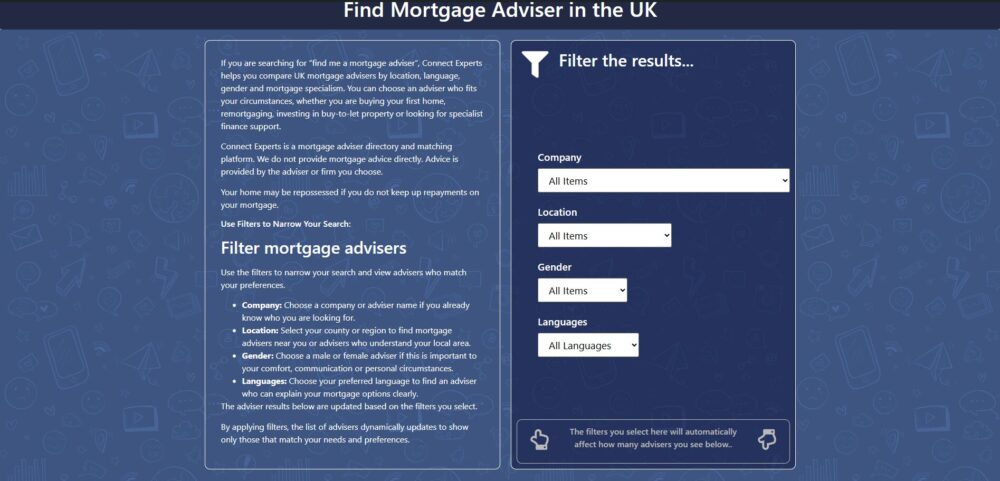
You can also use Connect Experts to find mortgage advisers by location, language and mortgage type.
Remortgage review checklist
Before choosing a new deal, check the following:
- Current rate
- Current monthly payment
- Deal end date
- Standard Variable Rate
- Early repayment charge
- Mortgage balance
- Property value
- Loan-to-value
- Remaining mortgage term
- Income and outgoings
- Credit file
- Product fees
- Legal costs
- Valuation requirements
- Product transfer option
- Full remortgage option
- Extra borrowing needs
- Protection needs
You can also use our mortgage calculators to understand how changes may affect payments.
Protecting your mortgage
A remortgage review is also a useful time to review protection.
Your mortgage may have changed since you first arranged cover. Your income, family, debts and monthly commitments may also be different.
You may want to review:
- Life insurance
- Critical illness cover
- Income protection
- Buildings insurance
- Contents insurance
The purpose is simple. If the mortgage changes, the protection around it may also need checking.
Read more about mortgage protection and life insurance.
Find remortgage advice near you
Some homeowners prefer to speak with an adviser who understands their local area.
Others prefer phone or online advice.
Both routes can work. What matters is that the advice fits the mortgage, the property and the household.
You can use Connect Experts to search for mortgage brokers by location.
FAQs: Need to remortgage?
Do I need to remortgage when my fixed rate ends?
Not always. You may remortgage to a new lender, switch to a product transfer, or stay on your lender’s Standard Variable Rate. The right option depends on cost, criteria and your plans.
How early should I look at remortgaging?
Many homeowners start reviewing options several months before their current deal ends. This helps avoid rushed decisions and gives time to compare products.
Is a product transfer the same as a remortgage?
No. A product transfer means staying with your current lender and moving to a new deal. A remortgage usually means moving to a new lender.
Can I remortgage to borrow more?
Yes, this may be possible if affordability and equity support the extra borrowing. The lender will also consider the reason for the funds.
Can I remortgage with bad credit?
It may be possible. This depends on the type of credit issue, when it happened and your current financial position.
Will I need a valuation?
A lender may need a valuation to confirm the property value. Some valuations are automated, while others may need a physical or desktop assessment.
Will I need a solicitor?
If you move to a new lender, legal work is usually needed. Some products include basic legal work. A product transfer with the same lender may not need separate legal work.
Is the lowest rate always best?
No. Product fees, incentives, term, flexibility and total cost all matter. A low rate with a high fee may not be the best option.
Can I remortgage if I am self-employed?
Yes, but lender criteria can vary. You may need accounts, tax calculations and tax year overviews.
What happens if I do nothing?
Your lender may move you to its Standard Variable Rate when your current deal ends. This may increase or change your monthly payment.