
New Builds in Demand: Mortgage Risks and Buyer Choices – New-build homes are not only about fresh paint, clean kitchens and untouched rooms.
They are also about timing, lender rules, warranties, valuation risk and buyer confidence.
A new home can feel like a simple purchase because nobody has lived in it before. Yet the mortgage process can be more technical than many buyers expect. The property may be unfinished. The completion date may move. The developer may offer incentives. The lender may ask for specific warranty evidence before releasing funds.
That is where demand becomes more than a housing story. It becomes a mortgage story.
What Buyers Need To Know About New Builds
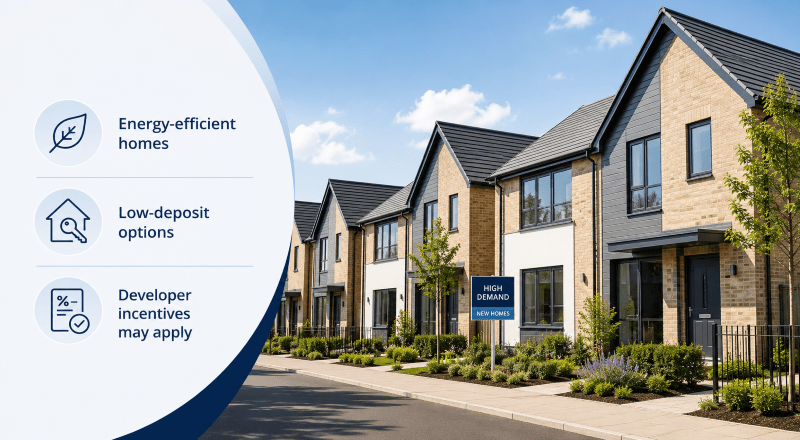
New builds remain in demand because buyers want energy efficiency, modern layouts and lower maintenance.
However, a new-build mortgage can involve extra checks.
- Lenders may assess new-build houses and flats differently.
- Smaller deposits may limit lender choice.
- Developer incentives can affect the lender’s valuation.
- A recognised warranty is usually needed.
- Mortgage offers can expire before the property is ready.
- Service charges, estate charges and lease terms must be checked.
- Buyers should understand the risks before exchanging contracts.
If you are buying your first home, start with our First-Time Buyer Mortgage guide.
Why New Builds Are Still In Demand
Demand for new builds is not difficult to understand.
Many buyers want homes that feel efficient, practical and ready to use. They may prefer better insulation, modern heating systems, open-plan layouts and fewer immediate repair costs.
There is also a deeper reason.
A home is not just a place to live. It is a decision about certainty. Buyers want to know what they are moving into, what it may cost to run, and whether it suits daily life.
Research reported by Modern Lender found that 48% of homebuyers in 2024 wanted to purchase a new-build property. That was up from 27% in both 2022 and 2023.
That demand includes first-time buyers, home movers, downsizers and some landlords. Each group may want the same type of property for different reasons.
First-time buyers may value a simple move-in process. Home movers may want more efficient space. Downsizers may want lower maintenance. Landlords may look for tenant appeal and fewer early repair costs.
However, demand alone does not make a purchase simple.
The Mortgage Difference With New Builds
A new-build mortgage can look similar to a standard residential mortgage at first.
The buyer applies. The lender assesses income, deposit, credit profile and affordability. The property is then valued.
Yet new builds bring extra moving parts.
The property may not be complete when the buyer applies. The lender may value the property from plans, specifications and local market evidence. The developer may offer incentives. The warranty provider must usually be acceptable to the lender.
This matters because lenders are not only lending against the buyer. They are also lending against the property.
For a wider overview of residential borrowing, see our Residential Mortgages page.
Deposits, Loan-To-Value and Lender Choice
Deposit size can affect the number of lenders available.
Some lenders may restrict higher loan-to-value lending on new-build properties. They may also treat houses and flats differently. For example, a lender may be more cautious where the property is a new-build flat, especially at a higher loan-to-value.
This is not because new builds are unsuitable. It is because lenders assess risk in layers.
They may consider:
- the property type
- the location
- the valuation
- the buyer’s deposit
- the developer’s incentives
- the warranty provider
- the expected completion date
A buyer with a larger deposit may have more options. A buyer with a smaller deposit may still have choices, but lender criteria become more important.
Buyers who want to estimate borrowing before viewing homes can use our Residential Affordability Calculator.
Developer Incentives and Mortgage Valuation
New-build developers may offer incentives to help buyers proceed.
These may include deposit contributions, legal fee support, stamp duty contributions, flooring, appliances or cashback. Such incentives can help buyers with upfront costs.
However, incentives must be declared to the lender.
A lender may reduce the mortgage valuation if the incentives are considered too high. This can affect the final loan amount. It may also mean the buyer needs a larger deposit than expected.
That is why incentives should never be viewed as free money.
They can be useful, but they must fit the mortgage rules. The question is not only, “What is the developer offering?” It is also, “How will the lender treat it?”
If stamp duty is part of your cost planning, use our Stamp Duty Calculator.
Warranty, Certification and Build Sign-Off
A recognised new-build warranty is usually important for mortgage lending.
The warranty helps protect against certain structural defects. It also gives lenders more confidence that the property meets required standards.
Common warranty providers may include NHBC, LABC Warranty, Premier Guarantee or other lender-accepted schemes. However, not every lender accepts every provider.
The buyer’s solicitor should check the warranty documents. The mortgage adviser should also confirm that the lender accepts the warranty provider.
Before completion, the lender may also need evidence that the property is ready. This can include building control sign-off, warranty confirmation and completion documentation.
Without the right paperwork, funds may be delayed.
This is where a new build becomes technical. A home can look ready before it is mortgage-ready.
Completion Timing And Mortgage Offer Expiry
Timing is one of the biggest new-build mortgage issues.
Many buyers reserve a property before it is complete. They may apply for a mortgage months before they can move in.
However, mortgage offers do not last forever.
If construction is delayed, the offer may expire before completion. The buyer may need an extension or a new application. If rates, income or lender criteria have changed, the outcome may not be the same.
This is why buyers should ask early questions.
- When is the expected completion date?
- Is the date fixed or estimated?
- How long is the mortgage offer valid?
- Will the lender extend the offer if the build is delayed?
- What happens if rates change before completion?
A good purchase is not only about finding the right home. It is also about matching the mortgage timeline to the build timeline.
New-Build Flats, Lease Terms and Service Charges
New-build flats can be attractive to first-time buyers, professionals and downsizers.
However, flats often come with additional legal and lender checks.
These may include lease length, ground rent terms, service charges, estate charges, building safety evidence and management arrangements.
The Competition and Markets Authority has raised concerns about estate management charges and the quality of some new homes. This makes clarity important before a buyer commits.
Buyers should ask what they are paying for, who manages the site, and how charges may change.
A low-maintenance home can still carry long-term costs.
New Builds And First-Time Buyers
First-time buyers often like new builds because the process can feel more direct.
There may be no onward chain. The property may be energy efficient. The buyer may avoid immediate repair work.
Yet the mortgage still needs care.
First-time buyers should check deposit rules, incentives, affordability, warranty evidence and completion timing before exchange. They should also understand that a reservation fee does not guarantee mortgage approval.
A new build can be a good first home. But it should still be tested against the numbers.
For buyers who want to compare local advisers, Connect Experts lets users find mortgage advisers across the UK.
New Builds And Home Movers
Home movers may choose new builds because they want space that suits modern life.
They may need room for hybrid working, family routines, storage, parking or better energy performance.
Some developers offer part-exchange or assisted move schemes. These can reduce the pressure of selling an existing home. However, the mortgage, sale price and onward purchase still need to work together.
A home mover should check whether the sale of their current property is required before the new-build purchase completes.
They should also ask whether the developer’s timescale matches their mortgage offer.
For wider guidance, read our Moving Home Mortgages page.
New Builds And Property Investors
New builds may also attract landlords and property investors.
A modern property may appeal to tenants because of energy efficiency, presentation and location. However, investors still need to assess yield, rental demand, service charges and mortgage criteria.
New-build investor purchases can involve different lending rules. A lender may assess rental income, personal income, portfolio size and property type.
A landlord buying through a limited company may also need a different mortgage route.
For investor-focused borrowing, see our Buy-to-Let Mortgages guide.
When Bridging Or Development Finance May Be Relevant
Some new-build related finance needs are not standard residential mortgages.
A developer may need funding to complete a site. An investor may need short-term finance before a longer-term mortgage is arranged. A borrower may need to bridge a timing gap between sale and purchase.
In these cases, short-term finance may be considered.
However, bridging finance is not a casual solution. It needs a clear exit route, realistic costs and a defined timescale.
For more information, read our Bridging Loan guide or our page on Development Finance.
Practical New-Build Mortgage Checklist
Before reserving a new-build property, buyers should check the following points.
- How much deposit is required?
- Is the property a house or a flat?
- Is the property complete or off-plan?
- What is the expected completion date?
- How long will the mortgage offer last?
- Will the lender accept the warranty provider?
- Are developer incentives being offered?
- Have all incentives been declared to the lender?
- Are there service charges or estate charges?
- Are there leasehold terms to review?
- What happens if completion is delayed?
- Can the buyer afford costs after moving in?
These questions help buyers move from excitement to evidence.
That matters because a mortgage is not approved on hope. It is approved on facts.
The Philosophical Point: Demand Needs Trust
New builds are in demand because buyers still believe in progress.
They want homes that are efficient, practical and ready for modern life. They want fewer repairs, better design and a smoother start.
But demand is fragile.
It depends on trust.
A buyer must trust the build quality. A lender must trust the valuation. A solicitor must trust the paperwork. The mortgage offer must survive the build timeline.
When one of those parts fails, the purchase can slow down.
That is why new builds need more than interest from buyers. They need clarity from developers, strong documentation, realistic pricing and mortgage advice that understands lender criteria.
The future of new-build demand will not be decided by demand alone. It will be decided by whether the product, the finance and the buyer’s expectations can meet in the same place.
Speak To A Mortgage Adviser About A New Build
Buying a new build can be exciting, but the mortgage process should be checked early.
A mortgage adviser can help review lender options, deposit requirements, incentives, warranty rules and offer timelines. This can help buyers understand whether the property is likely to fit the lender’s criteria before they go too far.