

Limited Company Buy-to-Let Tax Benefits: Buying a rental property through a limited company can change how tax, mortgage interest and rental profit are treated.
For some landlords, this structure may support long-term portfolio growth. For others, personal ownership may still be simpler and more suitable.
The right answer depends on your income, tax position, property plans, borrowing needs and exit strategy. You should always speak with a qualified tax adviser before choosing a structure.
At Connect Mortgages, we can help you understand how lenders assess limited company buy-to-let mortgages. A mortgage adviser does not replace tax advice, but they can explain how lenders view company ownership, rental income and property type.
Limited Company Buy-to-Let Tax Benefits
A limited company buy-to-let structure may help some landlords because:
- Mortgage interest is usually treated differently from personal ownership.
- Company profits are subject to Corporation Tax.
- Profits can be retained inside the company for future investment.
- Share ownership may support long-term planning.
- Some lenders assess company buy-to-let cases differently.
However, it is not automatically better.
Limited company buy-to-let can involve accountancy costs, legal fees, company filings, SDLT checks, possible higher mortgage rates and director responsibilities.
You should compare the tax position, mortgage costs and long-term plan before applying.
What is a Limited Company Buy-to-Let?
A limited company buy-to-let is a property investment in which a UK limited company owns the rental property.
The mortgage is usually taken out in the company name. The rent is paid to the company, which is responsible for the mortgage payments.
Many landlords use a Special Purpose Vehicle, often called an SPV. This is a company set up mainly to hold and let property.
Lenders often prefer a clear SPV structure because it helps them understand the company’s purpose.
A limited company structure may be used for:
- First buy-to-let purchases
- Portfolio landlord purchases
- Buy-to-let remortgages
- HMO property investments
- Multi-unit freehold blocks
- Refinancing existing company-owned property
- Long-term rental portfolio planning
If you are still comparing wider landlord finance, read our buy-to-let mortgage guide.
Why Tax Is Part Of The Limited Company Buy-to-Let Decision
Tax is often one reason landlords consider a limited company.
However, tax should not be viewed in isolation. The mortgage rate, lender criteria, legal work, accountancy cost and future plans all matter.
A limited company may look attractive on paper. Yet it may not produce the best result once all costs are included.
That is why tax advice and mortgage advice should work together.
A tax adviser can explain your tax position. A mortgage adviser can explain lender access, rental stress testing and borrowing options.
Main Limited Company Buy-to-Let Tax Benefits
1. Mortgage Interest Treatment
One of the main reasons landlords consider a limited company is mortgage interest.
Individual landlords affected by finance cost restriction do not usually deduct all mortgage interest from rental income in the same way as before. Instead, relief is usually given through a basic-rate tax reducer.
A company-owned buy-to-let is treated differently because the company calculates profit within the Corporation Tax system.
This can make a limited company more attractive for some higher-rate or additional-rate taxpayers.
However, this does not mean every landlord should buy through a company. The overall result depends on income, profit, borrowing level and how money is taken from the company.
2. Corporation Tax On Company Profits
Rental profits inside a company are subject to Corporation Tax.
Corporation Tax is not a single flat rate for every company. GOV.UK explains that the small profits rate applies to companies with profits of £50,000 or less. The main rate applies to profits above £250,000. Marginal relief can apply between those levels.
This means landlords should not assume a fixed tax rate without checking the company’s expected profit.
If you plan to leave profits inside the company, Corporation Tax may be part of a longer-term reinvestment strategy.
If you plan to take profits out personally, you also need advice on salary, dividends and personal tax.
3. Retaining Profits For Future Property Purchases
A limited company may help landlords retain profits inside the business.
This can be useful if the plan is to build a portfolio over time.
For example, retained profits may help with:
- Future deposits
- Mortgage costs
- Refurbishment costs
- Professional fees
- Reducing borrowing
- Planning the next purchase
This can suit landlords who do not need all rental profit as personal income.
However, retained profits are only useful if the wider plan works. You should review cash flow, tax, mortgage payments and future borrowing needs.
4. Share Ownership And Long-Term Planning
A limited company can offer a different ownership structure from personal ownership.
For example, shares may allow more flexibility when planning with family members or other shareholders.
This may help some landlords think about succession, ownership control and future planning.
However, inheritance tax, capital gains tax and share transfers can be complex. You should get specialist tax and legal advice before making changes.
5. Portfolio Planning
Limited company buy-to-let may suit landlords who want to build a larger portfolio.
Many portfolio landlords need lender criteria that can support several properties, different rents and multiple mortgage balances.
A limited company may support a clearer business structure for some investors.
However, lenders will still assess the people behind the company. This can include directors, shareholders, credit history, income and landlord experience.
If you own several rental properties, read our guide to buy-to-let portfolio mortgages.
Personal Name Buy-to-Let vs Limited Company Buy-to-Let
| Area | Personal Name Buy-to-Let | Limited Company Buy-to-Let |
|---|---|---|
| Ownership | You own the property personally | The company owns the property |
| Mortgage borrower | You apply as an individual | The company applies, often with director guarantees |
| Tax position | Rental profit forms part of your personal tax position | Company profits are subject to Corporation Tax |
| Mortgage interest | Finance cost restriction may apply | Interest is usually treated within company accounts |
| Admin | Usually simpler | More company filing and accountancy duties |
| Lender choice | Often broad | More specialist criteria may apply |
| Profit use | Usually taken personally | Can be retained inside the company |
| Advice needed | Mortgage and tax advice | Mortgage, tax, legal and accountancy advice |
Tax Costs And Risks To Check
A limited company structure can create benefits but also extra costs.
Before applying, check:
- Corporation Tax position
- Dividend or salary planning
- Personal tax when taking money out
- Stamp Duty Land Tax
- Capital Gains Tax if transferring property
- Company setup costs
- Accountancy fees
- Legal fees
- Director responsibilities
- Companies House filing duties
- Mortgage arrangement fees
- Valuation fees
- Personal guarantee requirements
- Exit strategy
You should also check whether your property is in England, Wales, Scotland or Northern Ireland. Property taxes can differ by nation.
For England and Northern Ireland, GOV.UK provides guidance on higher rates of Stamp Duty Land Tax.
Stamp Duty Land Tax And Company Buy-to-Let
Stamp Duty Land Tax should be reviewed before buying through a company.
Companies buying residential property may need to consider higher SDLT rates.
The rules can also depend on property value, property use, ownership structure and whether reliefs apply.
This is one reason tax advice should happen before the purchase is agreed.
A mortgage adviser can help you understand borrowing. A tax adviser can confirm the SDLT position.
Director Responsibilities
If you buy through a limited company, you also become responsible for company duties.
Directors usually need to keep company records, prepare annual accounts, complete Company Tax Returns and file required information.
You can ask an accountant to help manage these tasks. However, the company directors remain legally responsible.
This is another reason limited company buy-to-let should be treated as a business decision, not just a mortgage choice.
How Lenders View Limited Company Buy-to-Let
Limited company buy-to-let lenders usually look at both the company and the people behind it.
They may assess:
- Company registration details
- SIC codes
- Directors and shareholders
- Credit history
- Landlord experience
- Property type
- Deposit or equity
- Expected rental income
- Existing portfolio
- Personal guarantees
- Exit strategy
Some lenders prefer SPV companies. Others may consider trading companies, but criteria can be more limited. This is why a limited company case should be matched to the right lender before an application is submitted.
You can use our buy-to-let affordability calculator to estimate borrowing. The result is only a guide, because lender criteria can vary.
When Limited Company Buy-to-Let May Suit A Landlord
A limited company structure may suit you if:
- You plan to build a rental portfolio
- You are a higher-rate or additional-rate taxpayer
- You want to retain profits for future investment
- You are buying with other shareholders
- You have received tax advice supporting this route
- You want a business structure for property investment
- You are buying through an SPV
- You need specialist buy-to-let lender access
It may not suit you if:
- You only own one simple rental property
- You need rental profit as personal income
- You want the lowest admin route
- The extra costs outweigh the tax benefit
- You are transferring property and tax charges are too high
- You have not taken tax advice
Limited Company Buy-to-Let For HMOs
A limited company may also be used for HMO property investment.
However, HMO mortgages can involve extra lender checks. These may include room numbers, licensing, valuation method, rental demand and landlord experience.
If your property is an HMO, read our HMO property mortgage guide.
Insurance and Property Risk
Tax and mortgage structure are only part of the landlord journey.
You should also consider property risk, tenant risk, and building protection.
Landlord insurance may help cover risks linked to rental property ownership. The right cover depends on the property, tenant type and letting arrangement.
Read more about landlord insurance before completing your plans.
Speak With A Limited Company Buy-to-Let Mortgage Adviser
A limited company buy-to-let mortgage should be reviewed before you apply.
At Connect Mortgages, we can help you understand how lenders may view your company structure, rental income, property type and portfolio.
We can help with:
- Limited company buy-to-let purchases
- SPV buy-to-let mortgages
- Limited company remortgages
- Portfolio landlord mortgages
- HMO buy-to-let finance
- Rental stress testing
- Lender criteria checks
- Complex landlord cases
You should speak with a qualified tax adviser before choosing your ownership structure.
When you are ready to discuss the mortgage side, contact Connect Mortgages.
Compare Limited Company Mortgage Advisers
Some landlords want to speak directly with Connect Mortgages. Others may prefer to compare adviser profiles first.
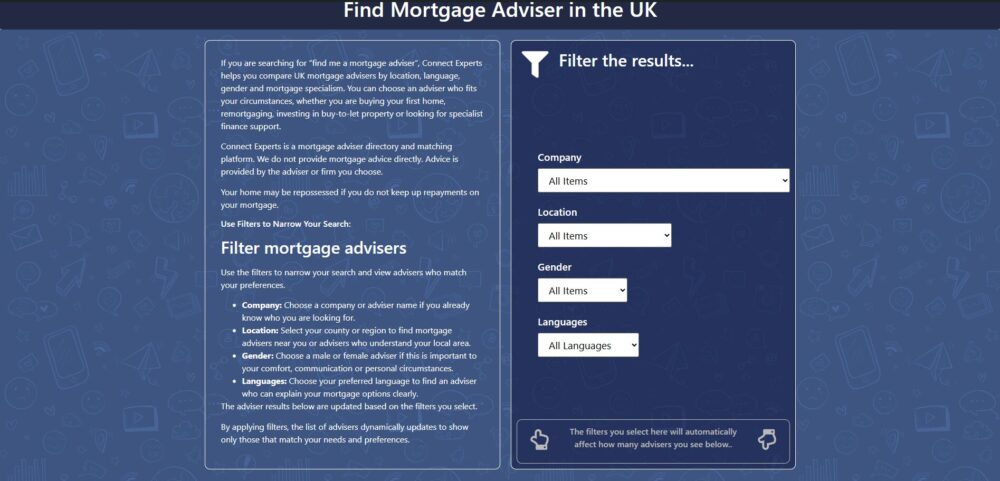
If you want to choose an adviser by specialism, location or language, you can use the Limited Company BTL Adviser Search on Connect Experts.
You can also browse Limited Company Mortgage Brokers to compare advisers experienced in SPV buy-to-let, refinancing, and portfolio landlord finance. Connect Experts is part of the Connect IFA trading style. Mortgage advice is provided by the adviser or firm selected by the customer.
FAQs: Limited Company Buy-to-Let Tax Benefits
What are the main tax benefits of limited company buy-to-let?
The main possible benefits are mortgage interest treatment, Corporation Tax on company profits, retained profits and long-term ownership planning.
However, the benefit depends on your personal tax position, company profit, borrowing costs and future plans.
Is limited company buy-to-let always better for tax?
No. It is not always better.
A limited company can create extra accountancy, legal, tax and mortgage costs. You should compare the full cost before deciding.
Can a limited company claim mortgage interest?
Mortgage interest is usually treated as a company expense when calculating company profits.
This is different from the restricted finance cost relief rules that can affect individual landlords.
What Corporation Tax rate applies to limited company buy-to-let?
The rate depends on company profit.
GOV.UK states that the small profits rate applies to companies with profits of £50,000 or less. The main rate applies above £250,000, with marginal relief between those levels.
Do I still pay personal tax if I take money from the company?
You may pay personal tax when taking money from the company through salary, dividends or other routes.
You should speak with an accountant before deciding how to extract profits.
Does a limited company pay SDLT on buy-to-let property?
A company buying residential property may need to consider higher SDLT rates.
The rules depend on the property, purchase price, location and ownership details. You should take tax advice before exchange.
Can I transfer my existing buy-to-let property into a limited company?
It may be possible, but it can trigger tax and legal costs.
You may need to consider Capital Gains Tax, SDLT, legal fees, lender consent and refinancing.
Do lenders prefer SPV companies?
Many limited company buy-to-let lenders prefer SPV companies because the company has a clear property investment purpose.
However, criteria vary by lender.
Do directors need to give personal guarantees?
Many lenders ask directors to provide personal guarantees.
This means the people behind the company may still carry personal responsibility if the company does not meet its mortgage obligations.
Who should I speak to first?
Start with a qualified tax adviser or accountant to check whether the structure suits your tax position.
Then speak with a mortgage adviser to check lender criteria, rental stress testing and borrowing options.