

About Bridging Loans: How Short-Term Property Finance Works
A bridging loan is not just fast money.
It is a short-term decision made under pressure. That pressure may come from a delayed sale, an auction deadline, a broken chain, or a property that needs work before it can be refinanced.
The principle is simple. A bridging loan connects two points: where you are now and where the money should come from next.
However, the practical details matter. The property, charge position, interest method, loan term, lender criteria and exit strategy all shape whether bridging finance is suitable.
This guide explains how bridging loans work, when they may be used, what lenders assess, and what risks should be understood before applying.
For tailored support, speak to Connect Mortgages about bridging loan advice.
About Bridging Loans at a Glance
A bridging loan is short-term finance secured against property.
It is usually used when timing is the issue, not long-term affordability.
A bridging loan may help when:
- You need to buy before selling.
- A property chain has broken.
- You need to complete an auction purchase.
- A property needs work before refinance.
- A longer-term mortgage is being arranged.
- Capital is needed quickly against property.
The most important part is the exit strategy.
That means the planned repayment of the loan. Common exits include selling a property, refinancing a mortgage, or using agreed funds from another source.
Bridging loans can be useful, but they can also be expensive. They should not be treated as a casual alternative to a mortgage.
Your home may be repossessed if you do not keep up repayments on your mortgage or any loan secured on it.
What Is a Bridging Loan?
A bridging loan is a short-term loan secured against property.
It is designed to bridge a temporary funding gap. The loan is normally repaid when a property is sold, refinanced, or another agreed repayment route completes.
Unlike a standard mortgage, a bridging loan is not designed to run for many years. It is usually arranged for months, not decades.
The lender wants to understand three things:
- What property is being used as security?
- Why is the money needed?
- How will the loan be repaid?
That last point is central. In bridging finance, the exit strategy is not a side detail. It is the foundation of the case.
How Does a Bridging Loan Work?
A bridging loan is secured against property as either a first charge or second charge.
A first charge bridging loan usually sits as the main loan against the property. This may happen when there is no existing mortgage, or when the current mortgage will be repaid.
A second charge bridging loan sits behind an existing mortgage. This may be considered when the borrower wants to keep the current mortgage in place.
If there is already a mortgage on the property, the existing lender may need to agree to the second charge. Borrowers should also compare this with second charge mortgages before deciding.
The process usually includes:
- Initial advice and fact-finding.
- Property and purpose review.
- Loan-to-value assessment.
- Exit strategy review.
- Valuation.
- Legal work.
- Offer.
- Completion.
- Repayment through the agreed exit.
Speed is part of bridging finance. However, speed should not replace careful judgement.
A bridge is only useful if both sides are stable.
When Are Bridging Loans Used?
Bridging loans are often used when a property transaction cannot wait for normal mortgage timescales.
Common uses include:
- Buying a new home before selling an existing one.
- Completing after a property chain breaks.
- Buying at auction.
- Funding light refurbishment.
- Releasing capital against property.
- Buying a property that is not currently mortgageable.
- Supporting a buy-to-let purchase.
- Refinancing short-term debt.
- Completing while a longer-term mortgage is arranged.
The common thread is timing.
A bridging loan may solve a timing problem. It should not create a long-term borrowing problem.
Open and Closed Bridging Loans
Bridging loans are often described as open or closed.
| Type | What it means | Practical point |
|---|---|---|
| Closed bridging loan | The repayment date is known or strongly evidenced. | Often linked to a confirmed sale or refinance. |
| Open bridging loan | The repayment date is not fixed. | More flexible, but the exit still needs to be credible. |
A closed bridge may suit someone who has exchanged contracts on a sale.
An open bridge may suit someone waiting for a sale, but who has not yet exchanged.
Open bridging can carry more uncertainty. Therefore, lenders will usually look closely at the property, equity, timescale and backup plan.
Regulated and Unregulated Bridging Loans
Bridging loans can be regulated or unregulated.
The difference depends on the borrower, the security property and how the property is used.
A regulated bridging loan may apply when the security is a home you live in, intend to live in, or that meets residential-use rules.
An unregulated bridging loan may apply to business, investment, commercial or some buy-to-let purposes.
| Area | Regulated bridging | Unregulated bridging |
|---|---|---|
| Typical use | Main home or future home | Investment, business or commercial property |
| Borrower | Usually individual borrowers | Individuals, companies or investors |
| Advice focus | Suitability and consumer protection | Property risk, purpose and exit |
| Common exit | Sale or residential remortgage | Sale, refinance or commercial exit |
| Key issue | Can the borrower repay safely? | Does the transaction work commercially? |
Some cases are not obvious. Mixed-use property, company ownership, family occupation and investment use can change the position.
For residential short-term finance, read more about regulated bridging loans.
What Do Bridging Loan Lenders Assess?
Bridging lenders usually focus on the security and the exit.
They may review:
- Property value.
- Purchase price.
- Existing mortgage balance.
- Loan amount.
- Loan-to-value.
- First or second charge position.
- Property condition.
- Borrower experience.
- Credit profile.
- Legal title.
- Valuation outcome.
- Loan purpose.
- Exit route.
- Backup repayment plan.
Income can still matter, especially for regulated cases or serviced interest.
However, bridging loans are often assessed differently from standard mortgages. The lender may place more weight on the property and repayment route.
That does not mean the loan is easier. It means the questions are different.
What Is an Exit Strategy?
An exit strategy is the planned way to repay the bridging loan.
This is one of the most important parts of the application.
Common exit strategies include:
- Sale of the property.
- Sale of another property.
- Refinance to a residential mortgage.
- Refinance to a buy-to-let mortgage.
- Refinance to commercial finance.
- Development exit finance.
- Confirmed funds from another source.
The exit should be realistic, evidenced and timed properly.
A weak exit can make the case harder to place. It can also increase the risk of fees, delays and pressure to sell quickly.
A strong exit answers three questions:
- Where will the repayment money come from?
- When is it likely to arrive?
- What happens if there is a delay?
How Is Bridging Loan Interest Paid?
Bridging loan interest can be structured in different ways.
The three common methods are:
- Monthly interest.
- Rolled-up interest.
- Retained interest.
With monthly interest, the borrower pays interest each month.
With rolled-up interest, the interest is added to the loan and repaid at the end.
With retained interest, the lender sets aside interest from the loan facility.
Each method affects cash flow and total cost.
Rolled-up interest may help if monthly payments are not practical. However, it increases the amount due at repayment.
Serviced interest may reduce the final balance. However, the lender must be satisfied that the monthly payments are affordable.
The cheapest-looking option is not always the best option. Total cost should be reviewed, not just the headline rate.
Bridging Loan Costs to Consider
Bridging finance can cost more than a standard mortgage.
Costs may include:
- Interest.
- Arrangement fees.
- Valuation fees.
- Legal fees.
- Broker fees.
- Exit fees, where charged.
- Administration fees.
- Telegraphic transfer fees.
- Higher pricing for complex cases.
The cost should be judged against the purpose.
For example, a borrower may use bridging finance to secure a property that would otherwise be lost. Another borrower may use it to complete refurbishment before refinancing.
In both cases, the question is not just “What is the rate?”
The better question is “Does the cost make sense against the outcome and risk?”
Bridging Loans and Refurbishment
Bridging loans are often used for light refurbishment.
This may include work needed before a property can be sold, rented or refinanced.
Examples may include:
- Updating kitchens or bathrooms.
- Repairing defects.
- Improving rental condition.
- Making the property acceptable to a mortgage lender.
- Completing works before sale.
However, heavier structural work may need a different route.
Where the project involves major construction, conversion or staged drawdowns, development finance may be more suitable.
The scale of work matters. So does planning, experience, cost control and the exit route.
What Are the Main Risks?
A bridging loan can be useful, but it carries risk.
The main risks include:
- The property may not sell on time.
- A refinance may not be approved.
- Costs may rise if delays occur.
- Interest can build quickly.
- The final repayment may be higher than expected.
- Legal work or valuation issues may delay completion.
- The property may be repossessed if the loan is not repaid.
- Some bridging loans are not FCA-regulated.
A bridging loan should be planned with a fallback route.
Borrowers should understand the first exit, the backup exit, and the cost of delay.
For a deeper guide, read our article on the risks of bridging finance.
When Might a Bridging Loan Not Be Suitable?
A bridging loan may not be suitable when the exit is uncertain.
It may also be unsuitable if the borrower is using short-term finance to cover a long-term affordability issue.
A bridging loan may not be the right route if:
- There is no clear repayment plan.
- The property value is uncertain.
- The borrower cannot evidence the exit.
- The loan term is too short.
- The costs outweigh the benefit.
- A standard mortgage could solve the issue.
- The borrower has no backup plan.
Sometimes the best advice is not to move quickly.
It is to pause, test the figures and choose a safer route.
Practical Bridging Loan Checklist
Before applying, ask these questions:
- What is the exact funding gap?
- Which property will secure the loan?
- Is the loan first charge or second charge?
- Is the case regulated or unregulated?
- How much is needed?
- How long is the loan needed for?
- How will interest be paid?
- What fees apply?
- What is the exit strategy?
- What evidence supports the exit?
- What happens if the exit is delayed?
- Is there a cheaper or safer alternative?
Good bridging advice should not focus only on completion.
It should focus on completion, repayment and risk.
About Bridging Loans and Advice
Bridging finance is built around timing.
Yet the right decision is not only about speed. It is about whether the structure makes sense.
A suitable bridging loan should connect the borrower’s current position to a realistic next step. That next step may be sale, refinance, downsizing, or another agreed repayment route.
At Connect Mortgages, we assess the property, purpose, lender options, costs, risks and exit route before making a recommendation.
We are a credit broker, not a lender.
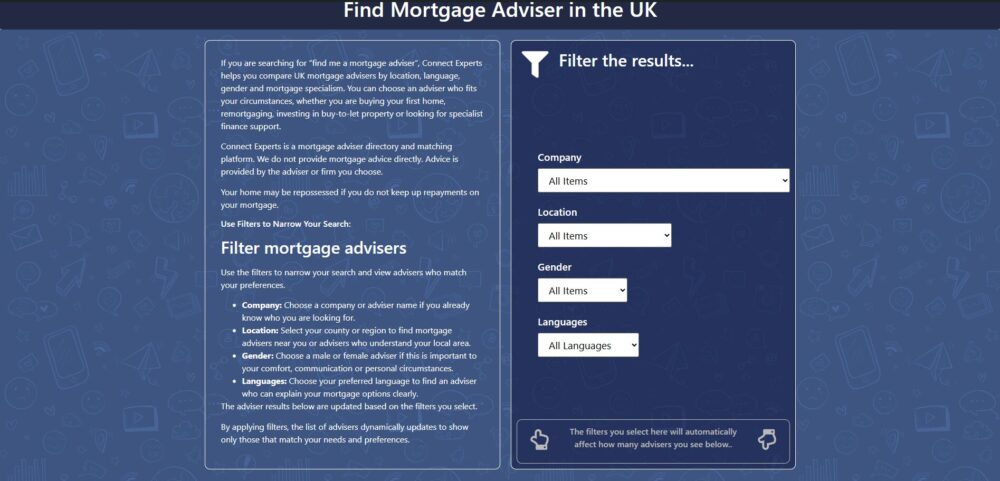
If you prefer to search by advisers’ expertise, you can also find a bridging-loan mortgage broker through Connect Experts.
Speak to Connect Mortgages About Bridging Loans
A bridging loan can help when time is short.
However, the decision should be made with clear numbers, clear risks and a clear repayment plan.
Speak to Connect Mortgages before you apply. We can help you understand whether bridging finance may fit your circumstances, or whether another route may be more suitable.
Call Connect Mortgages on 01708 676111.
FAQs About Bridging Loans
What is a bridging loan?
A bridging loan is short-term finance secured against property. It is usually used to cover a temporary funding gap until sale, refinance or another repayment route completes.
How long does a bridging loan last?
The term depends on the lender, property and exit strategy. Bridging finance is usually short-term and should not be treated as long-term borrowing.
What is an exit strategy?
An exit strategy is the planned way to repay the bridging loan. Common exits include property sale, remortgage, buy-to-let refinance or commercial refinance.
Are bridging loans regulated?
Some bridging loans are regulated, and some are not. The position depends on the borrower, property and purpose of the loan.
Can I use a bridging loan to buy before selling?
Yes, this is a common use. The loan may help complete the purchase before the existing property sale completes.
Can a bridging loan be used for refurbishment?
Yes, bridging loans can support light refurbishment. Major works may need development finance.
Is bridging finance expensive?
Bridging finance can cost more than a standard mortgage. Borrowers should review total cost, including interest, fees, legal costs and valuation costs.
What happens if I cannot repay the bridging loan?
If the loan is not repaid, extra costs may apply. The lender may also take action against the secured property.