
The First Homes Scheme was designed to solve a practical problem. Many first-time buyers can afford monthly mortgage payments, but struggle to bridge the gap between savings, deposit, house prices and lender affordability.
The scheme gives eligible buyers in England the chance to buy selected homes at a discount. The important point is not only the reduced price. It is how the discount works, who controls the process, and what happens when the property is sold later.
At a Glance
The First Homes Scheme helps eligible first-time buyers in England buy selected homes at a discount of 30% to 50% below market value.
The home must usually be your only or main residence. Local councils can set extra eligibility rules, such as income, local connection or key worker criteria.
Unlike Shared Ownership, you buy the whole property. There is no rent to pay on an unsold share. However, the discount stays with the property when it is sold, so future eligible buyers can also benefit.
A mortgage is still required unless you are buying without borrowing. Lenders will assess your income, deposit, credit history, debts, spending and the property itself.
You can read the official scheme rules on the GOV.UK First Homes Scheme guide.
What Is the First Homes Scheme?
The First Homes Scheme is a government-backed affordable housing scheme for first-time buyers in England.
It allows eligible buyers to purchase selected homes for less than their open market value. The discount is usually at least 30%. In some areas, the discount may be 40% or 50%, depending on local housing need and local authority rules.
The scheme is mainly linked to new-build homes. However, a property bought through the scheme can later be resold to another eligible buyer.
This matters because the discount is not a one-off gift that disappears after the first sale. It is designed to stay with the property. That means the home should remain more affordable for future first-time buyers too.
How Does the First Homes Scheme Work?
A First Homes property is valued at its open market value. The approved discount is then applied to that value.
For example, if a property is valued at £300,000 and has a 30% First Homes discount, the discounted purchase price would be £210,000.
The buyer owns 100% of the property. This is different from Shared Ownership, where a buyer purchases a share of the home and pays rent on the remaining share.
With First Homes, the buyer does not pay rent on an unsold share. However, the buyer must follow the scheme rules when living in, letting, remortgaging or selling the property.
First Homes Scheme Price Caps
The First Homes Scheme has price limits after the discount has been applied.
The usual maximum discounted price is:
- £250,000 across most of England
- £420,000 in Greater London
Local councils can set lower price caps if needed. This may happen where local affordability pressures mean a lower limit is considered more suitable.
This is why two buyers in different areas may face different First Homes rules, even though the scheme is national for England.
Who Can Use the First Homes Scheme?
The First Homes Scheme is aimed at first-time buyers.
You will usually need to meet core rules, including:
- You must be a first-time buyer
- The property must be your only or main residence
- The home must be bought through the First Homes Scheme
- The local authority must approve your application
- You must meet any local eligibility rules that apply
- You must be able to fund the purchase, usually through a mortgage and deposit
Local councils may also prioritise certain buyers. This can include key workers, people who already live locally, or buyers on lower incomes.
If you are buying with another person, the rules can become more detailed. Local criteria may apply differently depending on the council’s approach and the time the property has been marketed.
Why Local Authority Approval Matters
The local council is central to the First Homes process.
This is not only a mortgage transaction. It is also an affordable housing transaction with local rules attached.
The council checks whether the buyer meets the scheme criteria. The council may also confirm whether local connection, occupation or income rules apply.
This approval process helps protect the scheme’s purpose. The discount is intended to support eligible buyers, not to create an unrestricted open-market purchase.
First Homes Scheme and Mortgage Affordability
A First Homes discount can reduce the purchase price, but it does not remove the need for mortgage checks.
A lender will still assess whether the mortgage is affordable. This can include:
- Income
- Deposit
- Credit history
- Existing debts
- Monthly spending
- Childcare costs
- Dependants
- Employment type
- Mortgage term
- Property type
- Loan-to-value
- Source of deposit
The discounted price may make the mortgage smaller than it would be at full market value. However, approval is never automatic.
You can estimate how much you may be able to borrow using the Residential Affordability Calculator.
How Much Deposit Might You Need?
Your deposit is usually based on the discounted purchase price, not the full open market value.
For example, if a home is worth £300,000 but is sold through First Homes for £210,000, a 5% deposit would be based on £210,000.
That would mean a £10,500 deposit, subject to lender criteria.
This can make the upfront deposit more manageable. However, lenders may still apply their own rules for new-build homes, loan-to-value, gifted deposits, credit history and affordability.
Some lenders may have specific requirements for First Homes properties. This is why buyers should check both scheme eligibility and lender criteria before making firm plans.
First Homes Scheme and New-Build Mortgages
Many First Homes properties are new builds. This can create extra mortgage points to check early.
Lenders may consider:
- Build stage
- Warranty provider
- Developer incentives
- Reservation fee
- Completion timescale
- Mortgage offer expiry date
- Lease terms, where the property is leasehold
- Property type, such as flat or house
- Service charges and estate charges
Mortgage timing is important with new builds. If completion is delayed, a mortgage offer may need to be extended. Not all lenders treat extensions in the same way.
Buyers should also check whether any developer incentive affects the mortgage. Incentives can be useful, but they must be disclosed to the lender.
First Homes Scheme and Developer Incentives
A developer may offer incentives on a new-build First Homes property.
This could include help with certain costs, cashback or goods. However, incentives should be checked carefully because they may affect the mortgage assessment.
The lender needs a clear view of the real purchase structure. A mortgage application should not hide incentives, discounts or financial arrangements.
The practical rule is simple. The price, discount, incentive and deposit should all be clear before the mortgage application is submitted.
First Homes Scheme vs Shared Ownership
First Homes and Shared Ownership are often compared, but they work differently.
With First Homes, you buy the whole property at a discount. There is no rent to pay on another share.
With Shared Ownership, you buy part of the property and usually pay rent on the remaining share. You may be able to buy more shares later through staircasing.
The right option depends on the buyer, property, location, costs and long-term plans.
First Homes may appeal to buyers who want full ownership from the start. Shared Ownership may suit buyers who cannot afford to buy a whole property, even with a discounted price.
Can You Sell a First Homes Property?
Yes, but the resale rules matter.
When a First Homes property is sold, the same percentage discount is usually passed on to the next eligible buyer.
For example, if you bought with a 30% discount, the next eligible buyer should also receive a 30% discount against the market value at the time of resale.
A RICS valuation may be needed to confirm the property’s market value. The discount is then applied to that valuation.
This protects the long-term purpose of the scheme. The property remains part of an affordable housing route instead of becoming a normal open-market sale.
What Happens if You Cannot Sell to an Eligible Buyer?
There may be situations where selling to another eligible First Homes buyer is difficult.
If the property cannot be sold under the scheme after a set period, the owner may be able to ask the local council for permission to sell on the open market.
If this is allowed, the original discount percentage may need to be returned to the local council from the sale proceeds.
This is an important point for long-term planning. A buyer should understand not only how to buy the home, but how they may need to sell it later.
Can You Let Out a First Homes Property?
The First Homes Scheme is intended for owner-occupiers.
The home should usually be the buyer’s only or main residence. Letting rules can be restricted, and buyers should check the rules before assuming the property can be rented out.
This matters if future work, family or financial changes affect where the buyer needs to live.
A First Homes property should not be treated like a standard buy-to-let investment. The scheme has a different purpose.
Stamp Duty and the First Homes Scheme
Stamp Duty Land Tax is based on the price paid after the First Homes discount has been applied.
This can reduce the SDLT position compared with buying the same home at full market value.
First-time buyer SDLT relief may also be relevant, depending on the price, location and rules at the time of purchase.
You can estimate potential property tax using the Stamp Duty Calculator.
Documents You May Need
Before applying for a mortgage linked to the First Homes Scheme, it helps to prepare early.
You may need:
- Proof of ID
- Proof of address
- Payslips
- Bank statements
- Proof of deposit
- Credit commitment details
- Gifted deposit evidence, if relevant
- Property reservation details
- Developer incentive details
- Local authority approval documents
- Conveyancer details
Self-employed buyers may need extra documents, such as accounts, tax calculations and tax year overviews.
First Homes Scheme: Practical Buyer Checklist
Before relying on the First Homes Scheme, check:
- Is the property available through the scheme?
- Is the property in England?
- What discount applies?
- What is the discounted purchase price?
- Does the local council apply extra eligibility rules?
- Do you meet the first-time buyer criteria?
- Can you afford the mortgage?
- Does your lender accept the property and scheme structure?
- Are there developer incentives?
- What happens if completion is delayed?
- What are the resale restrictions?
- Can you live with the long-term rules?
This checklist helps turn the scheme from an idea into a practical buying decision.
Is the First Homes Scheme Right for You?
The First Homes Scheme can help some first-time buyers access a home at a lower purchase price.
However, the discount should not be the only focus.
A home is not just bought on day one. It is lived in, maintained, mortgaged, improved and eventually sold. The First Homes Scheme affects each of those stages.
For some buyers, the discount may create a realistic path into homeownership. For others, the local rules, property availability or resale restrictions may not fit their plans.
Good advice starts with the full picture.
If you are still comparing first-time buyer mortgage options, read our First-Time Buyer Mortgage guide.
Choosing Mortgage Advice for a First Home Purchase
A First Homes purchase can involve a developer, a local authority, a conveyancer, a lender, and a mortgage adviser.
Each part needs to fit together.
The discount may reduce the price, but the lender must still approve the mortgage. The council still needs to approve eligibility. The conveyancer still needs to handle the legal restrictions attached to the property.
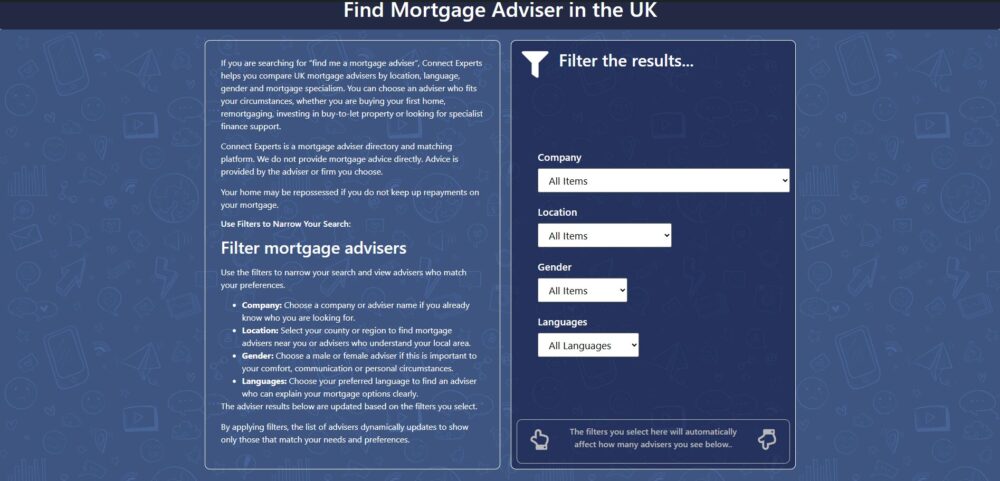
If you want to compare advisers before making contact, Connect Experts lets you search for first-time-buyer mortgage advisers by location, language, and adviser preference.
Connect Experts is part of the Connect Group. It is a mortgage adviser directory and matching platform. Advice is provided by the adviser or firm you choose.
FAQs: First Homes Scheme
What is the First Homes Scheme?
The First Homes Scheme helps eligible first-time buyers in England buy selected homes at a discount below market value. The discount is usually between 30% and 50%.
Is the First Homes Scheme available across the UK?
No. The First Homes Scheme applies in England. Scotland, Wales and Northern Ireland have different housing support schemes.
Do I own the whole property with First Homes?
Yes. You buy 100% of the property. This is different from Shared Ownership, where you buy a share and usually pay rent on the rest.
Do I need a mortgage for the First Homes Scheme?
Most buyers will need a mortgage unless they can buy without borrowing. The mortgage must still meet lender affordability, deposit, credit and property criteria.
Is the First Homes discount based on the full property value?
Yes. The discount is applied to the market value of the property. An independent valuation may be used to confirm the value.
Can I sell a First Homes property later?
Yes, but you usually need to sell it to another eligible First Homes buyer with the same percentage discount applied.
Can I rent out a First Homes property?
The scheme is designed for buyers who live in the property as their only or main residence. Letting may be restricted, so check the scheme rules before making plans.
Does the First Homes Scheme reduce Stamp Duty?
Stamp Duty is based on the discounted purchase price, not the full market value. First-time buyer relief may also apply depending on the rules at the time.
Are First Homes properties easy to find?
Availability depends on local developments, council policy and property supply. Not every new-build site will offer First Homes.
Should I check the official rules before applying?
Yes. Scheme rules, local criteria and property availability can change. Always check the latest GOV.UK guidance, local authority requirements and lender criteria before applying.