Consumer spending is not just about what people buy. It is also a signal of how secure households feel, how much disposable income they have, and how confidently they can make long-term financial decisions.
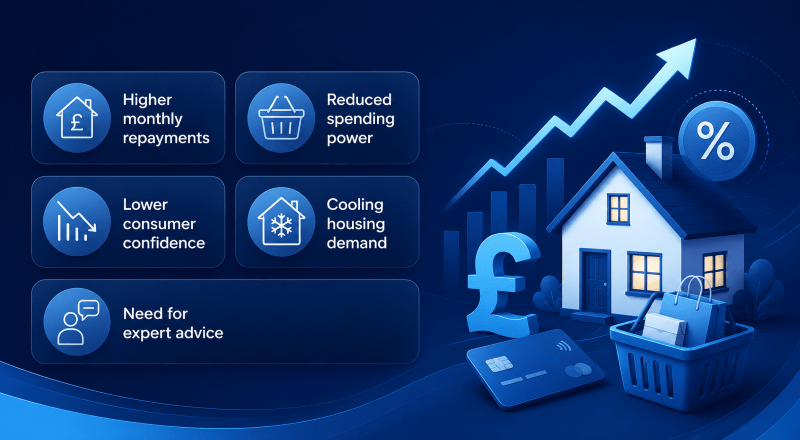
In July 2023, this mattered more than usual. Higher interest rates, rising mortgage costs and pressure on everyday budgets changed the way many households approached spending, saving and borrowing. For the mortgage market, this was not a side issue. It was central to affordability.
At a Glance
- Consumer spending weakened as household budgets came under pressure
- Higher interest rates increased the cost of mortgages, loans and credit cards
- Mortgage affordability became harder for some buyers and homeowners
- Consumer confidence affected property decisions and moving plans
- Bank statements, credit commitments and regular spending became more important in mortgage assessments
Why Consumer Spending Matters
Consumer spending is a major part of the UK economy. When households feel confident, they are more likely to spend, borrow, move home, improve property or make long-term financial commitments.
When confidence falls, behaviour changes. People may delay moving home, reduce non-essential spending, repay debt, use savings or avoid taking on new credit. These decisions can affect retail activity, lenders, the housing market and the wider economy.
In 2023, the pressure was clear. Higher interest rates made borrowing more expensive. Inflation had already reduced real household spending power. Many mortgage holders were also approaching the end of cheaper fixed-rate deals agreed before rates rose sharply.
The Bank of England’s July 2023 Financial Stability Report noted that UK households were facing higher living costs and higher interest rates. It also stated that average mortgage payments would continue to rise as fixed-rate mortgage deals expired.
How Higher Interest Rates Affected Spending
Interest rates influence spending by changing the cost of money.
When rates rise, borrowing usually becomes more expensive. This can affect mortgages, personal loans, car finance, overdrafts and credit cards. It can also make savings more attractive, as households may choose to keep more money in deposit accounts.
For some households, the effect was immediate. Variable-rate mortgage borrowers and those on tracker products saw payments rise more quickly. Others felt the impact when they came to remortgage.
For buyers, higher rates changed the monthly cost of borrowing. A mortgage amount that looked affordable at a lower rate could become harder to justify at a higher rate. This affected how much some people could borrow, whether they could meet lender affordability rules, and whether they felt comfortable proceeding.
Readers reviewing their own position can start with the residential affordability calculator before speaking to an adviser.
Consumer Credit and Household Budgets
Consumer spending is closely linked to credit use. When budgets are tight, some households reduce credit use. Others rely more on borrowing to manage rising costs.
Bank of England data for July 2023 showed that net borrowing of consumer credit fell from £1.6 billion in June to £1.2 billion in July. Credit card borrowing remained broadly unchanged, while borrowing through other forms of consumer credit, such as personal loans and car finance, fell.
The same data showed that the effective interest rate on interest-bearing credit cards rose to 20.76% in July 2023. That matters for mortgage applicants because lenders look at committed expenditure. Credit cards, loans, overdrafts and car finance can all affect affordability.
A mortgage assessment is not only about income. It is also about what is already leaving the household each month.
Why Spending Patterns Affect Mortgage Applications
Lenders assess whether a mortgage looks affordable and sustainable. This means they may review income, credit commitments, dependants, household costs and wider financial behaviour.
Spending patterns can therefore affect the mortgage journey. Regular gambling payments, heavy unsecured credit use, missed payments or persistent overdraft use may raise questions. Normal household spending is expected, but lenders need to understand whether the applicant can manage the mortgage alongside other commitments.
This is why bank statements can matter. They help show how income is received, how bills are paid and whether the household budget appears controlled.
For a buyer, the practical question is simple: after normal spending, debt payments and expected mortgage costs, is there enough room left for the commitment to remain manageable?
The Link Between Consumer Confidence and Housing Demand
Consumer confidence affects the housing market because buying a home is a major financial decision. When households feel cautious, they may delay moving, reduce their budget or choose to wait until costs feel more stable.
In July 2023, Bank of England data showed that net mortgage approvals for house purchases fell from 54,600 in June to 49,400 in July. The effective rate paid on newly drawn mortgages also rose to 4.66%.
This does not mean people stopped buying homes. It means the decision became more measured. Buyers had to think harder about monthly repayments, future rate changes, deposit size and long-term affordability.
Those exploring their options can read more about residential mortgages and how advice can support the process.
Existing Homeowners and the Remortgage Effect
Consumer spending also matters for existing homeowners. A household moving from a lower fixed rate to a higher rate may have less disposable income after the new mortgage payment begins.
This can affect everyday spending, savings, insurance choices, home improvements and debt repayment plans. Some homeowners may look at a product transfer. Others may compare remortgage options across lenders.
The key point is timing. A remortgage review should usually start before the current deal ends. This gives the homeowner more room to compare options, review affordability and avoid moving onto a lender’s standard variable rate without understanding the cost.
Homeowners approaching the end of a deal can read more about remortgage options.
What Buyers and Homeowners Could Do in 2023
A careful approach mattered in 2023. Higher rates did not remove the need for mortgage advice. They made the advice process more important.
Practical steps included:
-Reviewing income and committed expenditure
-Checking credit commitments before applying
-Reducing unnecessary borrowing where possible
-Understanding how a higher mortgage payment affects the monthly budget
-Keeping documents ready, including payslips, bank statements and proof of deposit
-Considering protection needs alongside the mortgage
Protection should not be treated as an afterthought. If a household budget is already stretched, illness, injury or loss of income can create further pressure. Readers can review mortgage protection insurance as part of wider planning.
When to Speak to an Adviser
Consumer spending data helps explain the market, but mortgage decisions are personal. Two households with the same income can have very different affordability outcomes because their spending, debts, deposits, and plans are different.
A mortgage adviser can help review the position clearly. This may include affordability, lender criteria, product choice, repayment structure and the timing of an application.
If someone wants to compare adviser support, they can use Connect Experts to find a mortgage adviser.