
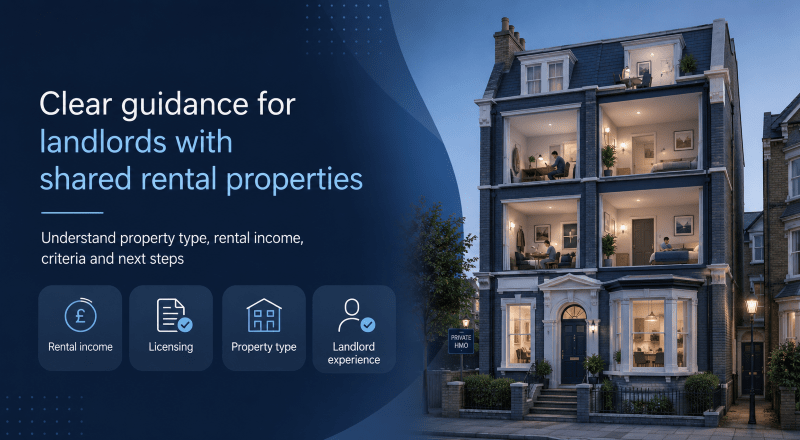
HMO Mortgages for UK Landlords: An HMO mortgage is not just a buy-to-let loan with more tenants.
It is a lending decision built around property use, rental strength, licensing, management, valuation and risk. A standard buy-to-let mortgage may suit one household. An HMO mortgage is designed for a property let to several unrelated tenants who usually share facilities.
That difference matters.
A lender is not only asking whether the rent looks strong. It is asking whether the property is suitable, whether the landlord can manage it, and whether the legal position supports the mortgage.
At Connect Mortgages, we help landlords understand how HMO mortgage lenders may assess the property, the rent, the borrower and the wider plan before an application is made.
HMO Mortgages at a Glance
An HMO mortgage may be suitable when a property is let to multiple tenants from more than one household.
Lenders may assess:
- The number of tenants
- Whether tenants share facilities
- Whether an HMO licence is needed
- The expected or current rental income
- The property condition and layout
- The landlord’s experience
- The deposit or equity available
- The ownership structure
- The wider property portfolio
- The valuation and rental demand
- The exit plan, where works are involved
Some HMO mortgages are arranged in a personal name. Others are arranged through a limited company.
The right route depends on the landlord, property, rent, lender criteria and long-term plan.
What Is an HMO Mortgage?
An HMO mortgage is a specialist mortgage for a House in Multiple Occupation.
In simple terms, an HMO is usually a property where at least three tenants live, from more than one household, and share facilities such as a kitchen, bathroom or toilet.
A large HMO usually means at least five tenants from more than one household share facilities. Larger HMOs normally need a licence. Some councils also apply additional licensing rules for smaller HMOs.
You can check official guidance on HMO licensing rules before buying, converting or refinancing.
A mortgage lender will want to know whether the property is already an HMO or will become one after completion. That point can affect the lender, valuation, legal checks and product choice.
Why HMO Mortgages Are Different From Standard Buy-to-Let Mortgages
A standard buy-to-let mortgage usually involves one property let to one household.
An HMO mortgage involves more moving parts.
There may be several tenants, separate tenancy agreements, shared facilities, licensing conditions, planning considerations and higher management duties. Because of this, many mainstream buy-to-let lenders do not treat HMOs in the same way as standard rental homes.
If you are new to landlord finance, it may help to read our wider buy-to-let mortgage guide before reviewing HMO options.
HMO lenders may look closely at:
- The number of lettable rooms
- The rental income per room
- The total monthly rent
- The type of tenants
- The tenancy structure
- The property layout
- The licence position
- The landlord’s track record
- The valuation method
- The local demand for shared housing
A strong HMO case is not built on yield alone. It must also make sense as a lending case.
Small HMO and Large HMO Mortgages
Not every HMO is assessed in the same way.
A smaller HMO may have three or four tenants. A larger HMO may have five or more tenants and usually needs a mandatory licence.
Some lenders accept smaller HMOs but not larger licensed HMOs. Other lenders are more comfortable with larger properties, but may expect more landlord experience.
The number of rooms can also affect the lender’s view. A six-bedroom HMO may sit within one lender’s policy, while an eight-bedroom HMO may need a more specialist route.
Before applying, it is worth checking:
- How many people will live in the property
- How many households will be formed
- Whether facilities are shared
- Whether a licence is required
- Whether the council has additional licensing rules
- Whether Article 4 planning restrictions apply locally
- Whether the property layout meets lender expectations
This matters because a lender may decline a case that looks affordable but fails on property use or licensing.
How HMO Mortgage Lenders Assess Rental Income
HMO rental income is often assessed differently from standard buy-to-let rent.
Some lenders may consider the full room-by-room rent. Others may take a more cautious view. Some may use a market rent figure based on the property as a single let, especially where the HMO status is unclear.
This can affect how much you may be able to borrow.
Lenders may apply a rental stress test. This checks whether the rent can cover the mortgage payment at a set interest rate. The exact calculation depends on the lender, product, tax position and whether the mortgage is in a personal name or limited company.
You can use our buy-to-let affordability calculator for an initial estimate. However, HMO cases often need a full adviser review because lender calculations can vary.
Deposits, Loan-to-Value and Costs
HMO mortgages often require a larger deposit than some standard residential mortgages.
The available loan-to-value depends on the lender, property, experience and case strength. Many HMO mortgage lenders may consider up to 75% loan-to-value, although some cases may sit lower or higher depending on criteria.
Landlords should also budget for more than the deposit.
Possible costs include:
- Valuation fees
- Legal fees
- Broker fees
- Product fees
- Licence application fees
- Fire safety works
- Refurbishment costs
- Furniture and compliance costs
- Insurance
- Void periods
- Management costs
A lower rate is not always the best outcome. The total cost, lending fit and exit route should be reviewed together.
Personal Name or Limited Company HMO Mortgage?
Some landlords buy or refinance HMOs in their personal name. Others use a limited company.
A limited company route may suit some landlords who are building a portfolio or planning for long-term property investment. However, it is not right for everyone.
Mortgage lenders may assess the company, directors, shareholders, property, rent and guarantees. They may also check whether the company is a Special Purpose Vehicle, often called an SPV.
You should speak to a qualified tax adviser before choosing an ownership structure. For mortgage guidance, read our page on limited company buy-to-let mortgages.
The structure should serve the plan. It should not be chosen only because another landlord used it.
HMO Mortgages for Portfolio Landlords
HMO lending can become more detailed when the landlord already owns several mortgaged rental properties.
A lender may treat you as a portfolio landlord if you own four or more mortgaged buy-to-let properties. In that situation, the lender may review the full portfolio rather than the new HMO alone.
They may ask for:
- A property schedule
- Current mortgage balances
- Rental income for each property
- Property values
- Monthly mortgage payments
- Tenancy details
- HMO licence details, where relevant
- Bank statements
- Personal income details
- Limited company documents, where relevant
If your HMO sits within a wider property portfolio, read our guide to buy-to-let portfolio mortgages.
A portfolio can be strong on paper but weak in lender presentation. Clean documents can make the case easier to place.
Buying, Refinancing or Converting an HMO
An HMO mortgage may be used for different purposes.
Common scenarios include:
- Buying an existing licensed HMO
- Buying a property to convert into an HMO
- Remortgaging an existing HMO
- Releasing equity from an HMO
- Moving an HMO into a limited company
- Refinancing after refurbishment works
- Expanding a landlord portfolio
- Reviewing a mortgage before a fixed rate ends
If the property needs works before it can be let as an HMO, a standard term mortgage may not always fit at the start.
In some cases, short-term finance may be considered before refinancing onto an HMO mortgage. Read more about bridging loans if timing, refurbishment or property condition is part of the plan.
HMO Valuations and Property Condition
Valuation is one of the most important parts of an HMO mortgage case.
A lender may ask whether the property should be valued as a standard residential investment, an HMO investment or on another basis. The answer can affect the loan amount and lender choice.
The valuer may consider:
- Room sizes
- Layout
- Shared facilities
- Fire safety measures
- Rental demand
- Licence position
- Local comparable evidence
- Property condition
- Planning position
- Whether the property could return to single-let use
A good HMO is not only about the number of rooms. It must work as a safe, compliant and lettable home.
That is where the philosophical point matters. Property finance should not only measure income. It should also ask whether the structure can stand up to scrutiny.
Documents You May Need for an HMO Mortgage
Every lender has its own requirements. However, an HMO mortgage application may need more paperwork than a standard buy-to-let case.
Useful documents may include:
- Proof of identity
- Proof of address
- Bank statements
- Proof of income
- Current tenancy agreements
- Expected rental income
- Existing mortgage statements
- Property schedule
- HMO licence, where required
- Planning documents, where relevant
- Fire safety information
- Floor plans
- Limited company documents
- Accountant details, where relevant
- Evidence of landlord experience
Preparing documents early can reduce delays. It can also help your adviser decide which lender route may be suitable.
Common HMO Mortgage Problems
Some HMO mortgage cases become difficult because important details are checked too late.
Common issues include:
- The property needs a licence but does not have one
- The council applies additional licensing rules
- The room sizes do not meet expected standards
- The valuation does not support the purchase price
- The landlord has limited experience
- The property is in an Article 4 area
- The rent does not pass the lender’s stress test
- The ownership structure is unsuitable
- The lease restricts HMO use
- The property needs works before letting
- The exit strategy is unclear
These issues do not always stop a case. However, they can change the lender route, deposit level, timing or product options.
HMO Mortgage Advice From Connect Mortgages
HMO mortgages need careful placement.
A lender may like the rent but not the layout. Another may accept the property but require more landlord experience. A third may support the case only through a limited company or only where the licence position is clear.
Connect Mortgages can help you review the practical details before you apply.
We can help with:
- First HMO purchases
- Existing HMO remortgages
- Licensed HMO finance
- Limited company HMO mortgages
- Portfolio landlord cases
- HMO refinance after works
- Property conversion finance
- Rental stress test reviews
- Lender criteria checks
- Document preparation
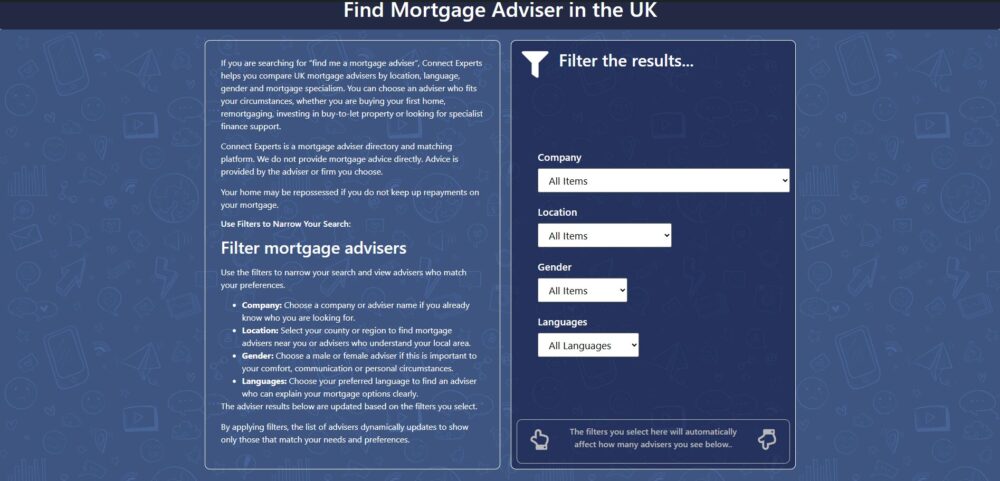
If you would prefer to search by adviser expertise, location or language, you can also use the HMO mortgage adviser search on Connect Experts.
Speak to Connect Mortgages About HMO Mortgages
An HMO can produce strong rental income, but the mortgage must be built on more than rent.
The property needs to work for tenants, the council, the valuer and the lender. When those parts fit together, the case is usually clearer.
If you are buying, refinancing or converting an HMO, speak to Connect Mortgages before you apply.
We can help you understand the mortgage route, likely documents, lender criteria and risks before the case reaches underwriting.
Contact Connect Mortgages
FAQs: HMO Mortgages for UK Landlords
What is an HMO mortgage?
An HMO mortgage is a specialist mortgage for a House in Multiple Occupation. It is usually used when a property is let to several unrelated tenants who share facilities.
Do I need a special mortgage for an HMO?
Yes, in most cases. Many standard buy-to-let lenders do not accept HMO properties, so a specialist HMO mortgage may be required.
How much deposit do I need for an HMO mortgage?
Deposit requirements vary by lender, property and landlord experience. Many lenders may consider HMO mortgages up to 75% loan-to-value, subject to criteria.
Can I get an HMO mortgage through a limited company?
Yes, some lenders offer limited company HMO mortgages. The lender may assess the company, directors, shareholders, rental income and property type.
Do all HMO properties need a licence?
Not all HMOs need a mandatory licence, but larger HMOs usually do. Some councils also run additional licensing schemes, so local rules must be checked.
Can a first-time landlord get an HMO mortgage?
Some lenders prefer HMO landlords to have experience. However, options may still exist depending on the property, deposit, income and wider circumstances.
How do lenders assess HMO rental income?
Some lenders assess rent room by room, while others use a more cautious rental figure. The lender will usually apply a rental stress test.
Can I remortgage an existing HMO?
Yes. An existing HMO can often be remortgaged, subject to valuation, rental income, licence position, landlord profile and lender criteria.