How a Better EPC Rating Saves You Money on Your Home: A better EPC rating can save you money by reducing energy waste, lowering running costs, and making your home more attractive to buyers, tenants, and some mortgage lenders. The savings do not come from the rating alone. It comes from the improvements behind the rating, such as insulation, efficient heating, glazing, lighting and better control of energy use.
A good EPC rating may also help you access selected green mortgage options, depending on lenders’ criteria and your wider circumstances.
Why an EPC Rating Matters to Your Home Costs
A home does not only cost money when you buy it. It costs money every month.
Heating, lighting, hot water and general energy use all affect household affordability. This is where an Energy Performance Certificate, known as an EPC, becomes more than a document.
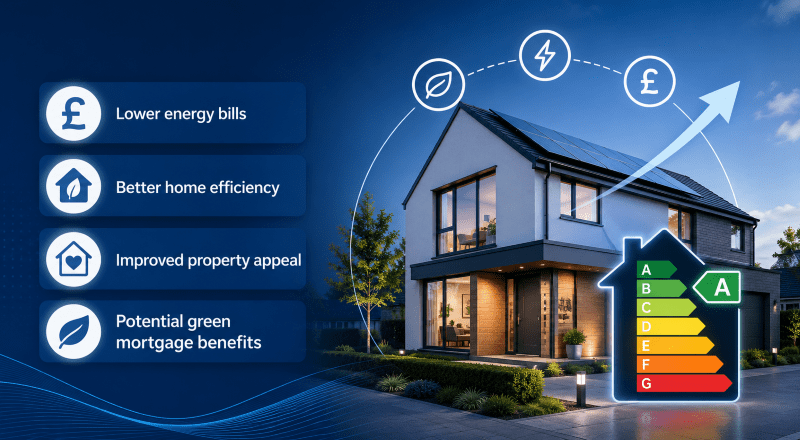
An EPC gives a property an energy efficiency rating from A to G. A is the most efficient rating. G is the least efficient rating. The certificate also gives recommendations that may improve the property’s rating.
The philosophical point is simple. A home should protect you, not quietly drain money through the roof, walls, windows or heating system. A better EPC rating is a sign that less energy is being wasted.
That can matter to homeowners, buyers, landlords and mortgage lenders.
What an EPC Actually Measures
An EPC looks at how energy-efficient a property is likely to be. It considers features such as:
- Wall, loft and floor insulation
- Windows and glazing
- Heating system efficiency
- Hot water controls
- Lighting
- Renewable energy features, where present
- The likely cost of running the home
<BR< The certificate also shows recommended improvements. These recommendations help you identify which upgrades may improve the property’s rating.
You can check an existing certificate through the official EPC register for properties in England, Wales and Northern Ireland.
How a Better EPC Rating Can Reduce Energy Bills
A better EPC rating can reduce costs because the home will need less energy to stay warm and usable.
This is usually achieved by reducing heat loss and improving energy use. For example, loft insulation can help keep heat inside the property. Double glazing can reduce draughts and heat escape. A more efficient heating system can use less energy to produce the same level of comfort.
The rating itself does not cut the bill. The physical improvements do.
This is why homeowners should read the EPC recommendations carefully. Some improvements may be low-cost, such as lighting changes or draught-proofing. Others may involve larger investments, such as insulation, windows, boilers, solar panels or heat pumps.
The best approach is to compare the cost of the upgrade with the likely savings and the property’s long-term use.
EPC Ratings and Mortgage Options
Mortgage lenders are interested in affordability and property risk. A more energy-efficient home may have lower running costs. This can support the broader affordability picture, although lenders will still assess income, credit profile, deposits, property type, and mortgage criteria.
Some lenders offer green mortgage products or incentives for homes with stronger EPC ratings. These products may include lower rates, cashback or other benefits, depending on the lender and the property.
This does not mean a green mortgage is always the cheapest option. A borrower still needs to compare the full cost of the mortgage, including rate, fees, term and any product conditions.
If you are considering energy upgrades before a remortgage, read more about remortgaging for home improvements.
How EPC Improvements Can Support Property Value
Buyers often compare homes based on more than the asking price.
They also consider monthly bills, comfort, and future upkeep. A home with a stronger EPC rating can feel more practical because it may cost less to run. It may also suggest that the property has been maintained with long-term efficiency in mind.
This can help when selling, especially when comparing two similar homes.
A lower-rated home may still sell, but buyers may ask questions. They may want to know what work is needed, how much it may cost and whether the property will remain affordable to run.
For this reason, a better EPC rating can help protect a property’s appeal. It gives buyers another reason to feel confident.
Which EPC Improvements Should Homeowners Consider?
The right improvements depend on the property.
An older solid-wall house may need a different approach from a newer flat. A detached home may lose heat differently from a terraced property. A landlord may also have different priorities from an owner-occupier.
Common EPC improvement areas include:
- Loft insulation to reduce heat loss through the roof
- Cavity wall insulation where suitable
- Double or triple glazing
- Low-energy lighting
- Heating controls and thermostats
- Efficient boilers or heating systems
- Draught proofing
- Solar panels where practical
- Better hot water insulation
The order matters. Start with the improvements that are suitable for the property and affordable for your budget. Not every recommendation will be right for every home.
EPC Ratings for Buyers
If you are buying a home, the EPC can help you understand future running costs.
A lower purchase price may look attractive, but a poor EPC rating could mean higher energy bills or future upgrade costs. A higher-rated home may cost more upfront, but it may be easier to live in and cheaper to run.
This is where the EPC becomes part of the buying decision. It helps you look beyond the purchase price and think about the real cost of ownership.
If you are reviewing affordability before buying, you can also use the residential mortgage calculator to understand possible mortgage payments.
EPC Ratings for Landlords
For landlords, EPC ratings have a practical and regulatory role.
A rental property with a poor energy rating may be harder to let, less attractive to tenants and more exposed to future rule changes. Tenants often care about heating costs, especially where household budgets are under pressure.
A better EPC rating can enhance tenant appeal by indicating lower running costs and improved comfort.
Landlords reviewing property finance may also want to consider how energy upgrades sit alongside their wider buy-to-let mortgage plans.
When Could a Better EPC Rating Save the Most Money?
A better EPC rating may be most valuable when:
- Energy bills are high
- The property is older or poorly insulated
- You plan to stay in the home for several years
- You want to remortgage and compare green mortgage options
- You plan to sell and want stronger buyer appeal
- You rent out the property and want to improve tenant demand
- You want to reduce long-term maintenance pressure
The savings are not always immediate. Some upgrades take time to pay back. The right question is not only “Will this improve the EPC?” It is also “Will this improve the way the home works?”
EPC Ratings and Green Mortgages
A better EPC rating may help some borrowers qualify for green mortgage options. Lender rules vary, but these products often focus on homes with stronger energy performance.
Green mortgages may be relevant when buying, remortgaging or improving a property. However, the best mortgage choice still depends on the full circumstances.
A lower rate is useful only if the overall mortgage is suitable. Fees, repayment type, loan size, term and future plans all matter.
This is why advice can be useful. The EPC is one part of the picture. Your income, deposit, credit profile and property plans still shape the outcome.
You can find a mortgage adviser if you want to discuss how EPC ratings, green mortgages or home improvement finance may apply to your circumstances.
Questions to Ask Before Improving Your EPC Rating
Before spending money on energy upgrades, ask:
- What is my current EPC rating?
- Which recommendations are shown on the certificate?
- Which improvements are affordable?
- Which improvements will reduce energy use most?
- Will the work affect my mortgage plans?
- Will the work improve sale or rental appeal?
- How long do I expect to keep the property?
- Could I need planning consent or specialist approval?
These questions help keep the decision practical. A better EPC rating should be part of a wider plan, not a rushed reaction.
The Bottom Line
A better EPC rating can save money because it reflects a more efficient home.
The benefit may show in lower energy bills, stronger buyer appeal, increased tenant interest, and access to some green mortgage options. The biggest value comes when the improvements are practical, affordable and suited to the property.
A home should work with the people who live in it. It should hold warmth, reduce waste and support long-term affordability.
That is why an EPC rating matters. It makes the hidden cost of energy use visible.

FAQs: How a Better EPC Rating Saves You Money
What is an EPC rating?
An EPC rating shows how energy-efficient a property is. Homes are rated from A to G, with A being the most efficient and G being the least efficient.
Does a better EPC rating reduce energy bills?
A better EPC rating can reduce energy bills when the property improvements behind the rating lower energy use. Examples include insulation, efficient heating, better glazing and improved controls.
Can a better EPC rating help with a mortgage?
It may help in some cases. Some lenders offer green mortgage products or incentives for homes with strong EPC ratings. Borrowers still need to meet the lender’s wider mortgage criteria.
Is an EPC needed when selling a home?
In most cases, an EPC is needed when a property is sold or rented. Some property types may have exemptions, so owners should check the rules that apply to their home.
What EPC rating do green mortgages usually require?
Many green mortgage products focus on homes with stronger EPC ratings, often A or B. Criteria vary by lender, so borrowers should check the full product rules.
What is the best way to improve an EPC rating?
The best improvement depends on the property. Common steps include improving insulation, upgrading heating controls, replacing inefficient lighting and reducing heat loss through windows or draughts.
Should I improve my EPC before remortgaging?
It may be worth considering if the improvements are affordable and could support lower bills or green mortgage eligibility. You should compare the cost of the work with the likely financial benefit.
Can landlords benefit from a better EPC rating?
Yes. A better EPC rating may reduce tenant running costs, improve rental appeal and help landlords prepare for energy efficiency requirements.