
A let-to-buy mortgage is not only a way to keep your current home. It is a way to test whether two properties can work together. You may want to move but not sell. Your current property may have rental potential. It may also hold equity that could help with the deposit for your next home. A let-to-buy mortgage can bring those ideas together, but only if the numbers, lender criteria and landlord duties make sense.
Connect Mortgages helps homeowners understand whether let-to-buy is suitable before they commit to a new purchase, a remortgage and a rental plan.
Let-to-buy mortgage at a glance
A let-to-buy mortgage may help you:
- Keep your current home and rent it out
- Release equity to help buy your next main residence
- Switch your current residential mortgage to a buy-to-let mortgage
- Apply for a new residential mortgage on the property you are moving to
- Use expected rent as part of the lender’s assessment
- Avoid selling your current home before you move
It may not be suitable if the rent is too low, your equity is limited, your income does not support the new residential mortgage, or the costs make the plan too stretched.
What is a let-to-buy mortgage?
A let-to-buy mortgage is used when you move out of your current home, rent that property to tenants, and buy a new home to live in.
It usually involves two mortgage applications.
The first is a mortgage on your current property. This is normally changed from a residential mortgage to a buy-to-let mortgage. The second is a residential mortgage on the new property you plan to buy.
The practical question is simple. Can your current home serve as a rental property while your new home is your main residence?
The answer depends on equity, rent, income, credit history, property type, deposit size and lender criteria.
For more information on landlord mortgages, you can read our buy-to-let mortgage guide.
How does let-to-buy work?
A let-to-buy transaction usually follows this route:
- Your current home is valued.
- A rental valuation is completed.
- The lender checks whether the expected rent supports the buy-to-let mortgage.
- You decide how much equity, if any, you want to release.
- The released equity may be used towards the deposit for your next home.
- You apply for a residential mortgage on the new property.
- Your current home is let to tenants after the correct mortgage and legal steps are in place.
This is why let-to-buy is more technical than a standard move. One property becomes an investment. The other becomes your home. Both need to pass lender checks.
Let-to-buy vs consent to let
Let-to-buy and consent to let are not the same.
Consent to let is usually permission from your current lender to rent out your home for a limited time. It may suit short-term situations, such as a temporary move for work.
Let-to-buy is usually a longer-term structure. It is used when you plan to keep your current property as a rental and buy another home to live in.
You should not rent out a property secured on a residential mortgage without speaking to your lender first. GOV.UK also explains that landlords with a mortgage must get permission from their mortgage lender before renting out the property.
What lenders check on the current property
The lender will assess whether your current home can work as a rental property.
They may review:
- Current property value
- Existing mortgage balance
- Available equity
- Expected monthly rent
- Property condition
- Property type
- Lease length, if leasehold
- Local rental demand
- Whether you have landlord experience
- Whether the property needs specialist lending
The rent is especially important. Many buy-to-let lenders use a rental stress test. This checks whether the rent is high enough compared with the mortgage payment used in the lender’s calculation.
You can use our buy-to-let affordability calculator to estimate how rent may affect borrowing.
What lenders check on the new home
The new home is assessed as a residential mortgage.
The lender will usually consider:
- Your income
- Employment or self-employed status
- Credit commitments
- Dependants
- Household spending
- Deposit source
- Credit history
- New mortgage term
- Future affordability
- Whether the let property costs are covered
Some lenders may ignore the buy-to-let mortgage payment if the rent supports it. Others may still include some cost in the background affordability assessment.
This is where adviser work matters. The right structure can depend on both lenders, not just one rate.
For wider moving guidance, read our moving home mortgages page.
How much equity do you need?
Many let-to-buy cases need enough equity in the current home to support the buy-to-let mortgage and release deposit funds.
A common route is to keep a suitable loan-to-value on the let property and use released equity towards the new purchase. The exact amount depends on the lender, rent, property value and your wider financial position.
Equity alone is not enough. A property can have strong equity but still fail the rental calculation if the expected rent is too low. Equally, a strong rental property may not work if your income does not support the new residential mortgage.
Let-to-buy is a balance sheet decision. The home, the rent and the future mortgage all need to fit together.
Stamp duty and tax points
Buying a new home while keeping your existing property can affect stamp duty.
In England and Northern Ireland, higher Stamp Duty Land Tax rates may apply when you buy an additional residential property and still own your previous home at the time of completion. You should check the latest GOV.UK guidance on higher Stamp Duty Land Tax rates before you proceed.
Rental income may also affect your tax position. Landlords may need to report rental income to HMRC. Mortgage interest, ownership structure and personal tax status can all affect the overall result.
Connect Mortgages can advise on the mortgage route. You should speak to a qualified tax adviser for tax advice.
Landlord responsibilities
Keeping your current home as a rental also means becoming a landlord.
That may involve:
- Landlord insurance
- Buildings insurance
- Gas and electrical safety checks
- An Energy Performance Certificate
- Tenancy deposit protection
- Right to rent checks in England
- Repairs and maintenance
- Allowing for void periods
- Understanding local licensing rules where relevant
GOV.UK explains key landlord responsibilities, including safety, deposits, EPCs, and right-to-rent checks.
This is the part many homeowners underestimate. A let-to-buy mortgage can help you keep an asset, but the property becomes a business responsibility.
When can let-to-buy make sense?
Let-to-buy may suit homeowners who:
- Want to move but keep their current property
- Have enough equity in their current home
- Can achieve enough rent to support the buy-to-let mortgage
- Need to release equity for the next deposit
- Want to build a property investment route
- Are relocating but do not want to sell immediately
- Have a property that may be suitable for tenants
It can also help where selling would delay the move. However, this should not be the only reason to proceed. The rental property still needs to work after completion.
When might let-to-buy be unsuitable?
Let-to-buy may not be suitable if:
- The current property has limited equity
- The expected rent is too low
- The new residential mortgage is not affordable
- The costs leave little financial margin
- You do not want landlord responsibilities
- The current lender will not agree to the change
- Early repayment charges are too high
- The property needs major work before letting
A slow sale can make let-to-buy feel attractive. But the right question is not “can I keep it?” The better question is “Can I keep it safely?”
Documents you may need
A let-to-buy application may require:
- Proof of income
- Bank statements
- Current mortgage statement
- Property valuation
- Rental valuation
- Proof of deposit
- Details of debts and regular commitments
- Identification and address documents
- Tenancy details, if already arranged
- Evidence of landlord experience, where relevant
More complex cases may need extra documents. This can apply if you are self-employed, buying through a company, using gifted deposit funds, or keeping more than one rental property.
Speak to Connect Mortgages
A let-to-buy mortgage can help you move without selling your current property. But it should be planned with care.
Connect Mortgages can review your current mortgage, rental potential, equity position and new home plans. The aim is to understand whether the structure works before you commit.
Your home may be repossessed if you do not keep up repayments on your mortgage or loans secured on it. Some forms of buy-to-let and commercial mortgage lending are not regulated by the Financial Conduct Authority.
Should you use a mortgage broker for a let-to-buy?
Let-to-buy involves two linked decisions. The buy-to-let mortgage must fit the rental property. The residential mortgage must fit your new home and income.
A mortgage broker can help compare both sides before you apply. This can reduce the risk of choosing one lender that works for the rental property but creates a problem for the new home purchase.
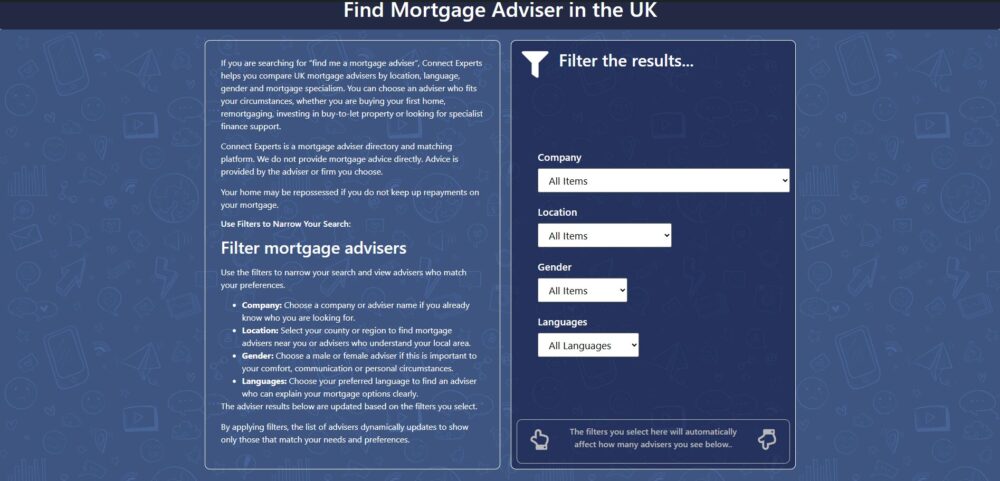
You can also use Connect Experts to find a mortgage adviser by location, language, and area of advice.
FAQs: Let-to-buy mortgage
Can I get a let-to-buy mortgage with bad credit?
It may be possible, but it depends on the type of credit issue, when it happened, the amount involved and your current position. Some lenders may consider cases with missed payments, defaults or older credit issues. Rates, deposits and criteria may differ.
Do I need a tenant before applying?
Not always. Many lenders can use an expected rental figure from a valuation. Some may ask for more evidence before completion, depending on the case.
Is let-to-buy the same as buy-to-let?
No. Buy-to-let is usually used when buying or refinancing a property that is already intended as a rental. Let-to-buy is used when you move out of your current home, let it, and buy a new main residence.
Can I release equity from my current home?
Possibly. This depends on the property value, mortgage balance, rent, lender criteria and your wider affordability. Releasing equity increases borrowing, so the long-term cost should be considered.
Will I pay higher stamp duty?
You may pay higher SDLT rates if you buy a new residential property while still owning your previous home. The rules depend on your circumstances, timing and location, so check the latest guidance and seek tax advice.
What happens if the rent does not cover the mortgage?
The lender may reduce the amount available, ask for a lower loan-to-value, require more income support, or decline the case. A broker can help check lender calculations before you apply.