

Remortgage Buy‑to‑Let: Landlord Guide – A buy-to-let remortgage is rarely just a rate change.
For landlords, it is a review of rent, risk, equity, tax position, property condition and long-term purpose. The mortgage may sit behind the investment, but the decision reaches further. It can affect monthly cash flow, future borrowing, property improvements, portfolio structure and exit planning.
A good remortgage decision begins with one question.
Does the current mortgage still fit the property?
If the answer is unclear, the landlord should review the numbers before the existing deal ends.
Remortgage Buy‑to‑Let in a Glance
A buy-to-let remortgage means replacing the mortgage on a rental property with a new deal.
Landlords often remortgage to review interest rates, avoid a lender’s follow-on rate, release equity, raise funds for improvements, or restructure borrowing.
Lenders usually assess rental income, loan-to-value, stress testing, property type, landlord experience, credit profile and wider portfolio exposure.
A product transfer may be quicker, but a full remortgage may provide more choice.
The lowest rate is not always the best outcome. Fees, rental coverage, early repayment charges, valuation results and long-term plans all matter.
What Is a Buy-to-Let Remortgage?
A buy-to-let remortgage is a new mortgage arranged on an existing rental property.
It may be arranged with the current lender or a new lender. The property remains let to tenants, so the lender usually focuses on rental income rather than standard residential affordability.
However, personal income may still matter. Some lenders ask for minimum income, while others focus mainly on rent and property strength.
A landlord may remortgage one property or review several properties as part of a wider portfolio plan.
For a wider explanation of buy-to-let lending, see the main buy-to-let mortgage guide.
Why Landlords Remortgage Buy-to-Let Property
Landlords usually remortgage for practical reasons.
Common reasons include:
- Reviewing the interest rate before a deal ends
- Avoiding the lender’s standard variable rate
- Moving from a variable rate to a fixed rate
- Releasing equity from a property
- Funding repairs or energy improvements
- Supporting another property purchase
- Reviewing limited company ownership
- Consolidating several loans
- Changing lender because criteria have changed
The reason matters because lenders assess the purpose of the remortgage.
A straightforward rate switch may need fewer checks. A capital-raising remortgage may need more evidence and a clearer explanation.
Product Transfer or Full Remortgage?
A product transfer means staying with the same lender and choosing a new deal.
A full remortgage means moving the loan to another lender.
A product transfer can be useful when speed matters. It may involve fewer checks, lower legal work and less disruption. However, it may not allow enough flexibility if the landlord wants to raise funds, change the term or move to a different structure.
A full remortgage may provide more choice. It can also help when the current lender no longer fits the property, rent, loan-to-value or landlord profile.
The better route depends on the full cost, not the headline rate.
How Lenders Assess a Buy-to-Let Remortgage
Buy-to-let lenders usually assess the property as an income-producing asset.
They may review:
- Current property value
- Current mortgage balance
- Monthly rental income
- Tenancy type
- Loan-to-value
- Interest cover ratio
- Stress testing rate
- Property condition
- EPC rating
- Landlord experience
- Credit history
- Personal income
- Existing portfolio exposure
- Ownership structure
- Reason for any capital raising
The lender wants to understand whether the property can support the mortgage under its own criteria.
This is why two lenders can assess the same landlord differently.
One lender may accept the rent. Another may decline because the stress test is tighter, the property type is restricted or the wider portfolio creates too much exposure.
Rental Stress Testing Explained
Rental stress testing is one of the most important parts of a buy-to-let remortgage.
The lender checks whether the rent covers the mortgage payment by a required margin. This is often called the interest cover ratio.
The required margin may change depending on:
- Whether the landlord is a basic-rate or higher-rate taxpayer
- Whether the property is owned personally or through a limited company
- Whether the product is fixed for two years or five years
- Whether the landlord owns several properties
- Whether the property is a standard buy-to-let, HMO or specialist property
This means a property may appear profitable but still fail a lender’s test.
Before applying, landlords can use the buy-to-let affordability calculator to estimate how rent may affect borrowing.
Loan-to-Value and Equity
Loan-to-value compares the mortgage balance with the property value.
For example, a £150,000 mortgage on a £250,000 property equals 60% loan-to-value.
A lower loan-to-value may improve lender choice. A higher loan-to-value may reduce options, especially when the rental income is tight.
Equity can help, but it does not guarantee approval.
A landlord may have strong equity, but the rent must still support the borrowing. The lender may also check the purpose of any extra funds.
Remortgaging to Release Equity
Some landlords remortgage to release equity from a buy-to-let property.
The funds may be used for:
- Property refurbishment
- Energy efficiency upgrades
- A deposit for another rental property
- Repairs or maintenance
- Portfolio restructuring
- Business investment, where accepted by the lender
- Debt consolidation, where permitted
Capital raising should be handled carefully.
A larger mortgage can reduce monthly cash flow. It may also increase exposure if rates rise or the property has a void period.
The philosophical point is simple. Equity is not the same as profit. It is stored value, and once released, it becomes debt again.
Limited Company Buy-to-Let Remortgage
Some landlords own rental property through a limited company. Others consider moving property into a company structure during a wider review.
This can affect tax, legal ownership and lender assessment.
A limited company buy-to-let remortgage may involve company bank statements, director details, shareholder details, personal guarantees and rental evidence.
It may suit some landlords, but not everyone. Tax advice should be taken before changing ownership structure.
For more detail, read the guide to limited company buy-to-let mortgages.
Portfolio Landlords and Remortgage Planning
A portfolio landlord usually owns four or more mortgaged buy-to-let properties.
Lenders often assess portfolio landlords more closely. They may review the full property schedule, total borrowing, rent across the portfolio, background assets and landlord experience.
A portfolio review should include:
- Mortgage maturity dates
- Current rates
- Rental income
- Property values
- Loan-to-value by property
- Void history
- Repair costs
- EPC position
- Ownership structure
- Future borrowing needs
The aim is not just to find a new rate. It is to understand whether the portfolio still works as a whole.
A property with a strong yield may support another weaker asset. Equally, one underperforming property can reduce options across the wider portfolio.
HMO, Multi-Unit and Specialist Property Remortgages
Some rental properties need specialist assessment.
This can include houses in multiple occupation, multi-unit blocks, holiday lets, student lets and properties with unusual construction.
A lender may check licensing, room layout, tenancy type, valuation method and landlord experience.
For HMO property finance, see the Connect Mortgages guide to HMO mortgages.
Specialist property can still be mortgageable, but lender choice may be narrower. The application may also need better preparation.
EPC, Energy Costs and Property Standards
Energy efficiency is becoming a bigger part of landlord planning.
The UK Government has proposed raising minimum energy efficiency standards for privately rented homes in England and Wales to the equivalent of EPC C by 2030. Landlords should check current rules and future requirements before deciding whether to release funds for improvements.
A remortgage review can help landlords plan for:
- Insulation works
- Heating upgrades
- Window improvements
- EPC reassessment
- Refurbishment funding
- Long-term rental suitability
This matters because a rental property is not only judged by today’s rent. It may also be judged by tomorrow’s legal and energy standards.
Government guidance on private rented energy performance is available through GOV.UK.
Renters’ Rights and Landlord Risk
Landlord finance should also reflect regulatory change.
The Renters’ Rights Act changed the private rented sector in England from 1 May 2026. Landlords should understand how tenancy rules, possession routes, documentation and rent processes may affect risk and cash flow.
This does not mean landlords should avoid remortgaging. It means the decision should be made with fuller information.
A buy-to-let mortgage is secured on property, but the income comes from tenants. Regulation can therefore affect the strength of the investment.
When a Second Charge or Bridging Loan May Be Considered
A full remortgage is not always the only option.
Some landlords may want to raise funds without disturbing the existing mortgage. In those cases, a second-charge mortgage may be considered, subject to the lender’s criteria.
A landlord may also need short-term finance where timing is important. For example, a purchase, auction deadline or refurbishment plan may need faster funding. In those cases, bridging finance may be reviewed.
These options carry risks and may cost more than standard mortgage finance. They should be considered carefully.
Documents Landlords May Need
The documents needed depend on the lender and case type.
Landlords may be asked for:
- Proof of identity
- Proof of address
- Current mortgage statement
- Tenancy agreement
- Rental income evidence
- Bank statements
- Proof of income
- Property schedule
- Limited company documents
- Insurance details
- Tax documents, where required
- HMO licence, where relevant
- Details of the capital-raising purpose
Good preparation can reduce delays.
A lender cannot assess what it cannot see. Missing documents can turn a strong case into a slow case.
The Practical Remortgage Checklist
Before reviewing a buy-to-let remortgage, landlords should check:
- When the current deal ends
- Whether early repayment charges apply
- The current mortgage balance
- The current property value
- The monthly rent
- Whether rent could reasonably increase
- The property’s EPC rating
- Whether repairs are needed
- Whether the property is personally owned or company owned
- Whether capital needs to be raised
- Whether the wider portfolio affects the case
This checklist helps turn a remortgage from a rate search into a proper financial review.
How Connect Mortgages Can Help
Connect Mortgages can help landlords review buy-to-let remortgage options before applying.
This may include checking rental coverage, loan-to-value, lender criteria, property type, ownership structure, portfolio position and documentation.
The aim is to help landlords understand what may be possible before they commit time, cost and paperwork.
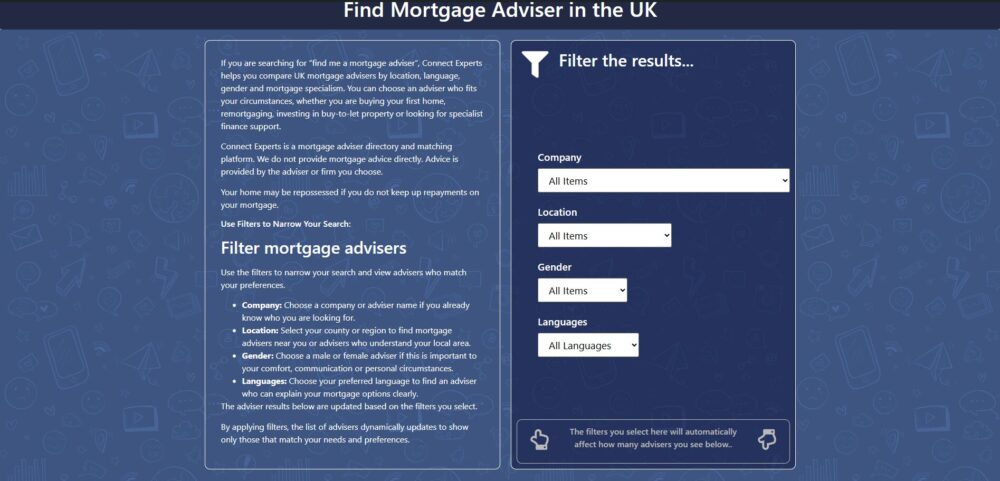
Landlords who want to compare adviser options can also use Connect Experts to find buy-to-let mortgage brokers by location, language and area of expertise.
FAQs: Remortgage Buy-to-Let
What is a remortgage buy-to-let?
A buy-to-let remortgage means replacing the mortgage on a rental property with a new mortgage deal. This may be with the current lender or a new lender.
Why do landlords remortgage buy-to-let property?
Landlords remortgage to review rates, avoid higher follow-on rates, release equity, fund improvements, restructure borrowing or support future property plans.
How is buy-to-let remortgage affordability assessed?
Lenders usually assess rental income, loan-to-value, stress testing, property type, ownership structure, landlord experience and credit profile.
Can I remortgage a buy-to-let to release equity?
Yes, this may be possible. The lender will assess the property value, rent, loan-to-value, reason for capital raising and wider circumstances.
Is a product transfer better than a remortgage?
Not always. A product transfer may be quicker, but a full remortgage may provide wider choice or allow changes to borrowing.
Can I remortgage a buy-to-let into a limited company?
It may be possible, but it is not a simple switch. It can involve legal, tax and mortgage considerations. Tax advice should be taken before changing ownership.
Do portfolio landlords face extra checks?
Yes. Portfolio landlords may need to provide a property schedule, rental details, mortgage balances and background financial information.
Can I remortgage an HMO property?
Yes, but lender criteria may be more specialist. Licensing, rental structure, valuation type and landlord experience may all be reviewed.
When should I review my buy-to-let remortgage?
Landlords should usually review options several months before the current deal ends. This gives time to compare options and avoid rushed decisions.
Are buy-to-let mortgages regulated?
Some buy-to-let mortgages are not regulated in the same way as residential mortgages. Consumer buy-to-let cases may be treated differently. Your adviser should explain what applies.