

Second Charge Mortgage Advice Before You Borrow: A second charge mortgage is not just another loan.
It is a decision about priorities, security, and future choices. The money may solve today’s need, but the structure must still make sense tomorrow.
That is why second charge mortgage advice matters.
A second charge mortgage allows a homeowner to borrow against property equity while keeping the existing mortgage in place. The first mortgage remains the first legal charge. The new borrowing sits behind it as a second charge.
This can be useful when remortgaging would be expensive, unsuitable or unnecessary. However, it also means you have two secured debts on your home.
Your home may be repossessed if you do not keep up repayments on your mortgage or any loan secured on it.
At a Glance
A second charge mortgage may help you raise funds without replacing your current mortgage.
It may be worth reviewing if:
- Your current mortgage rate is worth keeping.
- You face early repayment charges if you remortgage.
- Your current lender will not offer further borrowing.
- You need to raise money for a clear purpose.
- Your income, credit profile or circumstances need specialist review.
It may not be suitable if:
- The repayments would stretch your budget.
- You are using secured borrowing to delay wider debt problems.
- A further advance, a remortgage, or an unsecured loan would be more suitable.
- The total cost over the full term is too high.
- You have not compared the alternatives.
For a broader overview of the service, read our guide to second charge mortgages.
What Is Second Charge Mortgage Advice?
Second-charge mortgage advice assesses whether this type of secured borrowing is suitable for your circumstances.
It is not only about finding a lender.
A proper advice process should review:
- Your current mortgage rate and term.
- Any early repayment charges.
- Your income and regular spending.
- Your property value and available equity.
- Your credit commitments.
- Your reason for borrowing.
- The cost of alternatives.
- The risk of securing more debt on your home.
- Your ability to repay both mortgages.
The key question is simple.
Does the second charge mortgage improve your position, or does it only move the pressure into the future?
That question matters most when the money is being used for debt consolidation.
How Does a Second Charge Mortgage Work?
A second charge mortgage is secured against a property that already has a mortgage.
Your existing mortgage remains in place. The second charge lender registers a further legal charge behind the first lender.
This order matters.
If the property is sold after missed payments or repossession, the first mortgage lender is usually repaid first. The second charge lender is repaid after that.
Because of this lower priority, second charge mortgage rates can be higher than first charge mortgage rates. The lender is taking a greater risk.
A second charge mortgage may also be called:
- A second mortgage.
- A secured loan.
- A homeowner loan.
- A secured homeowner loan.
The names can vary, but the central point stays the same. The loan is secured against your home.
Comparing Quotes and Fees Carefully

Consider more than just the price when comparing fees and quotes for second-charge mortgages. Look for discounts, offers, and specific policy terms. Always review all available options before making a decision. Read the fine print carefully to avoid unexpected charges.
Ask advisers or brokers as many questions as needed. Ensure you fully understand what their services include to prevent surprises later.
When Might Second Charge Mortgage Advice Be Useful?
Second charge mortgage advice may be useful when you need to raise funds but do not want to replace your current mortgage.
This can happen when your existing mortgage still works well.
For example, you may have a low fixed rate. If you remortgage, you may lose that rate on the full mortgage balance. You may also face an early repayment charge.
In that situation, a second charge mortgage may allow you to borrow only the extra amount needed.
Second charge mortgage advice may also help if your current lender refuses a further advance. Some lenders will not offer additional borrowing for certain purposes, income types or credit profiles.
However, advice should never start with the product. It should start with the reason for borrowing.
Common Reasons for a Second Charge Mortgage
Homeowners may consider second charge borrowing for several reasons.
These can include:
- Home improvements.
- Property repairs.
- Debt consolidation.
- Tax bills.
- Business funding.
- School fees.
- Family support.
- Large one-off costs.
- Raising a deposit for another property.
Each reason needs a different advice conversation.
Borrowing for home improvements may involve property value, project costs and contingency planning.
Borrowing for debt consolidation needs a deeper review. It can reduce monthly payments, but it may increase the total amount repaid. It can also turn unsecured borrowing into debt secured against your home.
Borrowing for business purposes may create further risks. Business income can change, but the secured loan payment remains due.
Second Charge Mortgage vs Remortgage
A remortgage usually replaces your existing mortgage.
A second charge mortgage sits alongside it.
That difference can affect cost, risk and flexibility.
A remortgage may be suitable if your current deal is ending, your rate is no longer competitive, or you want one mortgage payment.
A second charge mortgage may be suitable if your current mortgage deal is worth keeping, or remortgaging would create higher costs.
For a direct comparison, read our guide to remortgaging vs second-charge loans.
The right answer depends on the full picture. A lower monthly payment does not always mean a cheaper solution. The total cost over the full term matters.
Tips for Finding a Reputable Lender

When seeking a lender for a second-charge mortgage, it is important to conduct thorough research. This approach helps secure the best available deal and reduces the risk of scams. Follow these tips to find reputable lenders:
- Check online reviews from previous customers.
- Use price comparison websites to evaluate different products.
- Consult an independent financial adviser or mortgage broker.
- Confirm that the Financial Conduct Authority regulates the lender.
- Ensure you are comfortable with the repayment terms and interest rates offered.
Taking these steps can help you make an informed decision while meeting UK lending criteria.
Second Charge Mortgage vs Further Advance
A further advance is extra borrowing from your existing mortgage lender.
It can be simpler because you are dealing with the same lender. It may also offer a lower rate than a second charge mortgage.
However, it depends on your current lender’s criteria. Your lender may decline the request or restrict how the money can be used.
A second charge mortgage uses a separate lender. This may create more choice, but it also creates a second secure payment.
Before choosing either route, compare the rate, fees, term, monthly payment and total amount repayable.
You can read more about advanced options if your current lender can help.
Second Charge Mortgage for Debt Consolidation
Debt consolidation is one of the most important areas of second charge mortgage advice.
It can look attractive because several payments may become one payment. The monthly cost may also reduce if the debt is spread over a longer term.
However, this can create three risks.
First, the total interest paid may increase.
Second, unsecured debts may become secured against your home.
Third, the original debt problem may return if spending habits do not change.
A second charge mortgage should not be used to hide a debt issue. It should be considered only after the cause, cost and repayment plan have been reviewed.
The FCA has reviewed second charge mortgage advice, fees, charges and affordability assessments. You can read the FCA’s findings on second charge mortgages and consumer outcomes.
Weighing Up the Pros & Cons
You should carefully weigh the pros and cons of taking out a second-charge mortgage before deciding. This type of loan can provide you with access to cash quickly, but it will add to your existing debt load, so ensure you are comfortable with this.
What Should an Adviser Check?
A second charge mortgage adviser should look beyond the amount you want to borrow.
They should review:
- Why do you need the money?
- Whether the purpose is suitable.
- Whether the loan is affordable.
- Whether the term is reasonable.
- Whether fees are clear.
- Whether a remortgage is better.
- Whether a further advance is better.
- Whether unsecured borrowing is better.
- Whether debt advice is needed.
- Whether protection should be reviewed.
Advice should also consider future changes.
Could your income fall? Could your mortgage rate rise later? Would the payment remain manageable if household costs increase?
Good advice does not only ask whether the loan can be arranged. It asks whether the loan should be arranged.
What Documents May Be Needed?
Lenders may ask for documents before assessing your application.
These may include:
- Proof of identity.
- Proof of address.
- Payslips or income evidence.
- Bank statements.
- Mortgage statement.
- Details of existing credit commitments.
- Property valuation details.
- Proof of the borrowing purpose.
- Business accounts, where relevant.
- Evidence of benefits, maintenance or other income, where applicable.
Self-employed applicants may need extra evidence. This can include accounts, tax calculations, tax year overviews and business bank statements.
The exact documents depend on the lender and your circumstances.
How Much Can You Borrow?
The amount you can borrow depends on several factors.
These include:
- Your property value.
- Your current mortgage balance.
- Your available equity.
- Your income.
- Your credit profile.
- Your regular spending.
- Your existing debts.
- The lender’s maximum loan-to-value.
- The purpose of the borrowing.
Equity is important, but affordability is just as important.
A homeowner may have enough equity but still fail affordability checks. Lenders must assess whether repayments are realistic.
You can use our mortgage calculator to understand basic repayment figures before taking advice.
What Are the Main Costs?
A second charge mortgage may include several costs.
These can include:
- The interest rate.
- Arrangement fees.
- Broker fees.
- Valuation fees.
- Legal or administration costs.
- Early repayment charges.
- Exit fees.
- Costs added to the loan.
Fees should be explained before you proceed.
Adding fees to the loan may reduce upfront cost, but it can increase the total amount repaid. This is because interest may be charged on the added fees.
The monthly payment is only one part of the decision. The total amount repayable is just as important.
What Are the Main Risks?
The main risk is that your home is used as security.
If you do not keep up repayments, your home may be at risk.
Other risks include:
- Higher interest rates than first charge mortgages.
- Two secured monthly payments.
- Higher total cost over a longer term.
- Fees or early repayment charges.
- Debt consolidation increasing long-term cost.
- Reduced flexibility when moving home.
- Pressure on household income.
- Difficulty refinancing later.
MoneyHelper explains that second mortgages are secured on your property and should be considered carefully before applying. You can read its consumer guide to second mortgages.
Questions to Ask Before Applying
Before applying, ask these questions.
- Why do I need the money?
- Is the borrowing essential?
- Have I compared remortgaging?
- Have I checked a further advance?
- Is unsecured borrowing possible?
- What is the total cost?
- What fees apply?
- Can I repay early?
- What happens if I move home?
- What happens if my income falls?
- Would debt advice be more suitable?
- Is the adviser authorised to give this advice?
These questions help protect the decision from becoming rushed.
A second charge mortgage can be useful. However, it should never be treated as a shortcut.
When Might a Second Charge Mortgage Not Be Suitable?
A second charge mortgage may not be suitable if the borrowing creates more pressure than it solves.
It may also be unsuitable if you are already struggling with existing payments.
If debt is the main reason for borrowing, it may be better to speak with a free debt advice charity before securing more borrowing against your home.
It may also be unsuitable if you plan to move soon, or if the second charge creates early repayment charges that limit your options.
A mortgage solution should not close too many future doors.
How Connect Mortgages Can Help
Connect Mortgages can help you review second charge mortgage advice in context.
That means comparing the second charge option with the main alternatives, including remortgaging, a further advance and other borrowing routes.
If remortgaging may be more suitable, our remortgage advice page may help you compare the wider route.
If your aim is to raise funds from property equity, our guide to raising capital using a second charge explains how homeowners may use secured borrowing in practice.
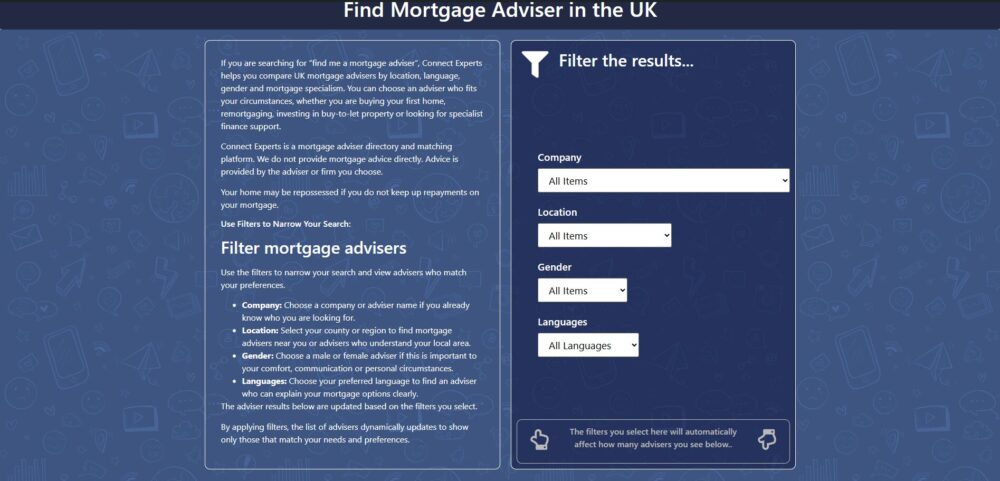
Some clients prefer to compare advisers by location, experience or language. Connect Experts offers a directory where you can search for second-charge brokers before deciding whom to contact.
Speak to Connect Mortgages
Second charge mortgage advice should be calm, practical and complete.
It should help you understand the product, compare the alternatives and decide whether secured borrowing is right for your circumstances.
FAQs: Second Charge Mortgage Advice
Is second charge mortgage advice required?
Advice is strongly recommended because a second charge mortgage is secured against your home. A qualified adviser can compare the product with remortgaging, further advance options and other borrowing routes.
Is a second charge mortgage the same as a secured loan?
In many cases, yes. A second charge mortgage is often called a secured loan because it is secured against your property. The wording can vary between lenders and brokers.
Can I get a second charge mortgage with bad credit?
It may be possible. Some specialist lenders consider applicants with credit issues. However, rates may be higher and affordability checks still apply.
Can I use a second charge mortgage for debt consolidation?
Yes, some homeowners use second charge mortgages for debt consolidation. However, this needs careful advice because unsecured debts may become secured against your home.
Is a second charge mortgage cheaper than remortgaging?
Not always. It may be more suitable if remortgaging would mean losing a good rate or paying early repayment charges. However, second charge rates can be higher. The full cost must be compared.
Do I need my current lender’s consent?
In most cases, the first mortgage lender must consent before a second charge can be registered. The process can vary by lender.
Can I repay a second charge mortgage early?
Some second charge mortgages allow early repayment, but charges may apply. Always check the terms before proceeding.
What happens if I sell my home?
The second charge mortgage will usually need to be repaid when the property is sold. The first charge lender is usually repaid first, followed by the second charge lender.