Sustainable mortgages are not about claiming that one product can solve climate change.
They are about a more practical question.
Can the property we finance today remain affordable, efficient and suitable tomorrow?
For many homeowners, buyers and landlords, that question now matters more. Energy use, insulation, heating systems and EPC ratings can affect running costs, future saleability and lender appetite. A mortgage is not just a loan against bricks and mortar. It is a long-term financial decision linked to the condition and performance of the home.
At a glance
Sustainable mortgages focus on property finance where energy efficiency, responsible borrowing and long-term property suitability are part of the decision.
They may be relevant if:
- You are buying an energy-efficient home.
- Your property has a strong EPC rating.
- You want to improve insulation, heating or glazing.
- You are remortgaging to fund energy-saving upgrades.
- You are a landlord reviewing rental property standards.
- You want to understand whether a green mortgage incentive is worth considering.
A sustainable mortgage still needs to meet normal lender rules. Income, affordability, credit history, deposit, property value and valuation all remain important.
Your home may be repossessed if you do not keep up repayments on your mortgage.
What Are Sustainable Mortgages?
Sustainable mortgages are linked to the idea that property finance should support homes that are efficient, affordable to run and suitable for long-term occupation.
In practical terms, this can include mortgages connected to:
- Homes with stronger Energy Performance Certificate ratings.
- Properties built to modern energy-efficiency standards.
- Borrowing used to fund approved energy-efficient improvements.
- Lender incentives for greener homes.
- Long-term property condition and running costs.
Sustainability in mortgage lending is not only an environmental idea. It also has a technical lending angle. A property that costs less to heat may place less pressure on household budgets. A better-maintained home may be easier to value, insure, sell or refinance. A landlord with efficient rental property may also be better placed to meet tenant expectations and future standards.
This is where sustainability becomes practical. It links household costs, property quality and responsible lending.
Are Sustainable Mortgages the Same as Green Mortgages?
The terms are often used together, but they are not always identical.
A green mortgage usually refers to a specific lender product. It may offer a lower rate, cashback or another incentive where a property meets certain energy-efficiency standards. Many green mortgage products are linked to EPC ratings, often A or B, although lender criteria can vary.
A sustainable mortgage is the broader idea. It looks at how mortgage borrowing can support long-term property efficiency, affordability and responsible ownership.
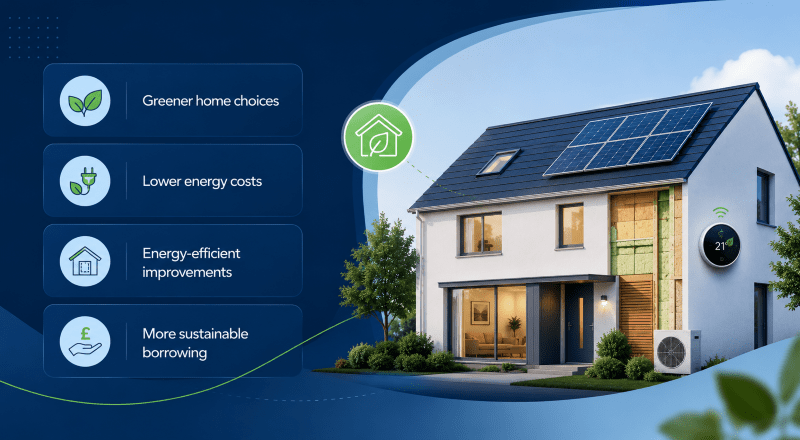
For example, a buyer may consider a residential mortgage on a property with a strong EPC rating. A homeowner may explore remortgage options to fund insulation, solar panels, double glazing or a modern heating system. A landlord may review a buy-to-let mortgage alongside a rental property’s energy performance.
The product may be green. The decision should be sustainable.
Why EPC Ratings Matter
An Energy Performance Certificate, often called an EPC, gives a property an energy-efficiency rating from A to G. A is the most efficient rating. G is the least efficient.
An EPC also provides recommendations to improve the property’s energy performance. GOV. The UK explains that an EPC is intended to provide buyers and tenants with information about a building’s energy performance and practical advice on improvements. Existing buildings generally need an EPC when sold or rented out, and an EPC is usually valid for 10 years unless a newer certificate is produced. Source: GOV.UK EPC guidance.
For mortgage purposes, an EPC may help lenders, valuers, buyers and landlords understand a property’s energy efficiency. It may also influence whether a borrower qualifies for a green mortgage product.
However, an EPC is not the whole story. Lenders still assess the borrower, the property, affordability and risk. A strong EPC does not guarantee mortgage approval.
What Lenders May Assess
Sustainable mortgage lending still follows standard mortgage rules.
A lender may review:
- Income and employment status.
- Deposit or equity.
- Credit history.
- Existing commitments.
- Loan-to-value.
- Property type and construction.
- Valuation.
- EPC rating.
- Planned improvement works.
- Overall affordability.
Where a lender offers a green mortgage incentive, they may ask for evidence. This could include a valid EPC, proof of the property’s rating, confirmation of eligible works or completion documents.
Different lenders use different criteria. Some products may only apply to purchases. Others may apply for remortgages or further borrowing. Some may be limited to new-build homes, while others may support improvements to existing homes.
This is why borrowers should compare the whole mortgage, not just the green label.
Can You Remortgage to Make a Home More Sustainable?
Some homeowners consider remortgaging to raise funds for energy-efficient improvements.
This may include:
- Loft insulation.
- Wall insulation.
- Double or triple glazing.
- Solar panels.
- Heat pumps.
- Modern heating controls.
- Draught proofing.
- Efficient doors and windows.
- Battery storage where suitable.
These improvements may reduce energy use, improve comfort and support long-term property value. They may also improve the EPC rating if the work is suitable and properly assessed.
However, borrowing more money increases debt. The lender will still check affordability. The homeowner should also compare the cost of borrowing with the likely benefit of the improvements.
A sustainable decision is not only about doing the right work. It is also about funding it in the right way.
Sustainable Mortgages for Landlords
Sustainability is also important for landlords.
Rental property is not only judged by yield. It is judged by condition, compliance, tenant demand and long-term viability. Energy efficiency can affect all four.
A landlord reviewing a rental property may need to consider:
- Current EPC rating.
- Recommended improvement works.
- Cost of upgrades.
- Rental demand.
- Property valuation.
- Refinance options.
- Future maintenance.
- Tenant energy costs.
For buy-to-let investors, energy performance can form part of a wider portfolio review. A property with poor efficiency may need more investment before it remains suitable for long-term letting or refinancing.
This does not mean every landlord should rush into expensive works without advice. It means sustainability should be part of the finance conversation.
Benefits of Sustainable Mortgages
Sustainable mortgage options may offer several benefits.
They may help borrowers:
- Access green mortgage incentives where eligible.
- Reduce long-term energy costs.
- Improve property comfort.
- Support future saleability.
- Prepare for changing property standards.
- Fund practical energy-efficient upgrades.
- Think more clearly about long-term affordability.
The wider benefit is cultural as well as financial. A home is not only an asset. It is a place where people live, work, raise families and make decisions that last for years.
A sustainable mortgage asks a simple question before money changes hands.
Is this property fit for the future?
Limits and Risks to Consider
Sustainable mortgages are not automatically cheaper.
A green mortgage deal may offer cashback or a lower rate, but the overall mortgage cost still needs to be compared with standard products. Fees, interest rate, term, loan-to-value and early repayment charges all matter.
Property upgrades can also be expensive. Some works may not improve an EPC rating as much as expected. Some improvements may need planning consent, specialist installation or extra checks from insurers and lenders.
Borrowers should avoid assuming that every energy-efficient improvement will increase property value by the same amount. The right decision depends on the property, location, budget, mortgage terms and long-term plans.
Sustainability should support good judgement, not replace it.
Practical Checklist Before You Apply
Before applying for a sustainable or green mortgage, consider these steps:
- Check the property’s current EPC rating.
- Review the EPC recommendations.
- Estimate the cost of any improvements.
- Check whether the work is eligible for any lender incentive.
- Compare green mortgage products with standard mortgage options.
- Review affordability before increasing your borrowing.
- Check whether the property needs specialist valuation or survey advice.
- Keep invoices, guarantees and completion documents for any completed work.
- Use mortgage calculators to understand possible repayments before speaking to an adviser.
A careful plan can help avoid rushed borrowing, unsuitable work or unrealistic expectations.
UK Net Zero and Mortgage Lending
The UK Government has set out policies and proposals to support the country’s net zero target by 2050. Source: GOV.UK Net Zero Strategy.
Mortgage lending is only one part of that wider transition. It cannot replace public policy, construction standards, energy reform or household decision-making.
But mortgage finance can still play a role.
It can help buyers recognise the value of efficient homes. It can help homeowners fund sensible improvements. It can help landlords think beyond yield and consider the long-term standard of their properties.
That is where sustainable mortgages become meaningful. Not as a slogan, but as a practical route between finance and responsibility.
Speak to a Mortgage Adviser
Sustainable mortgage decisions need clear evidence, not guesswork.
Connect Mortgages can help borrowers review residential, remortgage and buy-to-let options where energy efficiency is part of the wider property finance decision. Advice depends on your circumstances, lender criteria and affordability.
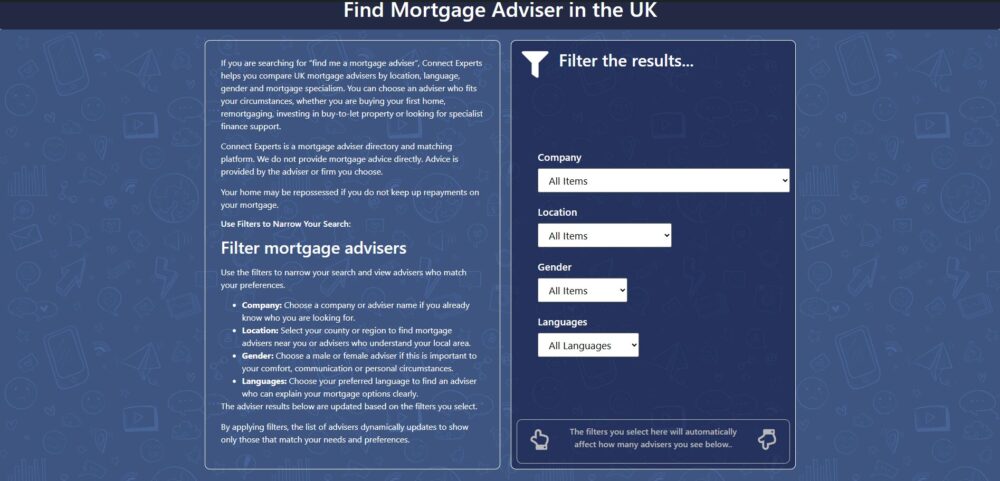
If you want to compare advisers by location, mortgage type, language or preference, you can use Connect Experts to find mortgage advisers.
FAQs About Sustainable Mortgages
What is a sustainable mortgage?
A sustainable mortgage is a mortgage approach linked to energy efficiency, responsible lending and long-term property suitability. It may include green mortgage products, EPC-linked lending or borrowing used to fund energy-efficient improvements.
Do I need a high EPC rating for a sustainable mortgage?
Some green mortgage products require a strong EPC rating, often A or B. Other borrowing options may be available for homeowners who want to improve a lower-rated property. Criteria vary by lender.
Can I get a better mortgage rate for an energy-efficient home?
Some lenders offer green mortgage incentives, such as lower rates or cashback. These offers depend on the lender, product and property criteria. They are not always the cheapest option overall.
Can I borrow more to improve my EPC rating?
It may be possible to borrow more through a remortgage, further advance or secured loan. This depends on affordability, equity, credit profile, lender rules and the planned work.
Are sustainable mortgages only for new-build homes?
No. New-build homes may be more likely to have higher EPC ratings, but existing homeowners may also explore finance for improvements. Older homes may need more careful assessment.
Do landlords need to think about sustainable mortgages?
Yes. Landlords should consider EPC ratings, property condition, tenant expectations, running costs and future refinancing. Energy efficiency can affect the long-term strength of a rental property.
Are sustainable mortgages regulated?
Many residential mortgages are regulated by the Financial Conduct Authority. Some forms of buy-to-let, commercial mortgage and business finance may not be regulated. Your adviser can explain what applies to your case.