Things To Do To Save Energy in Your Home: A home does not waste energy loudly. It wastes it quietly.
Heat escapes through small gaps. Lights are left on in empty rooms. Appliances sit on standby. Hot water is used without much thought. Over time, these small losses can become part of a property’s cost of living.
Saving energy is not only about spending less. It is about understanding how a home works. A more efficient home can feel warmer, run more efficiently, and give its occupants more control.
At a Glance
- Check your Energy Performance Certificate before deciding what to improve.
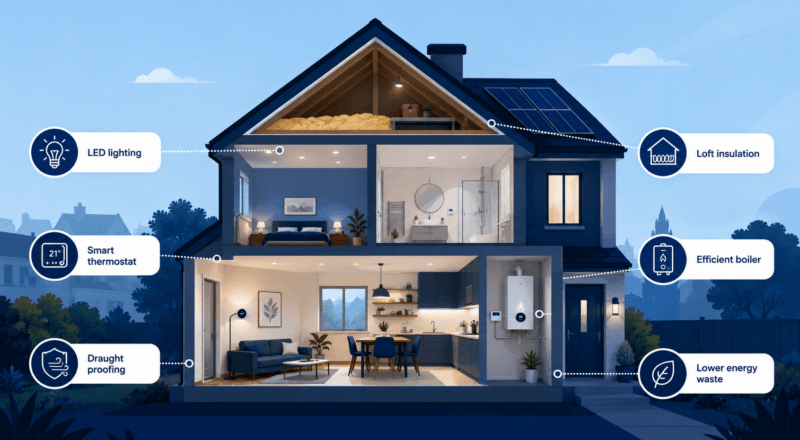
- Reduce heat loss through draught-proofing, insulation, and better heating control.
- Use LED lighting and turn off lights when rooms are empty.
- Switch appliances off standby where safe to do so.
- Use washing machines, dishwashers and tumble dryers more efficiently.
- Reduce wasted hot water from showers, taps and heating systems.
- Consider larger upgrades only when the cost, comfort and property value make sense.
- Speak to a mortgage adviser if energy improvements form part of a move, a remortgage, or a further borrowing plan.
Start With How Your Home Uses Energy
Before making changes, it helps to understand where energy is being used.
Most homes use energy for heating, hot water, lighting, cooking and appliances. Some improvements are simple and low cost. Others need planning, money and professional advice.
A good starting point is your property’s Energy Performance Certificate, often called an EPC. You can check an existing EPC through the official GOV.UK energy certificate service for properties in England, Wales and Northern Ireland. The EPC can show the current rating and suggested improvements.
For homeowners, this matters for three reasons.
First, it can show where the property may be losing energy. Second, it may help you decide which improvements should come first. Third, energy performance is becoming more relevant to buyers, lenders and long-term property planning.
Reduce Heat Loss First
The cheapest unit of energy is often the one you do not need to use.
Heat loss is one of the main reasons a home feels expensive to run. If warm air escapes through gaps around doors, windows, floors or loft spaces, the heating system has to work harder.
Practical steps include:
- Draught proofing windows and external doors
- Using a letterbox brush or cover
- Sealing gaps around floorboards where suitable
- Checking loft insulation
- Fitting thick curtains or thermal blinds
- Keeping internal doors closed in colder rooms
- Making sure radiators are not blocked by furniture
Draught proofing should be done carefully. Homes still need ventilation to help reduce damp, mould and poor air quality. The aim is not to seal the property completely. The aim is to stop unwanted heat loss while keeping healthy airflow.
Control Your Heating More Carefully
Heating can be one of the biggest energy costs in a home. Better control can reduce waste without making the property uncomfortable.
A thermostat, timer and thermostatic radiator valves can help you heat the rooms you use, at the times you need them. This is especially useful if some rooms are used less often.
Simple heating checks include:
- Set heating times around your actual routine
- Avoid heating empty rooms for long periods
- Bleed radiators if they have cold spots
- Keep boilers serviced by a qualified professional
- Use radiator valves to control room-by-room heating
- Avoid drying clothes directly on radiators where possible
This is where the philosophy of energy saving becomes practical. Comfort does not always come from using more energy. It often comes from using energy more precisely.
Switch to Efficient Lighting
Lighting is one of the simplest areas to improve.
If your home still uses older bulbs, switching to LED bulbs can reduce electricity use for lighting. LEDs also tend to last longer, which means fewer replacements over time.
The practical rule is simple. Use the right light, in the right room, for the right purpose.
For example, task lighting can work better than lighting a whole room. A desk lamp, under-cabinet kitchen light or reading lamp may use less energy than several ceiling lights.
Good habits also help:
- Turn lights off when leaving a room
- Use natural daylight where possible
- Fit LED bulbs in high-use areas first
- Choose suitable brightness rather than the highest option
- Keep windows clean so daylight can enter the room
Switch Off Standby Power Where Safe
Many homes lose energy through small everyday habits.
Televisions, chargers, games consoles, printers and other devices may use electricity while not in active use. This is often called standby power.
You do not need to unplug everything. Some appliances must stay on, such as fridges, freezers, medical equipment and some programmed devices. But many items can be switched off at the wall when they are not needed.
Useful steps include:
- Turn chargers off when not in use
- Use switched extension leads for grouped devices
- Check appliance instructions before switching off
- Keep essential appliances plugged in
- Review home office equipment at the end of each day
A home office can quietly increase electricity use. Monitors, printers and chargers should be checked as part of your daily shutdown routine.
Use Appliances More Efficiently
Appliances do not only cost money when you buy them. They also cost money each time they are used.
Washing machines, tumble dryers, dishwashers, ovens, and fridge-freezers all affect household energy use. The answer is not always to replace them immediately. It is often better to use them properly until replacement makes sense.
Practical appliance steps include:
- Wash clothes at lower temperatures where suitable
- Run full loads rather than half loads
- Air dry clothes when possible
- Clean tumble dryer filters
- Use eco settings on dishwashers and washing machines
- Avoid overfilling fridges and freezers
- Defrost freezers if ice build-up becomes heavy
- Keep appliance vents clear
When an appliance reaches the end of its life, choose a more efficient replacement. Check the UK energy label and compare running costs, not just the purchase price.
Reduce Hot Water Waste
Hot water uses energy before it reaches the tap.
Shorter showers, efficient showerheads, tap aerators, and careful use of hot water can help reduce energy use. This is especially relevant for larger households, where small habits are repeated many times each week.
Practical hot water steps include:
- Fix dripping hot taps
- Avoid leaving hot taps running
- Use a bowl when washing up by hand
- Fit tap aerators where suitable
- Insulate hot water cylinders and exposed pipes
- Check hot water settings if you have a cylinder
- Avoid heating more water than the household needs
Kettles are another simple example. Boiling only the water you need can reduce wasted electricity. It is a small act, but repeated small acts shape the running cost of a home.
Think Before Making Bigger Improvements
Some home energy improvements need more planning.
Examples include:
- Loft insulation
- Cavity wall insulation
- Solid wall insulation
- Double or triple glazing
- Solar panels
- Battery storage
- Heat pumps
- Boiler replacement
- Smart heating controls
These can improve comfort and efficiency, but they should be assessed properly. The right choice depends on the property’s age, construction type, budget, current heating system, and long-term plans.
For example, insulation may offer better value before changing a heating system. A heat pump may work best when the property is already well insulated. Solar panels may suit some households more than others, depending on roof space, orientation and daytime energy use.
Do not assume the most expensive improvement should come first. A sensible energy plan starts with the property, not the product.
Check Whether Energy Improvements Affect Your Mortgage Plans
Energy-saving improvements may become part of a wider property decision.
You may be buying a home that needs work. You may be moving home and comparing running costs. You may be reviewing your current mortgage and thinking about improvement costs. You may also be considering whether further borrowing, a remortgage, or a second-charge mortgage could help fund larger works.
If you are reviewing your mortgage options, our guide to remortgaging may help you understand where this fits within a wider finance plan.
If you are considering secured borrowing for home improvements, you can also read about second charge mortgages. This may be relevant where a homeowner wants to raise funds without changing their current main mortgage.
For buyers comparing homes, our residential mortgage page explains how mortgage advice can support the wider home-buying process.
If you want to speak with an adviser, Connect Experts can help you find a mortgage adviser by location, mortgage type and advice need.
Your home may be repossessed if you do not keep up repayments on your mortgage or loans secured on it.
Do Energy Improvements Help With Green Mortgages?
Some lenders offer green mortgage products or incentives for energy-efficient homes. These may depend on the property’s EPC rating, the lender’s criteria and the mortgage product available at the time.
However, a green mortgage should not be chosen only because it sounds positive. The rate, fees, cashback, term and wider mortgage suitability still matter.
Energy efficiency can support better household budgeting, but the mortgage must still suit the borrower.
If energy works are part of a wider home improvement plan, compare the total cost carefully. The right answer may be savings, staged improvements, a remortgage, further borrowing or waiting until the next natural mortgage review point.
Buildings and Insurance Considerations
Some energy improvements may affect your property or insurance position.
For example, solar panels, structural insulation works or major heating changes may need installer certification, planning checks, building control approval or notification to your insurer.
Before major work starts, check:
- Whether the installer is properly qualified
- Whether guarantees are provided
- Whether building regulations apply
- Whether planning consent is needed
- Whether your insurer needs to know
- Whether the improvement affects future sale documents
You can read more about protecting the home itself through buildings and contents insurance.
A Practical Order for Saving Energy at Home
A simple order can help avoid wasted money.
- Check your EPC and current bills.
- Fix obvious waste, such as standby use and lighting.
- Reduce draughts and heat loss.
- Improve heating controls.
- Use appliances and hot water more efficiently.
- Plan larger works around budget, property type and long-term goals.
- Review mortgage options only if borrowing is needed and suitable.
This order keeps the focus on control. It also avoids the mistake of spending heavily before dealing with basic energy waste.
FAQs: Things To Do To Save Energy in Your Home
What is the easiest thing to do to save energy at home?
One of the easiest steps is to turn off lights and appliances when they are not being used. You can also switch to LED bulbs, reduce standby power and avoid heating rooms that are not in use.
How can I reduce heat loss in my home?
You can reduce heat loss by draught proofing windows and doors, improving loft insulation, using curtains or blinds, keeping internal doors closed and checking whether radiators are working properly.
Should I check my EPC before making energy improvements?
Yes. An EPC can show your property’s current energy rating and recommended improvements. It can help you decide which changes may be worth considering first.
Do LED bulbs really help save energy?
Yes. LED bulbs use less electricity than many older bulb types. They can be a simple first step, especially in rooms where lights are used often.
Can saving energy improve my mortgage options?
Energy efficiency may matter for some green mortgage products, but lender criteria vary. A better EPC rating may help with some products, but the full mortgage cost and suitability should still be reviewed.
Should I borrow money to make energy improvements?
Only if the borrowing is affordable and suitable. Smaller improvements may be paid from savings. Larger works may need advice, especially if you are considering a remortgage, further borrowing or a second charge mortgage.
What should I improve first?
Start with low-cost waste reduction. Check lighting, standby power, heating controls, draughts and hot water use before moving on to larger improvements such as insulation, solar panels or heating system changes.