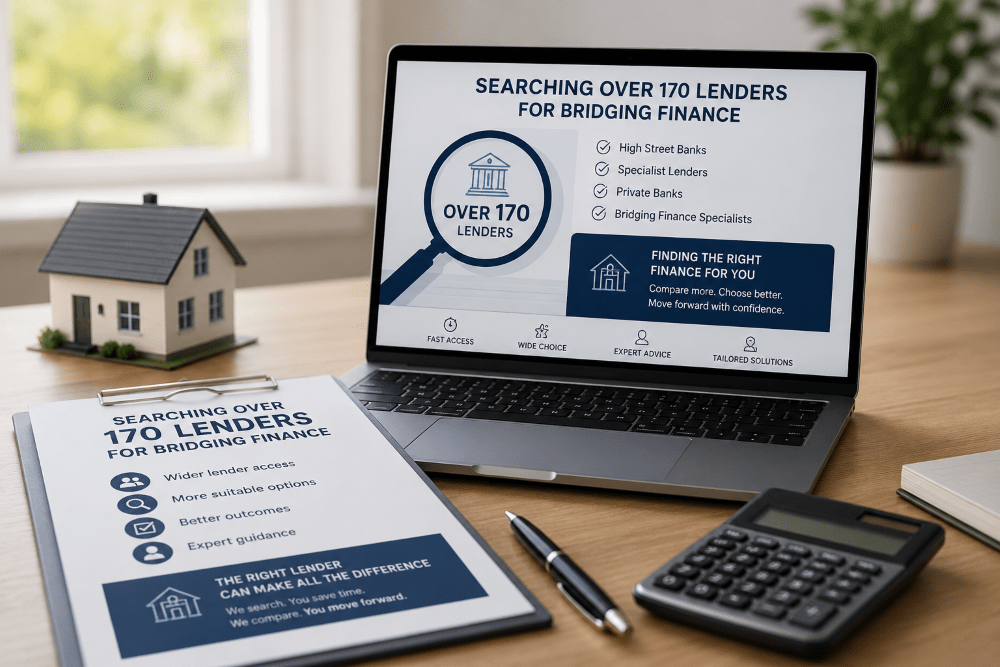
We Search 100s of lenders for Bridging Finance: Why? When a property purchase moves faster than a standard mortgage, lender choice can make a real difference.
Connect Mortgages searches across a wide panel of over 170 lenders to help clients explore suitable bridging finance options. This can include high-street banks, specialist lenders, private banks and short-term property finance providers.
A bridging loan is not right for every borrower. It is short-term finance, usually secured against property, and it should be supported by a clear repayment plan.
That is why lender choice, advice and timing matter.
Why Lender Access Matters
Bridging finance is often used when timing is tight, the property is unusual, or a standard mortgage is not ready.
Connect Mortgages is a credit broker, not a lender. We search across a wide lender panel to help identify options that may fit your property, timescale, borrowing need and exit strategy.
This matters because one lender may decline a case that another may consider.
What Does “Searching Over 170 Lenders” Mean?
Searching over 170 lenders does not mean every lender will suit every case.
It means your adviser can compare a wider range of lending criteria before recommending a suitable option. This can be especially helpful when the case involves speed, complex income, property condition, auction deadlines or a specialist property type.
Lenders may assess:
- The property used as security
- The property type and condition
- The loan amount
- The loan-to-value ratio
- Your credit profile
- Your deposit or equity
- The purpose of the borrowing
- The term required
- The exit strategy
- Whether the case is regulated or unregulated
A wider lender search can reduce wasted time. It can also help avoid approaching lenders whose criteria do not fit the case.
What is Bridging Finance?
Bridging finance is short-term borrowing secured against property.
It is often used to bridge a funding gap between one event and another. For example, a buyer may need to complete a purchase before a property sale completes.
Bridging finance may be used for:
- Buying a property at auction
- Buying before selling an existing property
- Refurbishing a property before refinancing
- Completing a purchase quickly
- Releasing funds for a short-term property need
- Buying a property that needs work before a standard mortgage is possible
However, bridging finance can be expensive. It can also carry risk if the repayment plan does not happen as expected.
This is why advice and lender selection are important.
Why Bridging Loans are Different From Standard Mortgages
A standard mortgage is usually arranged for long-term borrowing.
A bridging loan is different. It is normally short-term and linked to a clear exit route.
That exit route may include:
- Selling a property
- Refinancing onto a standard mortgage
- Refinancing onto a buy-to-let mortgage
- Moving to a limited company buy-to-let mortgage
- Completing refurbishment works before refinancing
- Receiving funds from another confirmed source
The lender will want to understand how the loan will be repaid.
If the exit strategy is weak, the lender may decline the case.
When Searching More Lenders Can Help
A wider lender search may help when the case does not fit a simple high-street route.
This can include:
- Tight completion deadlines
- Auction purchases
- Properties needing refurbishment
- Mixed-use or commercial property
- Buy-to-let investment purchases
- Portfolio landlord cases
- HMO property finance
- Limited company borrowing
- Complex income
- Adverse credit
- Unusual property construction
- Large loan requirements
For example, an HMO investor may need different lender criteria from a homeowner buying before selling. A limited company landlord may also need different lenders from a personal-name borrower.
If your case involves a rental property, you may also find our HMO property and buy-to-let mortgage pages useful.
Property Auctions and Fast Completion Dates
Auction purchases often move quickly.
In many traditional auction cases, the buyer may need to pay a deposit on the day and complete within a short contractual period. This can make standard mortgage timing difficult.
Bridging finance may help when the buyer has a suitable exit strategy and enough security.
However, you should not bid at auction without understanding the finance, legal pack and costs first.
Before bidding, check:
- The completion deadline
- The deposit required
- The legal pack
- The property condition
- The valuation position
- The likely refurbishment cost
- The lending options
- The repayment plan
- The total cost of borrowing
A lender search should happen before you commit, not after.
Why One Lender May Say No and Another May Say Yes
Not all lenders use the same criteria.
One lender may reject a property because it needs too much work. Another may consider it if the exit route is strong.
One lender may dislike the borrower’s profile. Another may focus more on the security and repayment plan.
This is why lender selection matters.
A wide lender panel can help your adviser compare the case against several lending routes before recommending a suitable option.
How Connect Mortgages Searches for Bridging Finance
Our adviser will first look at your situation, the property and your objective.
We usually need to understand:
- The property address and value
- The purchase price or refinance amount
- The loan amount required
- The deposit or equity available
- The deadline
- The property condition
- Whether work is needed
- Your income and credit position
- The planned exit strategy
- Whether the borrowing is personal, company or investment related
Once the key details are clear, we can search suitable lenders and explain the options available.
We will also explain the main costs, risks and documents needed before an application proceeds.
Costs and Risks to Consider
Bridging finance should be considered carefully.
Costs may include:
- Interest
- Arrangement fees
- Valuation fees
- Legal fees
- Broker fees
- Exit fees, where applicable
- Administration costs
The loan is usually secured against property. If repayments are not made, the property may be at risk.
You should also consider what happens if:
- The sale takes longer than expected
- A refinance is delayed
- The property is valued lower than expected
- Refurbishment costs increase
- The lender changes its view after valuation
- The exit strategy fails
A suitable bridging loan should have a clear purpose, a realistic term and a credible repayment plan.
Regulated and Unregulated Bridging Finance
Some bridging loans are regulated. Others are not.
This depends on the borrower, the property and the purpose of the loan.
For example, a bridge secured against a home you live in may be treated differently from finance arranged for a limited company investment property.
Connect Mortgages is a trading style of Connect IFA Ltd, which is authorised and regulated by the Financial Conduct Authority under reference 441505.
You can check authorised firms on the FCA Financial Services Register.
Who may use Bridging Finance?
Bridging finance may be considered by:
- Home movers buying before selling
- Auction buyers
- Property investors
- Landlords
- Developers
- Limited companies
- Portfolio landlords
- Self-employed applicants
- Applicants with complex income
- Borrowers refinancing after refurbishment
It is not always suitable. The right option depends on the security, borrowing purpose, timescale, costs and exit route.
If your plans involve buying or refinancing a home, visit our residential mortgage advice page.
Why Advice Matters Before Applying
Applying to the wrong lender can waste time.
It can also create avoidable checks, delays and declined applications.
A broker can help by checking which lenders may consider your case before you submit an application. This is useful when speed matters or when the property does not fit standard criteria.
Good advice should help you understand:
- Which lenders may consider the case
- What documents may be needed
- What the likely costs may be
- Whether the exit strategy is realistic
- What risks should be considered
- Whether bridging finance is suitable
Can I Compare Mortgage Advisers Before Speaking to Someone?
Some borrowers prefer to compare adviser profiles before making contact.
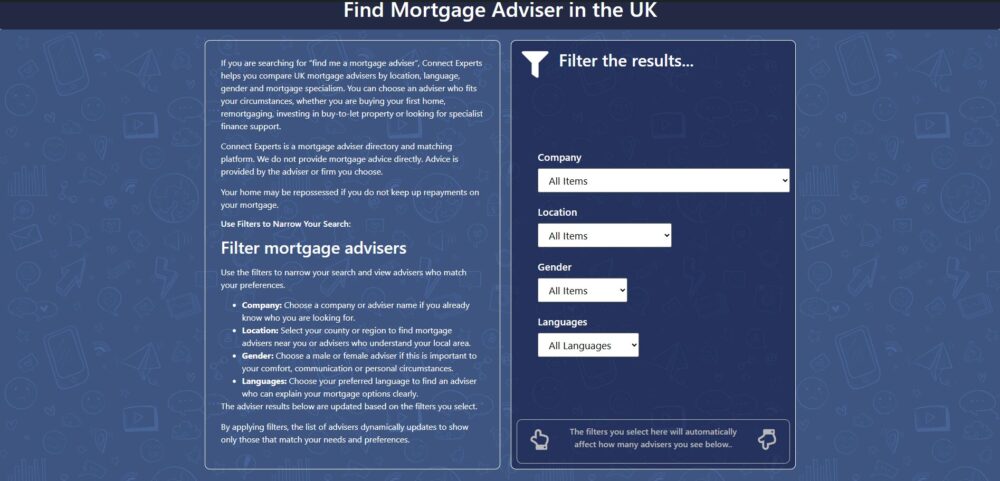
If you want to search by location, language or adviser expertise, you can use Connect Experts to find mortgage advisers across the UK.
You can also find a mortgage adviser by location if local knowledge matters to your property plans.
Connect Experts is part of Connect Group. Mortgage advice is provided by the adviser or firm selected by the customer.
Before You Ask About Bridging Finance
It helps to prepare a few details before speaking with an adviser.
Useful information includes:
- Property address
- Estimated property value
- Purchase price
- Loan amount needed
- Deposit or equity available
- Completion deadline
- Property condition
- Refurbishment plans, if any
- Current mortgage details, if refinancing
- Exit strategy
- Personal or company borrowing details
You can also use our mortgage calculators to estimate basic figures before speaking with an adviser.
FAQs: We Search 100s of Lenders
Why does searching more lenders matter?
Searching more lenders can help because each lender uses different criteria. One lender may decline a case that another may consider.
Does Connect Mortgages lend money directly?
No. Connect Mortgages is a credit broker, not a lender. We search suitable lenders based on your circumstances.
Is bridging finance only for auction purchases?
No. Bridging finance may also be used when buying before selling, refurbishing property, refinancing or completing a time-sensitive purchase.
Is a bridging loan expensive?
Bridging finance can be more expensive than standard mortgage borrowing. It is usually short-term and should have a clear repayment plan.
What is an exit strategy?
An exit strategy is the plan for repaying the bridging loan. It may include selling a property or refinancing onto a longer-term mortgage.
Can landlords use bridging finance?
Yes, some landlords use bridging finance for purchases, refurbishments or refinancing. The right option depends on the property, rental plans and exit route.
Can a limited company apply for bridging finance?
Yes, some lenders consider limited company applications. The lender will assess the company, property, loan purpose and repayment plan.
Is bridging finance regulated?
Some bridging finance is regulated, and some is not. This depends on the borrower, property and purpose of the borrowing.
What happens if my exit strategy fails?
If the exit strategy fails, you may face extra costs, delays or repayment pressure. Because the loan is secured, the property may be at risk.
How do I start?
You can contact Connect Mortgages to discuss your property, timescale and funding needs.