
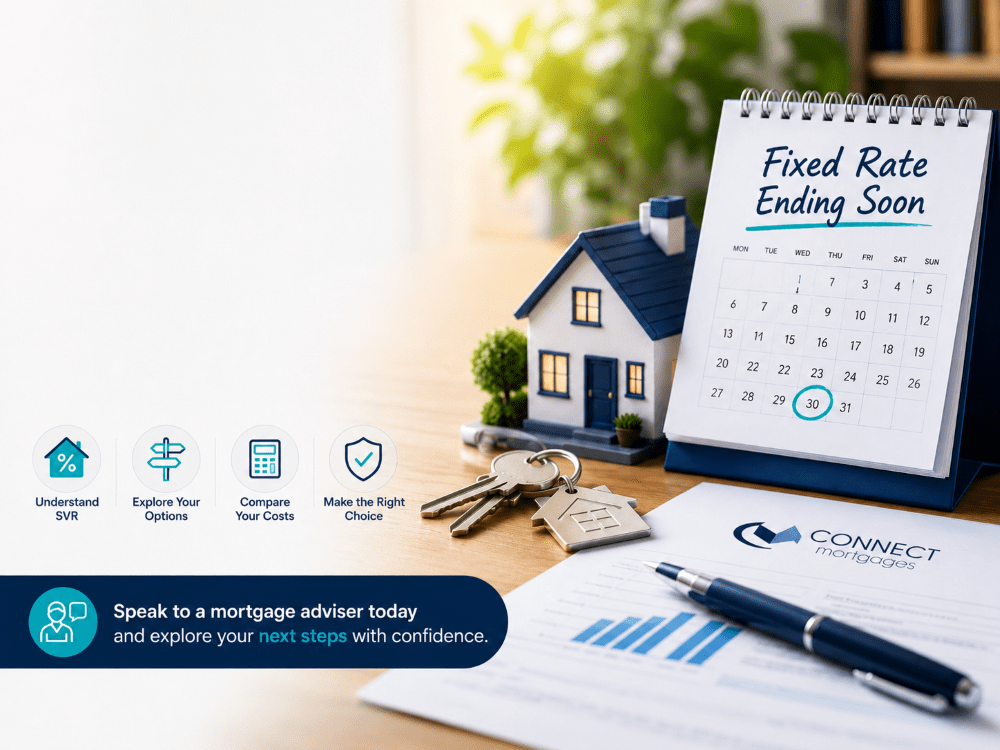
What Happens When a Fixed Rate Ends? Your fixed-rate mortgage gives you payment certainty for a set period.
However, that certainty does not last forever. When the fixed period ends, your mortgage usually moves onto your lender’s Standard Variable Rate, unless you arrange a new deal before that date.
That can change your monthly payment.
For some homeowners, the increase is small. For others, it can affect the household budget quickly.
This guide explains what happens when a fixed rate ends, what SVR means, and what options you may have.
It also explains when to review your mortgage, what costs to check, and how to avoid leaving the decision too late.
What Happens When a Fixed Rate Ends?
When a fixed-rate mortgage ends, your mortgage does not finish.
Instead, the fixed interest rate ends.
If you do nothing, your lender will usually move your mortgage onto its Standard Variable Rate.
That rate can go up or down.
It may also be higher than the rate you were paying before.
Your main options are:
- Switch to a new deal with your current lender
- Remortgage to a new lender
- Move onto a tracker or variable rate
- Stay on SVR for a short period if suitable
- Review wider borrowing needs before choosing
You should usually start reviewing your options several months before your fixed rate ends.
This gives you more time to compare the cost, fees and timing of each option.
What Is a Fixed-Rate Mortgage?
A fixed-rate mortgage has an interest rate that stays the same for a set period.
Many fixed-rate deals last two, three, five or ten years.
During that period, your monthly payment is usually predictable.
That can help with budgeting because the rate does not change during the fixed term.
However, the fixed rate is not the same as the full mortgage term.
Your mortgage may last 20, 25, 30 or more years.
The fixed rate is only the deal period within that wider mortgage term.
When the fixed period ends, the mortgage continues.
The question is what rate applies next.
What Happens Automatically When the Fixed Rate Ends?
If you do nothing, your lender will usually move your mortgage onto its Standard Variable Rate.
This is often called the SVR.
A Standard Variable Rate is set by the lender.
It can change at the lender’s discretion.
It may also change when wider interest rates move, although it does not always track the Bank of England base rate directly.
MoneyHelper explains that when a mortgage deal ends, borrowers are usually moved onto the lender’s Standard Variable Rate. It also says SVRs will usually be higher than other rates available elsewhere.
You can read the MoneyHelper guidance on remortgaging to get the best deal here. The FCA also explains that many mortgage products start with an introductory rate. After that, they move onto a reversion rate, such as an SVR.
You can read the FCA research here: switching in the mortgage market.
Why SVR Matters
SVR matters because it can change your monthly mortgage payment.
Your fixed rate may have been agreed years ago.
Market rates, lender pricing and your circumstances may now be different.
If your lender’s SVR is higher than your fixed rate, your monthly payment could rise.
If your mortgage is large, even a small rate difference may affect your budget.
SVR may suit some borrowers for a short time.
For example, you may be moving home soon.
You may also need flexibility before making a longer-term decision.
However, staying on SVR without reviewing your options can be costly.
That is why many homeowners review their mortgage before the fixed-rate end date.
Fixed Rate Ending: Your Main Options
When your fixed rate is ending, you do not have to accept the next rate automatically.
You can review the options available to you.
The right route depends on your balance, income, property value, plans and lender criteria.
Option 1: Product Transfer With Your Current Lender
A product transfer means switching to a new deal with your existing lender.
You stay with the same lender.
You choose a new product from the deals they make available to you.
This can sometimes be quicker than moving to a new lender.
It may also involve fewer checks.
A product transfer may suit you if:
- You want a simpler process
- Your current lender has a suitable deal
- You do not need to borrow more
- Your circumstances have changed
- You want to avoid a full new application where possible
However, your current lender may not offer the best deal for your needs.
It is still worth comparing the wider market before you decide.
Option 2: Remortgage to a New Lender
A remortgage means replacing your current mortgage with a new mortgage.
This is usually done on the same property.
Many homeowners remortgage when their fixed rate is ending.
A remortgage may help you:
- Review your rate before the current deal ends
- Avoid moving onto SVR
- Change your mortgage term
- Borrow more if suitable
- Review your loan-to-value
- Move to a lender with more suitable criteria
However, a remortgage is a new mortgage application.
The lender may check your income, credit history, outgoings, property value and mortgage balance.
Fees may also apply.
You can read more on our remortgage advice page.
Option 3: Choose Another Fixed Rate
Some homeowners want another fixed rate because they prefer payment certainty.
A new fixed rate can make monthly payments easier to plan.
This may help if you want more control over your household budget.
However, fixed rates can include early repayment charges.
This means you may pay a fee if you leave the deal early.
Before choosing another fixed rate, check:
- The interest rate
- The monthly payment
- Any product fee
- Any valuation fee
- Any legal costs
- Early repayment charges
- Overpayment limits
- Whether the deal fits your future plans
A lower interest rate is not always the cheapest option overall.
The total cost matters.
Option 4: Move to a Tracker or Variable Rate
Some borrowers consider a tracker or variable rate when their fixed rate ends.
A tracker rate usually follows a benchmark, such as the Bank of England base rate.
A discounted variable rate usually gives a discount from the lender’s variable rate for a set period.
These options may suit borrowers who accept payment changes.
They may also appeal if you want more flexibility.
However, payments can rise if the rate increases.
Before choosing this route, check whether your budget could cope with higher payments.
You should also check any fees, tie-ins or early repayment charges.
Option 5: Stay on SVR for a Short Period
Some homeowners stay on SVR for a short time.
This may happen when they are selling, moving or waiting for a clear plan.
It may also happen if a new deal is not ready in time.
SVR can offer flexibility because some lenders do not apply early repayment charges on SVR.
However, this depends on the lender and mortgage terms.
You should check the cost carefully.
Even a short period on SVR may increase your monthly payments.
When Should You Review Your Mortgage?
You should start reviewing your mortgage several months before your fixed rate ends.
Many homeowners begin around six months before the end date.
This gives time to compare deals, check affordability and avoid rushed decisions.
A new mortgage offer may also be valid for several months.
That can help if you want to secure an option before your current rate ends.
You should check:
- Your fixed-rate end date
- Your current balance
- Your remaining mortgage term
- Your current monthly payment
- Your lender’s SVR
- Any early repayment charge
- Any product or arrangement fee
- Your current property value
- Your income and outgoings
- Whether you want to borrow more
If you are unsure what your payment may look like, try our residential affordability calculator.
What If Your Payment Is Going Up?
If your mortgage payment may rise, review your options early.
Do not wait until the new payment has already started.
A higher monthly payment may affect wider household costs.
It may also affect future borrowing plans.
You may be able to look at:
- A new fixed rate
- A product transfer
- A full remortgage
- A longer mortgage term
- A lower loan-to-value deal
- A different repayment structure
- Wider affordability planning
Extending the mortgage term may reduce monthly payments. However, it can increase the total amount repaid over time. That is why advice can help before making changes.
Can You Borrow More When Your Fixed Rate Ends?
Some homeowners use a remortgage review to consider extra borrowing.
This may be for home improvements, repairs, family support or another purpose.
However, borrowing more is not automatic.
The lender will check affordability.
They will also consider your property value, loan-to-value and reason for borrowing.
If borrowing more through a remortgage is not suitable, a second charge mortgage may be another option.
This is a separate loan secured against your property.
You should take advice before increasing borrowing secured against your home.
What If Your Income Has Changed?
Your circumstances may have changed since you first arranged your mortgage.
You may now be self-employed.
You may have changed jobs, reduced hours or started contract work.
You may also have new childcare costs, credit commitments or household changes.
These details can affect your options.
A product transfer may sometimes be easier than a full remortgage.
However, this depends on the lender and your circumstances.
A remortgage to a new lender may still be possible.
It depends on the evidence available and the lender’s criteria.
You can read more about income-based mortgage support on our self-employed mortgage page.
What If Your Credit File Has Changed?
Credit changes can affect remortgage options.
This may include missed payments, defaults, CCJs or debt arrangements.
However, a changed credit file does not always mean you have no options.
Some lenders may still consider your application.
They will look at the type of issue, when it happened and your current position.
If your credit file has changed, avoid making several applications without advice.
Too many searches may make the situation harder.
You can read more on our adverse credit mortgage page.
Product Transfer or Remortgage: Which Is Better?
There is no single answer.
A product transfer may be faster and simpler.
A remortgage may give access to more lenders and products.
The best option depends on the full cost and your circumstances.
Compare:
- Interest rate
- Monthly payment
- Product fee
- Legal costs
- Valuation costs
- Early repayment charges
- Cashback
- Term length
- Flexibility
- Overpayment rules
- Lender criteria
The cheapest rate is not always the cheapest deal. A higher rate with lower fees may work better in some cases. A lower rate with a large fee may not always save money.
The total cost over the deal period matters.
What Costs Should You Check?
Before choosing your next mortgage deal, check the full cost.
Important costs may include:
- Product fees
- Arrangement fees
- Valuation fees
- Legal fees
- Broker fees
- Early repayment charges
- Exit fees
- Higher monthly payments on SVR
Some fees can be paid upfront.
Others may be added to the mortgage.
Adding fees to the mortgage can increase the amount of interest paid. Always compare the total cost, not just the headline rate.
What Documents Might You Need?
If you remortgage to a new lender, you may need to provide updated documents.
These may include:
- Proof of income
- Bank statements
- Proof of identity
- Proof of address
- Details of credit commitments
- Mortgage statement
- Property information
- Insurance information
Self-employed borrowers may need accounts, tax calculations and tax year overviews. The exact documents depend on the lender and application type.
Should You Review Protection When Your Fixed Rate Ends?
A mortgage review is also a useful time to review protection.
Your mortgage may have changed.
Your income, family and financial commitments may also be different.
You may want to review:
- Life insurance
- Critical illness cover
- Income protection
- Buildings insurance
- Contents insurance
Protection is not the same as mortgage advice.
However, both can be part of a wider home finance review. You can read more about mortgage protection and life insurance.
What Happens If You Do Nothing?
If you do nothing, your mortgage will usually continue.
However, the fixed rate will end.
Your lender will move you onto its default follow-on rate or Standard Variable Rate.
Your payment may change.
You may lose the payment certainty you had during the fixed term.
You may also pay more than you need to.
Doing nothing may be suitable for a short time in some cases.
However, it should be a conscious choice.
It should not happen because the end date was missed.
Fixed Rate Ending Checklist
Before your fixed rate ends, check:
- When your current deal ends
- What rate you move onto next
- What your new payment may be
- Whether an early repayment charge applies
- Whether your lender offers a product transfer
- Whether another lender may be suitable
- Whether your property value has changed
- Whether your income has changed
- Whether your credit file has changed
- Whether you need to borrow more
- Whether your protection still fits your mortgage
This checklist can help you prepare before making a decision.
Speak to a Mortgage Adviser Before Your Fixed Rate Ends
A fixed-rate end date is more than an admin reminder.
It is a chance to review whether your mortgage still fits your life.
You may want stability.
You may want flexibility.
You may want to reduce payments, borrow more or avoid SVR.
Connect Mortgages can help you review your options before your current deal ends.
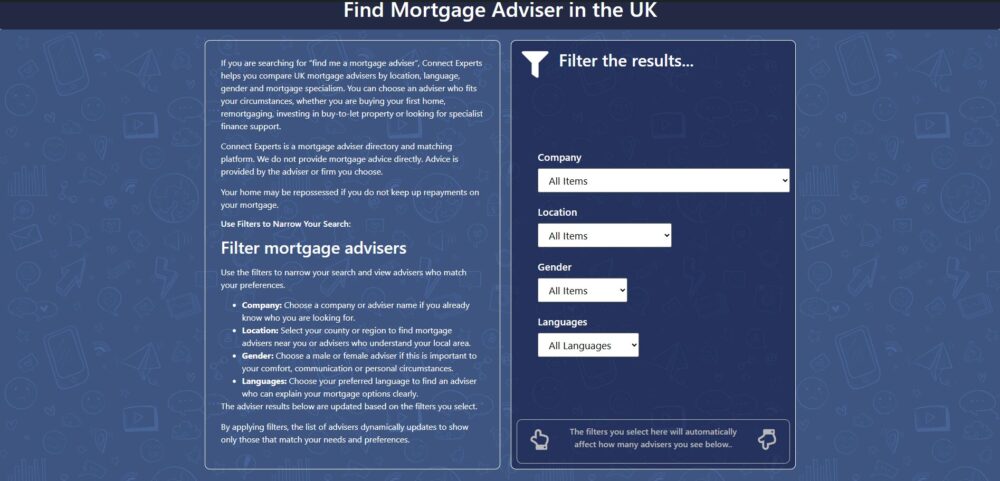
You can also use Connect Experts to find a mortgage adviser by location, language or mortgage need.
FAQs: What Happens When a Fixed Rate Ends?
What happens when my fixed-rate mortgage ends?
Your mortgage usually moves onto your lender’s Standard Variable Rate unless you arrange a new deal. Your mortgage does not end, but the fixed interest rate does.
Will my mortgage payment go up when my fixed rate ends?
It may go up if the new rate is higher than your fixed rate. This often happens when a mortgage moves onto SVR.
What is SVR?
SVR means Standard Variable Rate. It is a rate set by your lender. It can change, which means your monthly payment can also change.
Can I avoid moving onto SVR?
Yes, you may be able to avoid SVR by arranging a product transfer or remortgage before your fixed rate ends.
How early should I review my mortgage?
Many homeowners review their mortgage several months before the fixed-rate end date. This gives more time to compare options and avoid rushed decisions.
Is a product transfer the same as a remortgage?
No. A product transfer means switching to a new deal with your current lender. A remortgage usually means moving your mortgage to a new lender.
Should I stay with my current lender?
Staying with your current lender may be suitable if they offer the right deal. However, it is still worth comparing the wider market.
Can I remortgage if my income has changed?
Yes, it may still be possible. However, the lender will need to assess affordability and evidence of income.
Can I remortgage if my credit file has changed?
It may be possible, depending on the credit issue and lender criteria. Advice can help you avoid unsuitable applications.
Should I speak to a mortgage broker?
A mortgage broker can help compare product transfers, remortgage options and lender criteria. This can be useful when your fixed rate is ending.
Important Information
Connect Mortgages is a trading style of Connect IFA Ltd, which is authorised and regulated by the Financial Conduct Authority.
Connect Mortgages is a credit broker, not a lender.
Your home may be repossessed if you do not keep up repayments on your mortgage.
A fee may be payable for arranging your mortgage. Your consultant will confirm the amount before you proceed.
The guidance on this page is intended for UK consumers.