
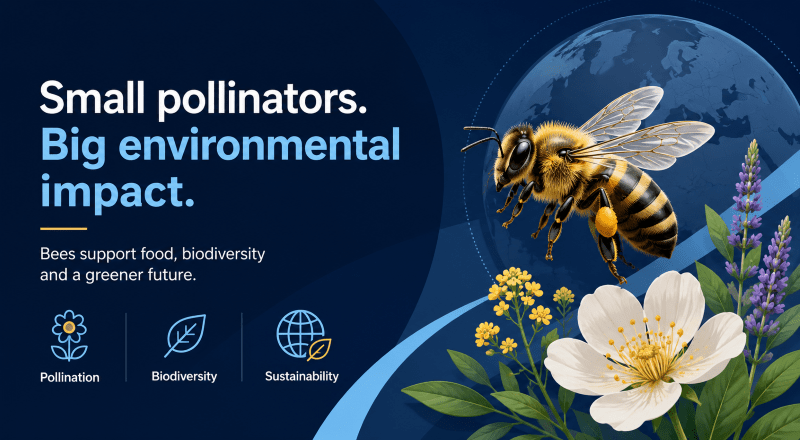
Why the Survival of Bees Matters? Bees are small, but their work supports something much larger than the hive.
They help plants reproduce, support food production, protect biodiversity and keep natural systems working. Their survival is not only an environmental concern. It is also a practical matter linked to food, land, housing, farming and the way people think about long-term value.
For Connect Mortgages, this topic sits naturally within the wider conversation about sustainability. Green homes, responsible property choices and environmental care are all part of the same question. What kind of future are we building, and what systems must survive for that future to work?
At a Glance
Bees matter because they pollinate crops, wildflowers and trees. This supports food production, biodiversity and healthy ecosystems.
The survival of bees is affected by habitat loss, climate change, pesticides, disease and changes in land use.
Green Mortgages are not directly about bees. However, they form part of a wider shift toward energy-efficient homes, lower environmental impact and more responsible property decisions.
Homeowners can support pollinators by planting flowers, reducing pesticide use, cutting grass less often and considering how their property affects the natural environment.
Why Bees Matter to Food, Nature and People
Bees are pollinators. This means they move pollen from one flower to another, helping plants produce seeds, fruit and new growth.
That process supports a large part of the natural world. It helps crops grow. It supports wildflowers. It provides food and habitats for insects, birds and mammals.
On World Bee Day 2023, the Food and Agriculture Organisation of the United Nations highlighted the role of bees and other pollinators in food security, plant health and ecosystem restoration. FAO also noted that about 75% of the world’s crops that produce fruits and seeds for human consumption depend, at least in part, on pollinators. Read the FAO World Bee Day 2023 update.
This is why bee survival matters. It is not only about honey. It is about the quiet work that allows many living systems to continue.
What Pollination Does
Pollination is one of nature’s most important technical processes.
When bees visit flowers for nectar or pollen, grains of pollen attach to their bodies. As they move between flowers, pollen is transferred. This allows plants to reproduce.
This process helps support:
- Fruit production
- Vegetable growth
- Seed formation
- Wildflower spread
- Tree reproduction
- Food chains for insects, birds and mammals
- Biodiversity across gardens, farms and green spaces
When pollinators decline, the effects are not always immediate. That is part of the problem. Nature often warns quietly before systems fail visibly.
A weaker pollinator population can affect crop quality, crop quantity and the strength of wider ecosystems. DEFRA stated in 2023 that bees contribute more than £500 million annually to UK farming and food. Read the GOV.UK Bees’ Needs Week 2023 update.
Why Bee Populations Are Under Pressure
Bees face several pressures at the same time.
These include:
- Habitat loss
- Climate change
- Pesticide use
- Pests and disease
- Fewer wildflowers
- Changes in farming and land use
- Loss of nesting and hibernation spaces
The issue is not one single cause. It is the combined effect of many small losses.
A garden with fewer flowers matters. A field margin removed for convenience matters. A chemical used without thought matters. A warmer season that changes flowering patterns matters.
The lesson is simple but uncomfortable. A stable future depends on systems many people barely notice.
Where Green Mortgages Fit In
Bees and mortgages may seem unrelated at first.
One belongs to nature. The other belongs to property finance. Yet both raise the same question: how do today’s choices affect tomorrow’s resilience?
A green mortgage is usually linked to energy efficiency. Lenders may offer incentives for homes with strong Energy Performance Certificate ratings or for borrowers improving a property’s energy performance. This can include better insulation, efficient heating, solar panels or other approved improvements.
You can read more about this in our guide to Green Mortgages.
The link to bees is not direct. A green mortgage will not restore pollinator habitats by itself. However, it is part of a broader shift in how property decisions are being assessed.
Homes are no longer judged only by size, location and price. Energy use, running costs, long-term condition and environmental impact are becoming more important.
That matters because property choices shape land, energy demand and household behaviour. A more efficient home can reduce wasted energy. A more thoughtful garden can support wildlife. A better-informed homeowner can make choices that consider both finance and nature.
Sustainable Property Choices Are Practical, Not Abstract
Sustainability can sound like a distant idea. In reality, it is often practical.
For homeowners, it may involve:
- Improving insulation
- Reviewing heating efficiency
- Considering solar panels where suitable
- Reducing water waste
- Choosing native or pollinator-friendly plants
- Avoiding unnecessary hard landscaping
- Leaving small wild areas in gardens
- Thinking carefully before using pesticides
For borrowers, it may also involve understanding whether property improvements could affect mortgage options.
Some homeowners may review their mortgage when planning energy-efficient upgrades. A remortgage may be considered to fund suitable home improvements, subject to affordability and lender criteria.
For buyers, the energy performance of a property may influence running costs. It may also affect whether certain green mortgage products are available.
For landlords and property investors, energy efficiency can matter because rental standards, tenant costs and long-term property value all need attention.
This is why sustainability should not be treated as a slogan. It is a practical part of property ownership.
The Wider Role of Sustainable Mortgages
Sustainable mortgage thinking is about more than a single product.
It considers whether a property is suitable for long-term ownership, efficient to run and prepared for future standards. It also reflects how lenders may think about property risk over time.
A property with poor insulation, high running costs or outdated systems may need investment. A property with better energy performance may be more attractive to some buyers, tenants and lenders.
Our guide to Sustainable Mortgages explains how energy performance, insulation and heating efficiency can form part of responsible property finance.
This is where the bee story becomes philosophical as well as practical.
The smallest parts of a system often hold the largest consequences. Bees show this in nature. Energy efficiency shows it in housing. Mortgage planning shows it in finance.
Small details, repeated over time, shape outcomes.
What Homeowners Can Do for Bees
Not every action needs to be large.
Many UK homeowners can support pollinators through simple choices around gardens, balconies and outdoor spaces.
Practical steps include:
- Grow flowers, shrubs and trees that provide nectar and pollen
- Let part of the garden grow wild
- Cut grass less often
- Avoid disturbing insect nests and hibernation areas
- Think carefully before using pesticides
- Add flowering plants to balconies or small spaces
- Choose native plants where suitable
- Keep some natural shelter for insects
These steps also improve the quality of the space around a home.
A property is not only bricks, walls and a mortgage balance. It sits within a living setting. Gardens, trees, soil, insects, and birds all contribute to the value people experience every day.
Why This Matters to Connect Mortgages
Connect Mortgages supports responsible mortgage conversations.
That means helping people clearly understand their options. It also means recognising that homes sit within a wider social and environmental setting.
Green mortgages, sustainable property choices and environmental awareness do not replace the need for sound mortgage advice. Affordability, suitability, lender criteria and long-term financial planning still come first.
However, sustainability can now form part of the mortgage conversation.
A borrower may want to understand whether an energy-efficient property could qualify for a green mortgage. A homeowner may want to review options before funding improvements. A landlord may need to think about energy standards across a property portfolio.
If you want to discuss mortgage options linked to your property plans, you can contact Connect Mortgages. You can also use Connect Experts to find a mortgage adviser by location if you want to compare advisers across the UK.