
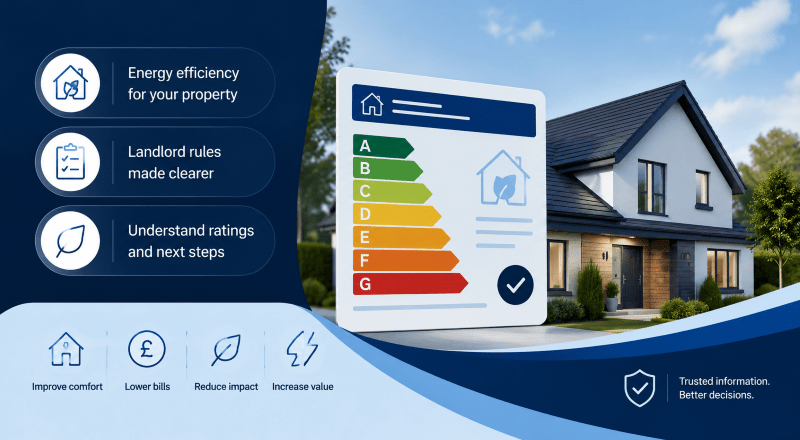
An Energy Performance Certificate is not just another property document. It is a small report with a large effect.
For landlords, it can influence whether a property can be legally let, how attractive it feels to tenants, how lenders view future risk, and what improvement costs may lie ahead. A property may be sound, well-located and well-managed, but its EPC rating still matters.
The quiet truth is simple. A rental property is no longer judged only by rent, yield and location. It is also judged by running costs, energy use, regulation and long-term suitability.
At a Glance
An Energy Performance Certificate, often called an EPC, rates a property’s energy efficiency from A to G. A is the most efficient rating. G is the least efficient.
Landlords usually need a valid EPC before marketing a property to rent. Domestic private rented homes covered by MEES rules must currently meet at least EPC E, unless a valid exemption applies.
The EPC position has also moved on since the 2023 policy reversal. The government’s 2026 response confirms plans to raise the private rented sector standard by 2030, subject to the legal process.
For landlords, EPC planning should form part of a buy-to-let strategy. It may affect rental appeal, improvement costs, future refinancing and portfolio decisions.
What is an Energy Performance Certificate?
An Energy Performance Certificate shows how energy efficient a property is. It assigns the property a rating from A to G and provides recommendations for improvement.
A strong EPC rating can suggest lower running costs. A weak rating can indicate poor insulation, older heating, inefficient lighting, single glazing, or other issues that may need attention.
The official GOV.UK Energy Performance Certificate guidance explains that an EPC includes information about energy use, typical energy costs and steps to improve energy efficiency. It also confirms that an EPC is valid for 10 years.
This matters because an EPC is both practical and regulatory. It helps tenants understand likely energy use. It also helps landlords see where the property may fall short.
Why EPC Ratings Matter For Buy-to-Let Landlords
Buy-to-let is not only about buying a property and collecting rent. It is about holding an asset that remains usable, lawful and financially sensible.
An EPC can affect this in several ways.
- It may affect whether the property can be let.
- It may influence tenant demand.
- It can highlight future upgrade costs.
- It may affect long-term investment planning.
- It can form part of a lender’s view of property risk.
- It may influence whether a landlord keeps, sells or improves a property.
For landlords arranging or reviewing finance, EPC quality should sit beside rent, deposit, interest cover and property condition. A landlord considering buy-to-let mortgages should think of the property as both a financial asset and a regulated home.
That is where EPCs become more than a certificate. They become part of the property’s future.
Current EPC Rules For Landlords
Landlords usually need an EPC when renting out a property. The EPC should be available before the property is marketed.
For domestic private rented property in England and Wales, the Minimum Energy Efficiency Standard rules currently mean many rented homes must reach at least EPC E. Properties rated F or G may not be legally let unless the landlord has made the required improvements or registered a valid exemption.
The official GOV.UK landlord MEES guidance explains how landlords should comply with the minimum standard for domestic private rented property.
This is the practical starting point. Landlords should check the existing EPC, check its expiry date, and understand whether recommended works are required.
EPC E, EPC C And The 2030 Direction
There has been confusion around EPC rules. That is understandable.
In 2023, earlier proposals to raise requirements were paused. Some landlords read this as the end of the EPC issue. That was never the safest way to view it.
The direction of travel remains clear. Energy efficiency remains part of housing policy, tenant affordability, and the wider move toward lower-carbon homes.
The government’s 2026 response on improving the energy performance of privately rented homes confirms plans to raise standards for privately rented homes in England and Wales by 2030, subject to the next legal steps.
For landlords, the lesson is not to panic. It is preparation.
A sensible landlord does not wait until a deadline becomes a problem. They review the EPC, the property fabric, the heating system, the likely cost of work and the mortgage position before pressure builds.
What Does An EPC Assessment Look At?
An EPC assessment looks at the property’s energy performance. It is not a full structural survey, but it can highlight areas that affect heat loss, energy use and running costs.
Common areas include:
- Wall construction and insulation
- Roof and loft insulation
- Windows and glazing
- Heating system type
- Hot water system
- Heating controls
- Lighting
- Renewable technology, which is installed
Older homes may face different challenges from newer homes. Solid-wall properties, period homes, flats above commercial units, and HMOs may need more careful review.
This is why EPC work should not be treated as a last-minute task. The cheapest improvement is not always the best improvement. The right work depends on the property, tenancy, building type and long-term plan.
EPC Ratings And Tenant Appeal
Tenants are more aware of energy costs than they once were. A lower rent may not feel attractive if the property is expensive to heat.
A stronger EPC rating can support a clearer rental proposition. It may suggest greater comfort, lower energy use, and fewer concerns about cold rooms, damp risks, or poor heating performance.
This does not mean every tenant will choose solely based on EPC rating. Location, price, space and condition still matter. But energy efficiency now sits within the decision.
A good landlord thinks beyond the tenancy agreement. They think about how the home feels in winter, how bills affect the household, and how maintenance problems begin when a property performs poorly.
EPC Improvements And Buy-to-Let Affordability
EPC improvements cost money. That cost should be part of the landlord’s figures.
A landlord may need to compare the cost of upgrades with rent, mortgage payments, void periods, maintenance, tax and insurance. For some properties, the work may be modest. For others, it may affect the entire investment case.
Before buying or refinancing, landlords may want to test the numbers using the buy-to-let affordability calculator. It will not replace advice, but it can help frame the conversation about borrowing.
EPC planning is also relevant when landlords own through a company. A landlord using a special purpose vehicle may need to consider how upgrade costs, cash flow and refinancing sit within the company structure. Our guide to limited company buy-to-let mortgages explains how company ownership can change the mortgage route.
EPCs And HMO Properties
HMO landlords should pay close attention to EPCs. A house in multiple occupation can place heavier demand on heating, hot water, ventilation and general maintenance.
This can make the EPC conversation more technical. The property may need to accommodate more occupants, more rooms, and more intensive use. It may also need to meet licensing requirements, fire safety standards and local authority expectations.
Landlords with shared housing should treat the EPC as one part of a wider compliance picture. Our HMO property guide explains more about mortgage considerations for this type of rental property.
Practical EPC Steps For Landlords
A landlord does not need to guess. The process can be broken down clearly.
- Check whether the property has a valid EPC.
- Read the current rating and expiry date.
- Review the recommendation section.
- Check whether any works are required for MEES compliance.
- Get quotes before committing to major upgrades.
- Keep records of assessments, invoices and advice.
- Review the mortgage position before large works.
- Consider whether grants or support may apply.
Some landlords may also need to consider planning rules, leasehold restrictions, freeholder consent or tenant access before work can start.
The official Boiler Upgrade Scheme may be relevant for some properties in England and Wales. Eligibility depends on the heating system, the property, and the scheme rules.
When EPC Work May Affect Mortgage Planning
Energy improvements can affect mortgage planning in several ways.
A landlord may want to remortgage before carrying out works. Another may need to release funds for upgrades. A buyer may want to know whether a low EPC rating will affect the property’s future use as a rental.
Lenders may also ask more questions about the property, particularly if the rating is low or the asset appears difficult to improve.
This does not mean a low EPC rating automatically prevents finance. It means landlords should be ready to explain the position.
Good mortgage planning looks at today’s rate and tomorrow’s risk. EPCs are part of that risk because the property must remain fit for the rental market.
EPCs, Insurance and Property Risk
An EPC is not an insurance document, but the issues behind it can overlap with property risk.
Poor heating, inadequate insulation, damp conditions, and older systems may affect maintenance and the tenant experience. Landlords should consider the wider protection of the property, not just the mortgage.
Our landlord insurance guide explains why rental property protection should be considered alongside ownership and letting responsibilities.
Should Landlords Improve a Property Before The Rules Change?
There is no single answer. The right decision depends on the rating, property type, budget, tenancy and investment plan.
Some landlords may choose to improve early because the work is manageable and the property will benefit. Others may need to phase upgrades over time. Some may decide that selling or restructuring the portfolio is more suitable.
The philosophical point is this: regulation often arrives after the direction has already become visible.
Energy performance is now part of property quality. Landlords who understand that early can make calmer decisions. Landlords who ignore it may face rushed costs later.
Speak to a Mortgage Adviser
EPC planning should not be excluded from the mortgage conversation. If a landlord is buying, refinancing or reviewing a portfolio, the EPC rating may affect timing, budget and lender choice.
You can use Connect Experts to find mortgage advisers who can discuss buy-to-let finance, property structure and the wider lending position.
Mortgage advice does not replace legal, tax or building advice. But it can help landlords understand how the finance route may fit around EPC requirements and future property plans.

FAQs
What is an Energy Performance Certificate?
An Energy Performance Certificate rates a property’s energy efficiency from A to G. It also gives information about energy use, typical costs and recommended improvements.
How long does an EPC last?
An EPC normally lasts for 10 years. A landlord should check the expiry date before marketing a property to rent.
What EPC rating does a rental property need?
Many domestic private rented properties covered by MEES rules must currently meet at least EPC E, unless a valid exemption applies.
Are landlords still expected to reach EPC C?
The government’s 2026 response confirms plans to raise private rented sector standards by 2030, subject to the required legal process. Landlords should keep this under review.
Can a landlord let a property with EPC F or G?
A landlord may be restricted from letting a property rated F or G unless the property is outside the rules, has been improved as required, or has a valid registered exemption.
Can EPC improvements affect buy-to-let borrowing?
Yes. EPC improvement costs can affect cash flow, refinancing plans and the long-term investment case. Landlords should include likely works when reviewing affordability.
Do HMOs need EPC planning?
Yes. HMO landlords should consider EPC ratings alongside licensing, safety, heating, insulation and tenant demand.
Should I improve the EPC before remortgaging?
It depends on the property, lender, cost of works and timing. Some landlords may benefit from planning improvements before refinancing. Others may need mortgage advice first.