Green mortgages are not only about choosing a product with an environmental label.
It is about how lenders view the home behind the mortgage. A property that uses less energy may be cheaper to run, more comfortable to live in, and better prepared for future property standards. For some borrowers, that can open the door to green mortgage incentives.
Green mortgages usually reward one of two things: buying or remortgaging an energy-efficient home, or borrowing to improve a property’s energy performance.
At a Glance
A green mortgage may offer a lower rate, cashback, or other incentives if the property meets the lender’s energy-efficiency rules.
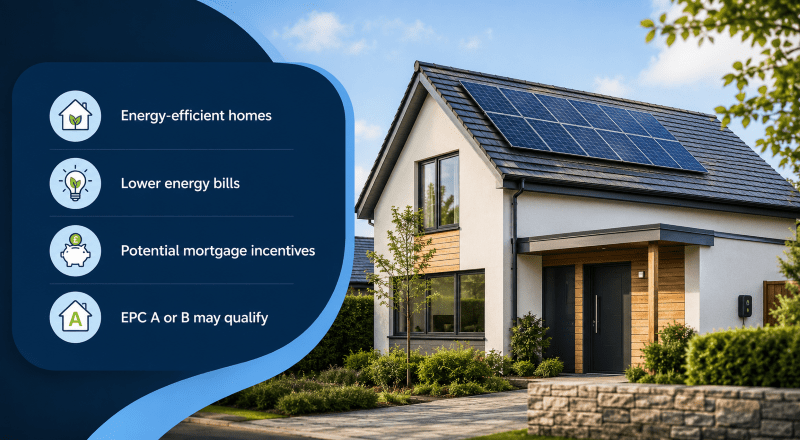
Most green mortgage criteria focus on the property’s Energy Performance Certificate (EPC). Many lenders look for an EPC rating of A or B, although criteria vary.
Some green mortgage options may also support home improvements, such as insulation, solar panels, better glazing, or a more efficient heating system.
Green mortgages are not always the cheapest option. The right choice depends on the rate, fees, cashback, mortgage term, property type, affordability and lender criteria.
What Is a Green Mortgage?
A green mortgage is a mortgage product linked to a property’s energy performance.
Some lenders offer green mortgage incentives when a home already has a strong EPC rating. Others may offer incentives when the borrower plans to make approved energy-saving improvements.
The product may be used for a home purchase, a remortgage, or further borrowing, depending on the lender. It may apply to residential properties and, in some cases, buy-to-let properties.
If you are buying a home to live in, you can also read our wider guide to residential mortgage options.
Why EPC Ratings Matter
An Energy Performance Certificate gives a property an energy-efficiency rating.
The rating usually runs from A to G. A is the most energy-efficient. G is the least energy-efficient.
Lenders may use the EPC rating as a quick way to assess whether a property qualifies for a green mortgage. A stronger EPC rating may suggest lower energy use, better insulation, and lower household running costs.
That does not mean every property with a good EPC will qualify. Each lender sets its own rules. Some may require a valid EPC rating of A or B. Others may apply different criteria for new-build homes, existing homes, flats, landlords, or improvement borrowing.
You can check whether a property has an energy certificate through the official GOV.UK energy certificate service.
How Do You Qualify for a Green Mortgage?
Green mortgage eligibility usually depends on evidence.
A lender may ask for:
- A valid EPC certificate
- The property address
- The current EPC rating
- Details of the mortgage application
- Evidence of planned improvement works, if borrowing for upgrades
- Confirmation that the work meets the lender’s green criteria
Some borrowers qualify because the home is already energy efficient. Others may qualify because they are improving the property.
The practical question is simple: can the lender see sufficient evidence to treat the home or the planned improvement as energy-efficient?
Green Mortgages for Energy-Efficient Homes
Some lenders may reward borrowers who buy or remortgage a home with a strong EPC rating.
The reward may take the form of:
- A lower interest rate
- Cashback
- Reduced fees
- A product reserved for energy-efficient homes
The benefit can be useful, but it should not be viewed in isolation.
A green mortgage with cashback may still cost more than another mortgage with a lower rate. A lower rate may also come with fees. The full cost needs to be compared over the chosen mortgage period.
This is where advice can help. A mortgage is not just a label. It is a combination of rate, fees, term, repayment type, affordability, property risk and lender rules.
Green Mortgages for Home Improvements
Some green mortgage products may help borrowers fund energy-saving improvements.
These improvements may include:
- Loft, wall or floor insulation
- Double or triple glazing
- Solar panels
- Battery storage
- Air source heat pumps
- Modern heating controls
- More efficient boilers or heating systems
- Draught-proofing and ventilation improvements
The lender may want to know what work is being carried out, how much it will cost, and whether it is likely to improve the property’s energy performance.
For existing homeowners, this may link naturally to a remortgage review. Some homeowners may consider taking on more debt when their current deal ends. Others may need to compare that route with a product transfer, savings, or another secured borrowing option.
Why Lenders Offer Green Mortgage Incentives
Lenders are paying closer attention to the energy performance of homes.
There are several practical reasons.
Energy-efficient homes may cost less to run. Lower energy costs can support household budgeting. A better EPC rating may also make a property more attractive to future buyers or tenants.
From a lender’s perspective, the property’s condition and future appeal matter. The property is security for the mortgage. A home that is cheaper to heat, easier to sell, and more prepared for future standards may be viewed more positively.
There is also a wider market shift. Property finance is becoming more connected to long-term sustainability. Green mortgages sit within that shift, but they still need to work as mortgage products first.
Green Mortgages and Buy-to-Let Properties
Green mortgages may also matter to landlords.
Buy-to-let lenders often review the property, expected rent, loan-to-value ratio, landlord experience, and wider portfolio. EPC ratings can add another layer to that decision.
A more energy-efficient rental property may appeal to tenants because running costs are easier to understand. It may also help landlords prepare for changing expectations around rental property standards.
If you own, or plan to buy, a rental property, read our guide to buy-to-let mortgage options.
Green Mortgages and EPC Ratings
EPC ratings are central to many green mortgage decisions, but they should not be treated as the only factor.
A lender may still assess:
- Your income
- Credit history
- Deposit or equity
- Loan-to-value
- Property type
- Mortgage term
- Monthly affordability
- Existing debts
- The purpose of any extra borrowing
A strong EPC may help you meet the green product criteria. It does not replace the standard mortgage checks.
For a deeper guide to the link between energy ratings and lending, read “Green Mortgages and EPC”.
Pros of Green Mortgages
Green mortgages may offer several benefits.
- They may provide lower rates or cashback where the property qualifies
- They can support energy-saving improvements
- They may reduce long-term household energy costs
- They can help borrowers think beyond the mortgage payment
- They may support future property saleability
- They can help landlords review EPC-related risks within a wider portfolio
The strongest benefit is not always the headline incentive. Sometimes the real value is the discipline it creates.
A green mortgage encourages the borrower to look at the building itself. That includes insulation, heating, windows, ventilation, running costs and long-term value.
Cons of Green Mortgages
Green mortgages are useful, but they are not perfect.
- Not every lender offers them
- Not every property qualifies
- Some products may have higher fees
- Cashback may not outweigh a higher rate
- Older homes may need costly improvements
- EPC evidence may be out of date
- Improvement borrowing increases the mortgage debt
- The cheapest overall mortgage may not have a green label
A green mortgage should still be compared against standard mortgage products.
The right question is not “Is this mortgage green?” The better question is “Does this mortgage fit the property, the borrower, and the long-term cost?”
What to Check Before Applying
Before applying for a green mortgage, check the property and the product.
Start with the EPC. Confirm the rating, the expiry date, and whether improvements have been made since the certificate was issued.
Then look at the mortgage product. Compare the rate, fees, incentives, early repayment charges, term, and total cost.
You should also consider whether planned improvements are realistic. A lender may approve borrowing, but the work still needs to be affordable, practical and suitable for the property.
Key checks include:
- Is the EPC current?
- Does the property meet the lender’s minimum rating?
- Is the incentive worth more than the product cost?
- Are any improvement works approved by the lender?
- Will the borrowing remain affordable?
- Could another mortgage be cheaper overall?
- Will the improvements help comfort, energy use, and long-term value?
Green Mortgages Are About Evidence, Not Assumptions
A green mortgage works best when the evidence is clear.
The property needs to show its energy position. The borrower needs to show affordability. The product needs to show value beyond the name.
That is why the best green mortgage decision is practical, not emotional.
Caring about the environment matters. Reducing waste matters. Lowering running costs matters. But a mortgage must still be suitable, affordable and clearly understood.
A greener home can be part of a better financial decision. It should not replace careful mortgage advice.
Speak to a Mortgage Adviser
Green mortgages can be useful for buyers, homeowners and landlords, but lender criteria can vary.
Connect Mortgages can help you review whether a green mortgage, a standard mortgage, a remortgage, or an improvement-related borrowing route may be suitable for your circumstances.
If you want to choose an adviser by location, language or mortgage need, you can also use Connect Experts to find your mortgage broker.