

Buy-to-Let Mortgages for UK Investors: A buy-to-let mortgage is not just borrowing against a rental property.
It is a test of rent, risk, ownership, lender criteria and long-term judgement. For UK investors, the mortgage is often the line between a property that works on paper and one that works in practice.
The right buy-to-let mortgage should support the property, the rent and the investor’s wider plan. It should not depend on hope, rising values or perfect market conditions.
This guide explains how buy-to-let mortgages work for UK investors. It covers deposits, rental stress tests, limited-company borrowing, portfolio lending, fees, risks, and documents.
For wider landlord mortgage support, you can also read our main guide to buy-to-let mortgage advice.
Buy-to-let mortgages for UK investors
A buy-to-let mortgage is used to buy or refinance a property that will be rented to tenants.
Lenders usually assess the expected rent, deposit, property type, landlord experience and credit profile. Many lenders also review the ownership structure, especially if the property is held through a limited company.
The lowest rate is not always the best product. Fees, rental stress tests, early repayment charges and long-term plans can change the true cost.
UK investors should review the numbers before applying. Rental income, void periods, tax, insurance, maintenance and future remortgage options all matter.
What is a buy-to-let mortgage?
A buy-to-let mortgage is a mortgage for a property that will be rented out.
It differs from a residential mortgage because the lender looks closely at the rental income. The property is treated as an investment asset, not a home for the borrower.
Most buy-to-let mortgages are arranged on an interest-only basis. This can help monthly cash flow because the borrower pays the interest each month, not the capital.
However, the loan balance remains due at the end of the term. Therefore, investors need a clear repayment or refinance plan.
Some landlords choose repayment buy-to-let mortgages. This reduces the mortgage balance over time, but monthly payments are usually higher.
Who are buy-to-let mortgages for?
Buy-to-let mortgages may suit UK investors who want to:
- Buy their first rental property
- Refinance an existing rental property
- Release equity from a buy-to-let
- Move from personal ownership to company borrowing
- Buy through a limited company or SPV
- Add another property to a portfolio
- Buy an HMO or specialist rental property
- Convert a former home into a rental property
- Invest in the UK while living overseas
The right route depends on the investor, the property and the purpose of the borrowing.
How lenders assess buy-to-let applications
Buy-to-let lenders do not only ask whether the borrower can afford the loan. They also ask whether the property can support the loan.
Lenders may review:
- Property value
- Loan-to-value
- Expected monthly rent
- Interest coverage ratio
- Stress test rate
- Deposit source
- Borrower income
- Credit history
- Landlord experience
- Property type
- Tenancy type
- Ownership structure
- Existing buy-to-let portfolio
- Future borrowing plans
This matters because two investors can buy similar properties and get different lending outcomes.
The difference may come from rent, deposit, company structure, product term or existing commitments.
Rental income and stress testing
Rental income is one of the most important parts of a buy-to-let mortgage application.
Lenders normally check whether the rent covers the mortgage interest by a set margin. This is often called the interest coverage ratio, or ICR.
The calculation may use a stressed interest rate rather than the product rate. This helps the lender test whether the property could still work if costs rise.
The Prudential Regulation Authority expects buy-to-let lenders to assess whether rental income can support monthly interest costs using an ICR test. Some lenders may also consider personal income where their criteria allow it.
Before you apply, you can use our buy-to-let affordability calculator to estimate possible borrowing.
Deposit and loan-to-value
Buy-to-let mortgages usually need a larger deposit than standard residential mortgages.
Many lenders may require at least 20% to 25% deposit. Some properties, borrowers or specialist cases may need more.
The deposit affects the loan-to-value. A lower loan-to-value may improve product choice, rate options and stress test results.
However, using too much cash on one property can limit future investment. Therefore, investors should think beyond the first purchase.
The question is not only, “Can I buy this property?”
It is also “Will this structure still work in three years?”
Interest-only or repayment buy-to-let
Many UK investors choose interest-only buy-to-let mortgages.
This can support monthly cash flow because payments are lower than the repayment of borrowing. It may also leave more rental income available for repairs, insurance and void periods.
However, interest-only borrowing carries a clear responsibility. The mortgage balance does not reduce during the term.
A repayment mortgage reduces debt each month. This can suit investors who want to lower their long-term borrowing.
The choice should reflect cash flow, tax position, exit plan and future property goals.
Fixed or variable buy-to-let rates
Buy-to-let mortgages can be fixed, variable, tracker or discounted products.
A fixed rate gives payment certainty for a set period. This can help landlords plan rent, cash flow and future costs.
A variable or tracker rate may change. This can create flexibility, but payments may rise.
Investors should compare:
- Monthly payment
- Product fee
- Early repayment charge
- Valuation cost
- Legal cost
- Stress test impact
- Product term
- Exit options
- Remortgage timing
The cheapest headline rate may not be the lowest overall cost.
Limited company buy-to-let
Some landlords buy through a limited company. This is often a Special Purpose Vehicle, known as an SPV.
A limited company route may suit some investors, especially those building a portfolio. However, it is not right for everyone.
Limited company borrowing can affect:
- Lender choice
- Product fees
- Legal work
- Tax treatment
- Accounts
- Director guarantees
- Future portfolio planning
Mortgage advice and tax advice are different. You should speak with a qualified accountant or tax adviser before choosing an ownership structure.
Once the tax position is clear, a mortgage adviser can explain how lenders assess company applications.
You can read more about limited company buy-to-let mortgages.
Portfolio landlords
A portfolio landlord usually owns four or more mortgaged buy-to-let properties.
Portfolio cases often need more detailed underwriting. Lenders may assess the full portfolio, not only the new property.
They may ask for:
- A portfolio schedule
- Current mortgage balances
- Rental income for each property
- Property values
- Tenancy details
- Business plan
- Assets and liabilities
- Tax calculations
- Bank statements
This is where preparation matters. A strong portfolio may still fail with the wrong lender or weak documents.
For more details, visit our guide to buy-to-let portfolio mortgages.
HMO and specialist buy-to-let properties
Not every rental property fits standard buy-to-let lending.
Some properties need specialist assessment. This may include houses in multiple occupation, multi-unit blocks, holiday lets, semi-commercial properties or properties needing refurbishment.
An HMO may produce higher rent, but it can also bring stricter criteria. Lenders may review licensing, room sizes, layout, management experience and local demand.
A property can be profitable but still difficult to mortgage.
That is why the property type should be checked before committing to the purchase.
You can read more in our guide to HMO mortgages.
Expat and overseas investor buy-to-let
Some UK investors live overseas or earn income in another currency.
These cases can still be possible, but lender choice may be narrower. The application may also need more documents.
Lenders may check:
- Country of residence
- Visa or residency status
- Income currency
- UK credit history
- Deposit source
- UK bank account
- Tax position
- Property type
- Letting plan
Currency movement can also affect affordability. A strong rent figure may not solve every issue if income, tax and documents are complex.
For more details, visit our expat mortgages UK guide.
Stamp Duty and tax considerations
Buy-to-let investors should consider tax before applying.
Higher rates of Stamp Duty Land Tax can apply when buying an additional residential property in England or Northern Ireland. Different property tax rules apply in Scotland and Wales.
Tax may also affect rental profit, mortgage interest relief, company structure and future sale planning.
Key areas to review include:
- Stamp Duty Land Tax
- Income Tax
- Corporation Tax
- Capital Gains Tax
- Allowable expenses
- Mortgage interest relief
- Limited company accounts
- Record keeping
A mortgage adviser can explain lending criteria. A tax adviser should explain tax treatment.
Landlord costs beyond the mortgage
A buy-to-let mortgage is only one cost.
Investors should also allow for:
- Insurance
- Repairs
- Letting agent fees
- Safety checks
- Licensing
- Service charges
- Ground rent
- Void periods
- Maintenance
- Legal costs
- Tax advice
- Accountant fees
- Rent arrears risk
A rental property should not depend on every month going perfectly.
Good investing leaves room for the difficult month.
Documents needed for a buy-to-let mortgage
Documents vary by lender, but investors may need:
- Proof of identity
- Proof of address
- Bank statements
- Income documents
- Deposit evidence
- Credit commitments
- Property details
- Expected rental income
- Tenancy details
- Existing mortgage statements
- Portfolio schedule
- Limited company documents
- Accountant details
- Tax calculations
- Proof of overseas income, where relevant
Clear documents can reduce delays. They can also help an adviser place the case with the right lender first.
How a buy-to-let mortgage adviser can help
A buy-to-let mortgage adviser can help match the case to lender criteria.
This matters because buy-to-let lending is not only about the rate. It is about whether the lender accepts the borrower, property, rent and ownership structure.
An adviser can help review:
- Rental stress testing
- Deposit level
- Product fees
- Ownership route
- Personal or company borrowing
- Portfolio position
- Specialist property types
- Remortgage timing
- Early repayment charges
- Exit strategy
- Documents needed for application
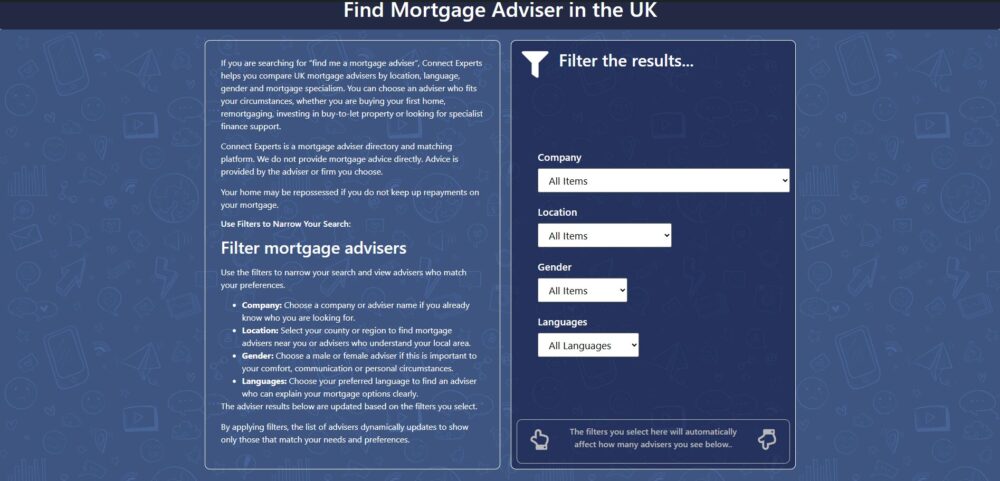
Through Connect Experts, you can also find a buy-to-let mortgage adviser if you want to compare adviser options by location, language or mortgage type.
Common buy-to-let mistakes
Investors should avoid treating buy-to-let as a simple rate search.
Common mistakes include:
- Ignoring product fees
- Forgetting early repayment charges
- Overestimating rent
- Underestimating repairs
- Not allowing for void periods
- Choosing the wrong ownership structure
- Applying before checking lender criteria
- Assuming all lenders accept HMOs
- Forgetting tax and SDLT costs
- Having no refinance plan
The mortgage should serve the investment plan. It should not become the plan.
Why use Connect Mortgages?
Connect Mortgages supports UK landlords, property investors and specialist borrowers.
We can help with first-time landlord cases, remortgages, limited-company buy-to-let, HMO lending, portfolio finance, and expat buy-to-let.
Our role is to help you understand lender criteria before you apply. This can reduce wasted time and help you compare products with the full cost in mind.
If your case needs a local or specialist adviser, you can also use Connect Experts to find buy-to-let mortgage advisers.
FAQs: Buy-to-let mortgages for UK investors
What is a buy-to-let mortgage?
A buy-to-let mortgage is used to buy or refinance a property that will be rented to tenants.
How much deposit do I need for a buy-to-let mortgage?
Many lenders ask for at least 20% to 25%. Some cases may need a larger deposit.
Is buy-to-let borrowing based on rental income?
Yes. Rental income is a major part of the lender assessment. Some lenders may also consider personal income.
What is an ICR test?
An ICR test checks whether the rent covers the mortgage interest by the lender’s required margin.
Can I get a buy-to-let mortgage through a limited company?
Yes, some lenders offer limited company buy-to-let mortgages. You should take tax advice before choosing this route.
What is a portfolio landlord?
A portfolio landlord usually has four or more mortgaged buy-to-let properties.
Can I get a buy-to-let mortgage for an HMO?
Yes, but HMO mortgages often need specialist lenders and more detailed property checks.
Can I live in a property with a buy-to-let mortgage?
Usually, no. A buy-to-let mortgage is intended for a property rented to tenants.
Are buy-to-let mortgages regulated?
Most business buy-to-let mortgages are not regulated like residential mortgages. Some consumer buy-to-let cases may be treated differently.
Is buy-to-let still worth it for UK investors?
It can still work for some investors. However, rent, tax, costs, rates, regulation and long-term plans must be reviewed first.