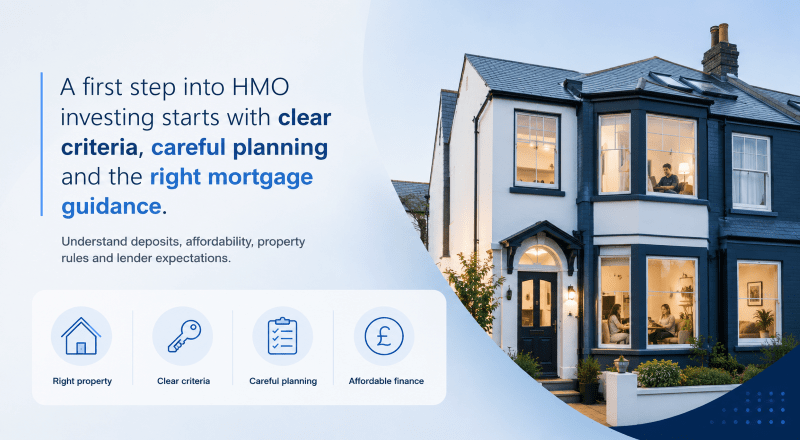
HMO Mortgages for First-Time Buyers: Buying your first property is often a personal milestone. Buying your first property as an HMO is different.
It is not only a purchase. It is a lending decision, a landlord decision, and a compliance decision. The property must serve as security for the lender, a home for tenants, and a business for the borrower.
That is why HMO mortgages for first-time buyers need careful planning before an application is made.
At a Glance
Some first-time buyers can get an HMO mortgage, but lender options are usually more limited.
An HMO mortgage is a specialist buy-to-let mortgage for a property rented to multiple tenants from more than one household. Lenders may look at the deposit, rental income, personal income, credit profile, property type, landlord experience and licensing position.
A larger deposit is often needed. Many lenders also expect the rent to pass a stricter affordability test.
Before applying, first-time buyers should check the property, licence rules, likely rental income, management costs and long-term plan.
Can First-Time Buyers Get an HMO Mortgage?
Yes, some lenders may consider first-time buyers for HMO mortgages. However, it is not always straightforward.
A first-time buyer has no history of owning property. A first-time landlord may also have no record of managing tenants. When both apply at the same time, lenders may see more risk.
That does not mean the case cannot work. It means the application must be well prepared.
The lender may want to understand:
- How much deposit you have
- Whether your income supports the application
- Whether the expected rent is realistic
- Whether the property meets HMO standards
- Whether a licence is needed
- Whether you understand landlord duties
- Whether you have a clear long-term plan
An HMO can produce stronger rental income than a single-let property. However, higher income potential usually comes with higher management responsibility.
What Is an HMO?
An HMO is usually a property rented by at least three people who are not from one household and who share facilities, such as a kitchen or bathroom.
Large HMOs usually need a licence. Smaller HMOs may also need one, depending on local council rules.
You should check the licence position before buying. The GOV.UK guidance on a house in multiple occupation licence explains how local licensing works in England and Wales.
For a wider explanation of HMO lending, read our HMO mortgage guide.
Why HMO Mortgages Are Different for First-Time Buyers
A standard residential mortgage is based on your ability to live in and repay the mortgage.
An HMO mortgage is different. It is usually assessed as a specialist buy-to-let mortgage. The lender looks at the property as an income-producing asset.
That changes the questions.
The lender may ask whether the rent covers the mortgage payment under a stress test. They may also look at whether the property can legally and practically operate as an HMO.
The first-time buyer must therefore think like an owner and a landlord from the start.
Deposit Requirements
HMO mortgages often require larger deposits than standard residential mortgages.
Many first-time buyers should expect to need a meaningful deposit. Some lenders may consider lower deposits in selected cases, but specialist HMO lending often works at lower loan-to-value levels.
The deposit affects:
- The number of lenders available
- The interest rate options
- The rental stress test
- The lender’s view of risk
- The strength of the application
A larger deposit does not guarantee approval. However, it can make the case easier to place.
Rental Income and Affordability
HMO mortgage affordability is usually driven by rental income.
The lender may test the rent against an assumed interest rate. This is often called rental stress testing. The rent must usually exceed the stressed mortgage payment by a set percentage.
This matters because the headline rent is not the full picture.
A first-time HMO buyer should also allow for:
- Empty rooms between tenants
- Repairs and maintenance
- Council licensing costs
- Utility bills, where included
- Letting agent or management fees
- Insurance
- Furniture replacement
- Safety checks
You can use the buy-to-let affordability calculator to estimate how rental income may affect borrowing. It should be used as a guide, not a mortgage offer.
Personal Income and Credit Profile
Some HMO lenders look mainly at rent. Others also want to see personal income.
This can be important for first-time buyers. If the rent is lower than expected, or costs rise, the lender may want confidence that the borrower has wider financial strength.
Your credit profile also matters.
Lenders may review:
- Credit score and credit history
- Existing debts
- Bank conduct
- Employment or self-employment income
- Deposit source
- Previous missed payments
- Overall financial stability
A clean case is usually easier to place. A complex case may still be possible, but it will need careful advice.
Licensing, Planning and Local Rules
HMO rules are local as well as national.
A property may appear suitable on paper, but the council may take a different view. Some areas also have planning controls that restrict new HMOs.
Before committing to an HMO purchase, you should check:
- Whether the property needs an HMO licence
- Whether the area has additional licensing
- Whether planning permission is required
- Whether Article 4 restrictions apply
- Whether room sizes meet local standards
- Whether fire safety works are needed
- Whether waste storage rules apply
This is not just a legal point. It is also a mortgage point.
If the property cannot operate as intended, the lender may not agree with the application.
Property Condition and Valuation
HMO lenders often look closely at the property itself.
The valuation may consider whether the property is suitable for multiple tenants. The valuer may also comment on layout, condition, demand and lettability.
A property that needs work may create extra challenges.
The lender may ask whether the property can be let immediately. If not, the buyer may need to consider whether short-term finance, refurbishment funding or a staged plan is needed.
For some purchases, a bridging loan may be reviewed before a longer-term HMO mortgage. This is usually only suitable where there is a clear exit strategy.
Buying Personally or Through a Limited Company
Some first-time HMO buyers consider buying through a limited company.
This can affect tax, ownership, lender choice and future planning. It can also change how the mortgage is assessed.
A limited company route is not automatically better. It depends on the buyer, the property, the expected rent and long-term investment plan.
You can read more about limited company buy-to-let mortgages if you are comparing ownership structures.
Tax advice should be taken from a qualified tax adviser. Mortgage advice and tax advice are separate areas.
First-Time Buyer or First-Time Landlord?
This distinction matters.
A first-time buyer has not owned a property before. A first-time landlord has not let property before.
Some lenders are more comfortable with first-time landlords than first-time buyers. Others may want the borrower to have previous property ownership or landlord experience.
If you are both a first-time buyer and a first-time landlord, the application may need stronger supporting evidence.
That evidence may include:
- A clear deposit source
- Realistic rental projections
- A managing agent plan
- Evidence of income
- Details of proposed tenants
- Licence checks
- A business plan for the property
The aim is not to make the case look simple. The aim is to make the risk understood.
Main Risks for First-Time HMO Buyers
An HMO can be attractive because each room may produce rent. However, income is only useful when it is sustainable.
First-time buyers should consider:
- The property may need a licence before letting
- Local rules may limit HMO use
- Refurbishment costs may rise
- Rooms may stay empty between tenants
- Tenants may move at different times
- Bills may reduce net profit
- Repairs may be more frequent
- Interest rates may affect affordability
- The lender may restrict inexperienced landlords
- The property may be harder to sell than a standard home
A good HMO decision is not built on rent alone. It is built on rent, rules, resilience and responsibility.
Documents You May Need
A lender may request more detail for an HMO mortgage than for a standard mortgage.
You may need to provide:
- Proof of identity
- Proof of income
- Bank statements
- Proof of deposit
- Credit commitments
- Property details
- Rental estimates
- Tenancy plans
- Licence information
- Refurbishment details, where relevant
- Managing agent details, where used
The exact documents depend on the lender and the case.
Insurance and Landlord Protection
An HMO buyer should also consider insurance early.
HMO properties may need specialist landlord insurance. Standard home insurance may not be suitable where the property is let to multiple tenants.
Insurance may need to reflect:
- Tenant type
- Shared facilities
- Buildings cover
- Contents in communal areas
- Loss of rent
- Public liability
- Legal expenses
You can review landlord insurance as part of the wider planning process.
When an HMO Mortgage May Not Be Suitable
An HMO mortgage may not be suitable if the property, borrower or plan is not ready.
It may be worth pausing if:
- The licence position is unclear
- The deposit is too small
- The rent does not pass lender checks
- The property needs major works
- The buyer has no management plan
- The costs have not been tested
- The purchase depends only on optimistic rent
- The exit route is weak
Sometimes the better decision is not to rush. A property can look profitable and still be unsuitable.
How Connect Mortgages Can Help
Connect Mortgages can help first-time buyers understand whether an HMO mortgage may be realistic.
An adviser can review your deposit, income, credit profile, property type, rental income and wider plan. They can also explain which lender criteria may affect your options.
The advice process may consider:
- HMO mortgage options
- Buy-to-let mortgage alternatives
- Limited company structures
- Refurbishment or bridging finance
- Rental stress testing
- Licensing and property risks
- Insurance needs
- Long-term repayment plans
Connect Mortgages is a credit broker, not a lender. Any mortgage is subject to status, affordability, valuation and lender criteria.
Speak to an HMO Mortgage Adviser
If you are buying your first property and considering an HMO, seek advice before committing.
The right question is not only whether you can get the mortgage. It is whether the property, finance and responsibility fit together.
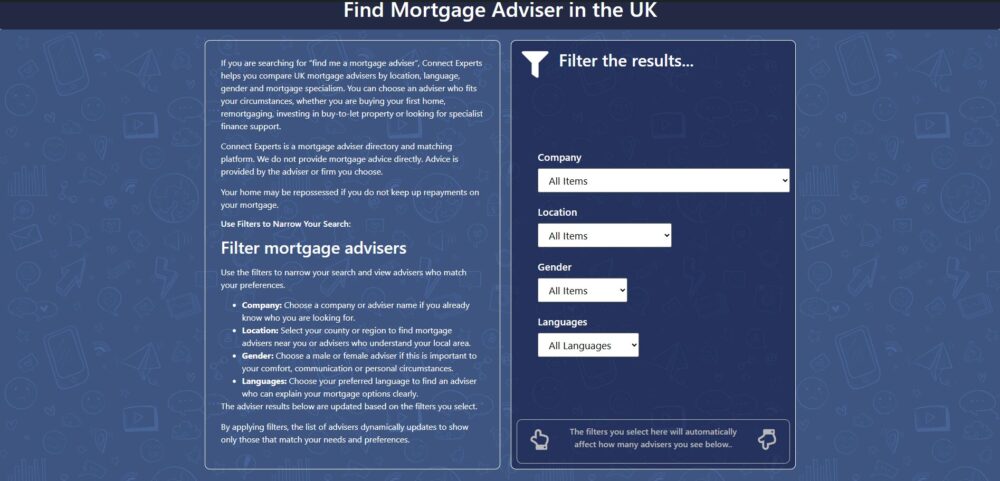
You can speak to Connect Mortgages about HMO mortgage advice. You can also find a mortgage adviser through Connect Experts if you want to search by location, language or advice area.
FAQs
Can a first-time buyer get an HMO mortgage?
Yes, some lenders may consider first-time buyers for HMO mortgages. However, the choice of lenders can be more limited. The deposit, rent, property type, credit profile and landlord plan will all matter.
Is an HMO mortgage the same as a buy-to-let mortgage?
An HMO mortgage is a specialist type of buy-to-let mortgage. It is designed for properties let to multiple tenants from more than one household. Standard buy-to-let mortgages may not allow HMO use.
How much deposit do first-time HMO buyers need?
Deposit requirements vary by lender and case. Many HMO mortgages require a larger deposit than standard residential mortgages. A higher deposit can improve lender choice, but it does not guarantee approval.
Do HMO properties need a licence?
Large HMOs usually need a licence. Smaller HMOs may also need one depending on local council rules. You should check the licence position before buying or applying for a mortgage.
Do lenders accept first-time landlords for HMO mortgages?
Some lenders do, but not all. A first-time landlord may need a stronger application, clear rental figures and a realistic property management plan.
Can I live in the HMO and rent out rooms?
This changes the type of mortgage and advice required. A standard HMO buy-to-let mortgage may not be suitable if you intend to live in the property. You should explain this clearly before applying.
Can I buy an HMO through a limited company?
Some buyers use a limited company for HMO property investment. This can affect mortgage choice, tax position and legal ownership. You should take both mortgage advice and tax advice before deciding.
What makes an HMO mortgage application stronger?
A stronger application usually has a clear deposit source, realistic rent, suitable property, clean credit profile, licensing checks and a practical management plan.
Are HMO mortgages risky for first-time buyers?
They can be. HMOs may offer higher rental income, but they also involve regulation, management duties, tenant turnover, maintenance and licensing costs. The risks should be understood before applying.
Should I get advice before offering on an HMO?
Yes. Advice before offering can help you understand lender appetite, deposit needs, rental testing and whether the property may meet HMO mortgage requirements.