

Complex Buy-to-Let Mortgages: When Structure Matters More Than Rate – A simple buy-to-let case asks one main question: does the rent support the loan?
A complex buy-to-let case asks deeper questions.
Who owns the property?
How many properties are already mortgaged?
Is the property an HMO, a multi-unit block, a mixed-use site, or a specialist let?
Does the landlord own property personally, through a limited company, or both?
That is why complex buy-to-let mortgages are rarely about rate alone. They are about structure, evidence, lender criteria and risk.
At Connect Mortgages, we help landlords review buy-to-let cases that may not fit a standard lender route. This can include portfolio landlords, limited-company borrowers, HMO investors, expat landlords, mixed property types, and more detailed rental-income cases.
If you need a broader starting point, read our buy-to-let mortgage guide.
At a Glance
A complex buy-to-let mortgage is usually needed when the borrower, property, ownership structure or wider portfolio needs deeper lender assessment.
This may include:
- Portfolio landlords with several mortgaged properties
- Limited company or SPV buy-to-let applications
- Houses in multiple occupation
- Multi-unit freehold blocks
- Semi-commercial or mixed-use property
- Non-standard rental income
- Expat or foreign income cases
- Larger loan sizes
- Complex credit or income profiles
- Properties needing specialist valuation review
The key point is simple. A complex case may still be workable, but it must be packaged clearly.
A lender needs to understand the property, the rent, the borrower, the ownership structure and the wider risk.
What Is a Complex Buy-to-Let Mortgage?
A complex buy-to-let mortgage is mortgage finance for a rental property case that does not fit standard lender criteria.
The word “complex” does not mean impossible. It means the lender may need more detail before making a decision.
A case may become complex because of:
- The number of properties owned
- The way the property is owned
- The type of tenants
- The property layout
- Rental income structure
- Lease terms
- Property condition
- Personal income
- Credit background
- Deposit source
- Company structure
- Wider borrowing exposure
In a standard case, the lender may focus mainly on rent, deposit and property value.
In a complex case, the lender may review the whole picture.
That is why preparation often matters more than speed.
Why Buy-to-Let Cases Become Complex
A buy-to-let case becomes complex when one part of the application changes the lender’s risk.
For example, a single rental house let to one household may be simple. An HMO with six rooms, licence requirements and multiple tenancy agreements needs a different review.
A landlord with one property may need a basic rental stress test. A landlord with six mortgaged properties may need a full portfolio assessment.
A personal-name application may be straightforward. A limited company case may involve directors, shareholders, SIC codes and personal guarantees.
Complexity usually sits in one of four places:
- The landlord
- The property
- The ownership structure
- The wider portfolio
The stronger the evidence, the easier it becomes for a lender to understand the case.
Complex Buy-to-Let Examples
The following examples often need specialist buy-to-let lender assessment.
| Scenario | Why it may be complex |
|---|---|
| Portfolio landlord | Lender may assess all properties, not just the new loan |
| Limited company purchase | Directors, shareholders and SPV structure may be reviewed |
| HMO property | Licensing, room numbers and rental demand may affect criteria |
| Multi-unit freehold block | Valuation and rental structure may need closer checks |
| Semi-commercial property | Residential and commercial elements may need different treatment |
| Expat landlord | Country of residence, income and documents may affect lender choice |
| Large loan size | Lender exposure and rental cover may be assessed more closely |
| Mixed ownership portfolio | Personal and company-owned properties may need to be shown together |
| Short lease property | Lease length can affect valuation and lender appetite |
| Recent company setup | Some lenders may need more detail on directors and deposit source |
Portfolio Landlords and Deeper Underwriting
Portfolio landlords are assessed differently because their risk is spread across several properties.
A lender may want to see how the full portfolio performs. This can include rental income, mortgage balances, property values, void risk and borrowing levels.
If you own, or are about to own, four or more mortgaged buy-to-let properties, your case may need a portfolio landlord assessment.
This does not mean the application cannot proceed. It means the lender may ask for a clearer view of the whole position.
You may need to provide:
- A full property schedule
- Current mortgage balances
- Monthly rental income
- Property values
- Loan-to-value levels
- Tenancy information
- Property types
- Personal income details
- Business plan
- Assets and liabilities
A portfolio with strong rent, sensible borrowing and clear documents may be easier to place than a smaller case with missing information.
For more details, read our guide to buy-to-let portfolio mortgages.
Rental Stress Testing and ICR
Rental stress testing is one of the most important parts of buy-to-let lending.
Lenders usually check whether the rent is sufficient to cover the mortgage payments. This is often called the interest coverage ratio, or ICR.
The exact calculation varies by lender. It may depend on:
- Product rate
- Stress rate
- Loan-to-value
- Tax position
- Ownership structure
- Fixed-rate period
- Landlord profile
- Property type
A limited company case may be assessed differently from a personal-name case. A five-year fixed rate may also be treated differently from a shorter product.
This is why two lenders can look at the same property and reach different outcomes.
Landlords can use the buy-to-let affordability calculator as an early guide. However, a calculator cannot confirm lender acceptance.
Limited Company Buy-to-Let Mortgages
Many landlords use limited companies for buy-to-let property investment.
In many cases, the company is a Special Purpose Vehicle, often called an SPV. This is usually a company created to own and let property.
A limited company route may suit some landlords, especially those building a longer-term portfolio. However, it will not suit everyone.
Lenders may review:
- Company registration
- SIC codes
- Directors
- Shareholders
- Personal guarantees
- Deposit source
- Existing portfolio
- Rental income
- Director income
- Credit history
- Property type
- Repayment strategy
The tax position should be reviewed with a qualified tax adviser before ownership decisions are made.
For a deeper guide, read about limited company buy-to-let mortgages.
HMO and Multi-Unit Buy-to-Let Cases
HMOs can offer higher rental income, but they often need more detailed lender checks.
A lender may review the number of rooms, tenancy setup, shared facilities, local demand and licensing position.
Some lenders also need the landlord to have previous experience. Others may accept first-time HMO landlords if the wider case is strong.
An HMO case may need:
- Licence details, where required
- Room-by-room rental evidence
- Valuation based on suitable rental assumptions
- Tenancy information
- Property layout
- Management plan
- Experience details
- Fire and safety compliance evidence, where relevant
Multi-unit freehold blocks may also require a specialist assessment. The lender may look at whether the units are self-contained, how rent is collected and whether the block can be sold or valued clearly.
For related guidance, see our HMO property page.
Semi-Commercial and Mixed-Use Property
Some landlords buy property with both residential and commercial elements.
This may include a flat above a shop, a property with commercial space below, or a mixed-use investment building.
These cases can sit outside standard buy-to-let rules.
A lender may ask:
- What percentage is residential?
- What percentage is commercial?
- Who occupies the commercial space?
- Is the commercial tenant on a lease?
- How stable is the rent?
- Can the property be valued clearly?
- Is the borrower experienced?
- Does the property need commercial finance instead?
The right route depends on the property and income structure.
This is where advice becomes more than product selection. It becomes case interpretation.
Documents Often Needed for Complex Buy-to-Let
Good documents can make a complex case easier to understand.
Before applying, landlords may need to prepare:
- Proof of identity
- Proof of address
- Bank statements
- Personal income evidence
- Tax documents
- Tenancy agreements
- Rental statements
- Portfolio schedule
- Mortgage statements
- Company documents
- Director details
- Shareholder details
- Deposit evidence
- Property details
- Valuation information
- Business plan, where required
Missing documents can slow the application down. A poorly matched lender choice can lead to avoidable declines.
A strong application should tell a clear story.
Complex Buy-to-Let Mortgage Questions Lenders May Ask
Lenders may ask detailed questions before deciding whether to offer.
These can include:
- How many properties do you own?
- How many are mortgaged?
- Are they owned personally or through a company?
- What is the total rental income?
- What are the total mortgage balances?
- Are any properties HMOs?
- Are any properties mixed-use?
- Are any properties vacant?
- Do you rely on top-slicing?
- Is the rent realistic?
- Does the property need work?
- How will the loan be repaid?
- What is your long-term plan?
These questions are not barriers. They are part of how lenders understand risk.
A prepared landlord can answer them clearly.
When Specialist Lenders May Be Needed
Specialist lenders may be useful when a standard lender cannot assess the full case.
This can apply where the borrower has a larger portfolio, a company structure, unusual property type, expat status, complex income or a stronger need for manual underwriting.
Manual underwriting allows the lender to look beyond a simple tick-box result.
A specialist lender may consider:
- Wider portfolio strength
- Landlord experience
- Company structure
- Alternative income
- Property use
- Rental demand
- Loan purpose
- Repayment strategy
- Deposit source
- Case background
However, specialist lending is not automatically better. The right lender depends on the facts. The aim is not to force a case into the wrong criteria. The aim is to match the case to a lender that understands it.
Technical Risks Landlords Should Consider
Complex buy-to-let borrowing can support growth, but it also carries risk.
Landlords should consider:
- Higher interest costs
- Rental stress test limits
- Valuation downshifts
- Void periods
- Maintenance costs
- Licensing costs
- Insurance needs
- Tax treatment
- Company administration
- Refinancing risk
- Exit strategy
- Tenant demand
The philosophical point is simple. Property investment rewards clarity more than optimism. A strong landlord plan does not ignore risk. It names it, measures it and prepares for it.
How Connect Mortgages Can Help
Connect Mortgages helps landlords review complex buy-to-let mortgage options.
We can help you understand how lenders may view the case before you apply.
This may include:
- Reviewing your landlord profile
- Comparing lender criteria
- Checking rental stress test issues
- Preparing portfolio information
- Reviewing limited company routes
- Considering HMO lender options
- Discussing specialist property types
- Identifying likely document needs
- Reducing unsuitable applications
Where advice is required, the adviser will assess your circumstances, objectives and eligibility. You can contact Connect Mortgages to discuss your next step.
Finding a Buy-to-Let Adviser
Some landlords want to compare advisers before deciding who to speak with.
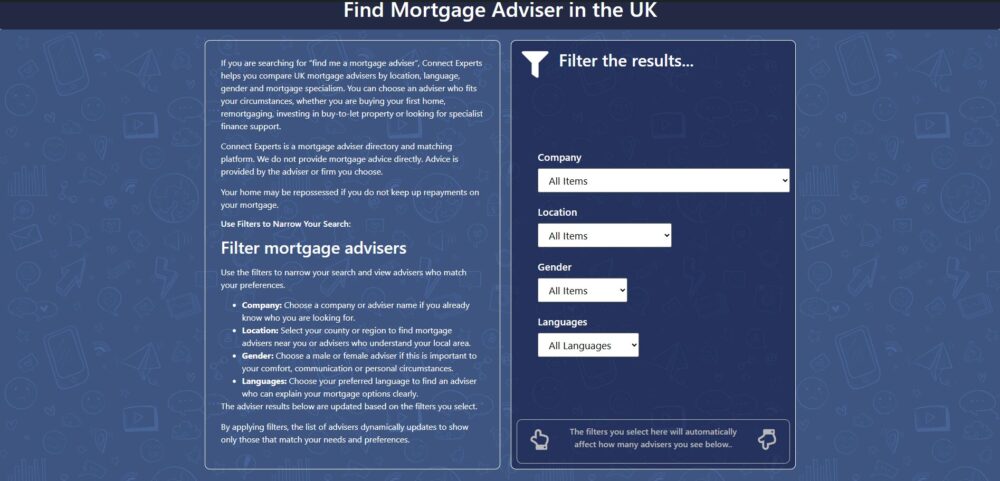
Connect Experts is a separate adviser directory within the wider Connect Group. It helps users search by location, language, gender and mortgage area.
You can use Connect Experts to find buy-to-let mortgage brokers or compare buy-to-let mortgage advisers.
Mortgage advice is provided by the adviser or firm selected by the customer.
Evidence and Regulation
Buy-to-let lending is criteria-led. Lenders can differ in how they assess rent, stress rates, property type and landlord experience.
The Bank of England’s Prudential Regulation Authority sets expectations for buy-to-let underwriting standards, including portfolio landlord assessment: PRA buy-to-let underwriting standards.
UK Finance publishes current buy-to-let lending data, including loan volumes, yields, rates and arrears: UK Finance buy-to-let lending data.
Landlords should also consider tax rules. HMRC explains the residential property finance cost restriction here: HMRC property finance cost restriction.
This page is for general information only. It is not tax, legal or financial advice. Speak to a qualified tax adviser before changing property ownership structure.
FAQs About Complex Buy-to-Let Mortgages
What is a complex buy-to-let mortgage?
A complex buy-to-let mortgage is used when the borrower, property, ownership structure or portfolio needs more detailed lender assessment. This may include HMOs, limited companies, portfolio landlords, mixed-use property or non-standard income.
Are complex buy-to-let mortgages harder to get?
They can be harder if the case is poorly prepared or sent to the wrong lender. However, a complex case may still be possible when the rent, documents, property details and borrower background are clear.
Why do portfolio landlords need more checks?
Portfolio landlords may have several loans, properties and income streams. Lenders often review the whole portfolio to understand rental cover, borrowing levels and future risk.
Can limited companies get buy-to-let mortgages?
Yes. Many landlords use limited companies or SPVs for buy-to-let borrowing. Lenders may assess the company, directors, shareholders, rental income, deposit source and wider portfolio.
Do HMO mortgages need specialist lenders?
Often, yes. HMO lending can involve licensing, room numbers, tenant demand, rental evidence and landlord experience. Not all buy-to-let lenders accept HMO properties.
What documents are needed for complex buy-to-let?
Documents may include bank statements, income evidence, tenancy agreements, mortgage statements, property schedules, company documents, deposit evidence and rental information.
Is rate the most important part of a complex buy-to-let mortgage?
Rate matters, but it is not the only factor. Lender criteria, rental stress testing, fees, valuation approach, property type and long-term plans may be just as important.
Should landlords get tax advice before using a limited company?
Yes. A limited company may suit some landlords, but not all. Tax, legal and accounting advice should be taken before changing ownership structure.