
Direct to Lender vs Broker: Which Mortgage Route Is Right? Choosing a mortgage route is not just about finding a rate.
It is about understanding how your income, deposits, credit history, property, and plans will be assessed. That is where the difference between going direct to a lender and using a broker becomes important.
A direct lender can only offer its own mortgage products. A mortgage broker can review options across a wider range of lenders, subject to their panel and permissions.
Neither route is automatically right for everyone. The better route depends on your circumstances, confidence, timing and need for advice.
At a Glance
Going direct to a lender may work if your case is simple and you already know which lender suits you.
Using a broker may help if you want advice, wider market access, help with criteria, or support with the application.
A broker can be useful if you are self-employed, remortgaging, buying your first home, applying with credit issues, or buying a more complex property.
Connect Mortgages is a credit broker, not a lender. We help clients understand mortgage options before they apply.
Your home may be repossessed if you do not keep up repayments on your mortgage.
What Does Going Direct to a Lender Mean?
Going direct means applying to a bank, building society or lender without using a broker.
You may do this online, by phone, in branch, or through the lender’s own mortgage team. The lender can discuss its own products and assess your application against its own rules.
This can feel simple if you already bank with that lender. It may also suit borrowers with a straightforward income, a strong deposit, and no unusual circumstances.
However, a direct lender will not compare the full market for you. If the lender declines your application, you may need to start again elsewhere.
That can cost time, especially if you are buying a property and working to a deadline.
What Does Using a Mortgage Broker Mean?
A mortgage broker helps review your circumstances and compare mortgage options.
This may include your income, outgoings, credit history, deposit, property type and future plans. The broker then considers which lenders may fit your situation.
MoneyHelper explains that a mortgage adviser searches the mortgage market and recommends a deal based on your needs. Some advisers are independent, while others may be tied to certain lenders or products.
At Connect Mortgages, clients can discuss residential mortgage options before applying. This can help reduce guesswork and avoid approaching unsuitable lenders.
A broker can also help explain documents, fees, timescales and lender criteria.
Direct lender vs broker: the practical difference
| Point | Direct to lender | Mortgage broker |
|---|---|---|
| Product access | One lender’s products | Wider lender access, depending on panel |
| Advice | Limited to that lender’s route | Advice based on your circumstances |
| Criteria check | One lender’s criteria | Multiple lender criteria considered |
| Application support | Lender processes its own case | Broker helps prepare and submit the case |
| Complex income | May be harder if criteria do not fit | Broker can check lenders with suitable criteria |
| Decline risk | You may need to restart elsewhere | Broker may assess fit before submission |
| Fees | Lender fees may apply | Broker fees may apply and should be explained |
The cheapest rate is not always the best route. A rate only matters if you qualify for it, understand the conditions and can proceed on time.
Mortgage choice is practical before it is emotional. The right route should fit the person, not just the product.
Going Directly to a Lender May Work
Going direct may be suitable if your circumstances are simple.
For example, you may have employed income, a clear credit history, a strong deposit and a standard property. You may also already understand the lender’s process and product range.
Some borrowers prefer this route because they want to deal with one institution. Others may have access to an existing customer product.
Even then, it is worth checking the full cost. Arrangement fees, valuation fees, early repayment charges and product conditions can all affect value.
A lower rate with a higher fee may not always be cheaper over the deal period.
When Using a Broker May Help
Using a broker may help when your case needs more thought.
This may apply if you are a first-time buyer, because the first application can feel unfamiliar. A broker can explain affordability, deposits, documents and lender expectations.
A broker may also help if you are reviewing your current deal. Read more about remortgage advice if your fixed rate is ending or you want to compare new options.
Self-employed applicants often need extra care. Lenders may treat salary, dividends, retained profits, accounts and tax calculations differently. Our self-employed mortgage guide explains this in more detail.
Credit issues can also affect lender choice. Missed payments, defaults, debt management plans or CCJs may need careful review before applying. See our guide to adverse credit mortgage advice.
Landlords may also benefit from advice. Buy-to-let lenders assess rental income, deposit, property type and landlord experience. You can read more about buy-to-let mortgage options.
Why Lender Criteria Matters
Mortgage products are not only priced by rate. They are controlled by criteria.
Criteria determine who can apply, how income is assessed, which property types are accepted, and how affordability is calculated.
Two lenders can look at the same borrower and reach different decisions. One may accept bonus income. Another may not. One may consider a recent contractor. Another may need a longer track record.
This is why the route matters.
Going direct can work when the lender fits. A broker can help you work out which lender might be a good fit before you apply.
The FCA also has rules around execution-only mortgage sales. These rules matter because some customers may need advice or support rather than simply choosing a product without advice.
What About Mortgage Fees?
Both routes can involve fees.
A direct lender may charge arrangement fees, valuation fees or product fees. A broker may charge an advice or arrangement fee. The broker should explain any fee before you proceed.
You should also check the full mortgage cost, not only the interest rate.
This includes:
- Monthly payment
- Product fee
- Valuation fee
- Legal costs
- Early repayment charges
- Exit fees
- Cashback or incentives
- Term length
- Fixed or variable rate period
You can use the Connect Mortgages calculators to get a starting point before speaking with an adviser.
Can a Broker Access Every Lender?
Not always.
Some brokers work from a broad lender panel. Others may be restricted. Some lenders also keep certain products direct.
That is why transparency matters. A good broker should explain the scope of their service, how they are paid and whether any fee applies.
Connect Mortgages is a credit broker, not a lender. We have access to a wide range of lenders and recommend options based on your circumstances.
Can You Choose Your Own Adviser?
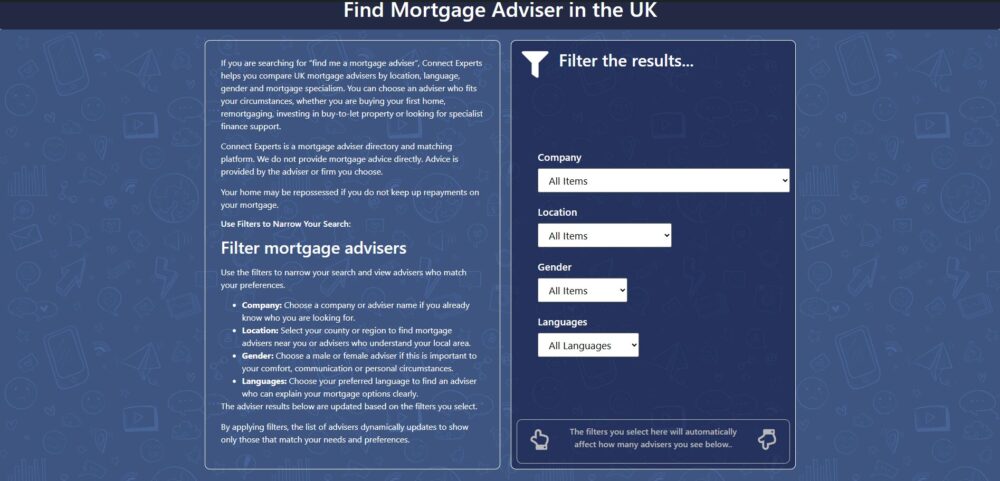
Yes. Some clients want to choose an adviser by location, language, gender or mortgage specialism.
You can use Connect Experts to find mortgage advisers across the UK. Connect Experts is a mortgage adviser directory and matching platform.
If you want a broader search, the Connect Experts mortgage broker directory can help you compare adviser profiles before making contact.
Advice is provided by the adviser or firm you choose.
Direct-to-Lender vs Broker: Which is Better?
There is no single answer.
Going direct may suit a simple case where you know the lender is a good fit.
Using a broker may suit borrowers who want advice, comparison, criteria checks and application support.
The decision should not be based on habit. It should be based on evidence.
A mortgage is a long-term commitment. The best route is the one that helps you understand the decision before you commit to it.
Speak to Connect Mortgages
If you are unsure whether to go direct or use a broker, start with your circumstances.
Your income, deposit, credit history, property type and timescale all matter.
Connect Mortgages can help you review your options before you apply. You can contact Connect Mortgages to speak with the team.
For independent guidance on mortgage advice, you can also read the MoneyHelper guide to choosing a mortgage adviser. For regulatory context, see the FCA Handbook section on execution-only mortgage sales.
FAQs: Direct to lender vs broker
Is it cheaper to go direct to a lender?
Not always. A direct lender may offer a competitive rate, but the full cost depends on fees, criteria, incentives and whether you qualify.
Does a mortgage broker get better rates?
A broker may access products from different lenders. However, the best route depends on your circumstances, product eligibility and total cost.
Can I apply direct after speaking to a broker?
You can choose how to proceed. However, check any broker fee terms before instructing an adviser.
Can a broker help if a lender has declined me?
Yes, a broker may review why the case failed and consider whether another lender’s criteria may fit.
Is Connect Mortgages a lender?
No. Connect Mortgages is a credit broker, not a lender.