

Do I Still Need an Adverse Credit Mortgage? A credit file tells a story, but it does not always tell the whole story.
You may have missed payments in the past. You may have had a default, a County Court Judgment, or a difficult period with debts. However, time changes the way lenders view risk. If your finances have improved, the right question is not only whether you can get a mortgage. It is whether you still need an adverse credit mortgage at all.
At a Glance
You may still need an adverse credit mortgage if your credit issues are recent, unpaid, serious, or still visible to lenders as a higher risk.
You may no longer need one if your credit conduct has improved, your debts are under control, your income is stable, and older issues are less relevant to the lender.
The answer depends on:
- The type of credit issue
- How long ago it happened
- Whether it has been settled
- Your deposit or equity
- Your income and outgoings
- The lender’s current criteria
- Whether you apply alone or with another person
If you already have an adverse credit mortgage, a review may show whether a remortgage could now be more suitable.
What Is an Adverse Credit Mortgage?
An adverse credit mortgage is not a separate legal mortgage type. It is a common term for a mortgage arranged for someone with past or current credit issues.
These issues may include missed payments, defaults, CCJs, debt management plans, IVAs, bankruptcy, repossession, payday loan history, or high credit use.
Some lenders may decline these cases. Others may consider them if the wider application makes sense. That is why adverse credit mortgages are often linked to specialist lenders, manual underwriting, larger deposits, and closer checks on affordability.
You can read the wider guide on adverse credit mortgage options if your credit issue is still active or complex.
Why the Question Matters
Needing an adverse credit mortgage is not a fixed label.
A borrower who needed specialist lending two years ago may not need it today. Another borrower with a strong income may still need specialist support because a recent CCJ or unpaid default remains a concern.
This is where mortgage advice becomes practical rather than emotional.
The aim is not to ignore the past. The aim is to understand how much the past still matters to lenders now.
How Lenders Assess Adverse Credit
Mortgage lenders do not usually look at one factor in isolation. They assess the full case.
They may consider:
- What happened
- When it happened
- How much money was involved
- Whether the issue was registered
- Whether it has been settled
- Whether there are repeat issues
- Whether your recent payments are stable
- Whether your income supports the mortgage
- Whether your deposit reduces the lender’s risk
A small missed payment from several years ago may be treated differently from recent mortgage arrears. A satisfied default may be viewed differently from an unpaid one. A historic CCJ may carry less weight than one registered recently.
This is why your credit file should be reviewed before a full mortgage application. A decline can create another problem when the real issue was lender choice.
You can also read MoneyHelper’s guide to getting a mortgage with bad credit for a wider consumer explanation.
When You May Still Need an Adverse Credit Mortgage
You may still need an adverse credit mortgage if the risk is still visible to lenders.
This may apply if:
- Your credit issues happened recently
- You still have unpaid defaults
- You have recent missed mortgage payments
- You have active debt management arrangements
- You have a recent CCJ
- You have low deposit or limited equity
- Your income is irregular or difficult to evidence
- Your bank statements show ongoing financial pressure
In these cases, a specialist lender may still be the right route. The product may cost more than a mainstream mortgage, but it could provide a route forward where standard criteria do not fit.
The key is suitability. A higher rate should not be accepted without checking whether a better route exists.
When You May No Longer Need an Adverse Credit Mortgage
You may no longer need an adverse credit mortgage if your credit position has improved enough for a wider lender choice.
This may apply if:
- Your recent payments have been maintained
- Older defaults or CCJs are less relevant
- Your debts have reduced
- Your income has improved
- Your deposit or equity has increased
- Your bank statements show better financial control
- Your previous issue has been settled
- Your current mortgage has been paid on time
At this stage, you may be able to move towards a standard residential mortgage or a more competitive remortgage option.
However, this should be checked before applying. Some lenders may still treat older credit issues differently, even if your current position looks stronger.
What If My CCJ or Default Is Old?
Older credit issues may have less impact than recent ones, but they should not be ignored.
A CCJ can affect mortgage applications, and credit reference agencies usually show it for six years from the judgment date. Experian explains how CCJs are recorded and how they may affect credit applications, including mortgages.
If your CCJ, default, or missed payment is old, settled, and followed by clean conduct, some lenders may take a more positive view. However, lenders can still ask questions about the background, amount, date, and settlement status.
This is why old adverse credit should be explained clearly rather than hidden.
What If My Partner Has Good Credit?
A partner with good credit may help affordability, but it does not automatically remove the adverse credit issue.
On a joint mortgage application, lenders assess all named applicants. If one person has credit issues and the other has strong credit, the lender will still review the combined risk.
This can affect:
- The lenders available
- The interest rate offered
- The deposit needed
- The maximum borrowing
- Whether the application should be joint or structured differently
Sometimes a joint application is still the best route. Sometimes another structure may need to be explored. This must depend on ownership plans, income, affordability, credit history, and legal advice where needed.
Could I Apply Without the Person With Adverse Credit?
Some borrowers ask whether the person with adverse credit should be left off the mortgage.
This may be possible in some cases, but it is not always suitable. The person applying must usually pass affordability checks without relying on the excluded person’s income. The ownership position must also make sense.
A mortgage is not only about approval. It is about the right legal, financial, and household structure.
Before choosing this route, speak with an adviser and understand the long-term impact.
Should I Remortgage Away From an Adverse Credit Mortgage?
If you already have an adverse credit mortgage, you should review it before the current deal ends.
A review can help you understand whether you can:
- Move to a lower rate
- Switch to a mainstream lender
- Stay with your current lender
- Reduce monthly payments
- Avoid a higher reversion rate
- Restructure borrowing
- Keep the current mortgage if it remains suitable
A remortgage is not always the right answer. Early repayment charges, fees, valuation, affordability, and credit checks all matter. However, doing nothing can also be costly if your deal ends and your payments increase.
What Documents Should You Prepare?
Before speaking to an adviser, it helps to prepare the facts.
Useful documents may include:
- Your latest credit reports
- Recent payslips or accounts
- Bank statements
- Details of defaults or CCJs
- Settlement letters
- Mortgage statement
- Proof of deposit or equity
- Details of loans, credit cards and commitments
This helps an adviser understand the case before approaching lenders. It may also reduce the risk of applying to the wrong lender.
For a wider view of how applications are assessed, read our guide to the mortgage approval process.
The Practical Test
Ask yourself three questions.
First, has my credit conduct improved enough for a lender to trust the pattern?
Second, can I prove affordability without stretching the budget?
Third, would a mainstream lender understand the case, or does it still need specialist underwriting?
If the answer is unclear, the next step is not guesswork. It is a proper mortgage review.
Speak With Connect Mortgages
If you are unsure whether you still need an adverse credit mortgage, Connect Mortgages can help you review your position before you apply.
The aim is simple. You need to know whether specialist lending is still required or whether your improved circumstances open more options.
Find an Adverse Credit Mortgage Broker
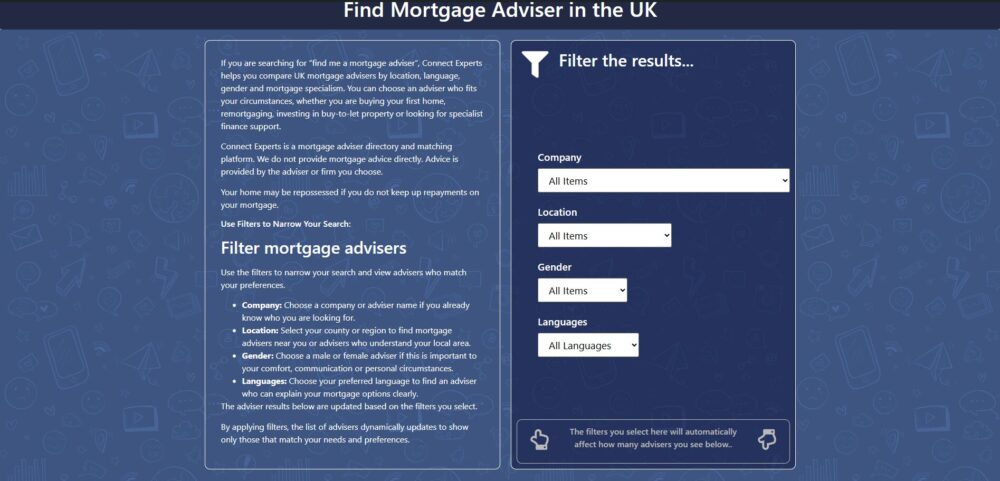
Some borrowers prefer to search for an adviser by location, language, gender, or mortgage specialism.
Connect Experts is part of the Connect Group. It is a mortgage adviser directory and matching platform. Mortgage advice is provided by the adviser or firm you choose.
You can use Connect Experts to find an adverse credit mortgage broker if you want to compare adviser profiles before making contact.
FAQs: Do I Still Need an Adverse Credit Mortgage?
Is an adverse credit mortgage the same as a bad-credit mortgage?
Yes, the terms are often used in a similar way. They describe mortgage applications where credit issues may affect lender choice.
Can I move from an adverse credit mortgage to a normal mortgage?
Yes, it may be possible. This depends on your credit conduct, affordability, equity, income, and current lender criteria.
Does an old CCJ still matter?
It can still matter while visible on your credit file. Lenders may also ask whether it was paid, when it happened, and why.
Will a bigger deposit help if I have adverse credit?
A bigger deposit may improve your options because it reduces lender risk. However, it does not remove the need for affordability checks.
Can my partner’s good credit cancel out my bad credit?
No. A strong co-applicant may help affordability, but lenders still assess both credit histories on a joint application.
Should I apply to my bank first?
Not always. If you have adverse credit, applying to the wrong lender may lead to a decline. It is often better to check your options first.
Is it worth checking my credit report before applying?
Yes. Your credit report helps show what lenders may see. It can also reveal errors, old markers, or issues that need explaining.
Can an adviser guarantee approval?
No adviser can guarantee approval. However, an adviser can help assess your position and identify lenders that may consider your case.