

Mortgage Approval Process: A mortgage approval is not a single decision.
It is a chain of checks.
The lender checks the borrower. The lender checks the property. The solicitor checks the legal position. The adviser checks whether the mortgage fits the client’s needs.
That is why the mortgage approval process can feel slow. It is not just about getting a yes. It is about making sure the yes can stand up to evidence.
This guide explains how the UK mortgage approval process works. It covers the practical steps, the documents usually needed, what lenders assess, and what can delay a mortgage offer.
Mortgage Approval Process: Quick Answer
The mortgage approval process usually moves through these stages:
- Agreement in Principle
- Mortgage advice and product selection
- Document checks
- Full mortgage application
- Lender underwriting
- Property valuation
- Formal mortgage offer
- Solicitor checks
- Exchange and completion
An Agreement in Principle is not a final mortgage offer. It is an early indication of what a lender may consider.
Final approval usually depends on your income, outgoings, credit history, deposit, documents, property type and lender criteria.
You can also use the Connect Mortgages residential mortgage page to understand broader borrowing options before applying.
What Does Mortgage Approval Mean?
Mortgage approval means a lender has agreed to lend, subject to its checks and conditions.
However, people often use the word approval too early.
There are two important stages.
First, there is an Agreement in Principle. This is also called an AIP, DIP or Decision in Principle.
Second, there is a formal mortgage offer. This is the lender’s confirmed offer after underwriting and valuation.
The first stage helps you understand your likely borrowing position. The second stage is the key document your solicitor needs before moving towards exchange and completion.
A mortgage offer is more serious because the lender has reviewed the application in greater detail.
Agreement in Principle
An Agreement in Principle gives an early view of how much you may be able to borrow.
It is useful before you make an offer on a property.
Estate agents may also ask for it because it shows you have considered your mortgage position. However, it is not a guarantee.
A lender may still decline the full application later if the documents, credit file, property or valuation do not meet its criteria.
At this stage, the lender may check:
- Your income
- Your regular commitments
- Your deposit
- Your credit file
- Your employment type
- Your address history
- Your requested loan amount
Some lenders use a soft credit search. Others may use a hard credit search. Therefore, it is important to check before applying.
For a wider public explanation, MoneyHelper explains what happens when you get a mortgage in principle.
Affordability Check
Affordability is one of the most important parts of mortgage approval.
A lender does not only ask, “How much do you earn?”
It also asks, “Can this mortgage remain affordable?”
That means the lender may review income, spending, debts, dependants, financial commitments and the proposed monthly payment.
Common affordability checks include:
- Basic salary
- Overtime, bonus or commission
- Self-employed income
- Pension income
- Credit cards
- Personal loans
- Car finance
- Childcare costs
- Student loans
- Maintenance payments
- Household bills
- Number of dependants
The lender’s job is to decide whether the mortgage looks affordable under its rules.
You can estimate your position with the Residential Affordability Calculator before speaking with an adviser.
Mortgage Product Selection
Mortgage approval is not only about being accepted.
It is also about applying to the right lender first time.
Different lenders assess cases in different ways. Some may be stronger for employed applicants. Others may be more flexible with self-employed income, complex pay, adverse credit, buy-to-let income or unusual property types.
A mortgage adviser can help match the case to lender criteria before submission.
This matters because a declined application can cost time. It may also create stress when a buyer is working to an offer deadline.
Product selection may include:
- Fixed-rate mortgages
- Tracker mortgages
- Discounted variable rates
- Repayment mortgages
- Interest-only options, where suitable
- Residential mortgages
- Buy-to-let mortgages
- Specialist lending options
The right product must fit both the borrower and the property.
A low rate is not enough if the lender is unlikely to approve the case.
Documents Needed for Mortgage Approval
Documents help the lender test the application.
They turn the story into evidence.
The documents needed can vary by lender and case type. However, most applicants should prepare the basics early.
You may need:
- Proof of identity
- Proof of address
- Latest payslips
- Latest P60
- Bank statements
- Proof of deposit
- Details of credit commitments
- Gifted deposit letter, where relevant
- Property details
- Solicitor details
Self-employed applicants may also need:
- Tax calculations
- Tax year overviews
- Business accounts
- Business bank statements
- Accountant details
- Company information, where relevant
If your income is more complex, read the Self-Employed Mortgage guide before applying.
Full Mortgage Application
The full mortgage application is the formal submission to the lender.
At this point, the lender receives the property details, borrower information, evidence of income, and the requested mortgage product.
The application should be accurate.
Small errors can create delays. Larger errors may affect the lender’s decision.
Before submission, check:
- Names match identity documents
- Address history is complete
- Income figures are accurate
- Deposit source is clear
- Credit commitments are disclosed
- Solicitor details are correct
- Property details match the sales memorandum
A good submission reduces avoidable questions.
It does not guarantee approval. However, it can help the lender assess the case more efficiently.
Underwriting
Underwriting is the lender’s detailed review.
This is where the lender checks whether the application fits its rules.
Underwriters may look at:
- Income evidence
- Bank statements
- Credit conduct
- Deposit source
- Employment stability
- Affordability
- Existing debts
- Property details
- Loan-to-value
- Mortgage term
- Repayment method
The underwriter may ask for more documents.
This does not always mean there is a problem. Sometimes the lender needs clarity before making a decision.
For example, a lender may ask about a large bank transfer. It may ask for proof of bonus income. It may query a missed payment. It may request more information about a gifted deposit.
Fast replies can help reduce delays.
Property Valuation
The lender also needs to check the property.
A mortgage is secured against the property. Therefore, the lender must decide whether the property is acceptable security.
A valuation is for the lender’s benefit. It is not the same as a full building survey.
The valuation may consider:
- Estimated property value
- Property condition
- Construction type
- Location
- Lease length, where leasehold
- Saleability
- Any obvious issues affecting security
The valuation can lead to different outcomes.
The lender may accept the property. It may request repairs. It may reduce the valuation. It may decline the property if it does not meet criteria.
If you want to understand payment estimates before applying, use the Mortgage Calculator.
Mortgage Offer
A mortgage offer is the lender’s formal offer to lend.
It normally follows successful underwriting and valuation.
The offer confirms key details, including:
- Loan amount
- Mortgage product
- Interest rate
- Mortgage term
- Monthly payment
- Fees
- Special conditions
- Property address
- Borrower details
You should read the offer carefully.
Your adviser can explain the mortgage details. Your solicitor will also check the legal conditions linked to the property purchase.
A mortgage offer does not mean you own the property.
It means the lender has agreed to lend, subject to the offer conditions and legal process.
Solicitor Checks
The legal process runs alongside the mortgage process.
Your solicitor or conveyancer checks the legal position of the property. This is separate from the lender’s affordability checks.
The solicitor may review:
- Title documents
- Searches
- Contract papers
- Lease details
- Property enquiries
- Source of funds
- Mortgage offer conditions
- Buildings insurance requirements
- Stamp Duty position, where relevant
The lender may also need the solicitor to confirm certain legal points before releasing funds.
This is why mortgage approval and legal completion are connected.
One cannot replace the other.
Exchange and Completion
Exchange is the point where contracts become legally binding.
Completion is the day the purchase money transfers and ownership changes.
Before exchange, you should normally have:
- A formal mortgage offer
- Solicitor approval
- Signed contract
- Deposit funds ready
- Buildings insurance arranged, where required
- Completion date agreed
On completion, the lender releases the mortgage funds to the solicitor.
The solicitor sends the money to the seller’s solicitor. Once completion happens, you can usually collect the keys.
GOV.UK provides a wider public guide to buying a home, including offers, conveyancing and completion.
What Can Delay Mortgage Approval?
Mortgage approval can slow down for practical reasons.
Common delays include:
- Missing documents
- Unclear deposit source
- Bank statement queries
- Credit-file issues
- Employer reference delays
- Self-employed income checks
- Down valuations
- Property defects
- Leasehold queries
- Solicitor delays
- Incorrect application details
Many delays are avoidable.
The best approach is preparation before the full application. This means checking documents, reviewing credit commitments and choosing a lender that fits the case.
What If Your Mortgage Application Is Declined?
A declined mortgage application is disappointing.
However, it should be treated as information, not the end of the road.
The first step is to understand the reason.
Common reasons include:
- Affordability does not fit
- Credit history does not meet criteria
- Income evidence is not strong enough
- Deposit source is unclear
- Property type is not acceptable
- Valuation is lower than expected
- The lender’s criteria do not fit the case
Do not keep applying without a plan.
Repeated applications can create further issues, especially where hard credit searches are used.
Instead, review the reason and consider whether another lender may be more suitable.
If credit history is part of the issue, read the Adverse Credit Mortgage guide before making another application.
Mortgage Approval for First-Time Buyers
First-time buyers often focus on the deposit.
That is important, but it is only one part of approval.
Lenders also check income, spending, credit history, employment, documents and the property.
First-time buyers should prepare early by checking:
- Deposit amount
- Proof of deposit
- Credit file
- Monthly budget
- Income evidence
- Bank statements
- Solicitor options
- Likely purchase costs
If you are buying your first home, the First-Time Buyer Mortgage guide explains the wider steps.
Mortgage Approval With a Broker
A mortgage broker can help before the application reaches the lender.
That can be important because every lender has different criteria.
A broker may help you understand:
- Which lenders may consider your case
- What documents are needed
- Whether affordability looks realistic
- How the property type may affect approval
- Whether your credit file creates concerns
- Which product may fit your plans
- What the next step should be
Connect Mortgages is a credit broker, not a lender.
Your adviser will explain any fees before you proceed. Your home may be repossessed if you do not keep up repayments on your mortgage.
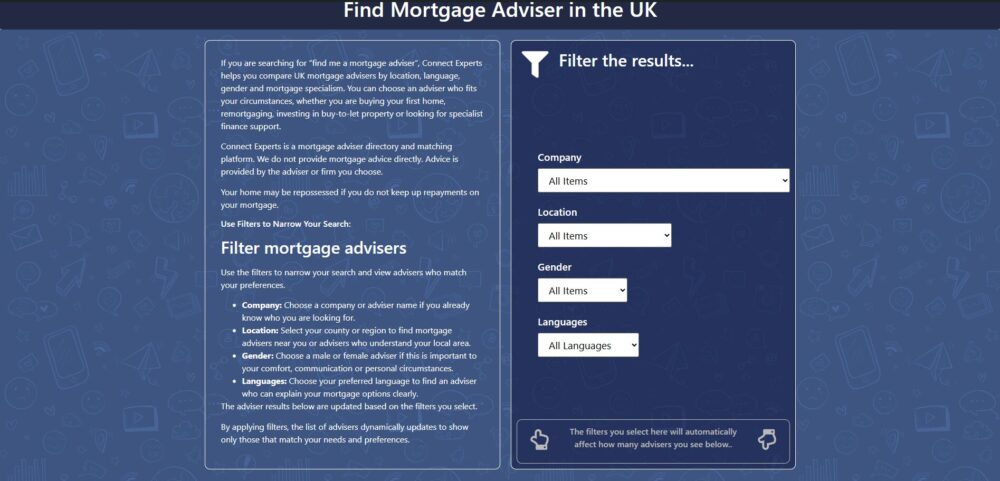
If you prefer to compare advisers by location, language or mortgage type, you can use the Connect Experts mortgage adviser directory.
Connect Experts is part of the Connect Group. It is a directory and matching platform. Advice is provided by the adviser or firm you choose.
Mortgage Approval Checklist
Before applying, check the following:
- Your deposit is available and evidenced
- Your credit file is accurate
- Your income documents are ready
- Your bank statements are clear
- Your spending is understood
- Your debts are disclosed
- Your solicitor details are prepared
- Your property details are correct
- Your adviser knows any case complexity
- You understand the difference between AIP and offer
A mortgage application works best when the lender receives a clear, complete picture.
What Next?
FAQs: Mortgage Approval Process
How long does mortgage approval take?
Mortgage approval times vary.
Some straightforward cases move quickly. Others take longer because of documents, underwriting, valuation, solicitor work or property issues.
Is an Agreement in Principle the same as mortgage approval?
No.
An Agreement in Principle is an early indication from a lender. A formal mortgage offer comes after the full application, underwriting and valuation.
What do lenders check before approving a mortgage?
Lenders usually check income, outgoings, debts, credit history, deposit, employment type, property details and affordability.
They also need the property to meet their lending criteria.
Can a mortgage be declined after an Agreement in Principle?
Yes.
A lender can still decline the full application if the documents, valuation, credit file, affordability or property do not meet its rules.
What documents do I need for mortgage approval?
You may need proof of ID, proof of address, payslips, bank statements, proof of deposit and details of debts.
Self-employed applicants may need tax documents, accounts and business bank statements.
Can a mortgage be declined after valuation?
Yes.
A lender may decline or reduce lending if the valuation is lower than expected. It may also decline if the property is not acceptable security.
What is underwriting in a mortgage application?
Underwriting is the lender’s detailed review of your mortgage application.
It checks whether the borrower, property and requested mortgage fit the lender’s criteria.
Can I get mortgage approval with bad credit?
It may be possible.
However, your options may depend on the type, age and size of the credit issue. The deposit amount and lender choice may also matter.
Does a mortgage offer mean completion is guaranteed?
No.
A mortgage offer is important, but legal work must still finish. Your solicitor must complete checks before exchange and completion.
Should I apply directly or use a mortgage broker?
That depends on your situation.
A broker may help if your income, credit file, deposit, property type or borrowing needs are less straightforward. A broker can also compare lenders and explain criteria before you apply.