
Green Mortgages and EPC Ratings Explained: A mortgage is not only a rate on a page. It is also a decision about the property behind the loan.
That is why green mortgages and EPC ratings now matter more than they once did. A home’s energy performance can affect running costs, lender incentives, landlord planning and the long-term condition of the property.
This does not mean every borrower needs a green mortgage. It means the EPC rating is becoming part of the wider mortgage conversation.
At a Glance
Green mortgages usually offer an incentive when a property is energy efficient or when a borrower improves its energy performance.
That incentive may include a lower interest rate, cashback or funding for energy-saving improvements.
The EPC rating helps lenders assess the property’s energy efficiency. A higher EPC rating may help secure access to certain green mortgage products, although lenders’ rules vary.
For homeowners, EPC improvements may reduce running costs and support future remortgage options.
For landlords, EPC ratings are especially important because the Government has set out plans to raise minimum energy efficiency standards for privately rented homes in England and Wales by 2030.
What Is a Green Mortgage?
A green mortgage is a mortgage product with an incentive linked to the energy performance of the property.
The incentive may apply when:
- The property already has a strong EPC rating
- The borrower is buying an energy-efficient home
- The borrower improves the property’s energy efficiency
- The lender offers cashback or a rate benefit for qualifying work
- A further advance is used for eligible home improvements
The Financial Conduct Authority has explained that green mortgages usually relate to the property rather than the mortgage itself. The FCA also notes that incentives may include a fixed-rate discount or cashback after improvements are completed.
That is an important distinction.
The mortgage is not green by nature. The property, or the planned improvement to the property, is what creates the green element.
What Is an EPC Rating?
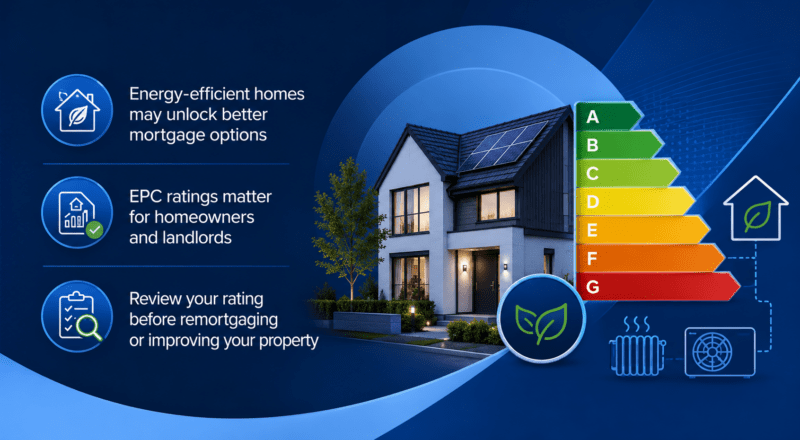
An Energy Performance Certificate, or EPC, shows how energy efficient a property is.
The rating runs from A to G.
A is the most energy-efficient. G is the least energy-efficient.
An EPC looks at the property’s fabric and services. This may include insulation, heating, hot water, windows and other energy-related features.
You can search for an existing certificate on the official GOV website.UK energy certificate service.
An EPC is useful because it gives a simple view of how a property performs. However, it should not be treated as a perfect technical survey. Some homeowners may need extra advice from qualified energy specialists before paying for major work.
Why EPC Ratings Matter to Mortgage Lenders
Lenders are paying closer attention to energy efficiency because homes form part of their mortgage books.
A property with poor energy performance may cost more to heat. It may also need more investment over time.
A property with a stronger EPC rating may be more attractive to some lenders because it can support lower running costs and a better long-term property profile.
This is where green mortgages fit in.
Some lenders may offer incentives for homes with EPC ratings such as A or B. Others may support borrowers who want to fund improvements. Criteria differ between lenders, so the EPC rating alone does not guarantee approval.
A borrower will still need to meet affordability, credit, income, deposit and property criteria.
Green Mortgages and New-Build Homes
New-build homes often achieve stronger EPC ratings than older properties.
This is because modern building standards usually include better insulation, heating systems and energy controls.
For lenders, new builds can help improve the average energy profile of their mortgage book. For buyers, an efficient home may mean lower running costs compared with an older property of a similar size.
However, the green mortgage conversation should not stop at new builds.
Most UK homes are not new. Many older properties need careful improvement rather than replacement. The larger question is not only how we finance efficient homes, but how we improve the homes people already live in.
That is where the topic becomes practical rather than theoretical.
What Green Mortgages Mean for Homeowners
For homeowners, green mortgages may matter when buying, remortgaging or improving a property.
A homeowner may want to review:
- The current EPC rating
- The likely cost of energy improvements
- Whether improvements may reduce energy bills
- Whether a lender offers a green incentive
- Whether borrowing more is affordable
- Whether the improvement adds practical value to the home
If your current mortgage deal is ending, your EPC rating may be worth reviewing before you consider remortgaging.
That does not mean an EPC improvement should be undertaken solely to secure a mortgage incentive. The cost of the work still matters. So does the time it may take to recover that cost through lower bills or lender incentives.
A good decision should improve the property, support the household and make financial sense.
Can You Borrow to Improve an EPC Rating?
Some borrowers may consider using mortgage finance to fund energy-efficiency work.
This may include:
- Loft insulation
- Wall insulation
- Double or triple glazing
- Heating system upgrades
- Solar panels
- Better heating controls
- Draft reduction
- Energy-efficient doors
- Ventilation improvements
The right route depends on your mortgage, property value, loan-to-value, income and wider plans.
Some borrowers may consider taking out further borrowing from their current lender. Others may consider a full remortgage if their existing deal is ending.
A second-charge mortgage may also be considered when the first mortgage should remain in place. This can be useful in some cases, but it adds another secured loan and must be reviewed carefully.
Your home may be repossessed if you do not keep up repayments on your mortgage.
What Green Mortgages Mean for Landlords
EPC ratings are a major issue for landlords.
The Government has published its response on improving the energy performance of privately rented homes in England and Wales. It sets out plans for a new standard from 1 October 2030, with a move towards the equivalent of EPC C under the future framework.
Landlords should read the official GOV.UK private rented sector energy performance update before making decisions.
For landlords, EPC planning is not only about compliance. It can affect:
- Letting suitability
- Refinance options
- Property value
- Tenant comfort
- Maintenance planning
- Future improvement budgets
- Portfolio risk
A landlord with several properties may need to review EPC ratings across the whole portfolio. One property may need minor work. Another may need a larger plan.
This is where mortgage advice and property planning can connect.
A landlord reviewing finances can explore buy-to-let mortgage options while also considering the cost of energy improvements.
Green Mortgages, EPC Ratings and Affordability
A stronger EPC rating does not replace affordability.
Lenders still assess income, outgoings, credit commitments, deposit, property value and loan-to-value.
A green mortgage incentive may improve the overall picture, but it does not remove the need for standard checks.
Borrowers should also compare the full cost.
A product with a green incentive is not automatically cheaper than a standard mortgage. Fees, rate, cashback, term, early repayment charges and future plans all matter.
The practical question is simple:
Does the mortgage support the property and the person?
If the answer is no, then the word “green” does not make it suitable.
What to Check Before Applying for a Green Mortgage
Before applying, check:
- Your current EPC rating
- Whether the EPC is still accurate
- The lender’s minimum EPC requirement
- Whether cashback is paid upfront or after completion
- Whether the lender requires proof of completed works
- Whether the property type is eligible
- Whether your income supports the borrowing
- Whether the total mortgage cost is competitive
- Whether there are early repayment charges
- Whether a non-green product may be better overall
A mortgage adviser can help compare the options rather than focusing only on the label.
If you need advice tailored to your property, location, and circumstances, you can use Connect Experts to find a mortgage adviser.
Why EPC Improvements Need Careful Thinking
Energy efficiency is important, but not every improvement gives the same result.
Some work may be relatively low cost and useful. Other work may be expensive, disruptive or unsuitable for the property.
Older homes, listed buildings and unusual properties may need specialist input. A standard EPC recommendation may not always reflect the best practical route.
This is why the discussion should be balanced.
A greener home should be warmer, easier to run and better prepared for the future. But the route to get there should be affordable, realistic and suited to the building.
A mortgage can help fund change, but it should not rush it.
Where Residential Mortgage Advice Fits In
For residential borrowers, EPC ratings are now part of the wider mortgage conversation.
A first-time buyer may compare the running costs of two similar homes.
A homeowner may review energy improvements before remortgaging.
A family may decide that improving their current home is better than moving.
Connect Mortgages can help borrowers review residential mortgage services and understand how property plans may affect mortgage options.
The aim is not to force every borrower into a green mortgage. The aim is to understand whether the EPC rating, property condition and mortgage route work together.
Green Mortgages and EPC Ratings: Final View
Green mortgages are not a passing label. They reflect a wider shift in how lenders, borrowers and landlords think about property.
The EPC rating is becoming part of the evidence.
It can show where a property stands today. It can suggest where improvement may be needed. It can also affect whether certain mortgage incentives are available.
But the best mortgage decision is still personal.
A green mortgage should not be judged only by the word green. It should be judged by the rate, fees, criteria, property, borrower’s needs, and long-term cost.
A good home should shelter the people inside it. A good mortgage should support that home without creating pressure that cannot be managed.
FAQs
What is a green mortgage?
A green mortgage is a mortgage product with an incentive linked to the energy efficiency of the property. This may include a lower rate, cashback or funding support for eligible improvements.
What EPC rating do I need for a green mortgage?
This depends on the lender. Some green mortgage products focus on properties with EPC ratings of A or B. Others may support energy-efficiency improvements. Always check the lender’s criteria.
Does a better EPC rating guarantee a cheaper mortgage?
No. A better EPC rating may help you qualify for some green mortgage products, but it does not guarantee the cheapest deal. Fees, rate, cashback, term and criteria all matter.
Can landlords get green mortgages?
Some lenders offer green buy-to-let mortgage products. Eligibility may depend on the EPC rating, property type, rental cover and wider lender criteria.
Can I borrow more to improve my EPC rating?
Possibly. Options may include further borrowing, a remortgage or a second charge mortgage. The right route depends on affordability, your current mortgage and the cost of the work.
Should I update my EPC after improving my home?
It may be worth arranging a new EPC if you have completed energy-efficiency improvements and want the rating to reflect the work. This may be relevant when selling, letting or applying for certain mortgage products.
Are EPC rules changing for landlords?
The Government has set out plans to raise energy performance standards for privately rented homes in England and Wales by 2030. Landlords should check the current Government guidance before making finance or improvement decisions.
Is a green mortgage always the best option?
No. A green mortgage may be suitable for some borrowers, but not all. The full cost, lender criteria and personal circumstances should be reviewed before applying.