

How To Improve Your Mortgage Approval Chances: A mortgage lender does not approve an application because it sounds convincing. It approves an application when the evidence supports the risk.
That is the quiet discipline behind mortgage approval. A lender needs to see that the loan is affordable, the documents are consistent, the property is suitable security and the applicant fits its criteria.
In a market where affordability has been under pressure, preparation matters. A stronger application is not about saying more. It is about showing the right things clearly.
At a Glance
You improve your mortgage approval chances by preparing your finances before applying, checking your credit file, reducing avoidable debts, proving income clearly, keeping bank statements steady and choosing a lender whose criteria match your circumstances.
A mortgage adviser can help you understand which lenders may fit your case before a full application is submitted.
What Does A Mortgage Lender Look For?
A mortgage lender looks at the risk of lending money against a property. The main checks usually include:
- Your income
- Your regular spending
- Your credit history
- Your deposit
- Your existing debts
- Your employment or trading history
- The property type
- The loan-to-value
- The mortgage term
- The purpose of the borrowing
For most residential borrowers, the lender must assess whether the mortgage is affordable. This is why an application cannot rely on income alone. A high income may still be affected by loans, childcare, credit cards, dependants or irregular spending.
You can read more about the wider borrowing route on the residential mortgage page.
Start With Affordability Before You Apply
Affordability is often the centre of the lender’s decision. A lender wants to know whether the mortgage is affordable now and whether it remains reasonable under its own checks.
Before applying, review your monthly commitments. This includes credit cards, personal loans, car finance, student loans, childcare, maintenance payments and other regular costs.
Small details can matter. A lender may treat a credit card balance differently from another lender. Some lenders may use bonus or overtime income more generously than others. Self-employed income may also be assessed differently depending on the lender.
This is why the lender choice matters as much as the rate. The lowest rate may not help if the lender’s affordability model does not fit your case.
For a wider explanation, see mortgage affordability. You can also use the residential affordability calculator to get an initial guide before speaking to an adviser.
Check Your Credit File Early
Your credit file helps a lender understand how you have managed borrowing in the past. It may show loans, credit cards, missed payments, defaults, county court judgments, electoral roll status and linked financial accounts.
A poor credit score does not always mean a mortgage is impossible. However, credit conduct can affect lender choice, deposit requirements, interest rates and the amount you may be able to borrow.
Before applying, check for:
- Old addresses that need updating
- Missed payments reported incorrectly
- High credit card utilisation
- Unknown accounts
- Financial links to another person
- Recent credit searches
- Defaults or CCJs
If there is an error, raise it with the credit reference agency. If the issue is correct, an adviser can help you understand which lenders may still consider the case.
Read more on the credit file page. If your credit history is more complex, see bad credit mortgages.
Keep Bank Statements Clean And Consistent
Bank statements often show more than income. They show conduct.
A lender may review how money moves through your account, whether bills are paid on time and whether there are signs of financial pressure. This does not mean every coffee or takeaway matters. It means the overall pattern should support the application.
Before applying, try to avoid:
- Returned direct debits
- Unarranged overdraft use
- Frequent gambling transactions
- Unexplained large transfers
- Payday lending
- New borrowing without a clear reason
- Inconsistent income payments
The question is simple: do the statements support the story the application tells?
If your income is stable, your spending is controlled and your documents match, the application is easier to assess.
Prepare The Right Documents
Missing or inconsistent documents can slow an application. In some cases, they can create questions that did not need to exist.
A typical lender may ask for:
- Proof of identity
- Proof of address
- Payslips
- Bank statements
- P60
- Employment contract
- Tax calculations
- Tax year overviews
- Company accounts
- Deposit evidence
- Proof of gifted deposit
- Existing mortgage statement, if remortgaging
Self-employed applicants may need more preparation because lenders assess income differently. Some may use the latest year. Others may average two years. Company directors may need to show salary, dividends, retained profit or business accounts, depending on the lender.
The better the documents are, the less interpretation the lender has to do.
Explain The Deposit Clearly
A deposit must usually be evidenced. The lender may want to know where the money came from and whether it needs to be repaid.
Common deposit sources include savings, sale proceeds, inheritances, gifts, bonuses, or equity from another property.
If the deposit is a gift, the lender may ask for a gift letter and evidence from the person making the gift. If the deposit has moved between accounts, the lender may ask for a paper trail.
A larger deposit can reduce the loan-to-value. This may improve lender choice, although approval still depends on the full case.
Choose The Right Lender For The Case
Mortgage lenders do not all use the same rules. This is one of the most important points for borrowers to understand.
One lender may be cautious about variable income. Another may be stronger for contractors. One may accept a certain property type, while another may not. Some lenders are more flexible with historic credit issues, while others may decline the case automatically.
This means the aim is not to apply everywhere. The aim is to apply to the right lender.
Too many applications can create unnecessary credit searches and wasted time. A better route is to assess the case first, then submit the application where it has a realistic fit.
If you want to understand the stages involved, read the mortgage approval process guide.
Avoid Changing Your Finances During The Application
A mortgage application can take time. During that period, avoid making major financial changes unless you have taken advice.
Try not to:
- Take out new credit
- Increase credit card balances
- Change jobs without discussing it first
- Miss payments
- Move large sums without records
- Reduce your deposit
- Commit to new finance agreements
A lender can ask for updated information before completion. The application should remain consistent from start to finish.
When Should You Speak To A Mortgage Adviser?
You should consider speaking to a mortgage adviser before applying if your case is not straightforward.
This may include:
- Self-employed income
- Contractor income
- Bonus, commission or overtime
- Credit issues
- Small deposit
- High existing commitments
- Buying a non-standard property
- Using a gifted deposit
- Applying after a recent job move
- Needing a higher borrowing amount
A mortgage adviser can help assess lender criteria, affordability, documents and the timing of the application.
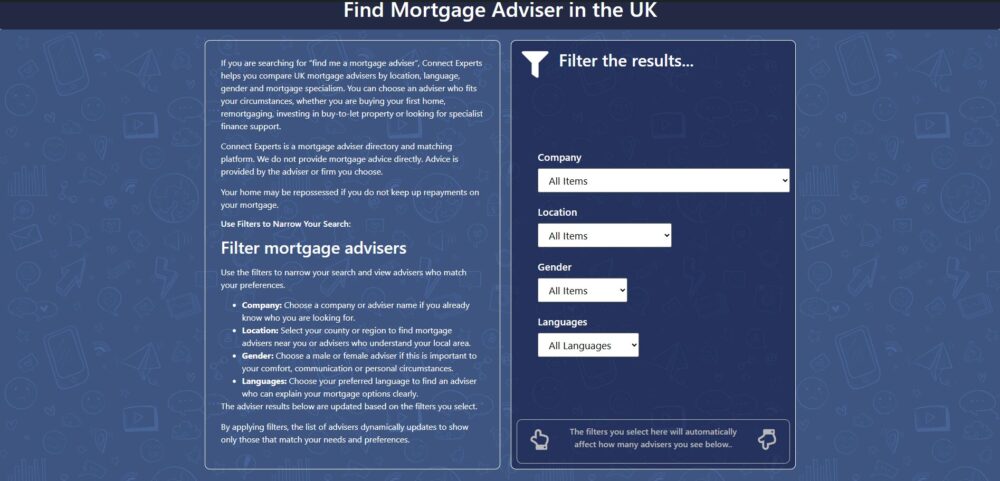
Some borrowers may prefer to compare advisers before making contact. You can use Connect Experts to find a mortgage adviser by location, language, gender and mortgage type. For broader adviser choice, you can also read about independent mortgage advice.
Practical Checklist Before Applying
Before a full mortgage application, check the following:
- Your income evidence is up to date
- Your bank statements are steady
- Your credit file has been checked
- Your deposit source is clear
- Your debts are understood
- Your documents match the application
- Your property type fits lender criteria
- You have not applied to unsuitable lenders
- You understand the likely monthly payment
- You have considered fees, insurance and moving costs
You can also review the wider mortgage calculators page before applying.
FAQs: Improving Your Mortgage Approval Chances
Can I convince a lender to approve my mortgage?
You cannot convince a lender with words alone. You improve your chances by giving clear evidence that the mortgage is affordable, the documents are accurate and the case fits lender criteria.
What is the biggest reason mortgages are declined?
Common reasons include affordability shortfalls, credit issues, inconsistent documents, undisclosed debts, property concerns or applying to a lender whose criteria do not fit the case.
Does a higher deposit improve approval chances?
A higher deposit can help because it lowers the loan-to-value. However, the lender will still assess income, spending, credit history, property suitability and overall risk.
Should I clear debts before applying?
Clearing or reducing debts may improve affordability, but it depends on your wider finances. Speak to an adviser before using savings that may be needed for your deposit or moving costs.
Can I get approved with bad credit?
It may be possible, depending on the type of credit issue, when it happened, whether it has been settled and how the rest of the application looks.
Is an Agreement in Principle the same as full approval?
No. An Agreement in Principle is an early indication. Full approval usually depends on underwriting, documents, valuation and final lender checks.