
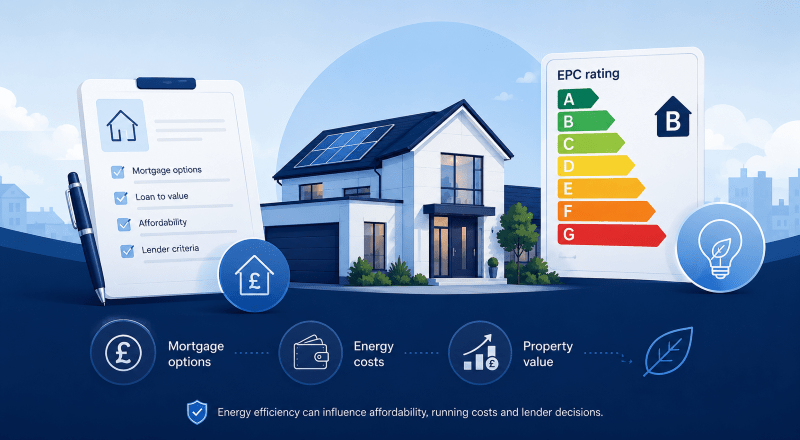
Mortgage and EPC Connection: How Ratings Affect Borrowing – A mortgage is not only a loan against bricks, mortar and land.
It is also a judgement about risk, running costs, property condition and long-term value. That is where an Energy Performance Certificate can start to matter.
An EPC does not replace income checks, affordability, credit history, deposit size or lender criteria. Yet it can help lenders, buyers, homeowners and landlords understand how efficient a property may be to run. In some cases, it may also affect access to green mortgage products, cashback offers, further borrowing, or the way a buy-to-let property is assessed.
The mortgage and EPC connection is not about one certificate changing everything. It is about one piece of property data becoming more important in the way homes are bought, refinanced, improved and let.
Mortgage and EPC Connection
An EPC rates a property’s energy efficiency from A to G.
A higher EPC rating may help some borrowers access green mortgage products, cashback or lower-rate options, depending on lender criteria.
A low EPC rating does not automatically stop a residential mortgage, but it may raise questions about running costs, future works and property condition.
For landlords, EPC rules matter more because privately rented homes in England and Wales must usually meet minimum energy efficiency standards unless an exemption applies.
Homeowners may consider energy improvements before selling, remortgaging or applying for further borrowing.
The right mortgage route depends on the property, the EPC rating, affordability, lender criteria and whether the property is a home or a rental investment.
What Is an EPC?
An Energy Performance Certificate shows how energy efficient a property is.
The rating runs from A to G.
A is the most energy-efficient.
G is the least energy-efficient.
An EPC looks at points such as:
- Wall, loft and floor insulation
- Heating systems
- Hot water systems
- Windows and glazing
- Lighting
- Renewable energy features
- Estimated energy use
- Recommended improvements
An EPC is usually needed when a property is built, sold or rented. It can give buyers and tenants a clearer idea of how efficient a home may be before they commit.
You can check whether a property in England, Wales or Northern Ireland has an EPC through the GOV.UK energy certificate service.
Why EPC Ratings Matter More in Mortgage Decisions
Mortgage lenders are not only thinking about today’s value.
They also think about future saleability, affordability pressure, property standards and risk. A property with poor energy efficiency may cost more to heat and improve. Those costs can affect a household’s wider budget.
That does not mean a low EPC rating automatically blocks a mortgage. Many older UK homes have modest EPC ratings. Lenders still assess the full case, including income, deposit, credit profile, loan size and property condition.
The EPC can still become part of the conversation because it may affect:
- Whether a green mortgage product is available
- Whether cashback or rate incentives apply
- Whether the borrower wants funds for improvements
- Whether a landlord can legally let the property
- Whether the property may need future works
- Whether energy costs affect household planning
This is why the EPC should not be treated as a small document at the end of the process. It can be a useful planning tool at the start.
Can an EPC Help You Get a Green Mortgage?
A green mortgage is usually linked to either an energy-efficient home or energy improvement works.
Some lenders offer better rates, cashback or specific borrowing options for properties with stronger EPC ratings. Many green mortgage products focus on EPC A or B homes, although criteria differ between lenders.
If you are buying, moving or remortgaging, a green product may be worth checking. It should still be compared against standard mortgage products. A green mortgage is only useful if the overall cost, criteria and terms make sense for your situation.
For a wider guide, read Green Mortgages.
Does a Better EPC Mean You Can Borrow More?
Not always.
A better EPC rating can make a property more attractive to some lenders, especially where a green mortgage product is available. However, borrowing is still driven mainly by affordability, income, deposit, credit profile, property value and lender policy.
It is safer to say that a stronger EPC may improve product choice in some cases. It should not be presented as a guarantee of a larger mortgage.
This matters because borrowers can make costly decisions if they assume an EPC upgrade will automatically change their mortgage outcome.
A better question is:
Will this EPC rating, property type and improvement plan fit a lender’s current criteria?
That is where mortgage advice can help.
EPC Ratings and Remortgaging
An EPC can become relevant when a homeowner wants to remortgage.
This may happen when:
- A fixed-rate deal is ending
- The homeowner wants to raise funds for improvements
- Energy bills have become a concern
- The property needs work before sale
- The borrower wants to check green mortgage options
- The current lender offers a green additional borrowing product
Some homeowners use remortgaging to fund insulation, heating upgrades, solar panels, new windows or other improvements. This can make sense when the borrower has enough equity and the monthly payments remain affordable.
However, remortgaging to fund works increases mortgage debt. The cost should be weighed against the likely benefit, energy savings, property plans and repayment term.
If you are considering this route, read Remortgage for Home Improvements.
EPC Ratings and Buy-to-Let Mortgages
The EPC issue is more technical for landlords.
A buy-to-let property is not only assessed as an investment. It also needs to meet legal letting standards. In England and Wales, domestic private rented properties generally need to meet minimum energy efficiency rules unless a valid exemption applies.
This can affect mortgage planning because a landlord may need to consider:
- Whether the property can legally be let
- Whether improvement works are needed
- Whether rental income could be interrupted
- Whether the cost of upgrades affects yield
- Whether a lender has specific EPC criteria
- Whether the property remains suitable for long-term investment
A landlord buying a lower-rated property should not look only at the purchase price. The real cost may include improvement works, void time, finance costs and compliance checks.
For landlord mortgage planning, see Buy-to-Let Mortgage.
You can also read the GOV.UK landlord guidance on domestic minimum energy efficiency standards.
What Improvements Can Help an EPC Rating?
The best improvements depend on the property.
An older solid-wall home may need different work from a modern flat, a converted house, or a rental property with older heating.
Common EPC improvement areas include:
- Loft insulation
- Cavity wall insulation
- Floor insulation
- Double or triple glazing
- Heating controls
- Boiler upgrades
- Heat pumps
- Low-energy lighting
- Solar panels
- Hot water cylinder insulation
- Draught proofing
The EPC report should list recommended measures. These recommendations can help a homeowner or landlord plan the order of works.
The key point is simple: the cheapest improvement is not always the most useful, and the most expensive improvement is not always the best first step.
A practical plan should consider cost, disruption, likely EPC impact, property value, mortgage position and how long you intend to keep the property.
Why the EPC Should Be Reviewed Before Applying
Mortgage applications often focus on income, deposit and rates.
That is understandable. Those points matter.
Yet the property itself also matters. If an EPC raises questions about energy performance, future costs or letting rules, it is better to know early.
Before applying for a mortgage, it may help to check:
- The current EPC rating
- When the EPC expires
- Whether improvements have been made since the last EPC
- Whether the property is residential or buy-to-let
- Whether any lender incentives depend on EPC A or B
- Whether improvement funds are needed
- Whether works may affect affordability
This is especially useful for buyers considering older homes and landlords reviewing rental properties.
EPC, Affordability and the Cost of Running a Home
Affordability is not only about the mortgage payment.
A household also has to pay for heating, electricity, council tax, insurance, repairs and daily living costs. Energy efficiency can influence that wider budget.
A more efficient home may be cheaper to run than a similar property with poor insulation or outdated heating. This does not mean a lender will ignore normal affordability rules. It means energy performance can form part of a more complete view of the property.
The philosophical point is practical: a home is not affordable only because the mortgage is approved. It must also be liveable, maintainable and suitable for the years ahead.
Can a Poor EPC Make a Property Harder to Mortgage?
A poor EPC does not automatically make a property unmortgageable.
However, it can create questions.
For a residential buyer, the lender may still proceed if the property is acceptable security and the borrower meets the lender’s criteria. For a landlord, the issue can be more serious because letting rules may affect rental income and investment viability.
A low EPC may also make buyers think more carefully about:
- Future improvement costs
- Heating bills
- Resale appeal
- Rental compliance
- Survey findings
- Available mortgage products
This is why a low EPC should not be ignored. It should be assessed alongside the mortgage, survey and property plan.
How a Mortgage Adviser Can Help
A mortgage adviser cannot change the EPC rating.
However, they can help you understand how the rating may fit with mortgage criteria.
This may include checking:
- Whether green mortgage products are available
- Whether standard products are more suitable
- Whether further borrowing could fund improvements
- Whether buy-to-let criteria create extra requirements
- Whether affordability still works after extra borrowing
- Whether the property type limits lender choice
If you want to compare advice options, you can search for a suitable adviser through Connect Experts.
Should You Improve the EPC Before Selling or Remortgaging?
It depends on the property and your plans.
Improving an EPC before selling may help a property appeal to buyers who care about energy costs. It may also help where the current rating is poor and the recommended works are affordable.
Improving an EPC before remortgaging may help if the lender offers green incentives or if you want to reduce running costs before taking a new deal.
However, not every improvement creates the same return. Borrowing more to fund works should be considered carefully.
Before spending money, ask:
- What is the current EPC rating?
- What rating could realistically be achieved?
- How much will the work cost?
- Will the work reduce bills?
- Will the work support property value?
- Will a lender recognise the improvement?
- How long will I keep the property?
This turns the EPC from a certificate into a decision-making tool.
Mortgage and EPC Connection: Key Points for Borrowers
The EPC is not the mortgage.
It does not replace affordability.
It does not guarantee a better rate.
It does not automatically increase borrowing.
But it can influence the mortgage conversation.
For homeowners, it may open the door to green mortgage products or improvement funding.
For landlords, it may affect letting, compliance and investment planning.
For buyers, it can reveal future costs before a mortgage is completed.
For lenders, it can form part of the property risk picture.
That is the real connection between mortgage and EPC: the home is being judged not only by what it is worth today, but also by how suitable it may be for tomorrow.
Mortgage and EPC Connection FAQs
What is the mortgage and EPC connection?
The mortgage and EPC connection is the link between a property’s energy efficiency rating and how lenders, buyers, homeowners or landlords may view the property. It may affect green mortgage options, improvement finance, running costs and buy-to-let planning.
Can an EPC rating affect my mortgage?
An EPC rating may affect some mortgage options, especially green mortgage products. It does not usually replace normal affordability, credit, deposit and property checks.
Do I need a high EPC rating for a green mortgage?
Many green mortgage products are aimed at properties with EPC A or B ratings. Some lenders also offer products linked to energy improvement works. Criteria vary, so the full mortgage product should be checked.
Can I remortgage to improve my EPC rating?
You may be able to remortgage or raise further borrowing to fund energy improvements, subject to affordability, equity and lender criteria. This increases mortgage debt, so the cost and benefit should be reviewed carefully.
Does EPC matter more for landlords?
Yes. EPC can be especially important for landlords because private rented properties must usually meet minimum energy efficiency standards unless an exemption applies. This can affect letting, rental income and buy-to-let mortgage planning.
Is a low EPC property unmortgageable?
Not automatically. Many homes with lower EPC ratings can still be mortgaged. The outcome depends on the lender, property condition, borrower profile, deposit, affordability and whether the property is residential or buy-to-let.
Should I check the EPC before buying?
Yes. Checking the EPC before buying can help you understand potential energy costs, improvement works and whether any green mortgage options may be available.
Speak With Connect Mortgages
If you are buying, remortgaging or reviewing a rental property, the EPC rating may be worth checking before you apply.
Use the Mortgage Calculators to understand possible repayments, then speak with Connect Mortgages about the mortgage route that may fit your property, budget and long-term plans.
Your home may be repossessed if you do not keep up repayments on your mortgage.
Some forms of buy-to-let mortgage, commercial mortgage and business finance are not regulated by the Financial Conduct Authority.